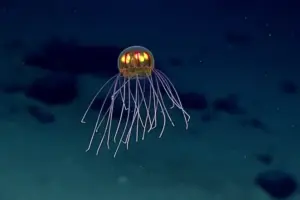
To find true extraterrestrials, humanity may not need to launch rockets into the deep void of space; we need only look down. Earth’s oceans—covering over 70 percent of the globe—contain realms more alien, pressurized, and dark than the surface of Mars or the icy crusts of Europa. Below the epipelagic sunlit zone, descending through the twilight mesopelagic down to the pitch-black abyss, lie ecosystems driven not by photosynthesis, but by radical adaptations to extreme pressures, freezing temperatures, and near-total starvation.
Biologists estimate that as many as one million deep-sea species remain entirely undiscovered. Many of the organisms already cataloged have been witnessed by human eyes only a handful of times, captured by robotic submersibles or specialized research vessels operating under immense logistical constraints. Far from being mere biological curiosities, these creatures are finely tuned evolutionary masterpieces. They possess translucent skulls, illuminate themselves with chemical light, and employ predatory mechanisms that rival any Hollywood science fiction script.
This report examines seven remarkable deep-sea species. Each challenges our terrestrial bias, proving that our home planet’s waters are just as strange, mysterious, and awe-inspiring as the furthest reaches of outer space. Furthermore, it underscores the urgent necessity of marine conservation, as these fragile ecosystems face mounting pressures from human activity, climate disruption, and prospective deep-sea industrialization.
Detailed Chronology: The Evolution of Deep-Sea Exploration and Discovery
Understanding how these bizarre organisms came to light requires a brief historical look at humanity’s journey into the deep ocean. For centuries, the abyssal zone was viewed as a biological desert—a cold, stagnant abyss where no life could possibly endure.
The Mid-19th Century (The Azoic Hypothesis): Prominent scientists like Edward Forbes proposed the "Azoic Hypothesis," arguing that marine life could not exist below 300 fathoms (1,800 feet) due to the absence of light and crushing hydrostatic pressure.
1872–1876 (The Challenger Expedition): The HMS Challenger shattered the Azoic Hypothesis. By dredging the global ocean floor, scientists discovered thousands of new species, proving that life thrives even in the deepest trenches.
The Mid-20th Century (Submersibles and Bathyscaphes): The invention of bathyscaphes like the Trieste allowed human observers to descend into the Challenger Deep in 1960. While direct human-piloted deep-sea dives proved challenging and expensive, they confirmed the presence of active ecosystems at extreme depths.
The Late 20th Century to Present (Remotely Operated Vehicles & Environmental DNA): Modern marine science relies heavily on Remotely Operated Vehicles (ROVs), autonomous underwater vehicles (AUVs), and environmental DNA (eDNA) sampling. Institutions such as the Monterey Bay Aquarium Research Institute (MBARI) and the National Oceanic and Atmospheric Administration (NOAA) have revolutionized our understanding. Advanced deep-sea cameras and robotic arms can now film living specimens in their natural, undisturbed habitats—revealing behavioral traits that dead, pressure-ruptured museum specimens could never display.
Supporting Context & Metrics: The Extremes of the Abyssal Realm
To comprehend the morphology of the creatures that follow, one must understand the environment they inhabit. The deep ocean is generally split into distinct layers:
The Mesopelagic (Twilight Zone: 656 to 3,300 feet): Faint sunlight filters down, but not enough for photosynthesis. Organisms here often feature large eyes and bioluminescence.
The Bathypelagic (Midnight Zone: 3,300 to 13,123 feet): Complete and utter darkness. Temperatures hover just above freezing (around 35°F to 39°F).
Hydrostatic Pressure: For every 33 feet you descend, water pressure increases by one atmosphere. In the deep sea, animals experience pressures ranging from hundreds to over a thousand times that at sea level—forces that would instantly crush an unreinforced submarine hull.
Food Scarcity: Without sunlight, primary production relies on "marine snow"—the constant downward drift of organic debris, fecal matter, and decaying carcasses from upper layers. Consequently, deep-sea predators must possess exceptional patience, highly efficient energy-conservation strategies, or opportunistic feeding mechanisms.
The Seven Abyssal Marvels
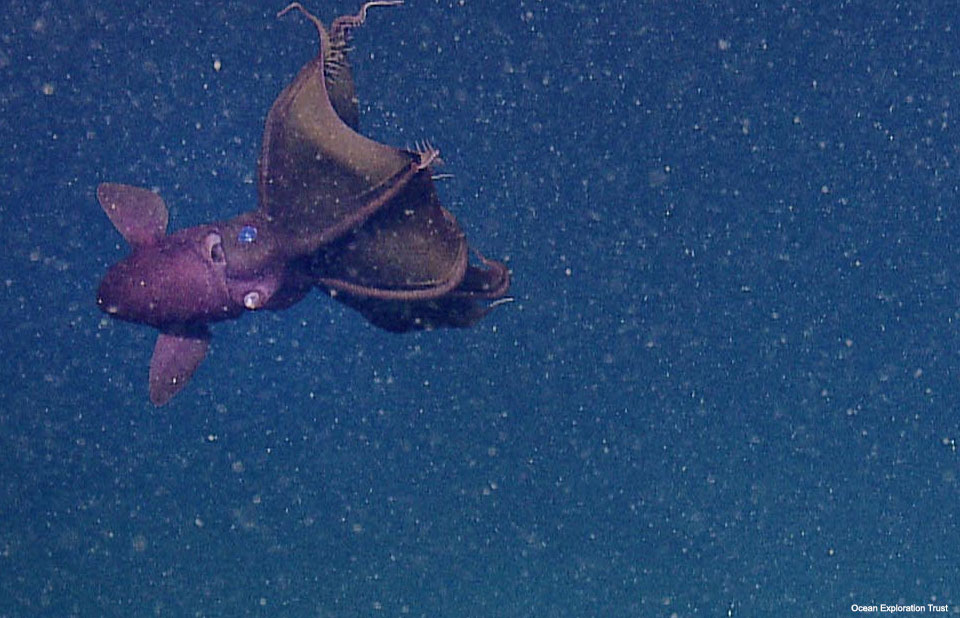
1. The Vampire Squid (Vampyroteuthis infernalis)
Despite its gothic moniker—translated literally as "vampire squid from hell"—Vampyroteuthis infernalis is entirely harmless to humans and does not feed on blood. This small, ancient cephalopod occupies a monotypic taxonomic order, bridging the evolutionary gap between octopuses and squids.
It earned its ominous reputation from its deep maroon skin, webbed arms that can be pulled back over its body like a vampire’s cape, and striking blue eyes. Unlike predatory squids that actively hunt fish, vampire squids are passive suspension feeders. They drift weightlessly in the oxygen minimum zone, suspended by a unique physiological ability to regulate their internal buoyancy to match the surrounding seawater precisely.
Using two long, thin, filament-like sensory threads, they capture "marine snow" drifting through the water column. When threatened, rather than expelling dark ink, they deploy bioluminescent mucus discharged from the tips of their arms, creating a disorienting cloud of glowing light that allows them to escape into the dark.
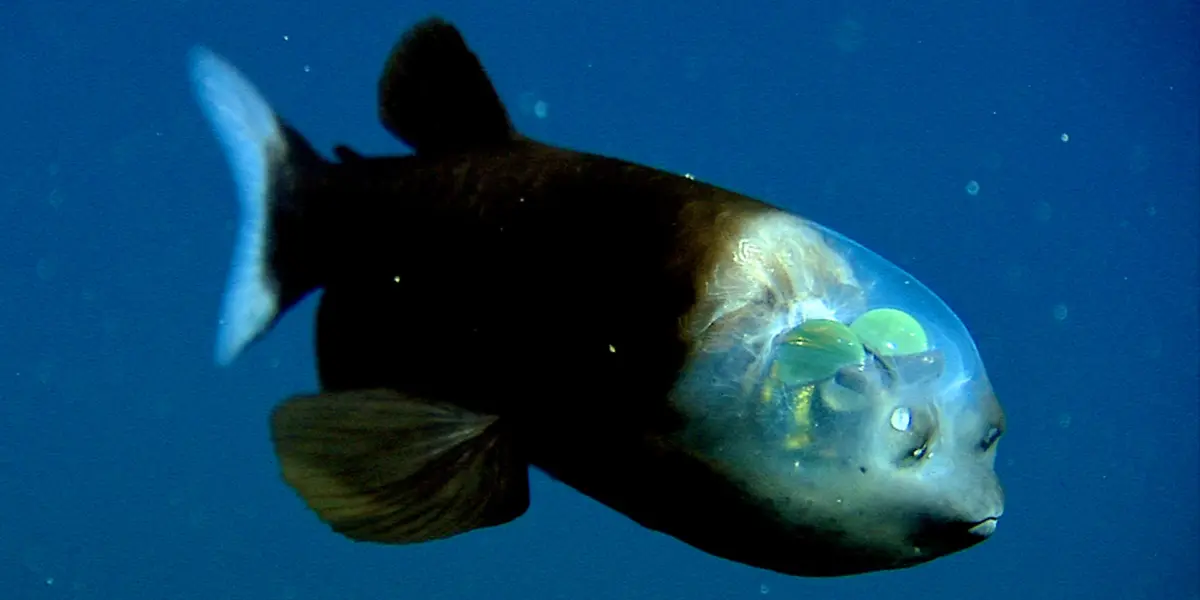
2. The Barreleye Fish (Macropinna microstoma)
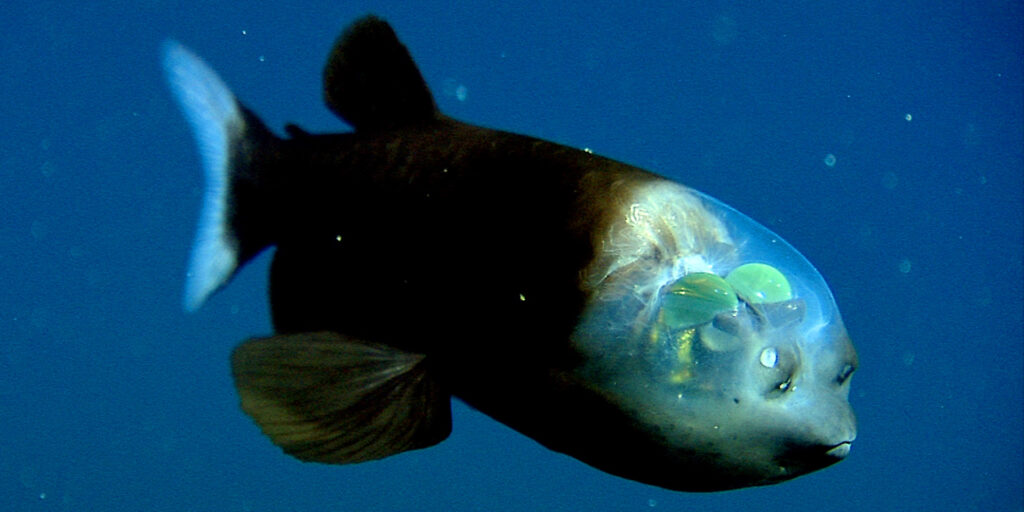
First described in 1939, the barreleye fish remained largely misunderstood for decades because specimens hauled to the surface by nets suffered catastrophic tissue damage, destroying their most remarkable feature: a transparent, fluid-filled dome encasing their head.
It wasn’t until researchers at MBARI successfully observed a living specimen via ROV that the true nature of the barreleye was revealed. Inside its transparent, protective shield sit two glowing, tubular green eyes. These eyes can rotate upward to scan the water column above for the silhouettes of prey against the faint, downward-filtering sunlight, or rotate forward to monitor food intake during feeding. The fluid-filled dome shields these sensitive optical instruments from the digestive toxins of the siphonophores and jellyfish upon which they frequently prey.
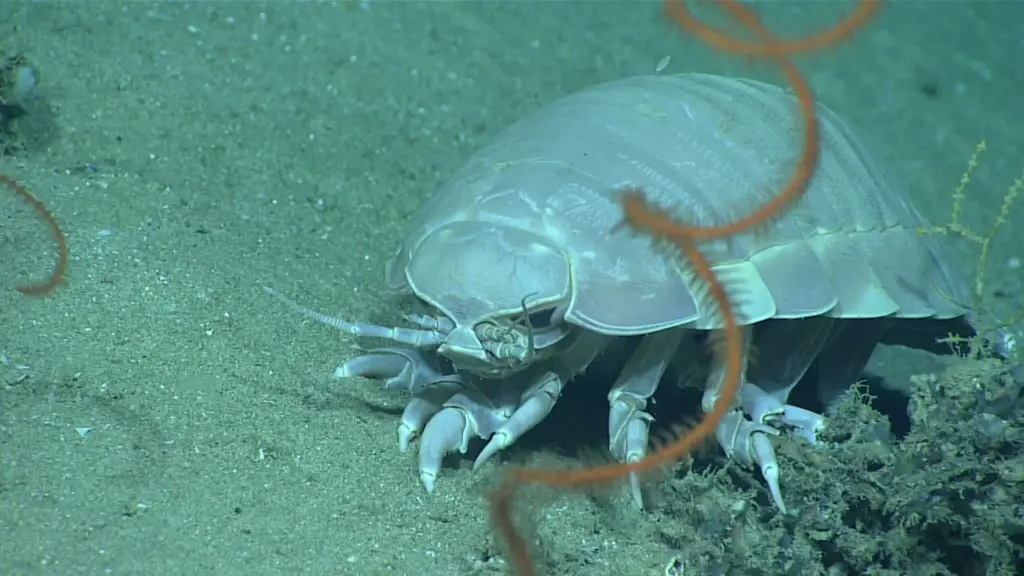
3. The Giant Isopod (Bathynomus giganteus)
Imagine a terrestrial woodlouse (roly-poly) scaled up to the size of a housecat, and you have the giant isopod. Growing up to 16 inches or more in length, these deep-sea crustaceans inhabit the cold, dark ocean floor down to 7,000 feet.
As a classic example of "abyssal gigantism"—a phenomenon where deep-sea invertebrates grow significantly larger than their shallow-water relatives—the giant isopod is armored in hard, segmented chitinous plates. Because food is exceptionally sparse in the benthic zone, these animals are evolutionary marvels of metabolic efficiency. Laboratory observations have shown that giant isopods can survive for years without a substantial meal, entering a state of metabolic slowdown when food is absent.
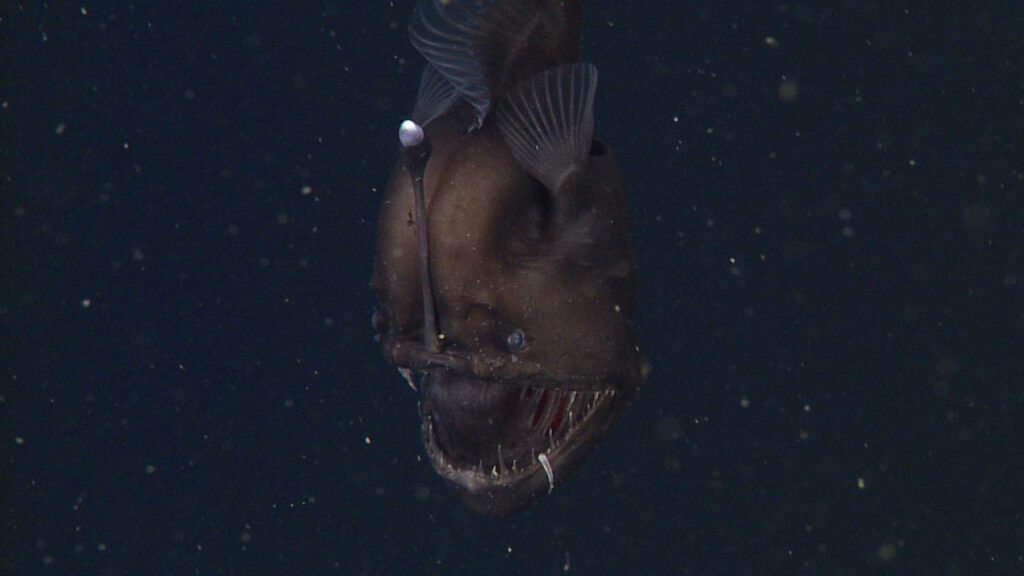
4. The Anglerfish (Order Lophiiformes)
Few creatures embody the cinematic vision of a deep-sea monster quite like the anglerfish, specifically species such as the black seadevil. Found in the bathypelagic zone, female anglerfish feature massive, trap-like jaws lined with translucent, needle-sharp teeth, an expandable stomach capable of swallowing prey larger than themselves, and a dorsal spine modified into a glowing biological lure (the esca).
This lure houses symbiotic, bioluminescent bacteria that emit a bright glow, effectively acting as a fishing line in pitch-black waters to attract curious prey. Perhaps most fascinating is their reproductive strategy: deep-sea males are microscopic compared to females. Lacking functional digestive systems, a male must find a female, bite into her flesh, and fuse with her circulatory system permanently. He degenerates into a mere sperm-producing appendage, ensuring reproduction is guaranteed whenever the female is ready—a brilliant adaptation to the extreme loneliness of the deep.
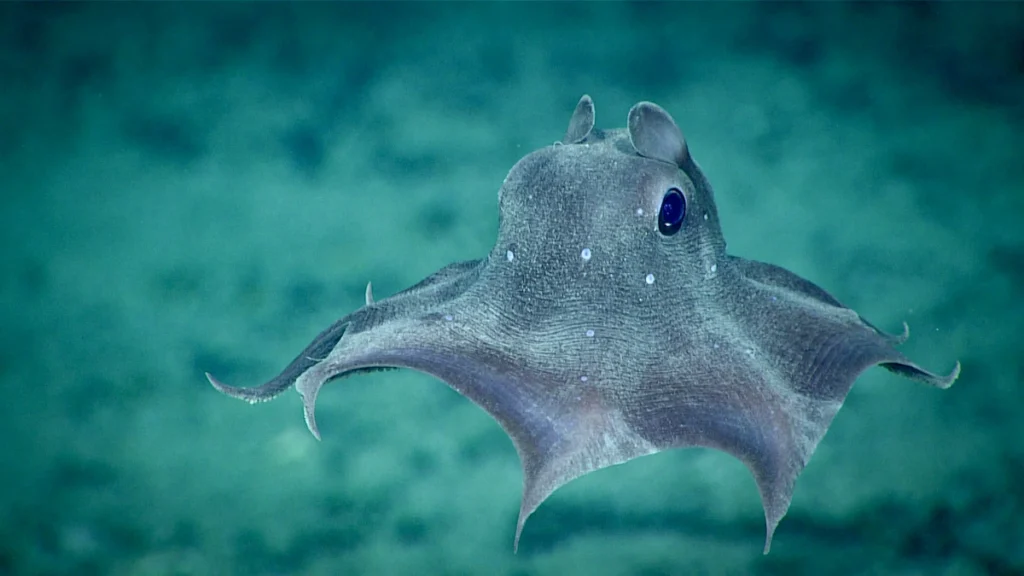
5. The Dumbo Octopus (Genus Grimpoteuthis)
Named after the beloved, big-eared Disney elephant, the dumbo octopus is an umbrella octopus inhabiting the extreme depths of 3,000 to over 13,000 feet, making them some of the deepest-living octopuses known to science.
Measuring a modest 8 to 12 inches on average, these creatures lack the defensive ink sacs and complex color-changing chromatophores typical of shallow-water octopuses. In the perpetual night of the deep, such defenses are largely redundant. Instead, they propel themselves gracefully by fluttering the ear-like fins protruding from their mantles, complemented by gentle pulses of their webbed arms.
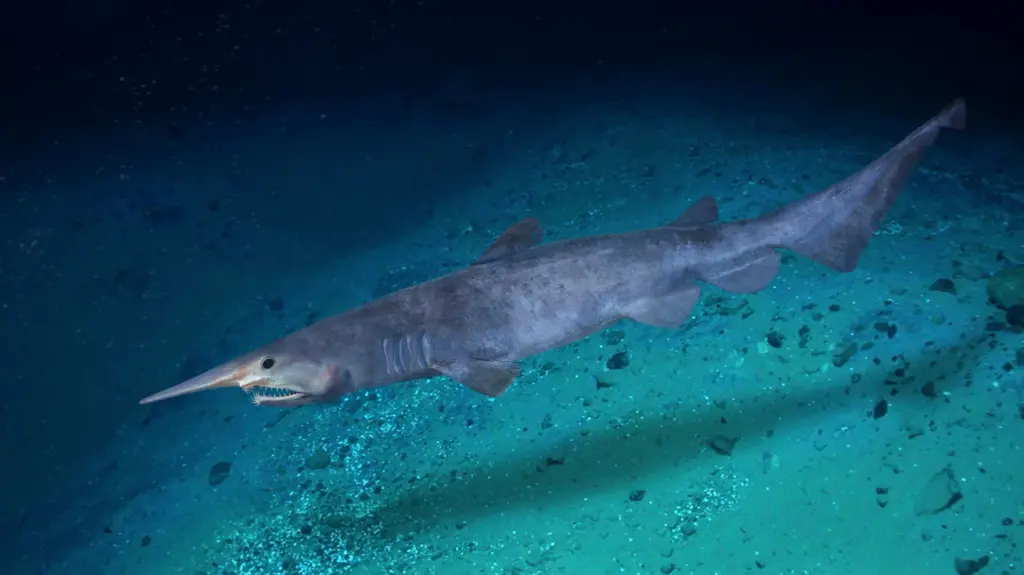
6. The Goblin Shark (Mitsukurina owstoni)
Often termed a "living fossil," the goblin shark is the sole surviving representative of the family Mitsukurinidae, a lineage dating back some 125 million years. With its soft, flabby body, pinkish-gray semi-translucent skin (through which blood vessels are visibly showing), and a distinctive, flattened, elongated snout, its appearance is unmistakably prehistoric.
The goblin shark’s most striking feature is its specialized jaw apparatus. While normally retracted beneath its long snout, its jaw can rapidly shoot forward like a spring-loaded mechanism to snatch passing fish or crustaceans before snapping shut and retracting. Because encounters with humans are exceedingly rare—usually limited to accidental deep-water trawls—much of its behavior remains shrouded in mystery.
7. Gelatinous Zooplankton and Sea Jellies
Not all deep-sea marvels possess hard shells, bones, or scales. The pelagic zones are heavily populated by gelatinous organisms, including deep-sea comb jellies (ctenophores), siphonophores, and scyphozoans that can consist of up to 95 percent water.
Some of these creatures date back over 500 million years, predating the dinosaurs by a massive margin. Lacking brains, blood, and bones, they rely entirely on water pressure and delicate, pulsing muscular contractions to maintain structural integrity. Many deep-sea jellies exhibit breathtaking bioluminescent displays, flashing vibrant neon blues, greens, and reds when disturbed—either to startle predators or to attract secondary hunters to consume their attackers.
Official Statements and Expert Perspectives
Marine conservationists and deep-sea researchers emphasize that our understanding of these organisms is still in its infancy. Dr. Edith Widder, a noted deep-sea biologist and founder of the Ocean Research & Conservation Association (ORCA), has frequently highlighted the importance of preserving these untouched habitats:
"When we look into the deep sea, we are looking at the largest habitat on Earth. The creatures living down there have evolved chemical and physical adaptations that we are only beginning to decipher. Protecting these ecosystems isn’t just about saving individual charismatic species; it’s about preserving the planetary life-support systems that regulate our climate and sequester carbon on a massive scale."
Furthermore, institutions like NOAA Ocean Exploration stress that exploration is inextricably linked to stewardship:
"Every time we send a submersible into the unmapped trenches of the ocean, we discover species new to science. Yet, these habitats face growing threats from climate change, ocean acidification, and prospective deep-sea mining. We cannot protect what we do not understand."
Future Outlook: Conservation and the Unseen Frontier
While these abyssal organisms may seem safely sequestered away from human interference behind miles of crushing pressure and eternal darkness, anthropogenic pressures are increasingly threatening the deep sea. Climate-induced ocean warming, shifting currents, acidification, and the looming specter of deep-sea seabed mining for rare earth minerals threaten to disrupt delicate benthic ecosystems before science has even had the opportunity to document them.
Organizations like the Ocean Conservancy lead ongoing advocacy, policy, and research initiatives designed to safeguard international waters and vulnerable marine habitats. Protecting the ocean requires a multi-pronged approach: establishing marine protected areas (MPAs), regulating commercial fisheries, halting destructive industrial practices, and funding advanced oceanographic exploration.
Ultimately, the bizarre, alien-like creatures of the deep sea are not just isolated curiosities of nature. They are integral components of a vast, interconnected global ecosystem. The deep ocean regulates global climate, cycles nutrients, and houses a reservoir of biodiversity that staggers the imagination. As science continues to pierce the veil of the midnight zone, it becomes increasingly clear that the most incredible discoveries on our planet are still waiting quietly in the dark depths below—reminding us that our own blue planet is far stranger, and more precious, than any science fiction ever conceived.