










Executive Overview
On his first day in office, Mayor Zohran Mamdani stood before New York City and made a sweeping pledge. His administration, he declared, would “replace the frigidity of rugged individualism with the warmth of collectivism,” promising that City Hall would actively leverage its institutional power to materially improve the daily lives of everyday New Yorkers. More than seven months into his tenure, that collectivist ethos faced a curious test—not in the boardroom or the municipal budget, but on social media, via a bicycle helmet.
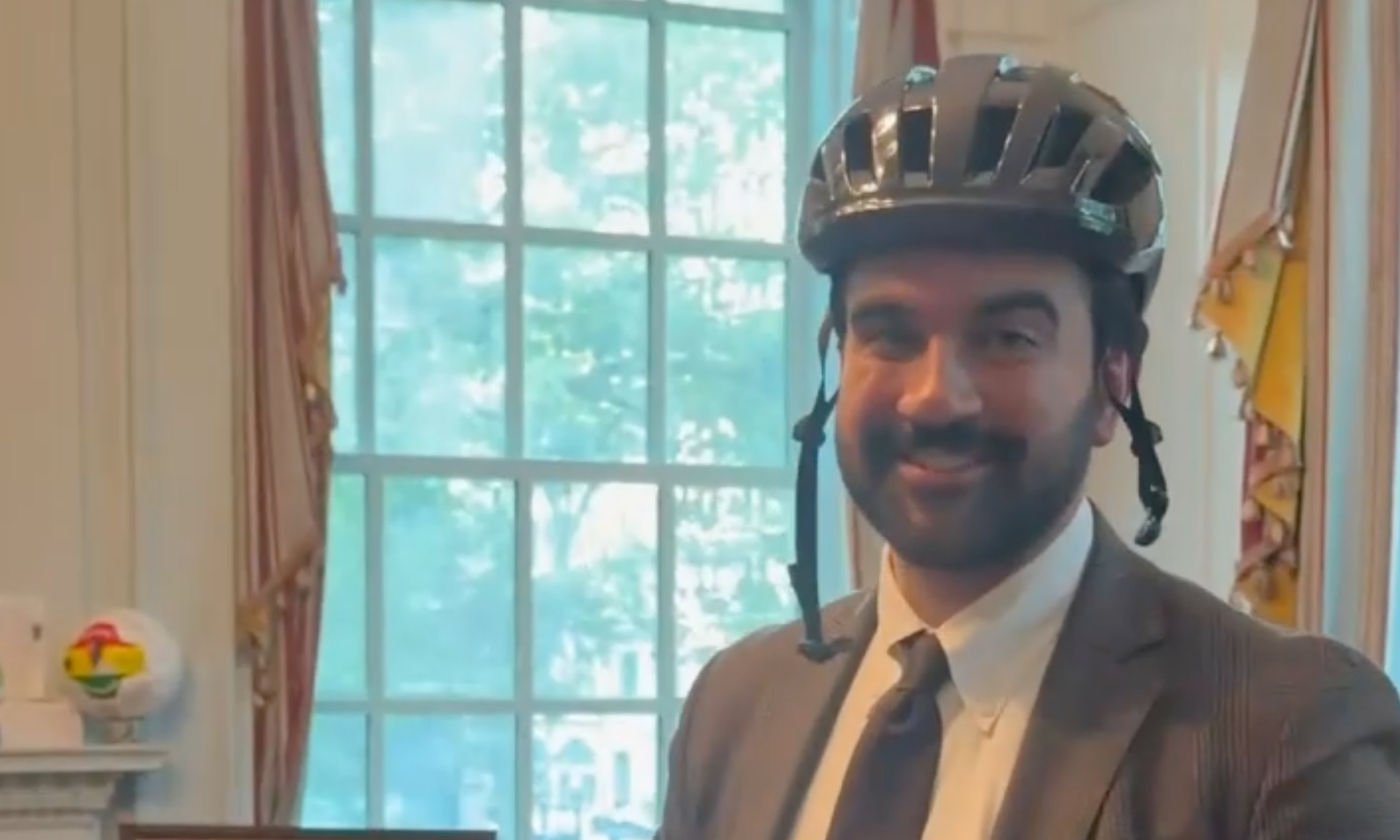
In late August, Mamdani released a short vertical video announcing a personal pivot: he would begin wearing a helmet during his frequent Citi Bike rides across the five boroughs. Yielding to the persistent pleas of constituents, the mayor smiled into the camera and said, “You’re right, I’ve gotta do better. Safety first, New York. See you out there.”
The post struck a viral nerve, exploding across digital platforms and garnering 26 million views on X alone. Mainstream media outlets and city agencies rushed to praise the move. The New York Times lauded the mayor for “finally” donning protective headgear, while the Department of Transportation (DOT) seized the moment to advertise a routine free helmet giveaway. To many observers, the clip encapsulated everything that Mamdani loves about the city—cycling, accessibility, and modern media outreach—and everything the city loves about Mamdani: a sense of approachability and genuine protectiveness around a globally famous executive.
Yet, beneath the wave of viral praise, a darker and more urgent reality overshadowed the moment. Just as the mayor’s video celebrated personal accountability and protective gear, New York City was plunged into a week of unprecedented carnage on its asphalt. Three motorists struck and killed three separate cyclists in less than seven days. None of the offending drivers have been arrested, or even publicly identified, by the NYPD. At least two of the deceased cyclists were wearing helmets when they were struck.
The juxtaposition laid bare a profound tension at the heart of modern urban governance: the dangerous allure of reducing systemic infrastructure failures to matters of personal responsibility. While helmets serve a vital, practical function in low-speed falls or accidents involving electric mobility devices, they are utterly powerless against three-ton motor vehicles operated at lethal speeds. As street safety advocates, urban planners, and grieving communities point out, Mamdani’s helmet video—however well-intentioned or charmingly executed—risks reinforcing a tired, deadly narrative that places the onus of survival on vulnerable road users, while letting municipal governments and reckless drivers off the hook.
Detailed Chronology: A Week of Carnage on Unforgiving Streets
The disconnect between the comforting optics of personal protective gear and the brutal reality of vehicular violence became painfully clear in August, as a horrifying sequence of hit-and-run crashes claimed the lives of three cyclists across Brooklyn and the Bronx.
The Murder of Paulina Tec Choc
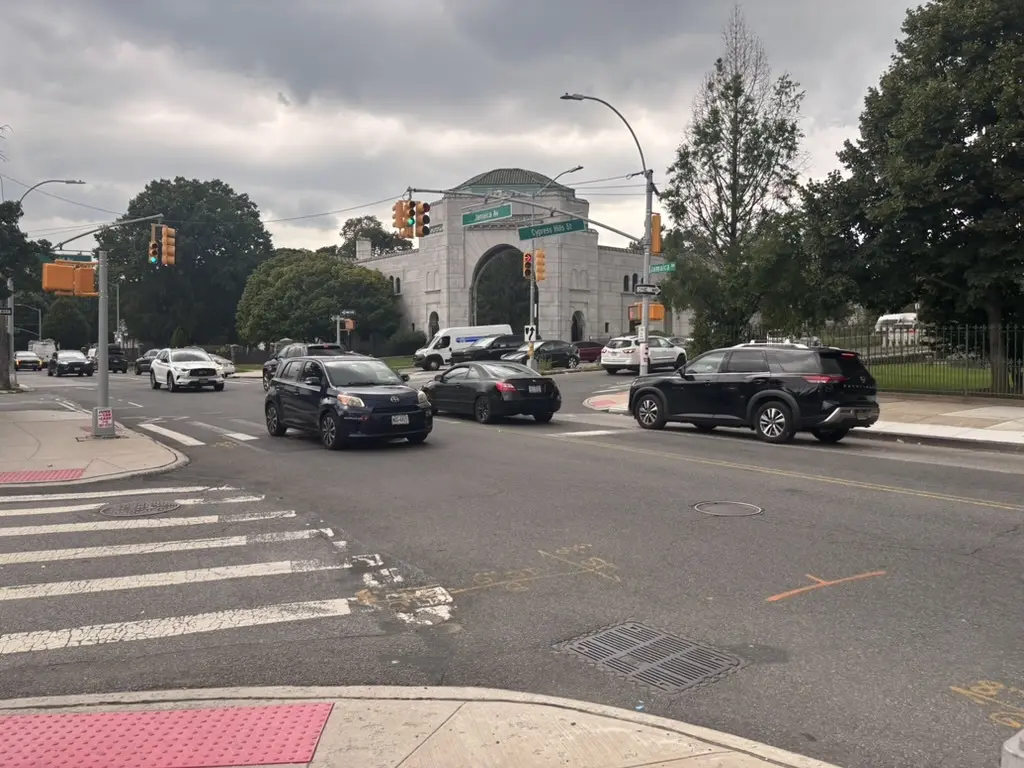
The violence began in Brooklyn. Around 5:50 a.m. on a Tuesday, 29-year-old Paulina Tec Choc was waiting at the corner of Jamaica Avenue and Cypress Hills Street on her electric bicycle. Without warning, a motorist struck her from behind, running her over before fleeing the scene into the early morning gloom.
Tec Choc, who was wearing a helmet, suffered catastrophic trauma to her head and body. She was rushed to a nearby hospital, where she was pronounced dead.
“She always wore a helmet,” her grieving employer, Osman Cevallos, told reporters.
According to data compiled by CrashMapper, the intersection where Tec Choc lost her life is a notorious hotspot for danger, having recorded 57 reported crashes that injured 29 people—including three cyclists and four pedestrians—over the preceding five years. While the DOT’s official map indicates that Cypress Hills Street features a protected cycling lane, the physical infrastructure is shockingly deceptive: only a thin layer of paint marks the corner where Tec Choc was struck. The rest of the intersection functions as a classic New York “car sewer”—wide, sweeping roadways paired with slip lanes and two-way traffic designed to encourage high speeds and driver carelessness.
The Tragedy at Bruckner Boulevard
Just days later, the violence struck the Bronx. Shortly before 9:30 p.m., a speeding motorist blew straight through a red light at the intersection of Bruckner Boulevard and Longwood Avenue. The driver smashed into multiple vehicles, initiating a violent chain-reaction crash that killed 51-year-old Angelo Camero, a father of five who was simply cycling home from work. A 37-year-old woman in one of the impacted cars was also seriously injured.
The location of Camero’s death underscores the systemic failures of municipal street design. While the intersection boasts a two-way bike path on the sidewalk, it is entirely ringed by excessively wide roadways that induce reckless, high-speed driving. Since 2022, the intersection has been the site of 139 reported collisions, resulting in injuries to three additional cyclists, a pedestrian, and 113 motorists and passengers. The driver responsible for Camero’s death fled the scene and remains at large.
The Death of Mamadou Diallo
Before the city could process the first two tragedies, a third cyclist was killed in a carbon-copy collision. Mamadou Diallo, a 40-year-old resident of Brooklyn, was making a legal left turn at East 54th Street and Avenue I when the driver of a BMW sedan slammed directly into him. Diallo, too, was wearing a helmet at the time of the impact.
While the intersection at East 54th Street and Avenue I has seen fewer formally documented crashes than the other two sites—logging five collisions resulting in two injuries over a five-year span—its physical layout remains entirely devoid of protective infrastructure for non-motorized travelers, a glaring omission given its proximity to a local school.
Across all three fatal incidents, a chilling pattern emerges: motorists mowing down vulnerable road users, fleeing the scene without consequence, and leaving behind grieving families while city streets remain engineered for vehicular speed rather than human survival.
Supporting Context & Metrics: The False Promise of the "Helmet Fixation"
To understand why safety advocates reacted with sharp criticism to the mayor’s viral video, one must examine the decades-long cultural and political fixation on bicycle helmets in the United States.
The Limits of Personal Protective Equipment
There is no medical debate regarding the efficacy of helmets in specific scenarios. Clinical data demonstrates that properly fitted bicycle helmets can reduce the risk of severe head injury by up to 88 percent. For users of high-speed electric mobility devices—such as e-bikes and e-scooters, which can rapidly achieve velocities far exceeding traditional acoustic bicycles—head trauma is a very real, existential threat.
“Helmets are great,” notes Jessie Singer, an investigative journalist and author who has extensively chronicled systemic failures in public safety. “Helmets serve a practical function of protecting your head if you fall off your bike and hit the asphalt—[but] even the manufacturers of helmets will tell you that they’re not made [to protect cyclists from] cars.”
When a three-ton SUV or speeding delivery truck collides with a human body, a polystyrene-and-plastic shell offers negligible defense against massive kinetic energy, internal organ failure, and crushing trauma.
Global Perspectives on Cycling Infrastructure
Academic research consistently shows that obsessive campaigns focusing on helmet use correlate inversely with actual road safety. Studies have found that individuals are far more likely to wear protective gear in countries like the United States, where cycling infrastructure is notoriously hazardous, than in nations with world-class urban design.
In cycling havens such as Amsterdam and Copenhagen, where municipal governments have engineered streets specifically to separate bicycles from heavy motor traffic, helmets are rarely worn by everyday commuters, yet crash and injury rates remain exceptionally low.
Conversely, regions that have enacted mandatory helmet laws—such as several Canadian provinces—have failed to register any statistically significant drop in overall injury rates. Sociological analyses point out that American civic institutions routinely couple helmet campaigns with car-first policies. This dynamic tacitly upholds a culture of "unfettered automobility," shifting the psychological and legal burden of survival onto the victim.
“We are as a nation eternally distracted by the idea that personal responsibility can save us so that we can excuse widespread preventable death,” Singer explained. Campaigns focused on individual gear are, in her view, a psychological coping mechanism for the public: “They’re looking to comfort themselves. It’s a way of saying, ‘This couldn’t happen to me, I know better.’”
Official Statements: Navigating Public Relations and Policy
The administration’s dual push—promoting personal protective gear while simultaneously accelerating structural road redesigns—has placed City Hall in a delicate political balancing act.
Jeremy Edwards, a spokesperson for the Mamdani administration, forcefully defended the mayor’s approach, arguing that New Yorkers should not be forced to choose between individual precautionary measures and systemic infrastructure reform.
“New Yorkers shouldn’t have to choose between wearing helmets that help protect against head injuries and infrastructure designs that reduce fatalities and ensure that everyone is protected when using our roads,” Edwards said. “This administration is providing both, and we will continue to do so.”
Administration defenders point to concrete policy shifts since Mamdani took office. In stark contrast to the car-centric legacy of his predecessor, Eric Adams—whose administration repeatedly delayed or abandoned critical pedestrian and cycling safety initiatives—Mamdani’s DOT has aggressively relaunched stalled bus lane and protected bike lane projects across the boroughs.
Yet street safety advocates argue that messaging matters, particularly when executed by a charismatic executive with unprecedented digital reach.
“I’d rather he’d keep the focus on institutional solutions to this public health crisis,” said Doug Gordon, co-host of The War on Cars podcast. “There’s almost never good timing for an elected official to post a helmet video in a city where you have an average of one or two cyclists or pedestrian fatalities every other day.”
Ben Furnas, executive director of Transportation Alternatives, acknowledged the conflicting optics while finding some silver lining in the mayor’s cultural influence. “I thought the mayor’s video was cute and I actually see it as his mainstreaming of bicycling,” Furnas said, while quickly pivoting back to core fundamentals. “Overwhelmingly, the threats for cyclists are from cars, and there’s a very limited amount of things a helmet can do when you’re struck by a driver.”
Future Outlook: The Fight for New York’s Asphalt
As New York City reels from the devastating loss of Paulina Tec Choc, Angelo Camero, and Mamadou Diallo, the pressure on Mayor Mamdani’s administration has reached a critical juncture.
In response to the recent spate of vehicular homicides, Transportation Alternatives organized a high-visibility “die-in” protest at City Hall Park, demanding that the administration unveil an emergency, comprehensive action plan to curb traffic violence. Activists are demanding structural accountability that goes far beyond painted lines and public service announcements: concrete-protected intersections, automated speed enforcement cameras running 24/7, aggressive NYPD crackdowns on hit-and-run motorists, and the complete elimination of architectural car sewers that prioritize suburban commuter throughput over urban human life.
Mamdani came to office promising to replace rugged individualism with collectivism. For the thousands of New Yorkers who navigate the city’s treacherous streets every day on foot and on two wheels, the ultimate test of that collectivist philosophy will not be found in the viral reach of a social media video, but in the physical transformation of the asphalt beneath their tires. Until the city’s streets are engineered to guarantee safety regardless of what a commuter chooses to wear on their head, the fundamental crisis of traffic violence will remain unresolved.