








Executive Overview
In the fast-paced, high-stakes world of public transportation, the spotlight is frequently—and understandably—shines on the vehicles themselves: their reliability, their efficiency, and their passenger capacity. Yet, far away from the public eye, the heartbeat of any transit or paratransit operation lies within its maintenance garages and repair shops. It is in these industrial environments that mechanics, technicians, and service staff face immense daily hazards to keep those fleets rolling safely down our streets.
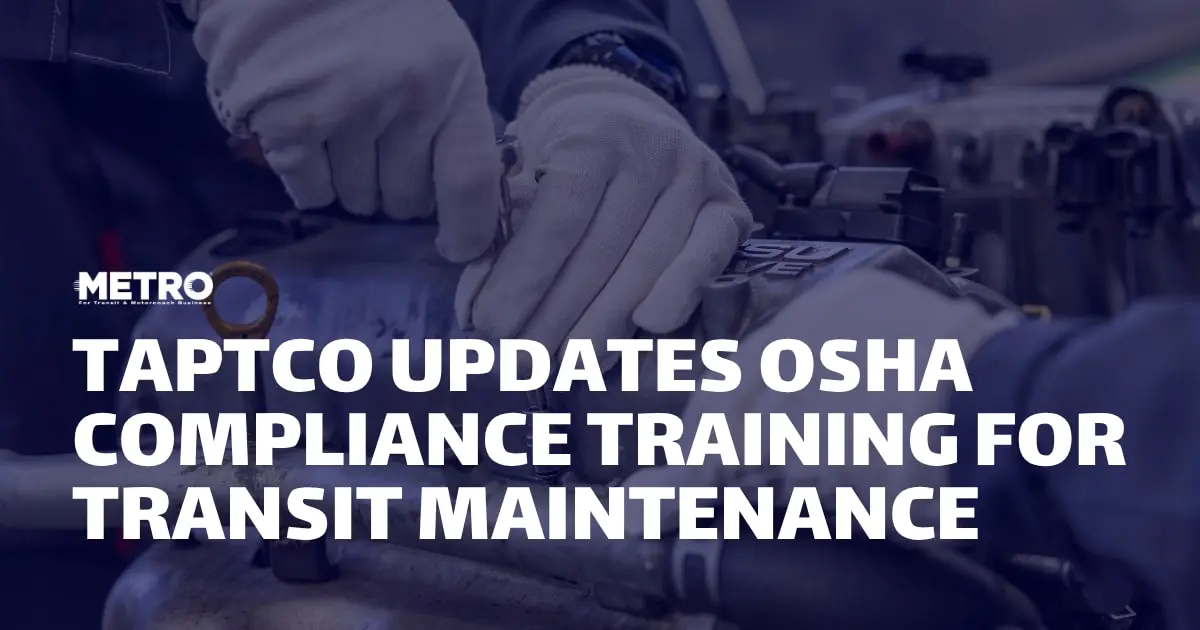
Recognizing an urgent need to modernize and streamline how transit agencies approach workplace safety, the Transit and Paratransit Company (TAPTCO) has officially launched a comprehensive, ground-up overhaul of its flagship OSHA Compliance Training Course. This sweeping update replaces a legacy curriculum that had been in active deployment across the industry for approximately 15 years.
The newly redesigned program is an all-encompassing resource meticulously crafted to give transit shop managers a single, unified framework for managing workplace safety and regulatory compliance. Spanning 26 distinct OSHA standards specifically applicable to heavy-duty maintenance facilities, alongside three targeted safety modules for drivers, the curriculum addresses the complex realities of modern transit operations.
According to TAPTCO President Jeff Cassell, the catalyst for this massive modernization project was twofold: the relentless march of technological and regulatory changes over the past decade and a half, and persistent, constructive feedback from industry users. The old guides, while functional for their era, had become structurally dated, visually unappealing, and difficult to navigate. The new program bridges this gap by offering a modernized, highly intuitive, and practical toolkit designed to transform abstract federal mandates into day-to-day operational reflexes.
By combining rigorous safety standards with actionable, step-by-step administrative guides, TAPTCO’s revamped course aims to solve one of the most stubborn challenges in the transit sector: bridging the gap between simply having written safety policies on a shelf and actually executing, tracking, and documenting life-saving training in a high-pressure shop environment.
Detailed Chronology: The Evolution and Overhaul of a Legacy Program
To understand the magnitude of TAPTCO’s recent release, one must examine the timeline of transit safety education over the past generation. For roughly fifteen years, TAPTCO’s original OSHA compliance training served as a foundational pillar for numerous transit and paratransit properties across North America. During that timeframe, however, the landscape of industrial safety shifted dramatically.
The 15-Year Gap in Legacy Training
When the original program was first penned and distributed fifteen years ago, the transit industry operated in a markedly different technological ecosystem. While core mechanical principles—such as heavy lifting, fluid management, and electrical systems—remained constant, the nuances of occupational safety, hazard communication, environmental compliance, and record-keeping underwent significant regulatory evolution.
Over the years, transit operators and maintenance managers increasingly reported to TAPTCO that the legacy training materials were showing their age. While the technical content remained broadly relevant, the accompanying user guides, reference manuals, and instructional formats were described as antiquated and overly cumbersome. In an industry where maintenance personnel are chronically pressed for time, poorly structured training guides present a severe barrier to consistent implementation.
The Development Phase: Listening to the Industry
Prompted by direct user feedback and an internal review of evolving Occupational Safety and Health Administration (OSHA) expectations, TAPTCO leadership initiated a comprehensive modernization project. The goal was not merely to update a few pages of text, but to rebuild the curriculum from the ground up to reflect the realities of the modern 21st-century transit garage.
The development phase focused heavily on usability, clarity, and administrative efficiency. TAPTCO recognized that for a safety program to be successful in a bustling, high-turnover maintenance shop, it had to be radically user-friendly. The resulting curriculum streamlines complex legal jargon into digestible, operationalized action plans that shop managers can implement immediately without needing an advanced degree in safety administration.
Rollout and Implementation
The newly released program is now fully available to transit and paratransit agencies nationwide. Designed for seamless integration into existing staff meeting schedules, the curriculum is structured so that all 26 safety programs can be systematically delivered through four focused, 75-minute sessions, totaling just five hours of instruction per year.
This chronological progression—from a 15-year-old legacy system to a dynamic, streamlined, 21st-century compliance toolkit—marks a pivotal milestone in TAPTCO’s ongoing mission to elevate industry-wide safety standards.
Supporting Context & Metrics: Navigating the Hazards of the Bus Maintenance Garage
Bus maintenance garages are, by their very nature, high-risk industrial environments. Unlike standard corporate offices or light-assembly manufacturing plants, transit shops combine heavy machinery, massive vehicular weight, hazardous chemicals, high-voltage electrical systems, and dynamic physical labor into a single, enclosed workspace.
The Anatomy of Garage Hazards
To appreciate the scope of TAPTCO’s updated training course, one must examine the sheer breadth of physical and chemical hazards cataloged within the 26 OSHA standards covered by the program. These include, but are not limited to:
- Lifts, Pits, Jacks, and Stands: The quintessential hazard of the transit garage. Servicing heavy-duty transit buses—which often weigh upwards of 30,000 to 40,000 pounds fully loaded—requires lifting equipment operating under extreme loads. A failure in lift maintenance, improper positioning of jack stands, or a mismanaged inspection pit can result in catastrophic crushing injuries or fatalities.
- Lockout/Tagout (LOTO): Because transit buses and shop machinery utilize multiple energy sources (electrical, pneumatic, hydraulic, and mechanical), mastering the control of hazardous energy is non-negotiable.
- Hazardous Materials & Chemical Safety: Technicians routinely handle corrosive battery acids, volatile cleaning solvents, heavy-weight lubricants, coolants, and toxic exhaust byproducts. Proper labeling, Personal Protective Equipment (PPE), and immediate spill-containment protocols are critical.
- Slip, Trip, and Fall Hazards: As TAPTCO President Jeff Cassell noted, maintaining a tidy shop is an ongoing war of attrition. Oil leaks, discarded cables, moisture tracked in from inclement weather, and misplaced air hoses transform shop floors into hazardous obstacle courses.
- Confined Spaces & Welding: Maintenance personnel frequently work inside restricted areas—such as vehicle interior compartments or subterranean maintenance vaults—where ventilation, atmospheric monitoring, and hot-work permits are vital for survival.
- Electrical Hazards & Machine Guarding: With the rapid adoption of hybrid and fully electric transit fleets, the presence of high-voltage high-amperage electrical systems has introduced entirely new risk vectors into traditional maintenance bays.
The Training and Documentation Deficit
Beyond physical safety, TAPTCO’s initiative highlights a sobering operational reality: having a safety policy on paper is worlds apart from enforcing it on the shop floor.
According to industry observations cited by Cassell, many transit operations fall into a reactive compliance cycle. Too often, agencies make a token effort toward OSHA compliance—filing away generic safety manuals to check a bureaucratic box—only to invest serious time and resources after an accident, injury, or federal audit has already occurred.
Compounding this issue is the administrative burden of tracking and documentation. Maintenance managers are inherently action-oriented; their primary focus is keeping buses repaired and returned to active revenue service. Consequently, carving out dedicated time for formal safety meetings and maintaining meticulous, up-to-date training logs frequently falls by the wayside.
TAPTCO’s updated course directly targets this vulnerability by providing built-in administrative tools—such as action plans, checklists, and a dedicated compliance calendar—designed to make documentation as frictionless as possible.
Official Statements and Expert Insights
To gain a deeper perspective on the philosophy driving TAPTCO’s new program, industry leaders have shared critical insights regarding the intersection of regulatory compliance, corporate culture, and human behavior.
Jeff Cassell on the Reality of Garage Dangers
Highlighting the inherent risks of daily transit maintenance operations, TAPTCO President Jeff Cassell offered an unvarnished assessment of shop-floor realities during an interview with industry media:
"By their very nature, bus maintenance garages are risky places. There’s lots of equipment around; cables, air hoses, chemicals, etc. The biggest challenge is staying as tidy as you can and avoiding oil or other chemical spills. Using lifting equipment safely at all times is essential. Lifts, pits, and jacks are also very risky for a very heavy bus."
Cassell emphasized that physical safety cannot be left to chance or informal, ad-hoc mentoring between senior and junior mechanics. It requires structured, repeatable education delivered consistently across the entire workforce.
The Five-Hour Solution to Chronic Non-Compliance
Addressing the common industry lament that managers simply "do not have the time" for exhaustive safety training, Cassell outlined the practical architecture of TAPTCO’s curriculum:
"In my experience, many shops do not comply with OSHA requirements, or they make a token effort, until something goes wrong. All 26 safety programs in our OSHA Compliance course can be delivered in four 75-minute meetings totaling five hours. This training should be provided to all shop workers once per year. The biggest challenge is actually taking the time to provide the training and keeping the documentation up-to-date."
Bridging Action Plans and Accountability
To ensure that busy managers can bridge the gap between intent and execution, the program’s Process Guide was engineered to provide absolute clarity. In formal announcements regarding the launch, Cassell explained the philosophy behind the guide:
"The Process Guide includes action plans and checklists with step-by-step instructions detailing what you must do to be in compliance. Simply put, if you follow all the action plans and document the steps taken, you’ll be in compliance, and your technicians will be safer. It’s that simple."
Beyond the Letter of the Law: The Moral Imperative of Safety
Perhaps the most profound philosophical stance taken by TAPTCO leadership centers on the limits of statutory mandates. While federal OSHA regulations dictate baseline legal requirements, Cassell argues that ethical and operational standards must extend far beyond what is legally mandated by the letter of the law:
"Some locations are exempt from complying with federal regulations. However, many states have similar rules, and the safety of the technicians and drivers in every bus operation deserves the same high level of safety whether it is required or not. Doing the right thing and protecting your employees should be the standard, not the regulations."
This perspective reframes safety compliance not as an external regulatory burden imposed by government bureaucrats, but as a core moral and professional obligation that transit leadership owes to its front-line workforce.
Future Outlook: Raising the Bar for Industry-Wide Transit Safety
As public transportation agencies navigate the complex challenges of the 2020s—ranging from workforce shortages and technological transitions to aging infrastructure—the introduction of TAPTCO’s updated OSHA compliance training arrives at a critical juncture.
The Impending Fleet Electrification Wave
Looking ahead, the transit maintenance garage is undergoing its most radical transformation in a century. The rapid deployment of zero-emission fleets—comprising battery-electric buses (BEBs) and hydrogen fuel cell vehicles—means that tomorrow’s transit mechanics must navigate high-voltage DC systems, chemical reactivity associated with lithium-ion thermal events, and specialized high-pressure gas containment protocols.
While TAPTCO’s current curriculum addresses the foundational 26 OSHA standards essential for legacy and mixed fleets, the establishment of robust, disciplined safety habits today serves as the indispensable baseline for the technological complexities of tomorrow. Agencies that master basic lockout/tagout, chemical handling, and lift safety today will be infinitely better prepared to manage the advanced technological hazards of fully electrified fleets.
Shifting from Reactive to Proactive Safety Cultures
The long-term impact of TAPTCO’s overhaul will ultimately be measured by how effectively transit agencies utilize its administrative tools to transition from a reactive safety posture to a deeply ingrained proactive culture.
By shrinking the annual training requirement into a manageable five-hour investment spread across four quarterly or periodic meetings, TAPTCO has dismantled the excuse of time scarcity. Furthermore, by equipping managers with clear checklists, action plans, and compliance calendars, the program removes the guesswork from regulatory record-keeping.
Conclusion: Protecting the Protectors of Public Transit
Every single day, millions of commuters board buses and paratransit vehicles with the reasonable expectation that they will arrive safely at their destinations. That daily miracle of mass mobility is made possible entirely by the unseen, tireless labor of mechanics, technicians, and service bay workers who toil in the background.
By modernizing its OSHA compliance training course after 15 years, TAPTCO has provided the transit industry with a vital instrument to protect those who protect the traveling public. As transit agencies evaluate their internal operating procedures in the coming months, adopting such streamlined, rigorous, and user-friendly safety programs will no longer be viewed as an optional administrative exercise. Instead, it will be recognized as the absolute gold standard of responsible transit leadership—ensuring that every worker goes home safe, shift after shift, year after year.