







Executive Overview
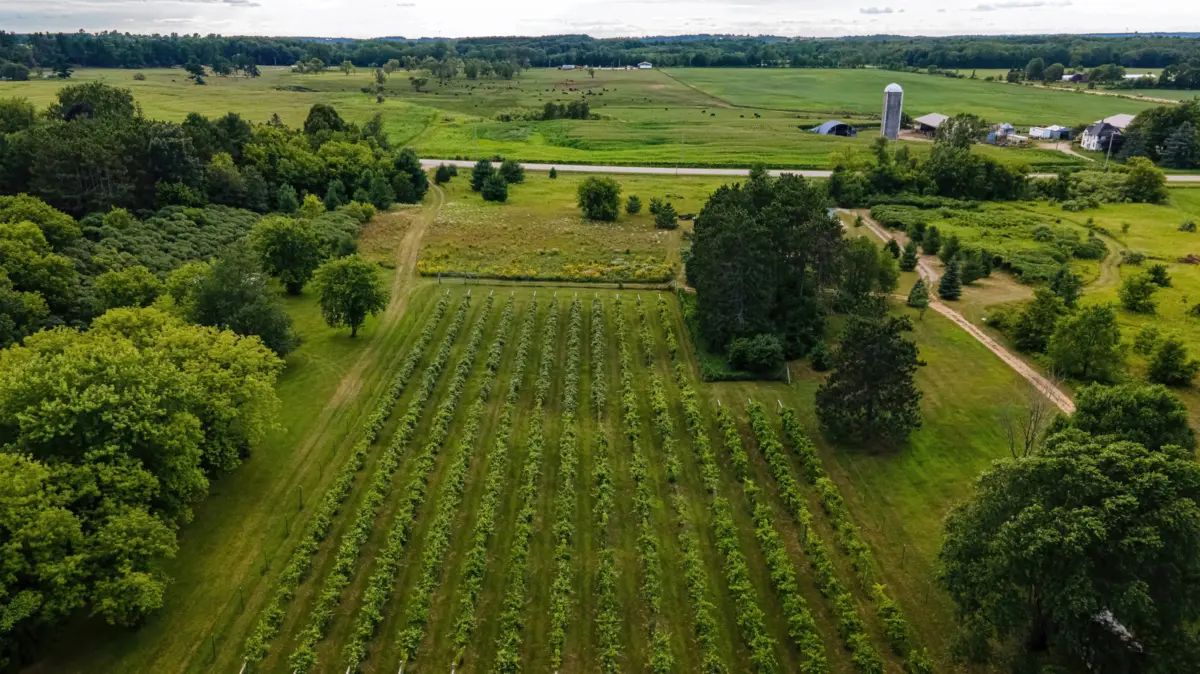
For decades, the American wine lexicon has been anchored by the Mediterranean-esque microclimates of California’s coastal valleys. Mention "wine country" to an oenophile, and visions of Napa Valley’s Cabernet Sauvignons or Sonoma County’s cool-climate Chardonnays immediately come to mind. However, a quiet revolution is taking place far from the West Coast, situated in a topographical anomaly that spans parts of southwest Wisconsin, southeastern Minnesota, northeastern Iowa, and northwestern Illinois. Known as the Driftless Area, this 24,000-square-mile expanse has emerged as one of the most compelling and rapidly evolving wine frontiers in the United States.
Recognized by industry publications like VinePair as a top underrated wine region to watch, the Driftless Area is redefining what is possible in cold-climate viticulture. Rather than trying to replicate the grape varieties and operational models of traditional powerhouse regions, vintners here are leaning into the area’s unique geological and climatic traits. By harnessing cold-hardy hybrid grape varieties developed specifically to withstand punishing Midwestern winters, and by capitalizing on limestone-rich soils and dramatic topography, this region is transforming from a novelty into a premier destination for wine enthusiasts, sommeliers, and travelers alike.
Detailed Chronology: From Glacial Omission to Modern Viticultural Frontier
To understand the rise of the Driftless Area as a wine hotspot, one must first examine the prehistoric forces that shaped its landscape.
- The Prehistoric Era: During the last glacial period (the Wisconsin glaciation), massive ice sheets advanced across North America. Uniquely, the glaciers largely bypassed a roughly 24,000-square-mile pocket in the Upper Midwest. Because this land was left untouched by the grinding, leveling action of glacial drift—hence the term "Driftless"—it retained an ancient, rugged topography. While much of the surrounding Midwest was flattened into agricultural plains, the Driftless Area developed deep river gorges, steep limestone bluffs, dense networks of cold-water streams, and abundant groundwater springs.
- The 19th Century (Pioneer Roots): Viticulture in this part of the country is not entirely new. In the mid-19th century, Hungarian immigrant and pioneer Agoston Haraszthy planted grapevines in Prairie du Sac, Wisconsin—establishing what would become Wollersheim Winery—before heading west to plant the roots of California’s legendary Sonoma Valley wine industry. However, subsequent generations of Midwest winemaking largely drifted away from premium table wines, focusing instead on sweet fruit wines and native Vitis riparia vines that could survive brutal winters but produced notoriously high-acid, low-sugar juices unsuited for traditional winemaking.
- The Late 20th Century (The Breeding Breakthrough): Recognizing the agricultural potential of the Upper Midwest, American grape breeders embarked on decades of methodical agricultural research. By crossing the frost-resistant native Vitis riparia with hardy, disease-resistant French hybrid grapes, horticulturists successfully developed a new generation of cold-climate wine grapes. Varieties such as St. Croix, St. Pepin, Frontenac, Marquette, and La Crescent were born, offering complex flavor profiles capable of thriving in extreme sub-zero winter temperatures.
- 2009 (The Establishment of the Upper Mississippi River Valley AVA): A monumental milestone for the region occurred when the Alcohol and Tobacco Tax and Trade Bureau officially established the Upper Mississippi River Valley American Viticultural Area (AVA). Spanning nearly 30,000 square miles across Wisconsin, Minnesota, Iowa, and Illinois, it immediately became one of the largest AVAs in the United States, placing the Driftless Area on the national winemaking map and signaling to the industry that this was a distinct, cohesive wine-growing ecosystem.
- Present Day (The New Frontier): Today, the region is experiencing a renaissance. As profiled by wine professionals and culinary guides in 2025, the Driftless Area is attracting serious attention from master sommeliers and travelers looking for authenticity, value, and terroir-driven wines that cannot be replicated anywhere else in the world.
Supporting Context & Metrics: Terroir, Economy, and Geography
The success of the Driftless Area’s wine industry is inextricably linked to its unique geography and the broader agricultural infrastructure of the Upper Midwest.
The Science of Cold-Hardy Terroir
Traditional wine grapes (Vitis vinifera) thrive in regions with Mediterranean climates—characterized by mild, wet winters and dry, warm summers—such as those found in parts of California, France, and Italy. The Driftless Area presents the exact opposite climate profile: short, warm summers bookended by long, harsh, and freezing winters.
Yet, the region possesses distinct environmental advantages:
- Limestone-Rich Soils: Much like the famed vineyards of Burgundy or Champagne, the Driftless Area features prominent limestone and dolomite bedrock, which imparts distinct minerality and structure into the grapes.
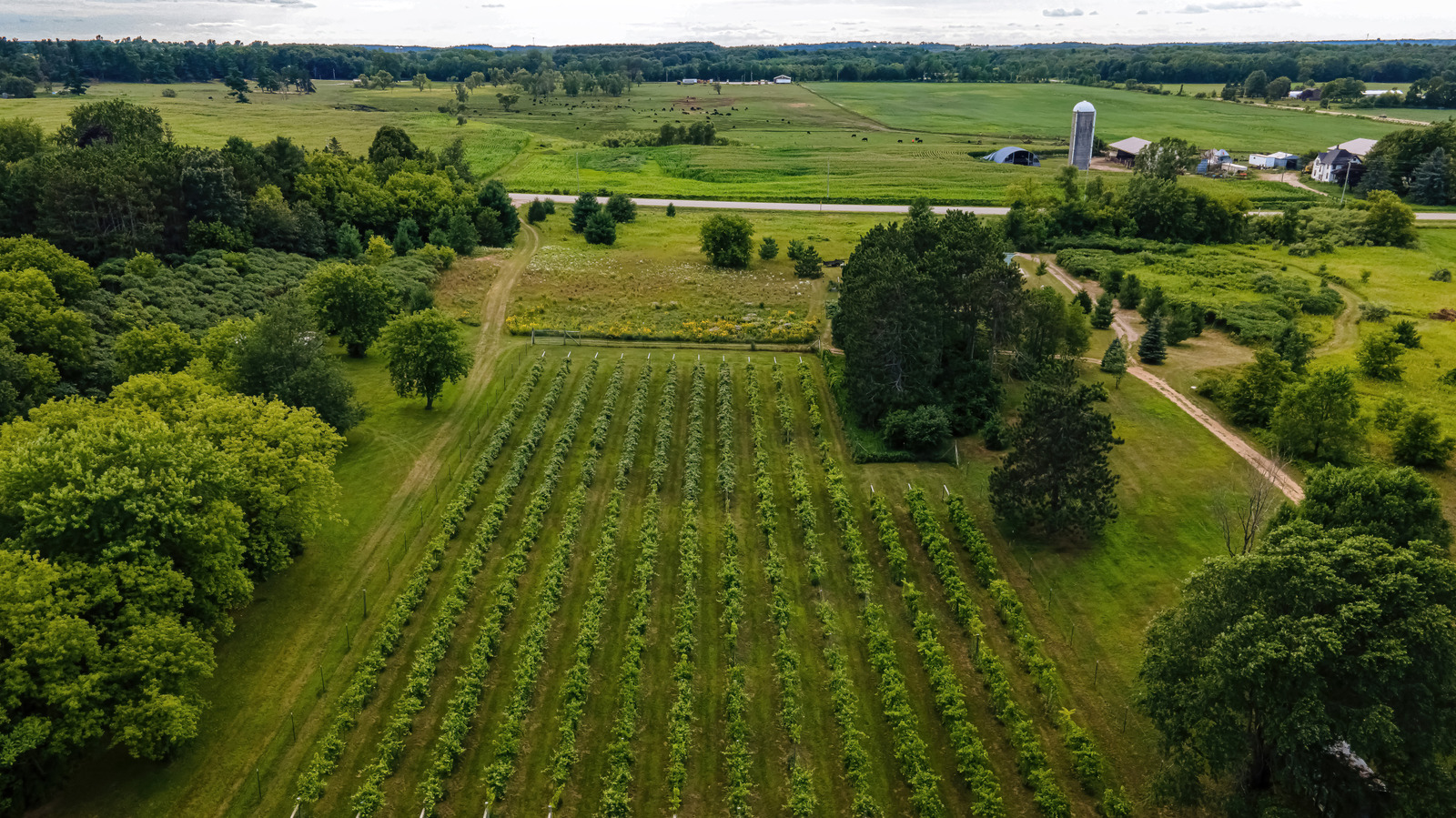
- Air Drainage: The region’s steep bluffs and deep valleys create natural air drainage channels, protecting vineyards from late spring and early autumn frosts by allowing cold air to flow downward away from the vines.
- Geographic Scale: Approximately 75% of the Driftless Area resides within Wisconsin, a state with an entrenched agricultural identity. Wisconsin acts as a powerhouse for dairy production—boasting a legendary cheese economy—which provides a built-in culinary synergy for local wine producers. The state features five distinct geographic wine regions, anchored heavily by the Upper Mississippi River Valley AVA and the nested Lake Wisconsin AVA.
Economic and Tourism Metrics
- AVA Scale: At nearly 30,000 square miles, the Upper Mississippi River Valley AVA is larger than several U.S. states, encompassing hundreds of miles of the Mississippi River corridor.
- Trail Tourism: Regional tourism initiatives have codified the wine experience. The Great River Road Wine Trail spans across state lines from Wisconsin down into Iowa and Minnesota, while the Driftless Wisconsin Wine & Cheese Trail bridges Madison and La Crosse, weaving together historic wineries and artisan creameries like Arena Cheese and Nordic Creamery.
- National Context: While California remains an undisputed titan—producing approximately 80% of all U.S. wine and ranking as the fourth-largest wine producer in the world globally—regions like the Driftless Area, alongside Illinois’ Shawnee Hills and Michigan’s Traverse Wine Coast, represent the fastest-growing frontier for domestic wine tourism, offering lower price points, intimate family-run operations, and an absence of corporate pretense.
Official Statements and Industry Perspectives
The rapid maturation of Driftless Area viticulture has shifted perceptions within the broader American culinary and sommelier communities.
Dylan Estey, a sommelier at the renowned Hawksmoor Chicago steakhouse, offers a grounded yet optimistic perspective on the region’s trajectory, describing winemaking in the Driftless Area as being "still in its infancy." Despite this developmental phase, Estey and other industry authorities acknowledge that the caliber of wines being produced is rising rapidly as winemakers dial in clonal selections, canopy management, and fermentation techniques tailored specifically to cold-hardy varietals.
Wine critics and travel journalists echo this sentiment. A recent evaluation by VinePair categorized the Driftless Area as one of the country’s most compelling underrated wine regions for 2025, noting that the wines offer a refreshing departure from heavily oaked, high-alcohol West Coast styles.
Visitor sentiment reinforces the appeal of the region. Reviews across destination platforms frequently highlight the unique hospitality of family-run estates. For instance, patrons of Elmaro Vineyard in Wisconsin routinely praise the immersive escape it provides, noting that "every visit feels like a mini getaway" where local character shines through every bottle. Similarly, establishments like Fergedabouit Vineyard & Winery in Hanover, Illinois, have cultivated cult followings, earning near-perfect ratings from guests who celebrate the harmonious pairing of regional wines with house-made artisanal bread and locally sourced charcuterie.
Future Outlook: The Next Chapter for Midwest Oenology
As the American palate shifts toward authenticity, sustainability, and regional discovery, the future of the Driftless Area wine industry appears remarkably bright.
1. Refinement of Hybrid Varietals
Agricultural research institutions in the Midwest are continuing to collaborate with independent vineyard owners to breed and test even more resilient, flavor-forward grape varieties. As winemakers gain deeper historical data on how grapes like Marquette and Frontenac age over decades rather than years, expect the complexity of regional reds and structured whites to reach new heights.
2. Deepening Agritourism Integration
The integration of wine tourism with the Upper Midwest’s agricultural heritage—specifically its world-class cheese production, craft distilling, and farm-to-table dining movements—positions the Driftless Area as a holistic culinary destination. Initiatives connecting Madison, Galena, and the Mississippi River towns are streamlining the visitor experience, making multi-day tasting itineraries seamless for travelers coming out of Chicago, Minneapolis, and Milwaukee.
3. Challenging Geographical Prejudices
The ultimate frontier for the Driftless Area is psychological. As more consumers blind-taste cold-hardy varietals and discover that balanced, expressive, and food-friendly wines can be cultivated in the heartland of America, the old adage that "great wine only comes from the coasts" will continue to dissolve.
For the oenophile willing to look beyond Napa and Sonoma, the Driftless Area offers a rare opportunity: a front-row seat to the birth of a classic American wine region.