





Executive Overview
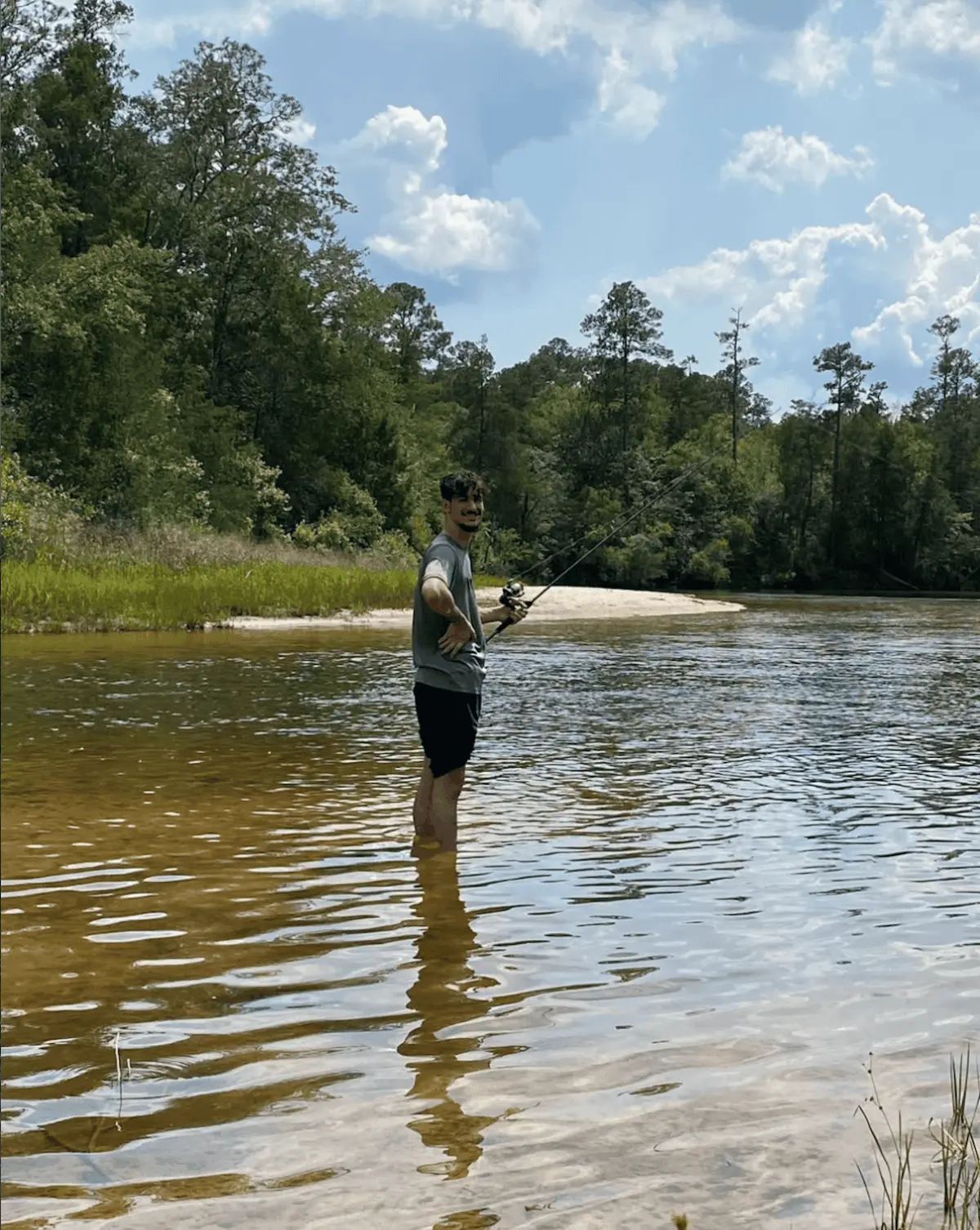
On the afternoon of May 31, what was supposed to be a peaceful father-son fishing trip on the picturesque Blackwater River in Milton, Florida, turned into an unimaginable nightmare. Eighteen-year-old Michael Aiden Vargas—known affectionately by his family and friends simply as Aiden—was struck by lightning while kayaking just yards away from safety. Despite the immediate and frantic rescue efforts of his father, local bystanders, and a multi-agency emergency response team, the high school senior did not survive.
Aiden’s sudden and heartbreaking death marks a devastating blow to his family and serves as a somber reminder of the hidden, volatile dangers that lurk on the water. Beyond the profound personal grief felt by those who knew and loved him, this incident has ignited a wider public conversation regarding outdoor safety, the erratic and unpredictable nature of Florida’s weather systems, and the vital protocols every paddler and angler must follow to minimize risk.
This comprehensive report examines the chronological details of the tragedy, explores the meteorological phenomena that made the event so perilous, highlights essential guidance from safety organizations like the National Oceanic and Atmospheric Administration (NOAA) and the National Outdoor Leadership School (NOLS), and outlines crucial takeaways for water safety and drowning prevention, including the non-negotiable importance of personal flotation devices (PFDs).
Detailed Chronology: A Peaceful Afternoon Turned Fatal
Setting Out on the Water
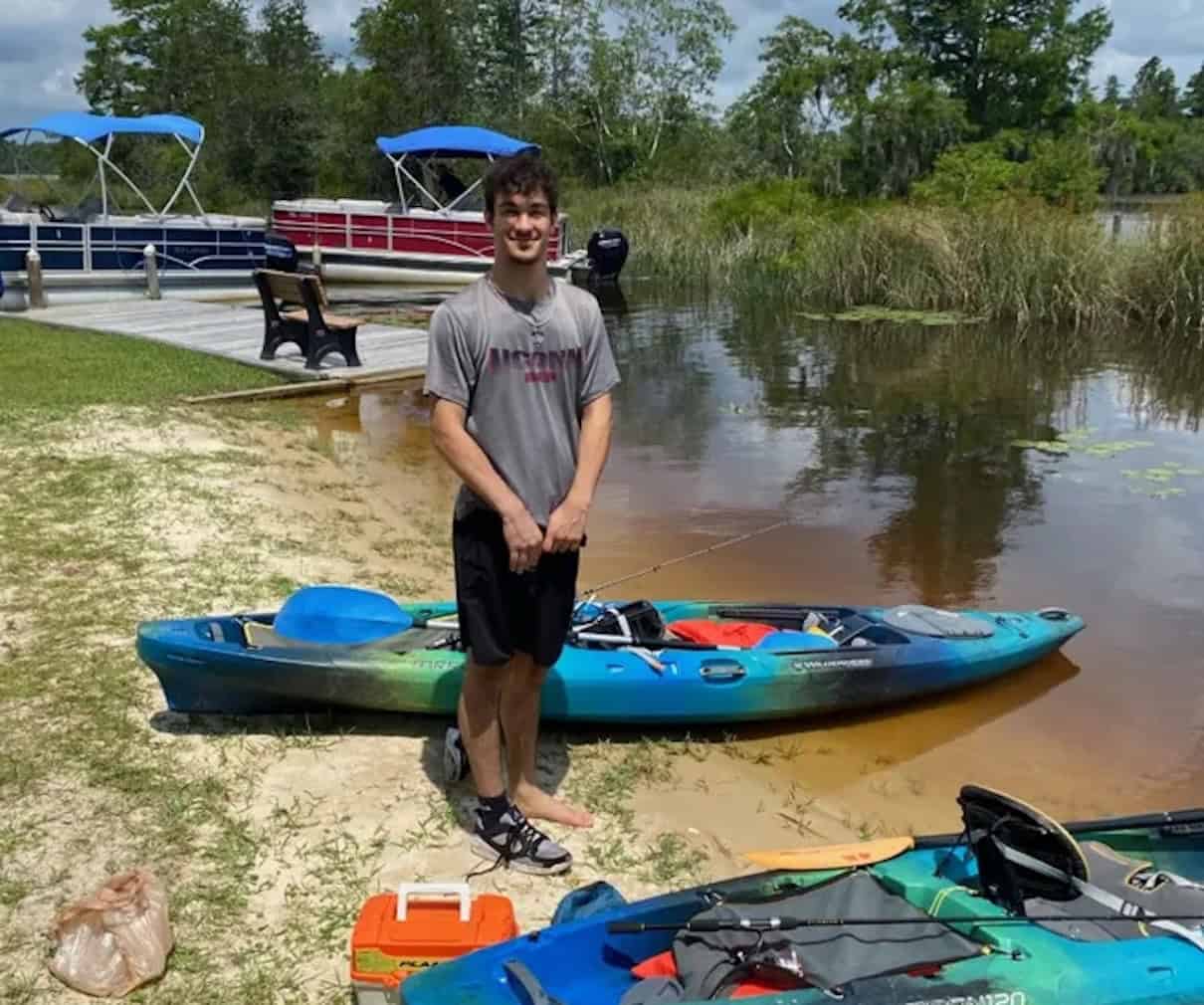
Aiden Vargas was a quintessential outdoorsman. An avid angler and a young man deeply at peace in nature, he spent much of his free time doing what he loved most: sharing quiet, bonding moments on the water with his father, Michael Vargas. May 31 began as an ordinary day for the pair. The water was calm, the air was warm, and the conditions felt benign—devoid of the heavy winds or rough chop that typically trigger immediate concern for kayakers.
The duo launched their watercraft onto the Blackwater River, navigating the scenic waterways of Milton, Florida. For hours, the afternoon progressed without incident. However, in Northwest Florida during the late spring, atmospheric conditions can shift with terrifying speed.
The Gathering Storm
As the afternoon wore on, storm clouds began to gather in the distance. Recognizing the shifting sky, Michael and Aiden decided to cut their excursion short. They turned their kayaks around and began paddling purposefully back toward the docks.
"The storm was coming in, and we could see the docks, you know. We were almost there," Michael Vargas recalled in a subsequent interview with regional media.

Despite the darkening clouds overhead, the immediate environment remained deceptively serene. According to Michael, the water surface stayed calm, providing no tangible warning of the extreme electrical violence about to materialize. The father and son were merely moments away from reaching the shore and securing their gear when the atmosphere violently ruptured.
The Strike and Immediate Aftermath
Without warning, a deafening bolt of lightning struck Aiden. The electrical discharge was instantaneous and catastrophic, causing the 18-year-old to lose consciousness immediately and fall from his kayak into the dark water of the river.
Nearby residents and recreationalists were shaken by the sheer force of the strike. "I heard a very large lightning strike, so loud that it was ear-piercing and scared me," one local witness recounted to the Pensacola News Journal. "Like 20 minutes go by and I see 10 to 15 cops walking the shore and some went by on a boat. They let us know there was a lightning strike and didn’t say much else."
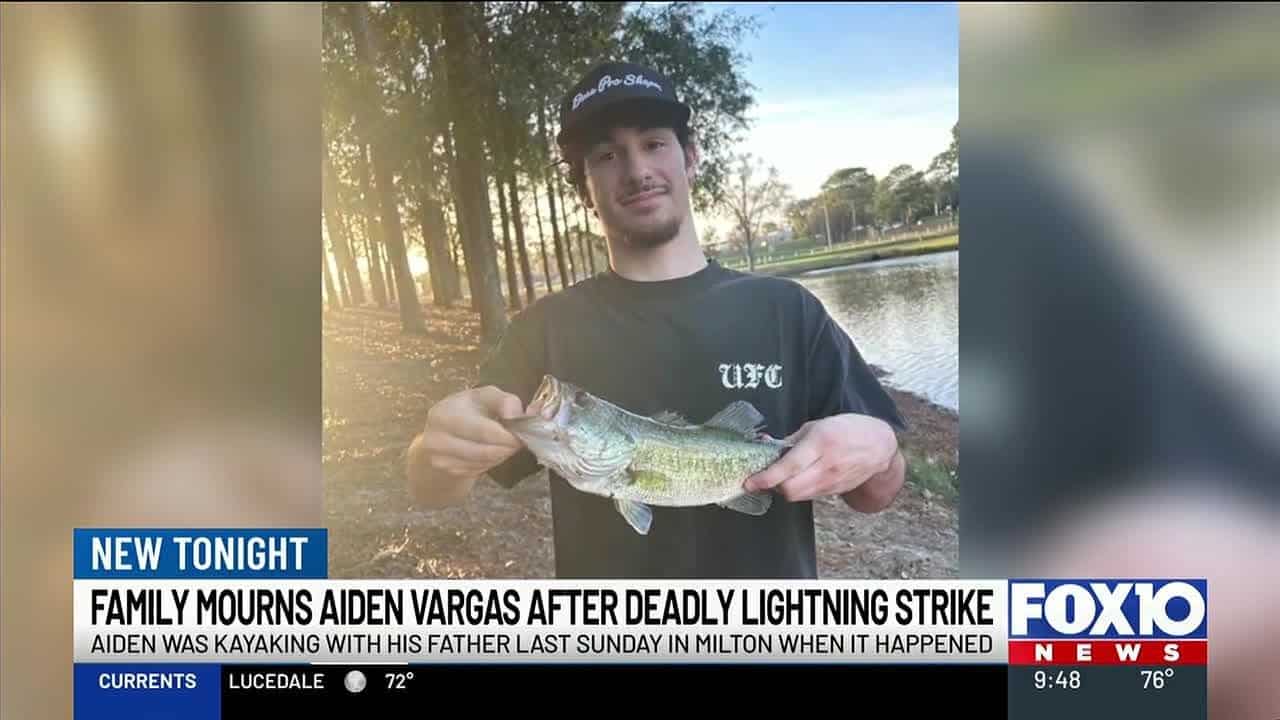
Michael Vargas and immediate bystanders rushed to the area where Aiden had fallen, desperately scanning the surface for any sign of him. Tragically, Aiden’s body did not immediately resurface.
The Multi-Agency Search and Recovery
Recognizing the severity of the situation, emergency services were dispatched immediately. Law enforcement, local dive teams, and rescue personnel converged on the Blackwater River. Utilizing advanced marine technology, including sonar equipment, search crews meticulously scanned the muddy floor of the river.
After an agonizing search operation, rescue divers located Aiden’s body submerged in the water. He was pronounced dead at the scene.
In the wake of the tragedy, Michael Vargas shared a heartbreaking yet comforting reflection with reporters: "I know he didn’t suffer. I know that it was something quick and instantaneous. And one day, we’ll see him again."
Supporting Context & Metrics: The Science of Unpredictable Lightning
The Volatility of Florida’s Microclimates
Florida is widely recognized as the lightning capital of the United States, experiencing high concentrations of cloud-to-ground strikes annually due to its unique peninsula geography, high humidity, and sea-breeze collisions. However, understanding how lightning strikes remains one of the greatest challenges for outdoor enthusiasts.
Emily Powell of the Florida Climate Center notes that lightning is inherently more random and volatile than other severe weather phenomena, such as sustained high winds or heavy rainfall. It offers remarkably little advance warning.
"Once convection is triggered, the thunderstorms can develop really rapidly," Powell explained in an interview with the Pensacola News Journal. "Also, what catches people off guard is the lightning can happen at the periphery of the storm and strike 10 miles away."
The "Blue Sky" and Periphery Threat
Many outdoor recreationists operate under the dangerous misconception that they are safe from lightning as long as it is not actively raining directly above them. Meteorologists emphasize that this is a myth.
The National Oceanic and Atmospheric Administration (NOAA) reports that lightning can strike as far as 25 miles away from the core of a parent thunderstorm. This phenomenon—often referred to by meteorologists as a "bolt from the blue"—frequently catches hikers, boaters, and paddlers off guard when they assume distant storm cells pose no immediate threat.
On the Blackwater River, the calm surface waters and the apparent distance of the heaviest storm clouds created a false sense of security for the Vargas family, illustrating just how rapidly peripheral strikes can materialize.
Official Safety Guidelines & Risk Mitigation
In the wake of this tragedy, outdoor education and safety authorities are heavily promoting established protocols to prevent similar accidents. Organizations like the National Outdoor Leadership School (NOLS) and NOAA have outlined strict frameworks for identifying, avoiding, and managing lightning risks in aquatic environments.
1. Proactive Monitoring Over Reactive Action
The golden rule of lightning safety is simple: Do not wait for thunder to seek shelter.
- Watch the Sky: Paddlers must diligently monitor developing cumulus clouds that indicate thermodynamic instability and thunderstorm growth.
- Heed the 30-30 Rule: If you see lightning and hear thunder within 30 seconds, a threat is imminent, and you should already be off the water. However, waiting for thunder means you may already be out of time. The safest approach is to clear the water at the first sign of towering dark clouds.
2. Identifying Safe Terrain
Once paddlers successfully reach the shore, finding appropriate shelter is critical.
- What to Avoid: Individuals must immediately steer clear of tall, isolated trees (which act as natural lightning rods), wide-open fields, hilltops, ridges, and, above all, open water. Metal objects, wet surfaces, and shallow caves or overhangs should also be avoided.
- Frontcountry vs. Backcountry Shelter: In developed areas (frontcountry), individuals should seek immediate shelter inside a fully enclosed metal-topped vehicle or a substantial permanent building with plumbing and wiring. In wilderness settings (backcountry), seek out flat terrain, dense stands of trees of uniform height, deep canyons, or gently rolling topography.
3. The "Lightning Position"
If caught outdoors without access to a substantial building or vehicle, and a storm is directly overhead, reducing your body’s footprint is essential to mitigate ground-current risks.
- How to Position: Stand or squat with your feet tightly pressed together, or sit down cross-legged on an insulating pad (such as a sleeping pad or backpack).
- What to Avoid: Never lie flat on the ground. Lying down maximizes your body’s surface area contact with the earth, exponentially increasing the lethal potential of ground currents radiating outward from a nearby strike.
- Crucial Caveat: The lightning position is an absolute last resort. It does not replace the need to seek safer terrain and lower elevations.
4. The Critical Importance of PFDs (Personal Flotation Devices)
Aiden Vargas’s tragic accident underscores an often-overlooked aspect of water safety: the necessity of wearing a Personal Flotation Device (PFD) at all times while on the water.
When Aiden was struck and fell from his kayak, his body sank rapidly into the river, complicating both immediate rescue efforts and the subsequent multi-agency recovery operation. Even the strongest, most experienced swimmers can be incapacitated instantly by trauma, electrical shock, or cold water immersion.
A properly fitted PFD ensures that an incapacitated paddler remains buoyant and visible at the surface, drastically increasing the window of opportunity for companions or rescue crews to render aid. Safety advocates emphasize that life jackets should never be stowed away under bungee cords; they must be worn securely zipped and buckled from the moment a paddler pushes off the shore until they return to dry land.
Future Outlook: Honoring Aiden’s Memory Through Education
The loss of Aiden Vargas has left an indelible mark on his family, his school community, and the broader outdoor recreation community in Florida. As loved ones mourn a young life cut short while pursuing his greatest passion, his story is becoming a catalyst for renewed awareness.
Moving forward, outdoor advocacy groups, river conservation societies, and meteorologists are calling for increased educational outreach aimed at young anglers, paddlers, and coastal tourists. By demystifying the unpredictable nature of convective storms, enforcing rigorous weather monitoring, and normalizing strict PFD compliance, the community hopes to prevent future tragedies on waterways like the Blackwater River.
Aiden will be remembered not only as a passionate angler who loved the serenity of the water, but whose legacy will undoubtedly save lives by prompting others to respect the awesome, unpredictable power of nature.