






Executive Overview
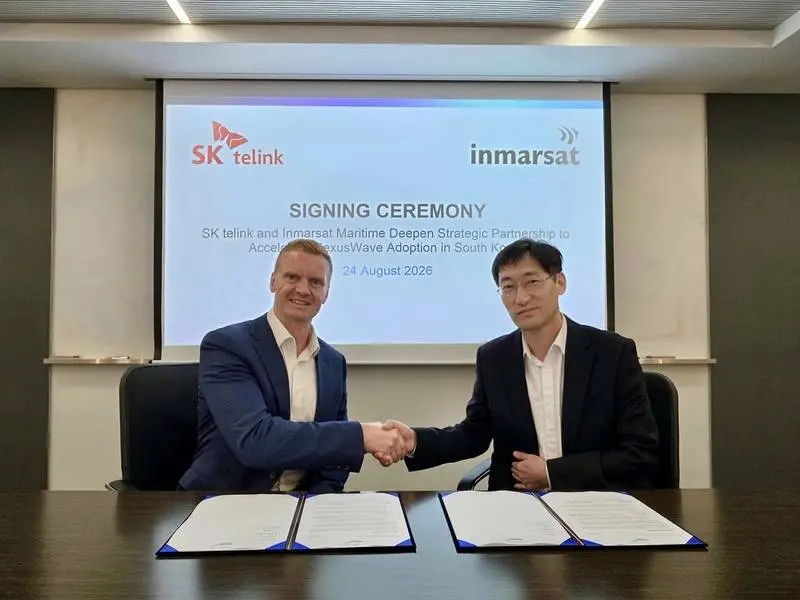
In an era where global supply chains are increasingly defined by digital agility, maritime connectivity has transitioned from a operational luxury to a core strategic asset. Marking a significant milestone in this technological evolution, Inmarsat Maritime, a Viasat company, and SK telink, one of South Korea’s premier telecommunications service providers, have formalized a landmark agreement. This partnership is designed to accelerate the deployment of Inmarsat’s cutting-edge NexusWave connectivity service across South Korea’s highly influential maritime sector.
The agreement targets some of the world’s most sophisticated merchant fleets, including those operated by global shipping heavyweights HMM and SINOKOR Merchant Marine. The scope of the implementation spans a diverse array of vessel types, ranging from ultra-large container ships and car carriers to Very Large Crude Carriers (VLCCs).
As maritime operators face a triple challenge—navigating volatile geopolitical corridors, adhering to stringent international decarbonization mandates, and managing a critical global shortage of skilled seafarers—the deployment of NexusWave represents a timely intervention. By combining Inmarsat’s robust, multi-dimensional global satellite network with SK telink’s deep local market penetration and technical integration expertise, the alliance aims to establish a new benchmark for maritime digital transformation, operational resilience, and crew welfare.
                  +-----------------------------------------+
                  |            Inmarsat Maritime            |
                  |           (A Viasat Company)            |
                  +--------------------+--------------------+
                                       |
                                       | Partners to Deliver
                                       v
                  +-----------------------------------------+
                  |                SK telink                |
                  |     (South Korean Telecom Leader)       |
                  +--------------------+--------------------+
                                       |
                                       | Deploys Service to
                                       v
    +----------------------------------+----------------------------------+
    |                                  |                                  |
    v                                  v                                  v
+-------+                          +-------+                          +-------+
|  HMM  |                          |SINOKOR|                          |Others |
+-------+                          +-------+                          +-------+
    |                                  |                                  |
    +----------------------------------+----------------------------------+
                                       |
                                       v
                +-----------------------------------------------+
                |            NexusWave Hybrid Network           |
                |  (Ka-band, L-band, LTE/5G, ViaSat-3 Capacity) |
                +-----------------------------------------------+
Detailed Chronology
The Foundation: A Decades-Long Alliance (2007–2023)
The collaborative relationship between Inmarsat and SK telink is not a recent development; rather, it is the culmination of nearly two decades of joint technological evolution.
- 2007: SK telink and Inmarsat establish their initial strategic relationship. During this era, maritime communication was dominated by narrowband services such as Inmarsat-C and early-generation FleetBroadband. SK telink acted as a vital regional bridge, translating satellite capabilities into viable commercial solutions for South Korea’s rapidly expanding shipping conglomerates (chaebols).
- 2016: The alliance deepens with the commercial introduction of Inmarsat’s Fleet Xpress, combining Ka-band High-Throughput Satellite (HTS) technology with L-band backup. SK telink becomes a key distributor in Northeast Asia, helping South Korean shipowners transition from legacy VSAT systems to high-speed, unlimited-data hybrid packages.
- May 2023: In a transformative corporate consolidation, Viasat completes its acquisition of Inmarsat. This merger unites Viasat’s high-capacity Ka-band assets with Inmarsat’s highly reliable L-band and Ka-band global maritime network, laying the technological foundation for next-generation products.
The Genesis of NexusWave (Early 2024–Present)
- May 2024: Inmarsat Maritime officially launches NexusWave, a fully managed, multi-dimensional connectivity service. Designed as a software-defined wide area network (SD-WAN) for the oceans, NexusWave is engineered to bond multiple networks—including high-speed Ka-band, reliable L-band, and terrestrial mobile networks (LTE/5G)—into a single, seamless user experience.
- Late 2024: Recognizing the unique operational demands of South Korea’s export-driven shipping lines, SK telink and Inmarsat finalize negotiations to bring NexusWave to the South Korean market. The agreement specifically targets high-value, data-intensive vessel classes (VLCCs, container giants, and specialized car carriers) operated by major domestic brands.
- Immediate Horizon: The partnership moves into the physical integration and installation phase. Teams from SK telink and Inmarsat begin installing the standardized NexusWave hardware suites on designated vessels within the HMM and SINOKOR fleets, initiating real-world, high-throughput trials across busy Asian and transpacific trade lanes.
Supporting Context & Metrics
South Korea’s Maritime Dominance
South Korea is a cornerstone of global maritime commerce. According to data from the United Nations Conference on Trade and Development (UNCTAD), South Korean shipowners control one of the world’s largest merchant fleets by deadweight tonnage (DWT).
Furthermore, domestic shipbuilders like HD Hyundai Heavy Industries, Samsung Heavy Industries, and Hanwha Ocean lead the world in the construction of high-specification, eco-friendly vessels such as LNG carriers and ultra-large container ships.
For operators like HMM (which commands a massive global container fleet) and SINOKOR (a leader in dry bulk, container, and tanker shipping), operational downtime is highly costly. A single day of lost communication or delayed routing optimization can result in tens of thousands of dollars in excess fuel consumption and port penalties.
| Operator | Key Vessel Classes | Typical Trade Routes | Connectivity Imperatives |
|---|---|---|---|
| HMM | Ultra-Large Container Vessels (ULCVs), VLCCs | Asia-Europe, Transpacific, Intra-Asia | Real-time engine telemetry, just-in-time port arrival, automated emissions reporting. |
| SINOKOR | Feeders, Dry Bulk, Chemical Tankers | Intra-Asia, Oceania, Middle East | High-frequency coastal cellular roaming, complex regulatory compliance, crew internet. |
Technical Architecture of NexusWave
NexusWave differs from traditional maritime VSAT through its hybrid, multi-network bonding architecture. Rather than forcing a vessel to switch abruptly between different satellite constellations or terrestrial networks—often resulting in dropped connections and data loss—NexusWave manages these transitions dynamically.
                  +----------------------------------------+
                  |           Vessel Applications          |
                  |  (IoT, Telemetry, Crew Wi-Fi, Video)   |
                  +-------------------+--------------------+
                                      |
                                      v
                  +----------------------------------------+
                  |        NexusWave SD-WAN Edge           |
                  +-------------------+--------------------+
                                      |
            +-------------------------+-------------------------+
            |                         |                         |
            v                         v                         v
+-----------------------+ +-----------------------+ +-----------------------+
|  Global Xpress Ka     | |  Inmarsat Elera L-Band| |   Terrestrial LTE/5G  |
|  (High-Speed Data)    | |  (Ultra-Reliable Safety)| |  (Near-Shore/Port)    |
+-----------------------+ +-----------------------+ +-----------------------+
            |                         |                         |
            +-------------------------+-------------------------+
                                      |
                                      v
                  +----------------------------------------+
                  |         Bonded, Secure Network         |
                  |         to Shore Operations            |
+----------------------------------------+- Multi-Dimensional Connectivity: The service integrates Ka-band (Global Xpress), L-band (ELERA) for backup, and terrestrial LTE/5G when vessels are near coastlines or in ports.
- Bonded Service Model: By utilizing advanced SD-WAN technology, the system bonds these various underlays into a single, secure pipeline. If a Ka-band beam experiences rain fade or physical blockage by ship superstructure, the system instantly redistributes the data payload across L-band or cellular channels without interrupting active sessions.
- Cybersecurity by Design: NexusWave is built with enterprise-grade security protocols, providing isolated network segments for critical ship operations (navigation, machinery monitoring) and crew welfare applications. This separation is crucial for compliance with the International Association of Classification Societies (IACS) Unified Requirements E26 and E27, which govern cyber resilience on ships.
The ViaSat-3 Integration and Regional Capacity Boost
A key element of the future capability of NexusWave is the planned integration of the ViaSat-3 satellite constellation.
Despite initial hardware challenges with the first ViaSat-3 satellite’s reflector deployment, Viasat has systematically adjusted its launch and operational strategies. The upcoming ViaSat-3 Asia-Pacific (APAC) satellite is poised to bring unprecedented terabit-class capacity to some of the world’s most congested maritime corridors, including the Strait of Malacca, the South China Sea, and East Asian shipping lanes.
For South Korean operators trading heavily along these routes, this integration guarantees high-bandwidth availability even in areas with dense maritime traffic, where traditional satellite beams often experience congestion.
Official Statements & Strategic Alignment
The partnership reflects a strong alignment of strategic interests, as detailed by leadership from both organizations.
Inmarsat Maritime: Driving Digitalization and Compliance
Executives from Inmarsat Maritime have emphasized that the modern shipowner’s challenge is no longer just about buying bandwidth, but about managing complexity.
"Maritime operations have entered a highly data-intensive era," noted an Inmarsat representative. "With NexusWave, we are not just selling a satellite link; we are providing a comprehensive, fully managed digital foundation. This service allows operators to run advanced cloud-based applications, perform remote maintenance via real-time video links, and protect their vessels from sophisticated cyber threats, all while ensuring their crews remain connected with high-speed internet."
Inmarsat also highlights the regulatory advantages of the service, particularly in the complex East Asian maritime zone:
"Navigating the regulatory landscape in Asia—where territorial waters overlap and local telecommunications laws vary widely—requires deep expertise. NexusWave dynamically manages network underlays in accordance with local regulations, ensuring continuous, compliant connectivity without requiring manual intervention from the ship’s crew."
SK telink: Bridging Technology and Local Operations
For SK telink, the agreement is a vehicle to reinforce its position as South Korea’s premier maritime ICT integrator.
"Our long-standing relationship with Inmarsat, dating back to 2007, has always been focused on bringing world-class technology to the South Korean shipping industry," an SK telink spokesperson stated. "By introducing NexusWave to key clients like HMM and SINOKOR, we are helping them solve critical business challenges. From optimizing fuel efficiency to meet IMO carbon intensity indicators (CII) to providing seafarers with the connectivity they expect, NexusWave is a game-changer."
The company also emphasized the operational peace of mind offered by the fully managed model:
"Shipowners do not want to manage multiple service providers, hardware vendors, and billing systems. Through this partnership, SK telink provides a single point of contact for installation, local maintenance, customer support, and billing, backed by Inmarsat’s global infrastructure."
Future Outlook
The Smart Shipping Paradigm and Decarbonization
The rollout of NexusWave comes at a critical juncture for the global shipping industry. The International Maritime Organization (IMO) has set ambitious targets for reducing greenhouse gas emissions, requiring vessels to continuously monitor and report their fuel consumption and carbon efficiency.
To comply, modern vessels are being fitted with thousands of IoT sensors tracking engine performance, hull resistance, weather conditions, and exhaust emissions.
+-----------------------------------------------------------------------------+
|                           THE DECISION-SUPPORT LOOP                         |
|                                                                             |
|  [Onboard IoT Sensors]                                                      |
|           │                                                                 |
|           ▼                                                                 |
|  [Real-Time Engine/Weather Data]                                            |
|           │                                                                 |
|           ▼                                                                 |
|  [NexusWave High-Speed Uplink]                                              |
|           │                                                                 |
|           ▼                                                                 |
|  [Shore-Based AI Analytics] ──(Optimizes Routing/Engine Speed)──► [Reduction|
|                                                                    in Fuel/ |
|                                                                    Emissions]
+-----------------------------------------------------------------------------+
This massive influx of telemetry data must be transmitted to shore-based offices in real time for AI-driven analysis. The high-capacity, low-latency pipeline provided by NexusWave ensures that shipping companies can implement dynamic route optimization, reducing fuel consumption and helping fleets maintain favorable CII ratings.
Crew Welfare as a Competitive Advantage
The maritime industry faces an ongoing crew retention challenge, exacerbated by years of demanding sea duties. In today’s labor market, high-quality onboard internet connectivity is no longer a perk; it is a primary factor for seafarers deciding which shipping company to work for.
By deploying NexusWave, South Korean shipowners can offer their crews high-speed, reliable connectivity that supports video calling, streaming services, and social media.
This capability helps operators attract and retain top-tier talent, ensuring a stable workforce to navigate increasingly complex vessels.
The Path Toward Autonomy and Beyond
Looking further ahead, the maritime industry is steadily moving toward semi-autonomous and autonomous vessel operations. Projects in South Korea, supported by government initiatives and major shipbuilders, are already testing autonomous navigation systems on commercial routes.
These autonomous systems rely on constant, ultra-reliable, and low-latency communication links with shore-based control centers.
The multi-orbit, bonded network architecture of NexusWave—combining GEO capacity, terrestrial cellular networks, and potentially future LEO integrations—provides the highly redundant and resilient communication infrastructure necessary to make autonomous shipping a safe and commercial reality.
Through this deepened alliance, Inmarsat Maritime and SK telink are not merely upgrading satellite terminals; they are building the digital highway that will carry South Korea’s maritime industry into a more efficient, sustainable, and highly connected future.