







Executive Overview
In the early hours of Saturday, August 22, a major maritime emergency unfolded in the deep waters of the Bay of Bengal when the Panama-flagged bulk carrier Ocean Winner suffered a catastrophic failure and sank. The vessel, laden with a heavy cargo of iron ore bound for Singapore, lost all communication with maritime safety agencies approximately 240 nautical miles southeast of India’s eastern port of Paradip.
At the time of the incident, the Ocean Winner was manned by a crew of 24 international seafarers, comprising 20 Chinese nationals, three Myanmar nationals, and one Bangladeshi national. Upon receiving distress indicators and confirming the loss of contact, the Indian Coast Guard (ICG) immediately mobilized a high-stakes search-and-rescue (SAR) operation. Deploying specialized surface assets from the strategically vital outpost of Sri Vijaya Puram (recently renamed from Port Blair), emergency responders succeeded in rescuing two survivors from a life raft drifting in the open ocean.
As the search continues for the remaining 22 crew members, the incident has sent shockwaves through the regional shipping community. It raises critical questions regarding bulk carrier safety, cargo stability, and the environmental hazards inherent in transporting dense mineral ores across the Indian Ocean during volatile seasonal weather transitions.
Detailed Chronology of the Incident
[Thursday] Departed Paradip Port, India (Loaded with Iron Ore)
       │
       ▼
[Friday] Transited Southeast across the Bay of Bengal
       │
       ▼
[Saturday Morning] Sudden loss of communication / Emergency beacon activation
       │
       ▼
[Saturday Afternoon] Indian Coast Guard launches SAR mission from Sri Vijaya Puram
       │
       ▼
[Saturday Night] Two crew members rescued from life rafts; search continues for 22 missing
The sequence of events leading to the loss of the Ocean Winner highlights the suddenness with which deep-sea disasters can occur.
Departure and Transit
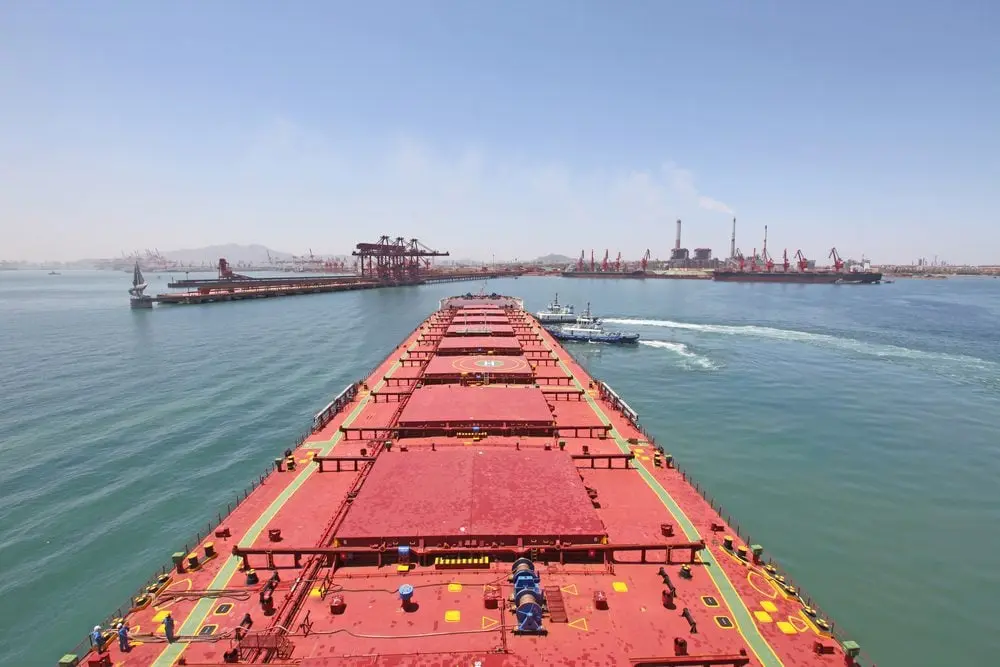
On Thursday, the Ocean Winner completed its loading operations at Paradip Port, located in the state of Odisha on India’s eastern seaboard. Paradip is one of India’s premier gateway ports, handling vast quantities of dry bulk commodities, particularly iron ore sourced from the mineral-rich hinterlands of eastern India. Fully laden, the vessel cleared the harbor and set a southeasterly course across the Bay of Bengal, aiming for the Malacca Strait with an ultimate destination of Singapore.
Loss of Contact
By Friday night and into Saturday morning, the vessel had progressed approximately 240 nautical miles into the open ocean. At this distance, ships operate far beyond the reach of terrestrial communication networks, relying entirely on satellite-based Global Maritime Distress and Safety Systems (GMDSS).
On Saturday, the Indian maritime rescue coordination centers detected a sudden, unexplained loss of all telemetry and communication from the vessel. The silence was accompanied by indications of an emergency, prompting immediate verification procedures by regional maritime authorities.

The Mobilization
Recognizing the high probability of a vessel foundering, the Indian Coast Guard regional headquarters initiated an emergency SAR protocol. Commandant Amit Uniyal, acting as the official spokesperson for the Coast Guard, confirmed that two specialized rescue vessels were immediately dispatched to the last known coordinates of the Ocean Winner.
Because the sinking occurred deep within the maritime search and rescue region of India, the response was coordinated from Sri Vijaya Puram (formerly Port Blair) in the Andaman and Nicobar Islands. This location serves as India’s primary forward military and humanitarian outpost in the Bay of Bengal.
First Rescue and Ongoing Search
Upon arriving at the designated search area, Coast Guard search teams faced challenging open-ocean conditions. Despite the vast expanse of water and debris, rescuers spotted life rafts. Two crew members were successfully located, stabilized, and brought aboard a Coast Guard vessel.
The rescued mariners have provided crucial initial accounts to responders, though their physical and psychological state remains a primary concern. The search area has since been expanded, with search planners utilizing drift-modeling software to calculate the likely trajectory of any remaining survivors, lifeboats, or debris fields.
Supporting Context & Metrics
The sinking of the Ocean Winner is not an isolated event but rather fits into a well-documented historical pattern of bulk carrier vulnerabilities, particularly those transporting heavy mineral ores.
| Parameter | Details / Metrics |
|---|---|
| Vessel Name | Ocean Winner |
| Flag State | Panama |
| Crew Complement | 24 (20 Chinese, 3 Myanmar, 1 Bangladeshi) |
| Cargo Type | Iron Ore |
| Port of Origin | Paradip Port, India |
| Destination | Singapore |
| Location of Incident | ~240 Nautical Miles Southeast of Paradip |
| Survivors Rescued | 2 (As of initial Coast Guard reporting) |
| Deploying SAR Base | Sri Vijaya Puram (Port Blair), Andaman & Nicobar Islands |
The Hazard of Cargo Liquefaction
While the official cause of the Ocean Winner’s sinking remains under investigation, maritime safety experts quickly point to the inherent dangers of transporting iron ore. Cargo liquefaction is one of the leading causes of rapid vessel loss in the dry bulk shipping sector.
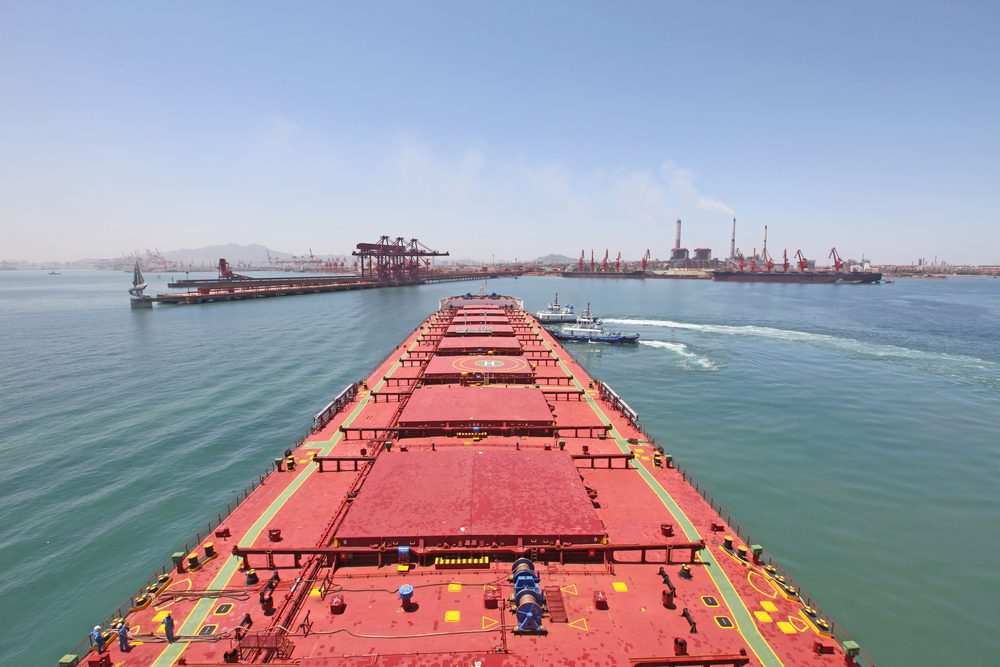
When fine-grained cargoes—such as iron ore fines or nickel ore—are loaded with a moisture content exceeding their Transportable Moisture Limit (TML), the motion of the ship at sea can cause the cargo to behave like a liquid.
- The Mechanics: The constant vibration and rolling of the ship increase the water pressure within the cargo spaces. This reduces the friction between the ore particles, turning a solid pile of ore into a highly unstable, viscous slurry.
- The Consequences: When the ship rolls, the liquefied cargo shifts to one side of the hold but does not shift back when the ship rolls the other way. This leads to a sudden, progressive list from which the vessel cannot recover, often resulting in a rapid capsize and sinking, sometimes giving the crew only minutes to abandon ship.
Paradip Port’s Export Dynamics
Paradip Port is a vital cog in the global steel supply chain. It handles millions of tons of iron ore annually, destined for major industrial hubs across East and Southeast Asia. The port infrastructure has been heavily modernized to accommodate large Capesize and Panamax bulkers. However, the high volume of mineral exports places a continuous responsibility on port authorities, surveyors, and masters to ensure that loaded cargo strictly complies with the International Maritime Solid Bulk Cargoes (IMSBC) Code.
Official Statements
The gravity of the incident has drawn responses from both operational commanders and port administrators, reflecting a mixture of urgency and deep concern for the missing mariners.
Commandant Amit Uniyal, speaking on behalf of the Indian Coast Guard, detailed the immediate assets committed to the operation:
"Upon losing communication with the Panama-flagged cargo vessel, the Coast Guard immediately mobilized a coordinated response. We have deployed two of our dedicated rescue vessels from Sri Vijaya Puram to the site, located approximately 240 nautical miles from Paradip. Our crews have successfully rescued two individuals from life rafts. The search-and-rescue mission remains our absolute priority, and we are utilizing all available resources to locate the remaining crew members."
At the departure point in Odisha, local officials expressed their shock and support for the rescue teams. Captain Alekha Charan Sahoo, the Deputy Conservator of the Paradip Port Authority, remarked on the emotional toll of the incident:
"The departure of any vessel from our docks carries with it our prayers for a safe passage. Learning of the loss of the Ocean Winner so soon after her departure is deeply distressing. We are praying earnestly for the safety of the crew members still missing at sea, and we remain hopeful that the coordinated efforts of the Indian Coast Guard will bring them safely back to land."
Future Outlook & Safety Investigations
As the active search-and-rescue phase continues, the maritime industry is already preparing for the extensive regulatory and investigative processes that must follow such a severe casualty.
Active Search & Rescue (ICG) ──► Casualty Investigation (PMA & India) ──► IMSBC Code & Loading ReviewsThe Investigation Phase
Because the Ocean Winner flew the flag of Panama, the Panama Maritime Authority (PMA) will serve as the lead administration responsible for conducting a marine casualty investigation. Under international maritime law (specifically the IMO’s Casualty Investigation Code), Panama will collaborate closely with Indian coastal state authorities and the countries of origin of the crew (China, Myanmar, and Bangladesh).
Investigators will focus on several critical vectors:
- Pre-loading Surveys: Reviewing the moisture certificates and transportable moisture limit (TML) declarations submitted at Paradip Port prior to departure.
- Vessel Maintenance Records: Examining the structural integrity of the ship’s cargo holds, hatch covers, and bilge pumping systems.
- Survivor Testimony: Interviewing the two rescued crew members to understand the exact sequence of events—specifically, whether the ship developed a sudden, uncorrectable list, or if there was a sudden structural failure or water ingress.
Industry Implications
If cargo liquefaction or structural failure is confirmed, this incident will renew pressure on the International Maritime Organization (IMO) to enforce stricter compliance with the IMSBC Code. It underscores the ongoing need for independent, shipboard testing of cargo moisture levels before departure, rather than relying solely on shipper-provided documentation.
For now, the focus remains on the waters of the Bay of Bengal. The window of survival in open-ocean conditions depends heavily on water temperature, sea states, and the availability of survival equipment. The maritime world watches with bated breath as the Indian Coast Guard continues its grueling search against the clock.