






Executive Overview
The global transition toward sustainable maritime transport is accelerating at an unprecedented pace. No longer confined to small-scale recreational novelties or niche environmental prototypes, electric propulsion, advanced hydrofoils, marine-grade solar composites, high-speed regional charging networks, and even experimental nuclear-electric architectures are reshaping the marine industry.
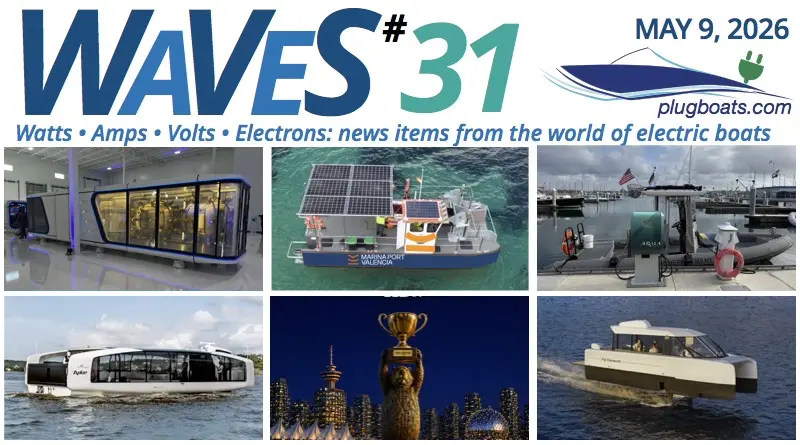
This comprehensive report details the latest wave of paradigm shifts in the e-boating sector. Highlights include the remarkable real-world operational data of Hyke’s award-winning electric shuttle ferry in Norway, Vessev’s ambitious expansion of electric hydrofoiling ferries into Tasmania’s Derwent River, and Open Waters Solar’s award-winning marine solar deck technology. Additionally, we examine the deployment of Marina Port Valencia’s multi-tasking electric cleanup vessel, Aqua superPower’s high-speed charging infrastructure milestone in Southern California, and the emerging frontier of subcritical thorium microreactors capable of unlocking true zero-emission propulsion for superyachts and commercial tankers.
Detailed Chronology of Recent Maritime Milestones
1. Hyke F-15 Shuttle: Proving Efficiency in Urban Waterways (April 2024 – July 2025)
Following a rigorous 14-month trial within the municipal transport network of Fredrikstad, Norway, the fully electric, 50-passenger Hyke F-15 Shuttle—winner of the prestigious 2024 Gussies Electric Boat Awards—completed its initial deployment phase. Operating over a high-frequency 225-metre river crossing with an average duration of two minutes, the vessel transported more than 41,000 passengers while collecting invaluable performance and reliability metrics.
2. Vessev Expands Hydrofoil Networks to Tasmania (Late Q1 2026)
Building on its recent announcement to supply Australia’s first electric hydrofoiling ferries in Perth, New Zealand-based innovator Vessev confirmed a strategic expansion into Hobart, Tasmania. Partnering with clean energy transport venture Fly Derwent, the initiative will deploy Vessev’s VS-9 and upcoming VS-12 fleets along the Derwent River, slated to begin service with the arrival of the first vessel in early 2027.
3. Open Waters Solar Wins Inaugural "Beaver’s Den" Startup Competition (Late April 2026)
British Columbia-based marine solar pioneer Open Waters Solar—founded in 2016—outpaced 25 competing startups to win the inaugural "Beaver’s Den" competition at Vancouver Science World. The company secured top honors on the strength of its proprietary SolaDek power-generating deck surface, validating its commercial trajectory and market readiness for durable, walkable marine solar applications.
4. Marina Port Valencia Deploys the "NetBoat" (Spring 2026)
Spain’s Marina Port Valencia integrated a cutting-edge CatClean 75 electric cleaning vessel, christened the "NetBoat," into its daily harbor maintenance operations. Built by Ona Safe & Clean, the 7.5-meter catamaran-style aluminum vessel represents a major leap forward for Mediterranean port decarbonization, combining waste collection, hydrocarbon retention, and water oxygenation capabilities.
5. Aqua superPower Fast-Charger Launch at Marina Park, Newport Beach (Spring 2026)
A crucial piece of global marine infrastructure fell into place as Aqua superPower commissioned a high-speed marine charging station at Marina Park in Newport Beach, California. Delivering up to 24 kW of power via international CCS standards, the installation bridges the gap for Southern California’s growing commercial and recreational electric fleet.
6. AMPERA and Scorpio Tankers Forge Path for Nuclear Superyachts (Summer 2025 – Present)
Building upon discussions from the World Yachting Summit in Monaco regarding the feasibility of nuclear propulsion for large vessels, energy innovator AMPERA—in collaboration with Monaco’s Scorpio Tankers—has advanced a radically safe, subcritical thorium microreactor design. This development opens a realistic pathway toward electrifying ultra-large vessels and superyachts without the safety compromises of traditional critical nuclear reactors.

Supporting Context, Metrics, and Technical Specifications
The economic, ecological, and engineering metrics driving these developments illustrate a profound shift away from fossil-fueled marine transport.
Efficiency and Passenger Sentiment: The Hyke F-15 Shuttle
The Fredrikstad trial provided direct, quantifiable metrics comparing an urban electric passenger ferry directly against traditional diesel alternatives:
- Energy Consumption: The Hyke F-15 demonstrated an energy footprint up to 88 percent lower than comparable diesel vessels of the same size.
- Power Draw: During typical operation, the vessel draws roughly the same amount of electricity as five household hair dryers.
- Passenger Satisfaction: The service achieved an exceptional user satisfaction rating of 4.72 out of 5.
- Scale: Operating daily between April 2024 and July 2025, the 50-passenger craft completed high-frequency short hops, proving that urban waterways can replace costly bridges and tunnels with agile, zero-emission mass transit.
Hydrofoil Innovation: Vessev’s VS-9 and VS-12 Specifications
Vessev’s hydrofoiling technology bypasses traditional hydrodynamic drag by lifting the vessel hull entirely clear of the water at speed.
- VS-9 Model: A 29-foot craft designed to carry 10 passengers, achieving a cruising speed of 25 knots with an operational range of up to 50 nautical miles.
- VS-12 Model: A larger, 37-foot variant engineered to accommodate up to 30 passengers.
- Grid Integration: Operating on the Derwent River in Hobart, the fleet will capitalize on Tasmania’s electrical grid, which runs on nearly 100% renewable energy sources, including prominent wind and solar generation, yielding one of the lowest life-cycle carbon footprints of any commuter transit network globally.
Durability in Marine Solar: Open Waters Solar
Traditional marine solar panels have long suffered from structural fragility, bulky metal frames, and poor durability under foot traffic. Open Waters Solar addressed these challenges by inventing a specialized composite material that suspends solar cells inside a protective, weatherproof layer.

- SolaDek Features: Combines high structural rigidity with mechanical flexibility, featuring a certified non-slip walking surface capable of withstanding active deck environments.
Environmental Maintenance: The CatClean 75 NetBoat
Stationed in Valencia, Spain, the Ona Safe & Clean NetBoat boasts heavy-duty maintenance metrics:
- Dimensions: 7.5 meters in length with a 2.5-meter beam, constructed from certified marine-grade aluminum.
- Capacity: Capable of retaining up to 2,000 litres of hydrocarbons and surface oils, while covering a surface cleaning rate of approximately 8.89 square kilometers per hour.
- Autonomy: Equipped with integrated solar panels to supplement its battery bank, allowing up to 16 hours of continuous daily operation with zero acoustic disruption to the local marine and human community.
High-Speed Charging: Aqua superPower at Newport Beach
- Power Output: Delivers up to 24 kW via international CCS (Combined Charging System) standards.
- Brand Agnostic: Built to service all major electric boat manufacturers, ensuring seamless interoperability for leisure craft, commercial tour boats, and public municipal workboats, such as Newport Beach’s pioneering Vita electric workboat.
Subcritical Thorium Microreactors: The AMPERA Architecture
Superyachts and deep-sea tankers have historically resisted electrification due to the enormous energy density required to move massive displacement hulls. While nuclear energy has powered military submarines since 1958, civil applications have stalled due to safety concerns surrounding conventional self-sustaining critical chain reactions.
- Subcritical Regime: AMPERA’s design operates entirely subcritically. The core cannot sustain a fission chain reaction on its own. Instead, external neutron generators continuously supply the neutron flux necessary to breed thorium into uranium-233 and sustain fission.
- Instantaneous Shutdown: By simply turning off the external neutron generators, the nuclear reaction ceases immediately. This eliminates the multi-day cool-down periods, xenon poisoning transients, and complex restart protocols associated with traditional critical reactors, making it exceptionally well-suited for the variable load demands of marine propulsion.
Official Statements and Industry Insights
Key leaders across the maritime, clean energy, and regulatory sectors have underscored the transformative nature of these developments:
-
Halvor Vislie, CEO of Hyke:

"The project shows that our urban waters can be used much more efficiently. Instead of digging tunnels or building bridges, which are hugely costly, electric ferries can quickly be deployed to shuttle large numbers of passengers. It’s time to rethink urban planning by putting waterways at the centre. Together with Fredrikstad Municipality, we’ve demonstrated that the Hyke F-15 can operate as part of everyday public transport — efficiently, quietly and with strong passenger acceptance."
-
Cameron McCulloch, Principal of Fly Derwent:
"From the very beginning this project has been about demonstrating how Tasmania’s renewable energy focus can translate into sustainable transport leadership. This technology unlocks affordable, river-based commuter and tourism transport in Hobart without the need for large-scale infrastructure changes. That’s what excites me most — not just the boats themselves, but everything they make possible in Hobart and beyond."
-
Niki Kearl, Open Waters Solar Team Member:

"We’re honoured to come out on top. We’ve developed a solution that delivers true durability, flexibility, and performance for those who seek the best and we went into this process with a strong data room, clear commercialization, and real market traction."
-
Patrick Reynés, CEO of Marina Port Valencia:
"NetBoat isn’t just a cleaning tool, but a statement of intent about the marina model we want to build for the future. It is part of a broader roadmap centred around innovation, decarbonization and active conservation of the Mediterranean."
-
Scott Canning, US VP Business Development for Aqua superPower:

"This installation represents a gamechanger for Southern California’s boating community. Newport Beach is a gateway to pristine coastal waters, and by bringing our fast-charging infrastructure here, we’re not just powering electric boats—we’re fuelling a sustainable future for marine electrification. Our brand-agnostic technology supports every major electric boat manufacturer, making the switch to e-boating seamless and accessible for all."
Future Outlook: The Road Ahead for Maritime Decarbonization
The collective momentum captured in this update points toward a highly electrified, highly efficient maritime future. As Hyke transitions its successful trial into scalable joint ventures with major European transport operators, urban river networks across the globe are presented with a blueprint for congestion-free public transit.
In the Southern Hemisphere, Vessev’s rapid expansion from Perth to Hobart demonstrates that high-speed, hydrofoiling electric transit is ready to scale commercially. Simultaneously, component and infrastructure innovations—exemplified by Open Waters Solar’s robust deck materials in British Columbia, Ona Safe & Clean’s multi-functional harbor vessels in Spain, and Aqua superPower’s rapid deployment of coastal charging hubs in California—are removing the practical hurdles that once hindered fleet operators from making the switch.
Looking further ahead, the integration of subcritical thorium microreactors through partnerships like AMPERA and Scorpio Tankers signals that even the heaviest, most energy-demanding vessels—from commercial cargo tankers to ultra-luxury superyachts—may soon break their absolute reliance on fossil fuels. As grid capacities green globally and marine-specific energy storage and charging technologies mature, the vision of a truly zero-emission marine industry is rapidly transitioning from aspiration to reality.