






Date: August 20, 2026
Author: Maritime Industry Desk
Category: Business Development & Marine Infrastructure
Executive Overview
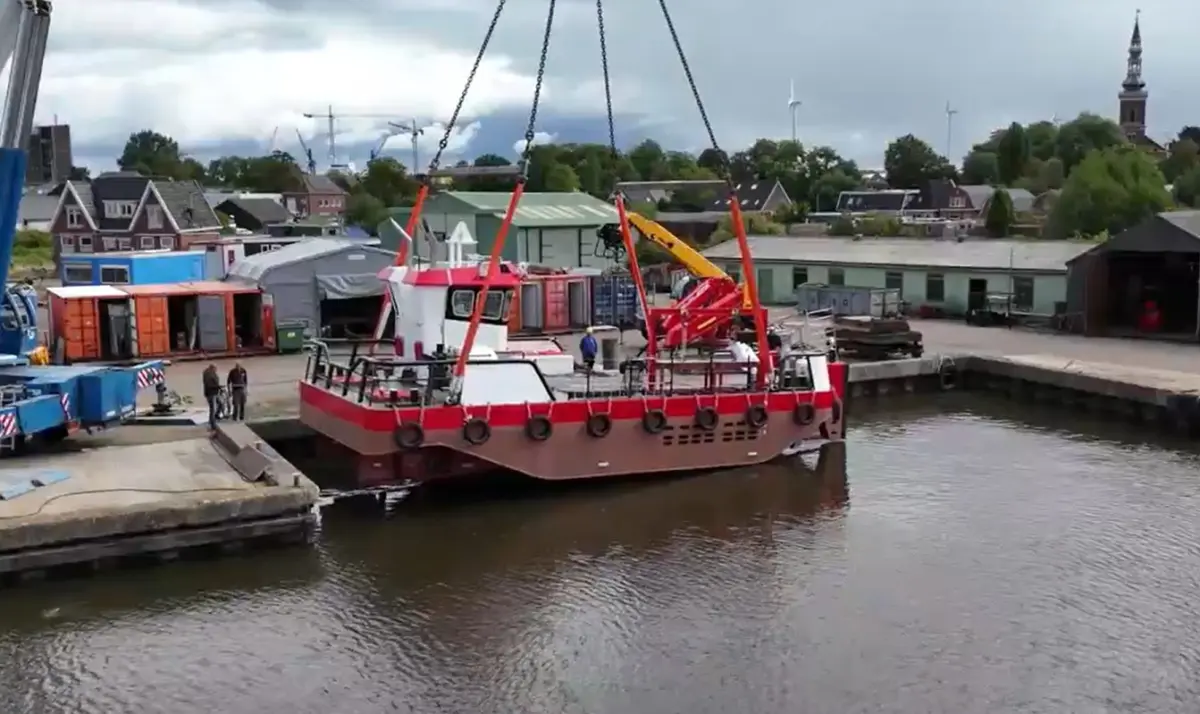
In a milestone development for shallow-water marine engineering and multi-purpose vessel deployment, Dutch shipbuilder Nauplius Workboats has officially announced the successful in-water launch of its newest flagship vessel: the Delta Multi Craft (DMC) 1450. Constructed as part of a high-profile strategic partnership with global dredging and maritime infrastructure giant Royal IHC, the 14.5-meter heavy-duty workboat is designed to operate in demanding environments.
Immediately following its launch, the DMC 1450 is slated for deployment to the Middle East, where it will serve as an indispensable asset supporting capital and maintenance dredging operations. The vessel has been acquired by a regional client through a coordinated package deal facilitated by Royal IHC, which paired the versatile workboat with a heavy-duty Beaver cutter suction dredger.
This comprehensive overview examines the technical specifications of the DMC 1450, the strategic alliance between Nauplius Workboats and Royal IHC, the surging demand for robust marine support craft in the Middle East, and the long-term implications of this launch for the global dredging industry.
Detailed Chronology & Project Genesis
Conceptualization and Design Architecture
The genesis of the DMC 1450 dates back to collaborative planning sessions between Nauplius Workboats and Royal IHC, both known for tailoring vessels to the rigorous demands of modern dredging contractors. The design brief called for a compact yet exceptionally powerful vessel capable of navigating shallow inland waterways without sacrificing the towing power, stability, and deck strength typically found in much larger craft.
Engineering teams at Nauplius focused heavily on vessel geometry. With an overall length (LOA) of 14.5 meters and a robust breadth of 6 meters, the DMC 1450 was optimized to maximize deck space and bollard pull while maintaining a low draft. This allows the vessel to operate seamlessly in restricted coastal zones, river systems, and shallow basins where large tugs and support vessels cannot safely venture.
Construction and Yard Milestones
Fabrication of the hull took place under strict quality control measures overseen by Nauplius Workboats’ technical supervisors. Given its intended operating theater—the punishing ambient temperatures, high salinity, and abrasive operating conditions of the Middle East—special attention was paid to the vessel’s structural steel integrity, corrosion protection systems, and marine-grade mechanical outfitting.

Throughout the build phase, engineers integrated state-of-the-art navigation, communication, and deck-handling gear. By mid-August 2026, the hull and superstructure integration was complete, leading directly to the successful launch milestone. The launch event marked the transition from structural assembly to final dockside testing, system commissioning, and preparation for international transport.
Technical Specifications & Operational Capabilities
The DMC 1450 is categorized as a "true all-rounder" by its builders, engineered specifically to withstand the grueling day-to-day realities of major dredging campaigns. Below is an exhaustive breakdown of its structural and functional characteristics:
Principal Dimensions & Hull Design
- Length Overall (LOA): 14.5 meters (approx. 47.5 feet)
- Breadth (Beam): 6.0 meters (approx. 19.7 feet)
- Hull Configuration: Twin-screw, multi-purpose box/chined hull optimized for shallow-water stability and maneuverability.
- Construction Material: Heavy-duty marine-grade steel, reinforced at key contact points for pushing and heavy towing operations.
Multi-Functional Operational Profile
Unlike single-purpose vessels, the DMC 1450 is engineered to wear multiple hats on a bustling marine job site. Its primary operational capabilities include:
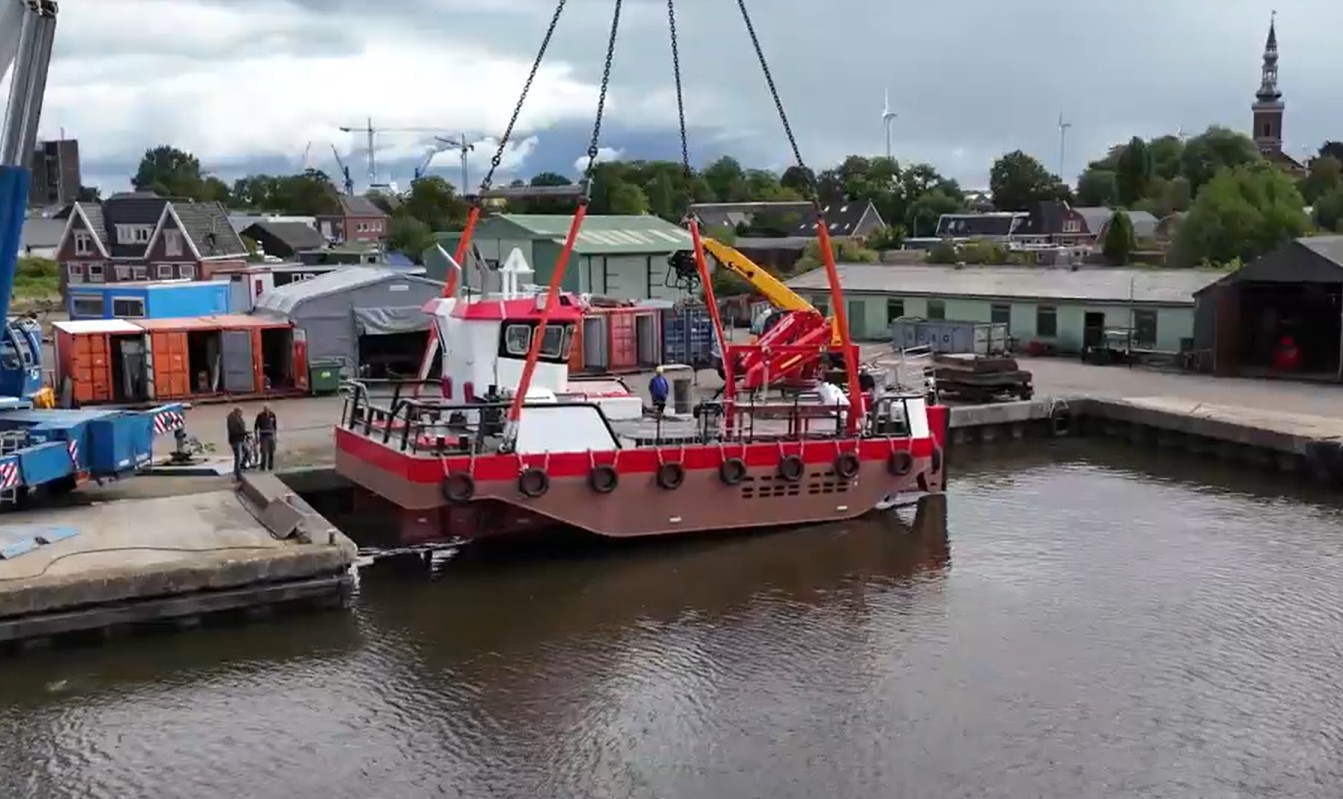
- Pushing and Towing: Equipped with heavy-duty push knees and a robust towing winch setup, the vessel can maneuver hopper barges, fuel pontoons, and cutter suction dredgers through confined channels and against strong river currents.
- Buoy and Anchor Handling: Featuring a reinforced deck layout and high-capacity deck cranes, the DMC 1450 can efficiently deploy, retrieve, and maintain navigational buoys as well as handle heavy anchors for stationary dredging spreads.
- Logistics and Supply Transport: The expansive flush working deck is rated for significant cargo weights, allowing the vessel to serve as a high-speed supply boat transporting fuel, potable water, spare parts, and general consumables to offshore or remote inland dredging sites.
- Personnel Transfer: Safe transfer configurations ensure that crews can be shuttled to and from primary dredge units quickly and securely, minimizing operational downtime during shift changes.
Supporting Context & Strategic Partnership
The Synergy Between Nauplius Workboats and Royal IHC
The successful delivery of the DMC 1450 highlights the strength of the ongoing partnership between Nauplius Workboats and Royal IHC. While Royal IHC is globally recognized for manufacturing legendary dredging machinery—such as the iconic Beaver series of cutter suction dredgers—it frequently collaborates with specialized builders like Nauplius to source high-performance auxiliary craft.
By bundling the DMC 1450 workboat with a primary Beaver dredger, Royal IHC provides its international clients with a turnkey operational ecosystem. Dredging contractors do not merely purchase a machine; they acquire an integrated spread where the support vessel is custom-matched in terms of capability, reliability, and maintenance requirements to the primary dredging asset.
Regional Context: The Middle East Marine Market
The decision to dispatch the DMC 1450 to the Middle East is no accident. The region remains one of the most active global hubs for capital dredging, land reclamation, port expansion, and coastal protection projects.
Countries across the Arabian Gulf and surrounding waterways continue to invest heavily in expanding maritime infrastructure to accommodate larger container vessels, develop new industrial cities, and secure coastlines against erosion. In these shallow-water and desert-adjacent environments, support craft like the DMC 1450 are vital. They ensure that primary dredgers maintain continuous uptime by managing anchor patterns, clearing pipeline paths, and keeping supply lines open in extreme climate conditions.
Official Statements
Reflecting on the successful launch of the vessel and its strategic importance, representatives from Nauplius Workboats issued detailed comments regarding the capabilities engineered into the DMC 1450:
"The DMC 1450, with its length of 14.5 meters and a breadth of 6 meters, is a true all-rounder, capable of performing a wide range of dredging support activities in shallow inland waters," stated a spokesperson for Nauplius Workboats.
Emphasizing the rugged nature of the craft, the company added: "From pushing and towing to buoy and anchor handling, and the transport of fuel, goods, and personnel, this vessel is built to handle tough conditions."
Furthermore, market insights confirmed the commercial trajectory of the vessel: according to project disclosures from Nauplius, Royal IHC successfully finalized the sale of this multi-purpose workboat—packaged alongside a flagship Beaver dredger—directly to an undisclosed, high-profile marine infrastructure client operating within the Middle Eastern theater.
Future Outlook & Industry Implications
As marine construction projects grow increasingly complex and environmentally regulated, the demand for versatile, efficient, and reliable support vessels is projected to rise steadily through the late 2020s.
Key Trends Shaping the Workboat Sector:
- Turnkey Equipment Procurement: Clients increasingly favor package deals where dredgers and support craft are procured simultaneously, ensuring full technical and operational compatibility from day one.
- Adaptability in Restricted Waters: As easy-to-access coastal areas become congested, contractors are pushing further into shallow inland rivers, estuaries, and confined port basins, driving demand for compact vessels with outsized power (such as the 6-meter-wide DMC 1450).
- Climate and Durability Engineering: Vessels built for regions like the Middle East must demonstrate resilience against extreme ambient heat, high-saline cooling water, and abrasive sediment loads, setting a high benchmark for future shipbuilding specifications.
Conclusion
The official launch and subsequent deployment of the Nauplius DMC 1450 mark another chapter of engineering excellence for both Nauplius Workboats and Royal IHC. By delivering a vessel that marries compact dimensions with heavy-duty operational versatility, the partners have once again demonstrated their ability to meet the exacting demands of modern marine contractors. As the DMC 1450 prepares to commence operations in the Middle East, it stands ready to prove its mettle as an essential component of large-scale regional dredging and infrastructure development.