









Executive Overview
The public transit industry stands at a critical juncture, navigating the complex intersection of aging infrastructure, rising passenger expectations, and the rapid maturation of edge computing and artificial intelligence. For decades, the mechanics of transit bus ingress and egress remained largely unchanged—relying on traditional electromechanical controls, rudimentary pneumatic switches, and legacy light-curtain sensors prone to blind spots and environmental degradation.
Today, however, the paradigm is shifting. Wabtec, a global leader in rail and transit technology, is spearheading this evolution through its advanced bus solutions division. At the forefront of this movement is VaporVision, a sophisticated machine-vision and deep-learning system engineered to fundamentally overhaul how transit agencies and original equipment manufacturers (OEMs) approach doorway safety, diagnostics, and vehicle flexibility.
Rather than treating artificial intelligence as a marketing buzzword or a retroactive software patch, Wabtec’s engineering team—led by veterans such as electrical and software expert Karl Kobel and control systems manager Jim Ferro—adopted a problem-first methodology. By anchoring technological innovation in real-world operational challenges, the VaporVision team has created a system that enhances passenger safety, slashes unnecessary dwell times, and provides maintenance departments with unprecedented forensic diagnostics.
This article explores the technical architecture, operational implications, and strategic philosophy behind VaporVision. Drawing from engineering insights and industry practices, we examine how purpose-built machine vision is transforming public transit from a reactive service model into a proactive, data-driven ecosystem.
Detailed Chronology: The Evolution of Transit Door Control and the Birth of VaporVision
To understand the engineering leap represented by VaporVision, one must first trace the historical trajectory of transit door control systems over the past half-century.
Phase 1: The Electromechanical Era
In the early days of modern transit manufacturing—an era spanning the late 20th century—door controls were dominated by electromechanical relays, physical limit switches, and hardwired logic. These systems were mechanically robust but functionally rigid. Troubleshooting often required multimeters and physical inspections of linkages, microswitches, and pneumatic cylinders. While reliable in their simplicity, they offered zero data logging, minimal adaptability to environmental anomalies, and severe limitations in detecting subtle passenger obstructions.
Phase 2: The Introduction of Electronic Sensors
As electronics matured, the industry introduced basic sensing technologies, including mechanical sensitive edges, infrared light curtains, and ultrasonic sensors. While these additions improved passenger safety, they came with inherent design compromises. Infrared and optical sensors often suffered from environmental interference—such as direct sunlight, heavy rain, or dirt accumulation—leading to false positives and phantom door obstructions. Furthermore, these sensors operated with fixed detection zones and programmed dead zones, leaving blind spots where a passenger or object could go unnoticed until physical contact was made.
Phase 3: The AI and Machine-Vision Paradigm
Recognizing the physical limitations of single-point sensors, Wabtec’s engineering teams sought to fundamentally reimagine the doorway as an intelligent interface. This realization marked the genesis of the VaporVision project.
- The Visionaries: Karl Kobel, an electrical and software engineer with 55 years of industry experience, watched the technological landscape evolve from conventional electromechanical controls to connected, intelligent systems. Jim Ferro, control manager and software team leader for VaporVision, was drawn to the project by the raw potential of deep-learning technology to solve persistent transit friction points.
- Development to Production: Under Ferro’s guidance, the software and engineering teams transitioned VaporVision from a theoretical development concept into a production-ready, highly resilient hardware-software ecosystem. The core objective was clear: protect passengers, streamline ingress and egress, minimize dwell times, and arm maintenance technicians with actionable diagnostic data when anomalies occur.
Supporting Context & Technical Architecture: A Wider View Changes the Detection Strategy
The cornerstone of VaporVision’s effectiveness lies in its departure from narrow, localized sensing toward comprehensive, contextual awareness.
1. Panoramic 180-Degree Coverage
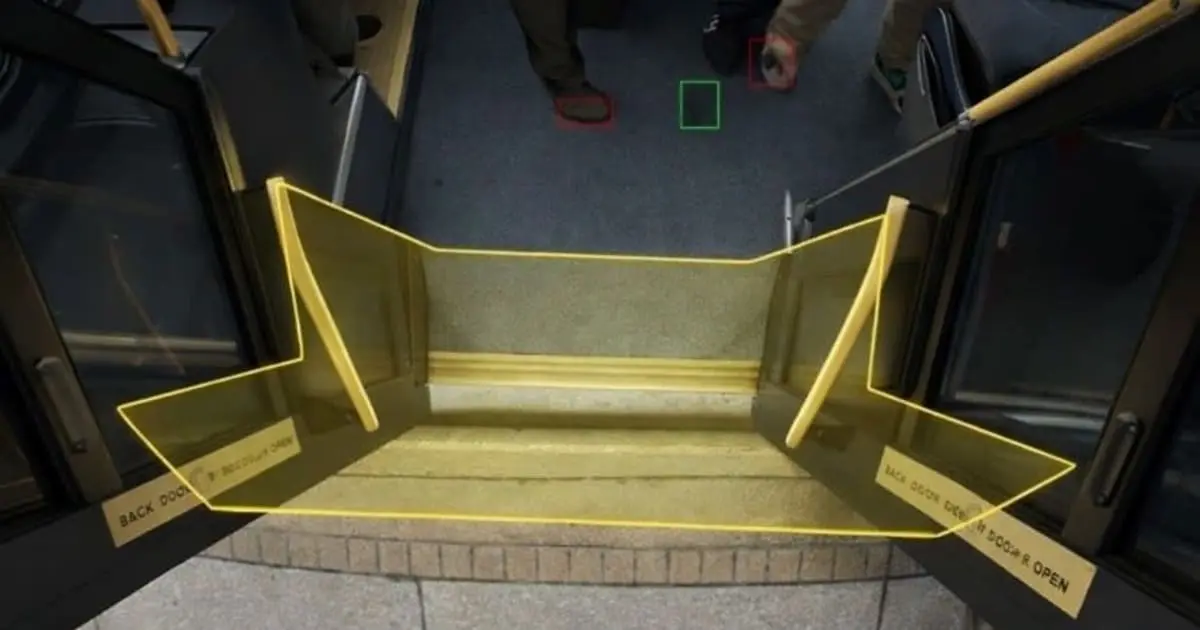
Unlike legacy sensors that scan isolated planes or thin vertical lines, VaporVision utilizes a centrally mounted camera engineered to provide full 180-degree coverage across the entire door portal. This wide-angle perspective eliminates the traditional dead zones that plagued older sensing setups. The camera does not merely act as a passive recording device; it serves as the primary perceptual organ for an onboard deep-learning classification model.
2. Context-Aware Deep Learning
Wabtec’s engineers trained the system’s deep-learning model to recognize relevant human and passenger features across varying conditions. Crucially, these classifications are not static. The system applies different behavioral rules depending on the state of the door:
- Opening State: Monitors for approaching passengers or unexpected obstacles.
- Open State: Evaluates the continuous presence of individuals lingering in the portal.
- Closing State: Continuously assesses whether a passenger or object is attempting to board or exit, dynamically modulating the door’s response to prevent pinch incidents without inducing unnecessary door re-openings.
By evaluating the full doorway in context, VaporVision reduces the friction caused by false triggers—such as a passenger standing too close to the threshold without the intent to board—thereby optimizing route schedules and reducing overall dwell time.
3. Comprehensive Diagnostic Logging
For fleet operators, equipment failures are frustrating enough; intermittent faults that vanish the moment a bus returns to the maintenance garage are even worse. VaporVision treats diagnostics as a core operational requirement rather than an afterthought.
The system continuously logs every system input, output, door-state change, object detection event, and reported error. Furthermore, configurable video recording technology captures approximately four seconds of high-definition footage before and after a selected event.
Real-World Validation: Shortly after a beta installation of VaporVision, a transit agency reported an intermittent door malfunction. Traditional troubleshooting would have required swapping out components blindly or waiting for the fault to reoccur. Using VaporVision, the engineering team reviewed the synchronized event logs and video footage. The visual and data record definitively proved that sensitive door edges were repeatedly retriggering the door due to a specific environmental interaction. This precise evidence isolated the root cause instantly, directing maintenance personnel directly to the vulnerable component and saving hours of diagnostic labor.
4. Connectivity, Flexibility, and Fleet Integration
Modern transit buses are rolling computer networks. VaporVision integrates seamlessly into this digital architecture:
- CAN Bus Integration: Communicates natively with the existing vehicle bus network.
- Ethernet & Wi-Fi: Ethernet connections support initial setup, system monitoring, and broader onboard network integration. Meanwhile, Wi-Fi capabilities allow maintenance technicians to securely access diagnostic logs and video data wirelessly, eliminating the need to physically remove interior panels or access hard-to-reach hardware enclosures.
- Physical Footprint: Despite its advanced capabilities, the system is significantly more compact than conventional multi-sensor arrays, facilitating straightforward retrofitting across diverse OEM vehicle layouts.
- Rigorous Environmental Testing: VaporVision has undergone extensive validation testing to ensure durability under harsh operational conditions. This includes rigorous trials for varied weather extremes, electromagnetic susceptibility and emissions, and electrostatic discharge (ESD) in compliance with applicable Society of Automotive Engineers (SAE) standards. Additionally, the system is designed and tested in strict adherence to Wabtec cybersecurity guidelines aligned with broader industry standards.
Official Statements and Industry Philosophy
Defining Purpose-Built AI
As transit agencies face a barrage of vendors marketing "AI-powered" solutions, Wabtec’s engineers emphasize the importance of conceptual clarity. Karl Kobel and Jim Ferro draw a sharp distinction between open-ended generative AI and purpose-built deep learning.
"The model is trained for a defined operational task: recognizing relevant passenger features in a doorway and informing the door controls. It is not generating open-ended content or making decisions outside of that role," the engineering team notes.
This distinction offers transit executives a valuable evaluation framework. Artificial intelligence in public transit should not be judged by the presence of a fashionable "AI" label, but by four strict criteria:
- Task Performance: How precisely does it execute its defined operational duty?
- Vehicle Integration: How seamlessly does it interface with existing mechanical and electrical architectures?
- Adaptability: How effectively does it adjust to fluctuating environmental and passenger conditions?
- Actionable Insight: Does it deliver clear, practical diagnostic value to maintenance technicians?
Viewed through this disciplined lens, machine vision transcends its traditional role as a mere safety sensor, evolving into a foundational pillar for safer operations, accelerated troubleshooting, and holistic fleet management.
Future Outlook: The Horizon of Intelligent Transit
The successful deployment of systems like VaporVision signals a broader transformation within the urban mobility sector. As cities push toward zero-emission fleets, autonomous vehicle integration, and heightened operational efficiency, the expectations placed on subsystem suppliers are higher than ever.
1. Predictive Maintenance and Machine Learning at the Edge
The future of fleet management lies in predictive analytics. By aggregating longitudinal data from edge-computing systems like VaporVision across an entire municipal fleet, transit agencies will soon be able to predict mechanical wear and door actuator degradation before a failure occurs. Machine learning algorithms analyzing thousands of door-open cycles can identify micro-variations in motor current draw, closing times, and friction coefficients, scheduling preventative maintenance during off-peak hours.
2. Enhanced Passenger Analytics and Flow Optimization
Beyond safety and door control, high-definition machine-vision portals hold immense potential for passenger analytics. Future iterations of intelligent doorway systems could interface with agency scheduling software to provide real-time occupancy tracking, passenger counting accuracy verification, and bottleneck analysis at high-traffic urban stops. This data empowers transit planners to optimize route frequencies, adjust bus configurations, and improve the overall rider experience.
3. Standardization and Cybersecurity
As transit vehicles become increasingly connected, cybersecurity will remain a paramount concern. Wabtec’s proactive alignment with rigorous industrial cybersecurity standards establishes a benchmark for the industry. Future deployments will likely see standardized communication protocols across all major transit OEMs, ensuring that advanced safety systems can be integrated universally without compromising vehicle network integrity.
Conclusion
The evolution of VaporVision illustrates a vital lesson for the modern transportation sector: true innovation does not begin with technology looking for a problem; it begins with a deep, empathetic understanding of operational challenges and engineering solutions that directly address them.
By replacing narrow sensors with context-aware machine vision, bridging the gap between real-time safety and forensic diagnostics, and prioritizing robust connectivity and cybersecurity, Wabtec has provided a masterclass in applied engineering. For transit agencies and OEMs alike, the roadmap is clear. Embracing purpose-built, intelligent systems is no longer merely an upgrade option—it is the essential foundation for the safe, efficient, and resilient transit networks of tomorrow.
Disclaimer: This article reflects the engineering perspectives and technical attributes of Wabtec’s VaporVision system. It does not necessarily represent the official views or endorsements of METRO Magazine or Bobit Business Media.