







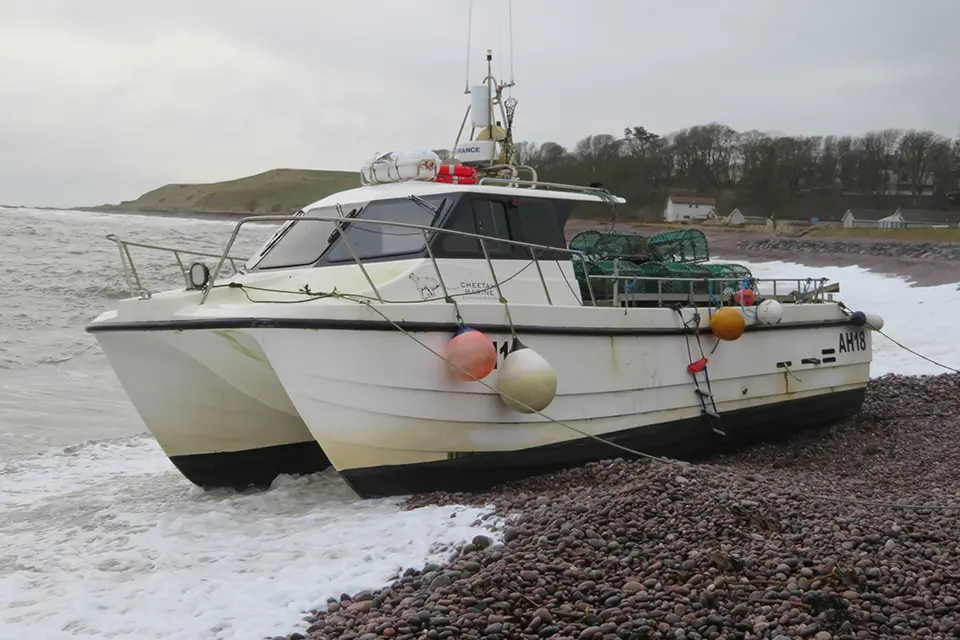
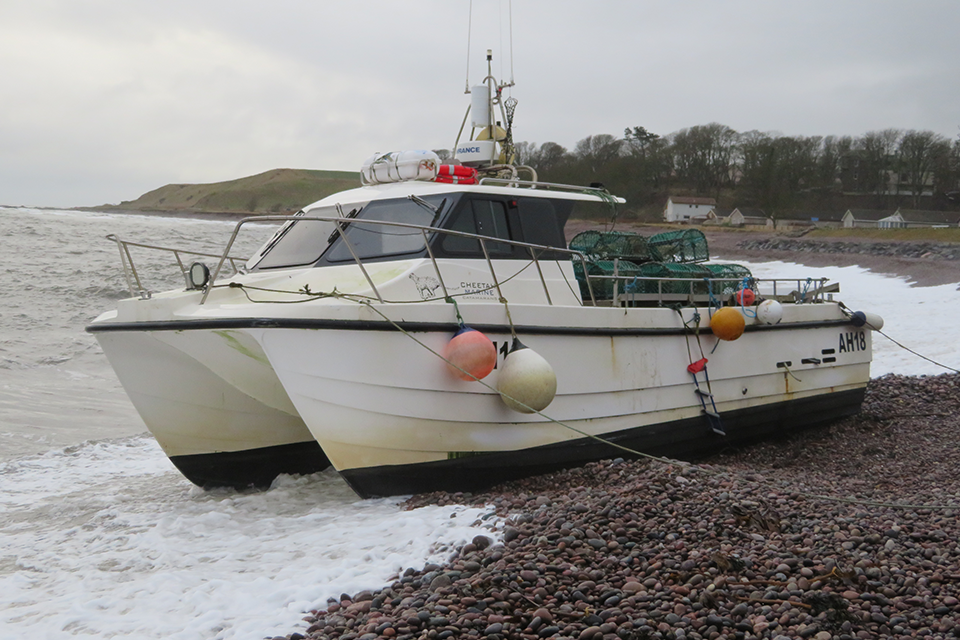
MONTROSE, SCOTLAND — The Marine Accident Investigation Branch (MAIB) has officially released its comprehensive accident investigation report detailing the tragic events of December 20, 2025, when a fisherman fell overboard from the lone-operated creel fishing vessel Sea Eagle (AH18). The incident, which occurred in the cold waters southeast of Montrose, Scotland, resulted in one presumed fatality and has once again cast a harsh spotlight on the inherent dangers faced by solo operators within the commercial fishing sector.
The publication of this report marks a crucial step in understanding the precise chain of events that led to the tragedy, while also providing the maritime community, regulatory bodies, and vessel operators with vital safety recommendations designed to prevent similar accidents. As the industry continues to grapple with high fatality rates, the findings from the Sea Eagle investigation serve as a sobering reminder of the critical vulnerabilities associated with single-handed maritime operations.
Executive Overview
On December 20, 2025, the creel fishing vessel Sea Eagle (AH18) was operating in the North Sea approximately southeast of Montrose. Operating as a single-handed vessel—a common practice among independent fishermen seeking to manage overhead costs—the boat was manned by a single skipper who was responsible for navigating, hauling, and shooting strings of creels.

At some point during the routine deployment or retrieval of fishing gear, the operator went overboard. Due to the lone-working nature of the voyage, there was no immediate onboard witness to the fall, nor was there a crewmate available to execute an immediate recovery maneuver or raise a direct alarm from the deck. The absence of a second crew member significantly delayed the realization that an emergency was underway, highlighting the profound risks inherent in lone-handed fishing operations.
The MAIB’s newly published report meticulously dissects the operational environment, vessel configuration, human factors, and safety equipment associated with the Sea Eagle. By examining the sequence of events leading up to the tragedy, the investigative body aims to offer actionable insights to protect fishermen who operate without the safety net of a crew.
Detailed Chronology: The Final Voyage of the Sea Eagle
While the complete narrative of the day is pieced together through a combination of vessel tracking data, post-incident forensic analysis, and environmental records, the general timeline outlines a routine working day that turned catastrophic in a matter of seconds.
Preparation and Departure
The Sea Eagle (AH18), a specialized creel fishing vessel optimized for catching shellfish such as crabs and lobsters, prepared for its voyage from a designated Scottish port. Creel fishing is notoriously labor-intensive, requiring operators to handle heavy gear, ropes, and steel-framed pots repeatedly throughout the day. For a solo operator, every task—from steering the vessel to managing the hauler and coiling ropes on a wet, moving deck—demands constant physical exertion and hyper-vigilance.
The Inciting Incident
On December 20, operating in the waters southeast of Montrose, the Sea Eagle was actively engaged in fishing operations. Environmental conditions in the North Sea during mid-winter are notoriously harsh, characterized by low water temperatures, unpredictable swells, and brisk winds.
The MAIB report indicates that the skipper was working on deck when the man overboard event occurred. In single-handed operations, the margin for error is razor-thin. A momentary loss of footing on a slick deck, an unexpected surge of the vessel, or an entanglement with moving creel lines can easily drag an operator into the sea. Without anyone else on board to throttle down the engine, alter course, or deploy a life ring, the Sea Eagle continued on its path or drifted, leaving the person in the water isolated against the elements.
The Emergency Response and Discovery
The alarm was eventually raised when the vessel failed to return at its expected time or when concern grew regarding its erratic or stationary movements at sea. Search and rescue (SAR) assets, including local lifeboats, Coastguard rescue teams, and helicopter units, were rapidly mobilized to scour the area southeast of Montrose.
Despite a coordinated and exhaustive search operation conducted under challenging weather conditions, the missing fisherman was not recovered alive. The incident has been classified by authorities as a presumed fatality, leaving a deep void in the local fishing community and underscoring the relentless dangers of the North Sea.
Supporting Context & Metrics: The Perils of Single-Handed Fishing
To fully understand the weight of the Sea Eagle incident, it is essential to examine the broader socio-economic and safety landscape of the commercial fishing industry in the United Kingdom and across Europe. Fishing consistently ranks among the most hazardous civilian occupations in the world, and within this sector, solo operators face disproportionately high risks.
The Economics of Lone Operations
In recent years, rising operational costs—including soaring fuel prices, expensive bait, and stringent regulatory compliance fees—have placed immense financial pressure on independent fishermen. To maintain a viable livelihood, many skippers choose to operate vessels single-handedly. By eliminating the wages of a deckhand, these operators can absorb financial shocks; however, they do so by shouldering immense physical and psychological burdens.
A lone fisherman must simultaneously act as master, engineer, and deckhand. This multifaceted role leads to chronic fatigue, reduced reaction times, and diminished situational awareness—all critical risk factors when working near heavy machinery and cold water.
Man Overboard Statistics and Survival Factors
Data compiled by organizations such as the MAIB and the Maritime and Coastguard Agency (MCA) consistently show that man overboard (MOB) incidents are a primary cause of fatalities in the commercial fishing sector. When a fisherman falls overboard, survival hinges on three critical factors:
- Immediate Buoyancy: Remaining afloat without exhausting oneself.
- Thermal Protection: Avoiding the debilitating effects of cold-water shock and hypothermia.
- Recovery Capabilities: Getting back on board or being rescued before incapacitation occurs.
In single-handed vessels, the third factor is almost entirely absent unless specific technological safeguards are in place. If a vessel is steaming ahead while the operator goes overboard, the distance between the person and the boat widens within seconds. Even if the person is wearing a personal flotation device (PFD), the physical impossibility of swimming after a moving vessel makes self-rescue virtually unattainable without an engine kill-switch tether or an automatic MOB signaling system.
Official Statements and Regulatory Findings
The release of the MAIB investigation report has prompted statements from maritime safety advocates, government officials, and industry leaders, all emphasizing the urgent need for a cultural shift toward enhanced safety protocols on small fishing vessels.
Insights from the Marine Accident Investigation Branch
The MAIB, an independent branch of the Department for Transport dedicated to investigating marine accidents to prevent future occurrences, highlighted several key technical and procedural takeaways in its publication regarding the Sea Eagle:
- The Necessity of Personal Flotation Devices (PFDs): The report stresses that wearing an inherently buoyant PFD or an automatic lifejacket at all times on deck is non-negotiable for solo operators. Too often, fishermen working alone forego PFDs because they find them cumbersome, failing to recognize that a fall into cold water causes immediate gasping and loss of muscular control.
- Engine Stop Mechanisms: The investigation underscores the vital importance of engine kill-cords or wireless electronic tether systems. When connected to the operator, these devices are designed to instantly cut the engine if the wearer falls overboard, preventing the vessel from sailing away and keeping it within swimming distance of the person in the water.
- Man Overboard Alerting Technology: The report advocates for the wider adoption of Personal Locator Beacons (PLBs) and Automatic Identification System (AIS) MOB devices integrated directly into workwear. These devices can transmit an immediate distress signal and GPS coordinates to the vessel’s plotter or nearby shipping, drastically reducing search times.
Industry and Community Response
Local fishing federations in Scotland expressed profound sorrow over the loss associated with the Sea Eagle, noting that the Montrose community and the wider Scottish fishing fraternity share in the grief of the affected family. Representatives have called for increased government support to help independent skippers subsidize the cost of advanced safety technology.
"Every fisherman lost at sea is a devastating blow to our coastal communities," stated a spokesperson for a regional fishermen’s association. "While independence is a proud tradition in our industry, no fish is worth a life. We must examine the MAIB report thoroughly and ensure that every single-handed operator is equipped with the tools they need to return home safely."
Future Outlook: Charting a Safer Course for Commercial Fishing
The tragedy of the Sea Eagle (AH18) must not be viewed as an isolated mishap, but rather as a catalyst for systemic change within the small-vessel fishing fleet. As maritime authorities review the findings, several key pathways are emerging to enhance safety standards and protect solo operators in the future.
Technological Innovation and Accessibility
The technological tools required to survive a man overboard incident already exist, but adoption rates among independent operators vary due to cost and habit. Future initiatives must focus on making safety gear—such as wireless engine kill-switches, integrated AIS-PLB beacons, and lightweight, comfortable PFDs—more accessible and affordable. Subsidies, grants, and safety equipment exchange programs managed by maritime charities and government bodies can play a pivotal role in bridging this gap.
Regulatory Evolution and Guidance
While regulations governing small fishing vessels have tightened significantly over the past decade, enforcement and culture remain challenging areas. Regulators are increasingly looking at ways to mandate the use of kill-cords and PFDs on single-handed vessels actively working on deck. Furthermore, safety awareness campaigns must continuously target the psychological barriers that lead seasoned fishermen to take unnecessary risks.
Fostering a Safety Culture
Ultimately, equipment alone cannot eliminate risk; it must be paired with a proactive safety culture. Training programs for skippers must emphasize risk assessment, fatigue management, and the establishment of emergency communication protocols, such as mandatory check-in routines with shore contacts when operating solo.
Conclusion
The MAIB report on the Sea Eagle (AH18) serves as a solemn document of a life lost off the coast of Montrose on December 20, 2025. By laying bare the mechanics of the accident, the investigation provides invaluable lessons for the entire maritime sector. It challenges regulators, vessel owners, and individual fishermen to re-evaluate their practices, prioritize personal safety equipment, and embrace technological safeguards.
As the commercial fishing industry navigates an increasingly complex future, honoring the memory of those lost at sea means committing fiercely to the principle that safety must always take precedence over the catch. Through rigorous implementation of the MAIB’s recommendations, the maritime community can strive toward a future where tragedies like the one involving the Sea Eagle become a relic of the past.