







Executive Overview
On October 1, 2026, the United Kingdom government escalated its economic campaign against the Russian Federation’s energy export infrastructure by blacklisting five specialized liquefied natural gas (LNG) carriers. This targeted intervention is designed to disrupt Moscow’s ambitious plans to bypass Western sanctions through the expansion of a maritime "shadow fleet" for LNG. Most notably, the sanctions target three newly constructed, Russian-built Arc7 ice-class vessels engineered specifically to unlock the export potential of the highly contested Arctic LNG 2 project.
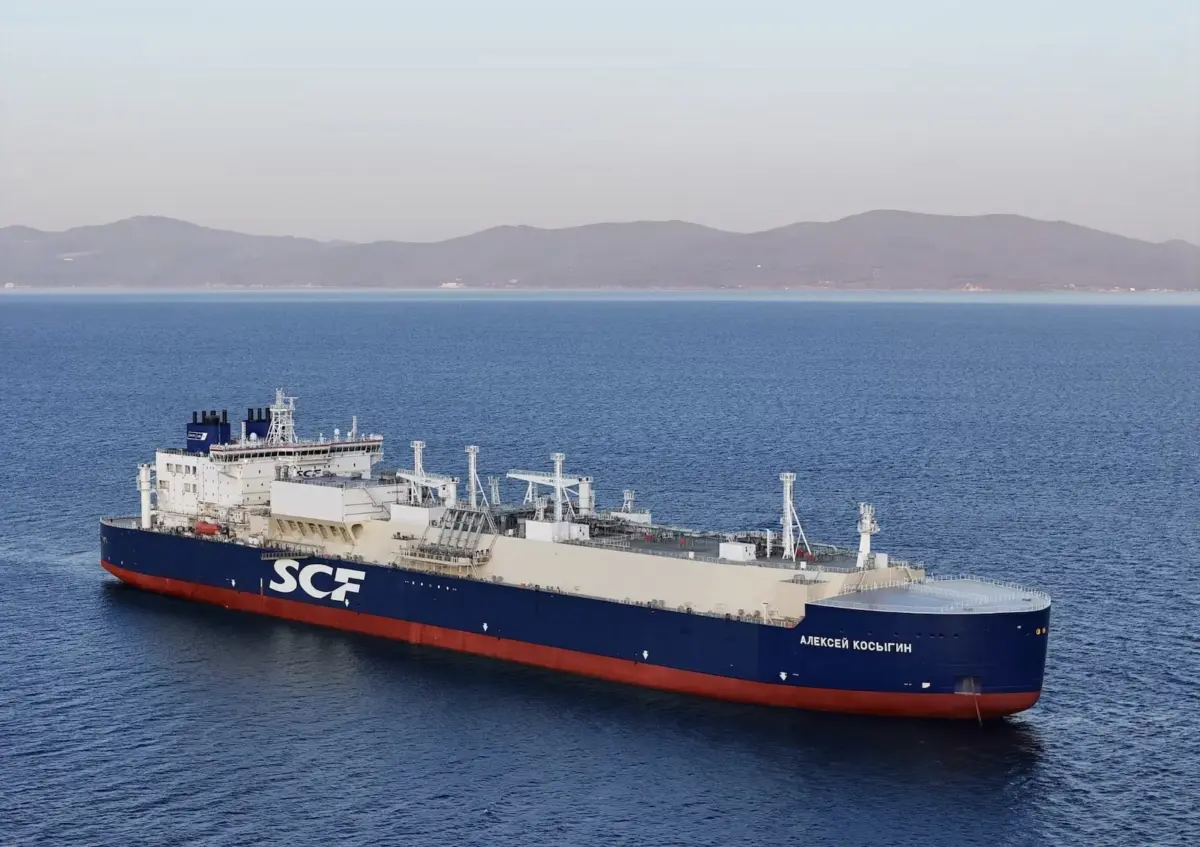
The five blacklisted vessels—Chaivo, Portovyy, Aleksey Kosygin, Konstantin Posyet (also referred to as Konstantin Posiet), and Pyotr Stolypin—are now subject to stringent UK shipping and trade sanctions. Under these measures, the vessels are prohibited from operating or being chartered, barred from entering UK ports, and cut off from the critical British maritime services sector, including insurance, underwriting, and technical ship management.
This round of sanctions represents a significant evolution in Western economic warfare. By targeting the Pyotr Stolypin while it is still undergoing sea trials and has yet to enter commercial service, London has signaled a shift toward a preemptive containment strategy. Rather than merely chasing vessels already operating in illicit supply chains, the UK is actively moving to strangle Russia’s future Arctic export capacity before it can materialize.
Detailed Chronology: From Shipyards to Sea Lanes
The deployment and subsequent sanctioning of these five vessels reveal a complex logistical game of cat-and-mouse between the Kremlin’s state-backed energy giants and Western regulatory authorities.
[Dec 2025] Aleksey Kosygin Delivered
       │
[June 2026] Konstantin Posyet Delivered (Loads cargo at Utrenniy terminal)
       │
[Aug 2026] Portovyy conducts historic Baltic-to-China Northern Sea Route voyage
       │
[Sept 2026] Pyotr Stolypin undergoes sea trials at Zvezda Shipyard
       │
[Oct 1, 2026] UK issues sweeping sanctions package targeting all five LNG carriers
The Arc7 Ice-Class Vanguard
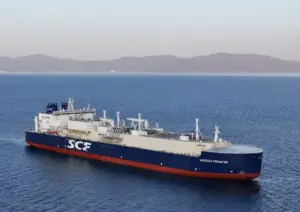
The crown jewels of Russia’s modern cryogenic fleet are its Arc7 ice-class carriers. Built to navigate the treacherous, ice-locked waters of the Northern Sea Route (NSR) without the aid of dedicated icebreaker escorts, these vessels are the lifeblood of Novatek’s Arctic LNG 2 project on the Gydan Peninsula.
- Aleksey Kosygin: Delivered in December 2025, this vessel represented a major milestone for the domestic Russian shipbuilding industry, which has struggled to fill the void left by Western technology partners and East Asian shipyards that withdrew following the 2022 invasion of Ukraine.
- Konstantin Posyet: Commissioned in June 2026, this vessel quickly entered active service. It successfully traversed the Northern Sea Route to reach the Arctic LNG 2 terminal at Utrenniy, where it loaded commercial cargo, proving the operational viability of Russia’s unilateral Arctic export corridor.
- Pyotr Stolypin: In September 2026, Russian state oil company Rosneft confirmed that the Pyotr Stolypin was being prepared for sea trials at the Zvezda Shipbuilding Complex in Russia’s Far East. By blacklisting this vessel prior to its maiden commercial voyage, the UK has disrupted the integration of the vessel into the Arctic LNG 2 logistics chain, complicating its insurance, classification, and future operational safety.
The Conventional Fleet: Bypassing Traditional Trade Routes
While the Arc7 vessels represent Russia’s future, the two conventional LNG carriers targeted in the October 1 sanctions package—Chaivo and Portovyy—have been workhorses for current sanctions-evasion schemes.
- Chaivo: This older, conventional LNG tanker has been actively engaged in transferring Russian LNG to third-party nations. The UK sanctions notice identified Tudor Maritime and CryoLine Management as the vessel’s current operators, shining a spotlight on the network of boutique ship-management firms used to obscure ownership structures.
- Portovyy: Operated by state-owned Gazprom, the Portovyy has served as a floating storage unit (FSU) at the Portovaya LNG facility near the Baltic port of Vyborg since 2022. For years, the vessel remained stationary, acting as a buffer for Baltic gas exports. However, in August 2026, the 277-meter vessel undertook a highly unusual eastbound voyage. Sailing from the Baltic, it traveled through the Northern Sea Route directly to China. This historic voyage bypassed the traditional Mediterranean and Suez Canal routes entirely, demonstrating Russia’s ability to link its sanctioned Baltic assets with hungry East Asian markets via the Arctic.
Supporting Context & Metrics: The Mechanics of Arctic Energy Warfare
To understand the impact of these sanctions, one must examine the unique engineering and economic realities of liquefied natural gas transport in the high north.
| Vessel Name | Vessel Type / Class | Primary Operator / Manager | Status / Key Milestones |
|---|---|---|---|
| Aleksey Kosygin | Arc7 Ice-Class LNG Carrier | Sovcomflot / Novatek affiliates | Delivered Dec 2025; Active in Arctic |
| Konstantin Posyet | Arc7 Ice-Class LNG Carrier | Sovcomflot / Novatek affiliates | Delivered June 2026; Loaded at Utrenniy |
| Pyotr Stolypin | Arc7 Ice-Class LNG Carrier | Rosneft / Zvezda Shipyard | Sea trials Sept 2026; Sanctioned pre-service |
| Chaivo | Conventional LNG Tanker | Tudor Maritime / CryoLine | Active in third-country Russian LNG trade |
| Portovyy | Conventional LNG Tanker | Gazprom | Former Baltic FSU; Completed NSR route to China (Aug 2026) |
The Indispensability of Arc7 Technology
Unlike crude oil, which can be transported in standard, single-hulled tankers that are easily acquired on the secondary market, LNG requires highly specialized, technically complex vessels. LNG must be kept at a cryogenic temperature of -162°C (-260°F) during transit.
In the Arctic, the challenge is doubled. Arc7 ice-class vessels are engineered with reinforced hulls capable of breaking through ice up to 2.1 meters thick. They utilize specialized podded propulsion systems (such as Azipods) that allow the ship to operate astern in heavy ice conditions.
Because Russia cannot easily source these specialized components due to Western export controls, every single Arc7 vessel hull is an irreplaceable asset. The loss of even one carrier severely restricts the annualized export capacity of the Arctic LNG 2 project, as standard tankers cannot access the Utrenniy terminal for much of the year.
The Broader Sanctions Package
The targeting of these five LNG carriers is part of a larger, coordinated UK diplomatic effort. The October 1 sanctions package targeted a total of 23 individuals and entities alongside eight ships.
Beyond the five LNG carriers, the maritime designations include:
- Three shadow-fleet oil tankers engaged in transporting price-capped Russian crude.
- Two bunkering vessels that provide offshore fueling services, allowing shadow-fleet tankers to avoid docking in ports where they would face regulatory scrutiny.
Official Statements and Geopolitical Friction
The UK’s aggressive moves against Russian LNG have reverberated through international energy markets, highlighting the delicate balance between penalizing Moscow and maintaining global energy stability.
The UK Government’s Position
In a statement accompanying the sanctions release, the UK Foreign, Commonwealth & Development Office (FCDO) emphasized its commitment to systematically dismantling Russia’s energy-funded war machine:
"As part of the UK’s work with international partners to support their transition away from Russian energy, existing licensing arrangements have been extended to cover LNG, on a targeted and time-limited basis, to support the Republic of Korea’s and Japan’s energy security."
This statement highlights the complex geopolitical reality of energy sanctions. While the UK is moving to implement a comprehensive ban on UK maritime and insurance services connected with Russian LNG exports—set to take effect on January 1, 2027—it has had to carve out temporary exemptions for key democratic allies in East Asia.
The East Asian Energy Dilemma
Both Japan and South Korea are heavily dependent on imported LNG to fuel their economies and power grids. Japanese utilities hold significant equity stakes in Russian Arctic gas ventures, including the Sakhalin-2 project, which was developed under the assumption of long-term stability.
By offering targeted, time-limited licensing arrangements, the UK and its G7 partners are providing Tokyo and Seoul with the regulatory breathing room needed to secure alternative long-term supply contracts from allies like the United States, Qatar, and Australia. This prevents a sudden supply shock that could drive global LNG spot prices to unsustainable levels.
Future Outlook: The Looming Arctic Crunch
As the January 1, 2027 deadline for the total UK maritime and insurance ban approaches, the battle for control over Russia’s energy corridors is expected to intensify.
                  [Jan 1, 2027: UK Insurance & Maritime Services Ban]
                                        │
             ┌──────────────────────────┴──────────────────────────┐
             ▼                                                     ▼
[Russian Countermeasures]                             [Western Enforcement Challenges]
 • Domestic insurance (RNRC)                           • Tracking dark ship-to-ship transfers
 • Non-Western classification                          • Monitoring flag-of-convenience shifts
 • Domestic shipbuilding expansion                     • Managing East Asian energy dependency
The Insurance Bottleneck
The impending UK services ban is a powerful tool. The international maritime industry relies heavily on the International Group of P&I Clubs, a consortium of mutual insurance associations that provides marine liability cover for approximately 90% of the world’s ocean-going tonnage. A significant portion of this market is subject to UK law and English jurisdiction.
Once the ban takes effect in 2027, any vessel carrying Russian LNG will find it nearly impossible to secure standard Western insurance. Without valid Protection and Indemnity (P&I) insurance, these vessels will be legally barred from transiting key maritime choke points, including the Danish Straits, the English Channel, and the Bosporus.
Russia’s Counter-Strategy
To counter this looming blockade, Moscow is pursuing three main strategies:
- State-Backed Reinsurance: The Kremlin is expanding the capacity of the Russian National Reinsurance Company (RNRC) to provide sovereign guarantees for its LNG fleet, attempting to bypass the need for Western P&I clubs.
- The Northern Sea Route Pivot: As demonstrated by the Portovyy, Russia is increasingly relying on the Northern Sea Route to deliver gas directly to China and other Asian buyers. By keeping voyages entirely within Russian territorial waters and international Arctic seas, Moscow minimizes the risk of Western physical interception or port-state control inspections.
- Ship-to-Ship (STS) Transfers: Analysts anticipate that Russia will attempt to use its conventional LNG carriers to perform ship-to-ship transfers in ice-free waters, such as off the coast of Murmansk or in the Mediterranean, transferring cargo from sanctioned ice-class vessels to anonymous, flag-of-convenience tankers that can slip into international markets unnoticed.
Ultimately, the UK’s preemptive sanctioning of the Pyotr Stolypin and its sister ships strikes at the weakest link in Russia’s energy strategy: its reliance on specialized marine engineering. While Moscow may succeed in assembling a "shadow fleet" of older, conventional oil tankers, building, maintaining, and insuring a technologically advanced Arctic LNG fleet under a regime of strict isolation will be a far more difficult challenge.