











MILFORD, N.H. — In the highly competitive arenas of naval architecture and marine electronics, the physical integration of high-performance sensors has long been a complex challenge. For decades, boatbuilders and marine technicians have wrestled with the delicate balance between acoustic performance and hydrodynamic efficiency. The installation of high-power transducers—essential for modern CHIRP (Compressed High-Intensity Radiated Pulse) sonar systems—frequently required bespoke hull modifications, labor-intensive custom pocket designs, or drag-inducing external fairing blocks.
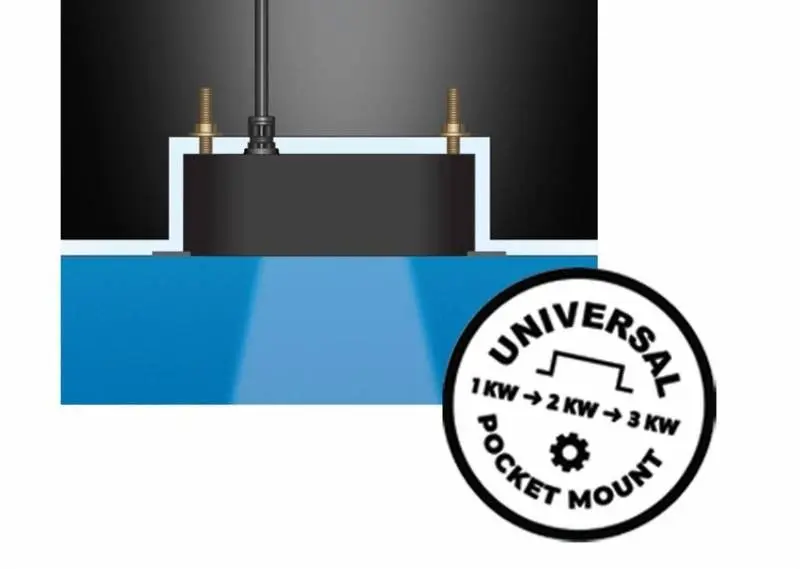
To resolve these long-standing manufacturing and engineering bottlenecks, AIRMAR Technology Corporation, a global leader in ultrasonic transducer design and acoustic sensor technology, has launched its Universal Pocket Mount Solutions. Announced on October 5, 2026, this system is designed to allow boatbuilders to integrate a single, standardized transducer pocket directly into their hull molds during the initial fabrication phase.
By decoupling the physical dimensions of the hull pocket from the specific power output of the transducer, AIRMAR’s new solution supports a wide range of CHIRP configurations spanning from 1 kW to 3 kW. This standardization is supported by the simultaneous release of the new XLM265 and XLM275 1 kW transducers, which are engineered to fit seamlessly into the same universal pocket footprint as their higher-power 2 kW and 3 kW counterparts.

Executive Overview: Solving the Integration Paradox
For modern boatbuilders, offering premium fishfinding capabilities is no longer optional; it is a critical selling point for center consoles, sportfishing yachts, and commercial vessels alike. However, installing these high-power acoustic sensors has traditionally been a logistical and engineering headache.
+-----------------------------------------------------------------------+
|                       TRADITIONAL INSTALLATION                        |
|                                                                       |
|  [ 1 kW Transducer ]       [ 2 kW Transducer ]     [ 3 kW Transducer ]|
|          |                         |                       |          |
|    (Pocket Size A)           (Pocket Size B)         (Pocket Size C)  |
|          |                         |                       |          |
|   Requires Unique           Requires Unique         Requires Unique   |
|   Hull Mold/Tooling         Hull Mold/Tooling       Hull Mold/Tooling |
+-----------------------------------------------------------------------+
|                         AIRMAR UNIVERSAL POCKET                       |
|                                                                       |
|  [ XLM265/275 (1kW) ]      [ 2 kW Transducer ]     [ 3 kW Transducer ]|
|                                   |                       /          |
|                                   |                      /           |
|            +-----------------------+---------------------+            |
|                                    |                                  |
|                        [ ONE UNIVERSAL POCKET ]                       |
|                                    |                                  |
|                      Single, Standardized Hull Mold                   |
|                      No Tooling Changes | Low Drag                    |
+-----------------------------------------------------------------------+
Traditionally, a buyer opting for a 1 kW sonar system required a different hull pocket configuration than a buyer choosing a ultra-deepwater 2 kW or 3 kW system. This variation forced shipyards to maintain multiple hull molds, use temporary mold inserts (plugs), or perform aftermarket fiberglass modifications. These approaches added significant labor costs, extended production timelines, and introduced opportunities for structural defects and cosmetic inconsistencies.
AIRMAR’s Universal Pocket Mount Solutions resolve this paradox through physical standardization. By establishing a uniform pocket geometry, boatbuilders can integrate a single pocket design across their entire model lineup. Whether a end-user selects a standard 1 kW system or an advanced 3 kW deep-water array, the installation process, hull tooling, and structural layout remain identical. This breakthrough simplifies manufacturing logistics, reduces inventory complexity, and ensures that every vessel leaves the factory with an hydrodynamically optimized, flush-mounted transducer installation.
Detailed Chronology: The Evolution of Transducer Integration
To understand the significance of AIRMAR’s universal standardization, it is necessary to examine the historical evolution of transducer mounting methodologies and how they have impacted vessel performance.

[Phase 1: Transom/In-Hull] -> [Phase 2: Thru-Hull/Fairings] -> [Phase 3: Custom Pockets] -> [Phase 4: Universal Pocket Standard]Phase 1: Transom Mounts and In-Hull Sensors (The Early Era)
In the early days of recreational and commercial sonar, transducers were typically mounted externally on the transom or glued inside the bilge (in-hull). While simple to install, transom mounts are highly susceptible to aerated water (bubble flow) coming off the hull, which severely degrades sonar performance at speeds above a few knots. In-hull mounts, while protected from the water flow, suffer from significant signal attenuation as the acoustic energy must pass through the fiberglass hull twice, reducing effective depth range and target resolution.
Phase 2: Thru-Hull Installations with Fairing Blocks
As CHIRP technology emerged and power outputs increased, the industry moved toward thru-hull installations utilizing large high-performance fairing blocks. These external, teardrop-shaped mounts positioned the transducer face below the boundary layer of turbulent water, delivering excellent acoustic clarity.
However, these large fairing blocks created significant hydrodynamic drag, increased fuel consumption, and altered the handling characteristics of high-speed vessels. For modern, multi-outboard center consoles capable of speeds exceeding 50 knots, large external fairing blocks are hydrodynamically unviable.
Phase 3: Custom Pocket Mounts
To eliminate drag while retaining acoustic performance, high-end builders began designing custom pockets directly into the keel or running pad of the hull. This allowed the transducer face to sit perfectly flush with the hull surface.
While hydrodynamically ideal, this approach created a manufacturing bottleneck. Because transducers of different power levels had different physical dimensions, builders had to create custom fiberglass pockets for every specific transducer model. If a customer decided to upgrade their electronics package mid-build, the shipyard was forced to halt production to alter the hull lamination process.
Phase 4: The Universal Pocket Standard (2026)
Recognizing the inefficiencies of custom pocket fabrication, AIRMAR initiated a multi-year engineering program to standardize the physical form factors of their professional-grade transducer line. The culmination of this effort is the Universal Pocket Mount Solution. By scaling the physical housing of the new 1 kW XLM265 and XLM275 transducers to match the dimensions of their higher-power 2 kW and 3 kW counterparts, AIRMAR has decoupled physical installation from acoustic power, establishing a new paradigm for marine manufacturing.
Technical Analysis: The XLM265 and XLM275 Transducers
At the core of this integration ecosystem are the newly introduced XLM265 and XLM275 1 kW transducers. These units are specifically engineered to bridge the gap between mid-tier power requirements and premium, standardized hull integration.
| Parameter / Feature | XLM265 Transducer | XLM275 Transducer |
|---|---|---|
| Power Rating | 1 kW | 1 kW |
| Primary Frequency Bands | Low & High CHIRP | Low & Medium CHIRP |
| Low CHIRP Range | 42 kHz to 65 kHz | 42 kHz to 65 kHz |
| High/Med CHIRP Range | 150 kHz to 250 kHz (High) | 85 kHz to 135 kHz (Medium) |
| Beamwidth (Low Band) | 25° to 16° | 25° to 16° |
| Beamwidth (High/Med) | Constant 25° (Wide Beam) | 16° to 11° |
| Target Audience | Pelagic, blue-water sportfishing | Coastal, reef, and mid-depth anglers |
| Hull Footprint | Standardized Universal Pocket | Standardized Universal Pocket |
Acoustic Engineering and Beam Dynamics
The XLM265 is tailored for offshore anglers targeting pelagic species in deep water. The High-CHIRP band operates across a wide 25° constant beamwidth, providing exceptional coverage in the upper water column—ideal for identifying baitfish, game fish, and subtle thermoclines.
Conversely, the XLM275 utilizes a Medium-CHIRP band (85 kHz to 135 kHz) with a narrower, adjustable beamwidth (16° to 11°). This configuration provides superior bottom discrimination and target separation in mid-depth environments, making it highly effective for reef fishing and locating structure-oriented species.

Hydrodynamic and Boundary Layer Optimization
When a vessel moves through the water, a boundary layer of turbulent, aerated water forms along the running surface of the hull. If air bubbles flow across the active ceramic elements of a transducer, they block the acoustic signals, resulting in "noise" or a complete loss of bottom tracking on the sonar display.
By flush-mounting the XLM265 or XLM275 inside the standardized universal pocket, the face of the transducer remains perfectly aligned with the running surface. This allows clean, laminar water flow to pass smoothly over the sensor face. The result is uninterrupted, high-resolution sonar returns, even when the vessel is running at high cruising speeds.
Supporting Context & Manufacturing Metrics
The transition to standardized pocket mounts delivers tangible economic and operational advantages to marine manufacturers. In high-volume boatbuilding, time-to-market and labor efficiency are critical metrics that directly impact profitability.
Labor and Tooling Cost Reductions
In traditional boatbuilding, creating a custom transducer pocket requires dedicated labor hours. The process typically involves:
- Selecting the correct mold insert for the specified transducer.
- Securing the insert inside the main hull mold.
- Hand-laying fiberglass reinforcement around the complex geometry of the pocket.
- Post-cure fairing and gelcoat touch-ups to ensure a smooth hydrodynamic finish.
By implementing a universal pocket design, shipyards can eliminate these variable steps. The pocket mold is permanently integrated into the master hull tooling. Laminators follow an identical layup schedule for every single hull, regardless of the electronics package selected by the buyer. Industry estimates suggest that standardizing hull inserts can reduce lamination and fairing labor by up to 60% to 70% per pocket installation, saving several man-hours per hull and reducing the risk of costly cosmetic defects.
TRADITIONAL METHOD (Variable Inserts):
[Setup Tooling] -> [Select Custom Insert] -> [Install Insert] -> [Complex Hand-Layup] -> [Post-Cure Fairing] -> [QA Inspection] (High error rate)

AIRMAR UNIVERSAL METHOD:
[Standardized Master Tooling] -> [Uniform Lamination Process] -> [Direct Bolt-In Installation] -> [QA Inspection] (Consistent quality)
Quality Assurance and Structural Integrity
Modifying a hull mold with temporary inserts introduces potential points of failure. If an insert is not perfectly sealed, resin can bleed behind it, resulting in structural voids or surface imperfections that require grinding and re-gelcoating.
Furthermore, consistent lamination practices are critical for maintaining the structural integrity of the keel area. A standardized pocket ensures that the fiberglass laminate schedule remains uniform across all production units. This reduces structural variability and simplifies compliance with marine certification standards, such as those set by the American Boat and Yacht Council (ABYC) and the European Recreation Craft Directive (RCD).
Industry Perspectives & Strategic Value
The launch of the Universal Pocket Mount Solutions has drawn positive reactions from naval architects, marine electronics installers, and boatbuilding executives. The consensus is that physical standardization is a major step forward for an industry that has historically struggled with fragmented integration standards.
The Boatbuilder’s Perspective
"For years, we’ve had to treat transducer installations as custom engineering projects on otherwise standardized production lines," notes a senior naval architect at a leading U.S. sportfishing boat manufacturer. "If a customer wanted to change from a 1 kW system to a 2 kW system late in the sales cycle, it disrupted our entire production schedule. AIRMAR’s universal pocket allows us to build the exact same hull bottom for every boat. We can decide which transducer to bolt in during the final rigging stage, which dramatically improves our manufacturing flexibility and reduces lead times."
The Electronics Installer’s Perspective
Marine electronics installers also stand to benefit significantly from this standardized approach. Retrofitting or upgrading transducers has traditionally been a highly invasive process, often requiring grinding, fiberglass work, and re-painting.
With the universal pocket, upgrading a vessel’s sonar system becomes a straightforward mechanical task. If a vessel owner decides to upgrade from a 1 kW XLM265 to a 2 kW or 3 kW transducer, the old unit can be unbolted and removed, and the new unit can be installed directly into the existing pocket without any fiberglass modification or hull alteration.
Future Outlook: The Standardized Hull of Tomorrow
Looking ahead, the introduction of AIRMAR’s Universal Pocket Mount Solutions is poised to influence the broader landscape of naval architecture and marine sensor integration.
+-------------------------------------------------------------------------+
|                        FUTURE HULL INTEGRATION                          |
|                                                                         |
|  +-------------------------------------------------------------------+  |
|  |                        Standardized Keel Pad                      |  |
|  +-------------------------------------------------------------------+  |
|         |                           |                         |         |
|  [ Sonar Arrays ]         [ Speed/Temp Sensors ]     [ LiDAR / Cameras ]|
|         |                           |                         |         |
|  +-------------------------------------------------------------------+  |
|  |                    Universal Multi-Sensor Pockets                 |  |
|  +-------------------------------------------------------------------+  |
+-------------------------------------------------------------------------+
The Push for Hydrodynamic Efficiency
As marine propulsion systems evolve—particularly with the rise of hybrid and fully electric drivetrains—minimizing hydrodynamic drag is becoming increasingly critical. Electric boats rely heavily on hull efficiency to maximize range and battery life. By making flush-mounted pocket installations accessible and cost-effective for mid-sized vessels, AIRMAR is helping boatbuilders optimize hull efficiency across their entire fleets.
Multi-Sensor Integration and Smart Hulls
The success of the universal pocket mount concept could pave the way for broader standardization of other underwater sensors. Modern vessels are increasingly equipped with an array of sensors, including speed-through-water paddlewheels, high-precision temperature probes, forward-looking sonar, and electromagnetic speed sensors.
In the future, we may see the development of multi-sensor universal bays, where a single standardized hull cavity can accommodate a modular suite of sensors tailored to the owner’s specific needs. This modular approach would simplify hull design and ensure that recreational and commercial vessels remain easily upgradeable as sensor technology continues to advance.
Conclusion
With the launch of the Universal Pocket Mount Solutions and the new XLM265 and XLM275 transducers, AIRMAR has addressed a major pain point in marine manufacturing. By aligning physical installation standards across their 1 kW to 3 kW transducer lines, the company has provided boatbuilders with a practical tool to improve production efficiency, reduce labor costs, and deliver consistent, high-performance sonar capabilities to consumers. As the marine industry continues to prioritize efficiency and technological integration, physical standardization will remain a key driver of progress, with AIRMAR leading the way.


