







Executive Overview
Modern urban planning has long favored the internal combustion engine, designing metropolitan landscapes around the assumption that every resident owns, operates, and relies on an automobile. Yet, as traffic congestion worsens, infrastructure maintenance costs skyrocket, and the climate crisis intensifies, a fundamental question is emerging in city halls and neighborhoods across the country: What is the true cost of our car dependency, and what would we gain if living a car-free lifestyle became a realistic, safe, and efficient choice?
As communities gear up for the upcoming national Week Without Driving challenge—scheduled for October 1 through 8—advocates, urban planners, and everyday commuters are confronting these questions head-on. The annual event asks participants to abstain from driving personal automobiles for seven days, relying entirely on walking, rolling, bicycling, public transit, and carpooling.
The initiative is more than a personal lifestyle experiment; it is a profound public awareness campaign designed to expose the invisible barriers built into our built environment. For millions of non-drivers—including people with disabilities, seniors, young people, and low-income residents—these barriers are a daily reality.
Ahead of next week’s launch, transportation advocates and digital creators like the voice behind Bike Bike Nudge Nudge are sharing eye-opening breakdowns of what it truly means to navigate a car-centric city without a set of keys. From missed social engagements and lost hours spent waiting for infrequent bus lines to the indignity of relying on favors from family members just to run basic errands, the personal toll of auto-normative planning is severe. This year, organizers are issuing a direct challenge not just to everyday citizens, but to local elected officials and policymakers—many of whom have never spent a single day of their adult lives navigating their own districts without the protective shell of a private vehicle.
Detailed Chronology: A Week in the Life Without a Car
To understand the systemic hurdles of car-dependent infrastructure, it helps to examine how a standard week unfolds for someone attempting to live without a personal vehicle in a city optimized for automobiles. The experience is rarely a seamless transition; rather, it is a daily exercise in problem-solving, friction, and exclusion.
Days 1 and 2: The Initial Optimism and Immediate Friction
The challenge typically begins on a Sunday or Monday with high spirits. Participants map out their weekly routes, check local transit schedules, and dust off their bicycles.
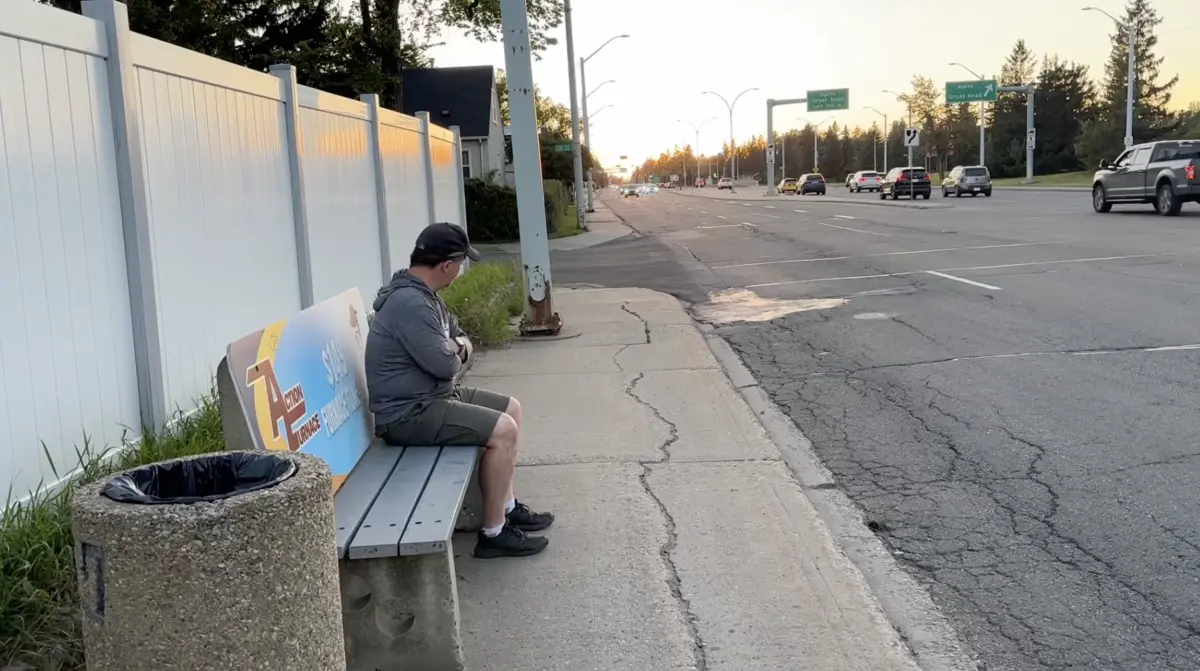
However, the reality of auto-centric design sets in almost immediately. On Day 1, a Monday morning commute reveals the first major flaw in the local transit network: regional bus lines that run on hourly headways rather than convenient, high-frequency intervals. A trip that takes twelve minutes by car stretches into a forty-five-minute journey involving a lengthy walk along a busy arterial road lacking sidewalks, followed by a transfer at an unprotected, unshaded bus stop.
By Day 2, the logistical compounding effect takes hold. Running a routine midday errand—such as picking up a prescription or dropping off mail—turns into a multi-hour ordeal. Without safe, protected bike lanes, cycling alongside heavy truck traffic feels perilous, forcing the commuter to choose between taking a dangerous vehicular route or walking a circuitous path designed exclusively to accommodate turning semi-trucks rather than human pedestrians.
Days 3 and 4: The Social Tax and Interpersonal Strain
As the middle of the workweek arrives, the hidden social costs of car dependency become glaringly apparent. Spontaneous professional networking lunches, evening community meetings, and family social obligations cannot be easily attended because transit service effectively shuts down or scales back drastically after 7:00 PM.
This is the phase where participants experience what urbanists call the "social tax" of car-free living. As highlighted in recent commentary from Bike Bike Nudge Nudge, navigating a car-centric municipality often requires an uncomfortable amount of social bargaining. Simple tasks demand begging family members or friends for rides, altering someone else’s schedule, and feeling a persistent sense of being a burden.
For example, attending an evening event across town requires coordinating a convoluted transit route that would make returning home before midnight impossible, forcing the commuter to ask their spouse for a late-night pickup, thereby disrupting the household’s entire routine. The time lost sitting in traffic while bumming rides—or waiting at poorly lit transit stops—represents hours of productivity and leisure stolen by poor infrastructure design.
Days 5 and 6: Systemic Fatigue and Exclusions
By the end of the workweek, the cumulative physical and mental fatigue of navigating hostile infrastructure reaches a peak. The sheer cognitive load of planning every trip down to the minute—calculating walking times, checking for delayed buses, scanning for missing curb ramps, and worrying about weather exposure—wears down even the most enthusiastic participant.
Furthermore, Days 5 and 6 highlight the places and activities that are entirely off-limits. Grocery stores located in auto-oriented strip malls surrounded by sprawling sea-of-asphalt parking lots become virtually inaccessible on foot or by bicycle. Parks, recreation centers, and medical facilities located on high-speed bypasses with no pedestrian crossings are rendered invisible to anyone not enclosed in a two-ton metal box.
Participants realize that they are not just lacking a car; they are lacking access to their own communities.
Day 7: Reflection and Realization
The final day of the challenge brings profound clarity. Participants emerge from the week with a visceral understanding of what it means to be structurally marginalized by municipal planning decisions. The experiment transforms abstract policy debates about zoning, transit funding, and complete streets into deeply personal experiences of isolation, lost time, and constrained mobility.
Supporting Context & Metrics: The Reality of Car Dependency
The personal frustrations documented during the Week Without Driving reflect broader, systemic data points that define modern transportation in the United States and globally.
The Financial Burden of Auto-Ownership
According to data from the American Automobile Association (AAA), the average cost of owning and operating a new vehicle in the United States has soared past $10,000 per year when accounting for depreciation, fuel, insurance, maintenance, and financing. For low-income households, this expense consumes an unsustainable percentage of disposable income, creating a cruel paradox: individuals must spend a massive portion of their earnings on a car simply to maintain employment, yet the cost of that car keeps them trapped in cycles of financial vulnerability.
The Equity Deficit
The Week Without Driving initiative was originally popularized by transit advocates and disability rights activists to highlight the daily lived experiences of the roughly one-third of the U.S. population that does not drive. This demographic includes:
- Older adults who have aged out of driving.
- Young people under the legal driving age.
- Individuals with disabilities or medical conditions that preclude driving.
- Low-income families who cannot afford the upfront and ongoing costs of vehicle ownership.
When cities are planned exclusively for drivers, they systematically disenfranchise these populations, restricting their access to education, employment, healthcare, and community life.
Safety and Infrastructure Deficits
Federal safety data underscores the danger of auto-centric infrastructure. Pedestrian fatalities have climbed steadily over the past decade, driven in large part by the proliferation of larger, heavier passenger vehicles (such as SUVs and light trucks) and road designs that prioritize high vehicle speeds over human safety. Arterial roads—wide, multi-lane thoroughfares designed to move cars quickly through urban areas—are disproportionately the sites of severe and fatal pedestrian crashes.
Official Statements and Advocacy Voices
As anticipation builds for the October 1–8 event, advocacy networks across the country are amplifying calls for systemic policy changes.
Transportation justice advocates emphasize that the Week Without Driving is not about shaming individuals who drive out of necessity; rather, it is about shining a light on the policy choices that created that necessity in the first place.
"When we design our cities so that a person cannot buy groceries, get to work, or visit a doctor without a car, we have not created freedom—we have created captivity," notes a spokesperson for the national campaign. "This week is an invitation for our leaders to step outside their windshield-tinted bubbles and experience the city the way millions of their constituents are forced to do every single day."
Digital creators and local commentators have similarly focused on demystifying the hidden costs of auto-supremacy. In widely shared video breakdowns, independent analysts have calculated the exact metrics of exclusion: the hours lost waiting for infrequent transit, the social capital expended asking for rides, and the physical isolation imposed by missing sidewalks and hostile stroads (streets designed to act as both highways and local roads).
Organizers are issuing a specific, urgent call to action for local elected officials, city council members, and transit board directors: Join the challenge.
- "Tell your elected officials who have never gone a day without getting behind the wheel to do it with you," campaign organizers urge.
Requiring policymakers to rely on the exact transit networks and pedestrian infrastructure they fund—or neglect—has proven to be one of the most effective catalysts for genuine political will and infrastructure reform.
Future Outlook: Building Cities for People, Not Just Cars
The Week Without Driving serves as an annual stress test for our communities, but its ultimate goal is to inspire year-round transformation. As urban areas face the compounding pressures of housing affordability, traffic gridlock, and carbon reduction, the imperative to pivot away from car-centric planning has never been clearer.
The Path Forward: Complete Streets and Multimodal Investment
Transforming a car-dependent city into a vibrant, accessible community requires deliberate policy shifts:
- Complete Streets Policies: Mandating that all road reconstruction projects prioritize the safety and mobility of pedestrians, cyclists, and transit riders alongside motorists.
- High-Frequency Transit: Investing operational subsidies into public bus and rail networks so that transit becomes a matter of convenience rather than a last resort.
- Zoning Reform: Eliminating mandatory parking minimums and allowing mixed-use, walkable neighborhood developments that bring daily necessities within a 15-minute walk or roll of residential areas.
- Safe Systems Approach: Lowering speed limits in residential zones, installing protected bike lane networks, and building raised crosswalks to eliminate traffic fatalities.
Mark Your Calendars: October 1–8
The upcoming Week Without Driving offers a vital entry point for this broader movement. Whether you commit to going completely car-free for seven days, attempt a hybrid routine of walking and transit, or challenge your local representative to give up their car keys for a week, the experience promises to reshape how you view your city.
By confronting the hidden costs of our auto-centric culture, we can begin to imagine—and demand—urban spaces designed not for machines, but for human lives, community connection, and sustainable mobility.
For more information, resources, and to officially sign up for the challenge, visit participating local transit advocacy websites and watch the introductory video campaign online.