







Executive Overview
A sharp geopolitical and economic debate has emerged over the future of the world’s most critical maritime energy chokepoint: the Strait of Hormuz. In September 2026, a war of words escalated between United States Treasury Secretary Scott Bessent and Qatari Energy Minister Saad Al-Kaabi, exposing deep divisions over global energy security, regional infrastructure development, and the long-term viability of maritime trade routes in the Middle East.
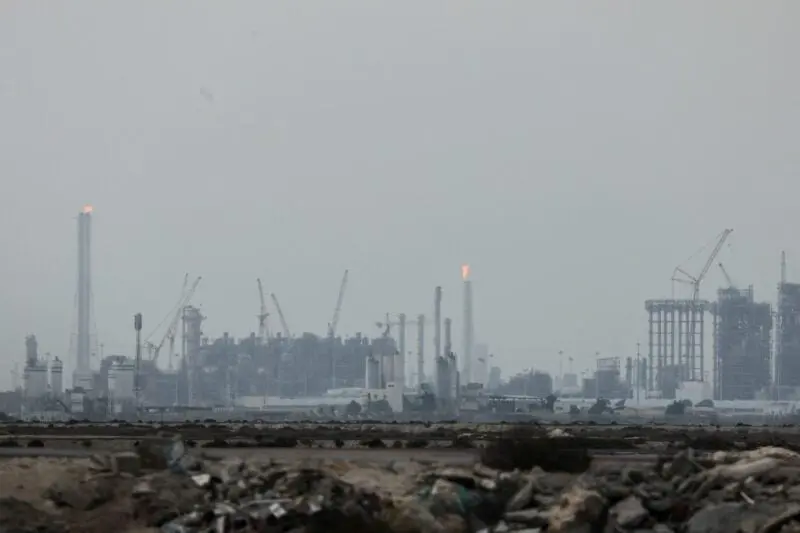
The dispute centers on a provocative assertion by Secretary Bessent, who claimed that ongoing regional conflicts and a surge in bypass pipeline infrastructure would render the Strait of Hormuz "worthless" within two years. This perspective is shaped by the ongoing war involving Iran, which has severely disrupted shipping lanes, spiked maritime insurance premiums, and forced energy companies to seek alternative logistics.
However, Qatar—the world’s leading liquefied natural gas (LNG) exporter—has fiercely rejected this thesis. Speaking at the Qatar Economic Forum in New York City, Saad Al-Kaabi, who also serves as the CEO of state-owned energy giant QatarEnergy, declared Bessent’s assessment "completely wrong." Supported by Qatari Commerce Minister Sheikh Faisal Al-Thani, Al-Kaabi argued that the physical and economic reality of global trade makes the Strait irreplaceable. While regional neighbors like the United Arab Emirates (UAE) and Saudi Arabia aggressively fund multi-billion-dollar bypass routes, Qatar has doubled down on its commitment to the waterway, confirming it has no plans to construct bypass pipelines.
This investigative report analyzes the timelines, strategic calculations, infrastructure metrics, and geopolitical realities defining this high-stakes clash between American policy ambitions and Gulf energy realities.
Detailed Chronology: The War of Words in September 2026
The clash of perspectives unfolded over three weeks in September 2026, transitioning from international diplomatic sidelines to the high-profile stages of global economic forums.
+-----------------------------------------------------------------+
|                        CHRONOLOGY OF EVENTS                     |
+-----------------------------------------------------------------+
| Sept 1, 2026: US Treasury Sec. Scott Bessent claims the Strait  |
| of Hormuz will be "a worthless piece of water" in two years     |
| during a G20 sideline meeting.                                  |
+------------------------------------+----------------------------+
                                     |
                                     v
| Sept 20, 2026: Qatari Energy Minister Saad Al-Kaabi rejects     |
| Bessent's claims at the Qatar Economic Forum in New York.       |
+------------------------------------+----------------------------+
                                     |
                                     v
| Sept 20, 2026: Qatari Commerce Minister Sheikh Faisal Al-Thani  |
| backs Al-Kaabi, emphasizing that 90% of global trade is seaborne.|
+-----------------------------------------------------------------+
The G20 Spark (September 1, 2026)
The opening salvo was fired by US Treasury Secretary Scott Bessent on September 1, 2026, on the sidelines of a Group of 20 (G20) meeting. Amidst discussions on global inflation, supply chain resilience, and the economic toll of the prolonged war involving Iran, Bessent presented a radical outlook on Middle Eastern energy transit.
"In two years, the Strait of Hormuz will be like a worthless piece of water," Bessent asserted. His argument rested on two core pillars:
- The accelerating development of cross-border and trans-peninsular oil and gas pipelines designed specifically to bypass the Persian Gulf.
- The persistent security vulnerabilities of the Strait, which has been heavily restricted and periodically blocked due to hostilities involving Iran.
Bessent’s remarks reflected a growing sentiment in Washington that the geopolitical leverage traditionally held by nations controlling the Strait could be neutralized through rapid infrastructure diversification.
The Doha Counter-Offensive in New York (September 20, 2026)
Nineteen days later, Qatari officials utilized the Qatar Economic Forum in New York City—an event underwritten by the Qatari government—to deliver a coordinated, public rebuttal.
Saad Al-Kaabi did not mince words when asked about Bessent’s remarks. "I mean, maybe this is his view. I think this is completely wrong," Al-Kaabi stated. He emphasized that the Strait of Hormuz is not merely an energy corridor but a multi-commodity trade highway that supports the broader economies of the entire Persian Gulf basin. "If you look at the trade that we have through the Hormuz Strait, it cannot be obsolete," Al-Kaabi added, defiantly promising to repeat his stance to "anybody" who questioned the waterway’s permanence.
Later that day, Sheikh Faisal Al-Thani, Qatar’s Minister of Commerce and Industry, stepped forward to reinforce Al-Kaabi’s statements. Sheikh Faisal grounded his defense in macroeconomic reality, noting that "90% of all shipping happens through the sea" and framing the construction of pipelines not as a replacement for the Strait, but as a secondary effort at "diversification."
Supporting Context & Metrics: The Geopolitical Anatomy of Hormuz
To evaluate whether Bessent’s "worthless" prediction or Al-Kaabi’s "irreplaceable" stance holds water, one must look at the physical, economic, and logistical metrics governing the Strait of Hormuz.
+------------------------------------------------------------------+
|               STRAIT OF HORMUZ BY THE NUMBERS (EST.)             |
+------------------------------------------------------------------+
| Daily Crude Oil Flow:        ~20-21 Million Barrels/Day          |
| Global LNG Transit Share:    ~20% of Global Supply               |
| Narrowest Shipping Lane:     2 Miles Wide (in each direction)    |
| Seaborne Global Trade Share: ~90% of All Volume                  |
+------------------------------------------------------------------+
The Strategic Chokepoint
The Strait of Hormuz is a narrow waterway connecting the Persian Gulf with the Gulf of Oman and the Arabian Sea. At its narrowest point, the shipping lanes are only two miles wide in either direction, bordered by Oman to the south and Iran to the north.
Historically, the Strait has carried:
- Crude Oil: Approximately 20 to 21 million barrels per day (bpd), representing roughly 20% of global petroleum consumption.
- Liquefied Natural Gas (LNG): Over 80 million tons per annum (mtpa), primarily sourced from Qatar and the UAE, accounting for roughly 20% of global LNG trade.
- Containerized Cargo: Billions of dollars in consumer goods, industrial equipment, and agricultural products bound for Iraq, Kuwait, Bahrain, Qatar, and the upper Gulf ports of Saudi Arabia and Iran.
The Impact of the "Iran War" in 2026
By 2026, the geopolitical landscape of the Gulf had shifted due to active warfare involving Iran. The conflict has severely disrupted traditional shipping, leading to:
- Escalating Insurance Premiums: War risk insurance premiums for vessels transiting the Strait have surged, making traditional voyages commercially punitive for smaller operators.
- Ship-to-Ship (STS) Transfers: To mitigate risks, Qatari and UAE energy companies have increasingly relied on transferring LNG and crude cargoes via ship-to-ship operations outside the Strait of Hormuz, using smaller shuttle tankers to move product through the chokepoint before loading it onto larger tankers in safer waters.
The Regional Divergence: Bypass Projects vs. Maritime Loyalty
The dispute between Bessent and Al-Kaabi highlights a fundamental split in how Gulf nations are preparing for the future of energy transport.
+-----------------------------------------------------------------------+
|                       REGIONAL BYPASS STRATEGIES                      |
+-----------------------------------------------------------------------+
| Country      | Strategy             | Key Infrastructure              |
+--------------+----------------------+---------------------------------+
| UAE          | "Zero Hormuz"        | Fujairah Pipeline (ADNOC)       |
|              |                      | (50% Complete)                  |
+--------------+----------------------+---------------------------------+
| Saudi Arabia | Red Sea Pivot        | East-West Pipeline expansion;   |
|              |                      | Red Sea port investments        |
+--------------+----------------------+---------------------------------+
| Qatar        | Purely Maritime      | No bypasses; reliant on Strait  |
|              |                      | of Hormuz shipping lanes        |
+-----------------------------------------------------------------------+
1. The UAE’s "Zero Hormuz" Strategy
The United Arab Emirates has actively pursued a multi-billion-dollar initiative dubbed "Zero Hormuz." The cornerstone of this strategy is the expansion of pipelines connecting the onshore oilfields of Abu Dhabi directly to the port of Fujairah on the Gulf of Oman, bypassing the Strait entirely. According to recent disclosures from the Abu Dhabi National Oil Company (ADNOC), a major new crude pipeline designed to scale up bypass capacity is now 50% complete. Once fully operational, this infrastructure will allow the UAE to export the vast majority of its flagship Murban crude directly to open ocean lanes.
2. Saudi Arabia’s Red Sea Pivot
Saudi Arabia has similarly accelerated its investments in Red Sea ports and expanded the capacity of its East-West Pipeline (the Petroline). This system allows the Kingdom to pump crude from its Eastern Province fields across the Arabian Peninsula to terminal facilities in Yanbu on the Red Sea, insulating a significant portion of its export capacity from disruptions in the Strait.
3. Qatar’s Unyielding Maritime Position
In stark contrast to its neighbors, Qatar is refusing to build bypass pipelines. Saad Al-Kaabi confirmed this definitive policy choice: "We have decided not to do pipelines, and I think the decision in Qatar was based on commercial and technical [factors], and we are only going to be using the straits."
Qatar’s decision is rooted in the physics of its primary export: LNG. Unlike crude oil, which can be easily pumped through thousands of miles of overland pipelines, LNG must be supercooled to -162°C (-260°F) and transported via specialized cryogenic vessels.
To bypass the Strait of Hormuz via pipeline, Qatar would have to:
- Build an incredibly complex, high-pressure natural gas pipeline crossing either Saudi Arabian territory or the deep waters of the Gulf of Oman.
- Construct massive, multi-billion-dollar liquefaction plants outside the Strait (e.g., in Fujairah or Oman) to convert the piped gas back into liquid form for shipping.
- Navigate highly sensitive regional geopolitics, requiring transit agreements with neighboring states with whom Doha has historically had complex diplomatic relations.
For Qatar, the commercial and technical costs of building such bypass systems far outweigh the risks of continuing to navigate the Strait of Hormuz.
Official Statements: Deconstructing the Rhetoric
The public statements made by the key actors in this debate reveal a deeper clash of political and economic philosophies.
Scott Bessent: The US Treasury’s Infrastructure Optimism
Secretary Bessent’s assertion that the Strait will become "worthless" is viewed by analysts as both an economic prediction and a strategic narrative designed to undermine Iran’s primary geopolitical leverage. By signaling that global markets are rapidly decoupling from the Strait of Hormuz, the US Treasury seeks to reassure markets, suppress energy price spikes, and diminish the perceived threat of Iranian maritime blockades.
However, Bessent’s rhetoric glosses over the extreme difficulty of transitioning global gas markets away from maritime transit, assuming that pipeline capacity can scale fast enough to replace a waterway that handles a fifth of the world’s petroleum.
Saad Al-Kaabi: The Voice of Pragmatic Energy Realism
As the head of QatarEnergy, Al-Kaabi’s priority is protecting the long-term investment viability of Qatar’s massive North Field expansion project, which aims to boost the country’s LNG production capacity from 77 mtpa to over 140 mtpa by the end of the decade.
Al-Kaabi’s insistence that the Strait "cannot be obsolete" is a defense of Qatar’s sovereign economic model. By dismissing Bessent’s claims as "completely wrong," Al-Kaabi is telling international buyers in Europe and Asia that Qatar’s maritime export routes remain secure, reliable, and commercially viable, irrespective of the rhetorical posturing coming out of Washington.
Sheikh Faisal Al-Thani: The Broad Commercial Perspective
Commerce Minister Sheikh Faisal Al-Thani’s intervention reframed the argument from an energy-specific issue to a broader critique of global supply chain mechanics. His assertion that "90% of all shipping happens through the sea" serves as a reminder that even if every drop of oil and gas were successfully piped out of the Persian Gulf, the region’s economies would still depend on the Strait of Hormuz for the import of food, consumer goods, construction materials, and industrial inputs.
Future Outlook: The Resilient Chokepoint
While the United States and some Gulf states envision a future where the Strait of Hormuz is neutralized as a geopolitical weapon, the physical and economic realities suggest the waterway will remain a critical global artery for the foreseeable future.
+-----------------------------------------------------------------------+
|                    THE FUTURE OF THE STRAIT OF HORMUZ                 |
+-----------------------------------------------------------------------+
|                                                                       |
|  [UAE & Saudi Bypass Pipelines]        [Qatari LNG Mega-Expansion]    |
|   - Diverts portion of crude oil       - Locks in massive seaborne    |
|   - Mitigates localized risk            LNG volumes via the Strait    |
|                                                                       |
|                                       /                              |
|                                 v     v                               |
|                     [STREET OF HORMUZ STATUS IN 2028+]                |
|                      - Remains highly strategic                       |
|                      - Lower crude reliance, but                      |
|                        absolute LNG reliance remains                  |
+-----------------------------------------------------------------------+
Why "Worthless" is an Exaggeration
The claim that the Strait of Hormuz will be "worthless" by 2028 ignores several logistical realities:
- Capacity Limitations: Existing and planned bypass pipelines in Saudi Arabia and the UAE have a combined capacity that covers only a fraction of the total daily flow through the Strait. Even at peak operation, these pipelines cannot handle the massive volumes of crude exported by Iraq, Kuwait, and Iran itself.
- The Indispensability of LNG: While oil can be diverted, LNG cannot easily follow suit. Qatar’s massive capital commitment to maritime LNG shipping ensures that the global transition to cleaner burning natural gas will remain tethered to the safety of the Strait.
- The Shifting of Risk: Bypassing the Strait of Hormuz by routing pipelines to the Red Sea or the Gulf of Oman does not entirely eliminate geopolitical risk. As seen in recent conflicts, shipping in the Red Sea and the Gulf of Aden faces its own severe security threats from drone strikes, piracy, and regional proxy forces.
Conclusion: A Dual-Track Gulf Energy Map
The debate between Secretary Bessent and Minister Al-Kaabi highlights the emergence of a dual-track energy export model in the Middle East. On one track, Saudi Arabia and the UAE are building expensive land-based alternatives to bypass regional vulnerabilities, attempting to insulate their economies from maritime blockades. On the other track, Qatar is choosing to navigate those vulnerabilities directly, relying on its maritime dominance, massive fleet, and diplomatic relations to keep its shipping lanes open.
Ultimately, while the Strait of Hormuz may see a reduction in the proportion of crude oil passing through its waters over the next decade, its role as the primary pathway for global LNG and regional trade guarantees that it will remain far from "worthless." Instead, it will continue to be one of the most vital, contested, and watched stretches of water on the planet.