Executive Overview
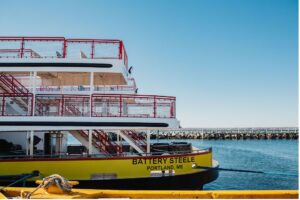
The maritime transit landscape of the United States is undergoing a quiet, yet profound, revolution. For generations, the lifeline of island communities has been defined by the steady, heavy thrum of diesel engines—a symbol of reliability that, until recently, came with an unavoidable environmental cost. Today, that narrative is shifting dramatically off the coast of Maine. Casco Bay Lines, a critical public transit link for residents, commuters, and tourists alike, has officially sent its newest vessel into the Atlantic Ocean. The ship, appropriately named the Battery Steele, is currently navigating its way up the New England coastline toward its permanent home in Portland, Maine.
Representing a monumental leap forward for regional ferry service, the Battery Steele is not merely a replacement for aging tonnage; it is a technological marvel and an environmental flagship. Measuring 164 feet in length, this robust steel vessel is outfitted with a cutting-edge diesel-electric hybrid propulsion system. It stands proudly as one of the very first public passenger ferries of its kind in the United States to harness advanced battery technology on such a transformative scale.
Scheduled to enter formal service this fall following a thorough phase of shoreside commissioning and intensive crew training, the Battery Steele will primarily service the heavily traveled commuter and tourist route between Portland and Peaks Island. In doing so, it will eventually succeed the trusty Machigonne II, which has served the bay faithfully for years. But the arrival of the Battery Steele signifies far more than a simple fleet upgrade. It is a calculated, forward-thinking investment in the ecological health of Casco Bay, designed to eliminate up to 800 metric tons of carbon dioxide emissions annually. By marrying state-of-the-art maritime engineering with deep-rooted local heritage, Casco Bay Lines is charting a course that honors the past while aggressively steering toward a cleaner, quieter, and more sustainable future.

Detailed Chronology: From Rhode Island Shipyards to the Open Atlantic
The journey of the Battery Steele from a blueprint on a drafting table to a sovereign vessel cutting through the swells of the Atlantic Ocean is a testament to years of meticulous planning, engineering precision, and cross-state collaboration.
The story truly began on the drawing boards of the renowned Elliott Bay Design Group, a naval architecture firm tasked with translating the ambitious environmental and logistical goals of Casco Bay Lines into a tangible, seaworthy reality. Their mandate was clear: design a vessel capable of navigating the demanding coastal conditions of Maine, handling the heavy passenger and vehicular loads of the Peaks Island run, and drastically reducing the carbon footprint of the operation without sacrificing operational reliability.
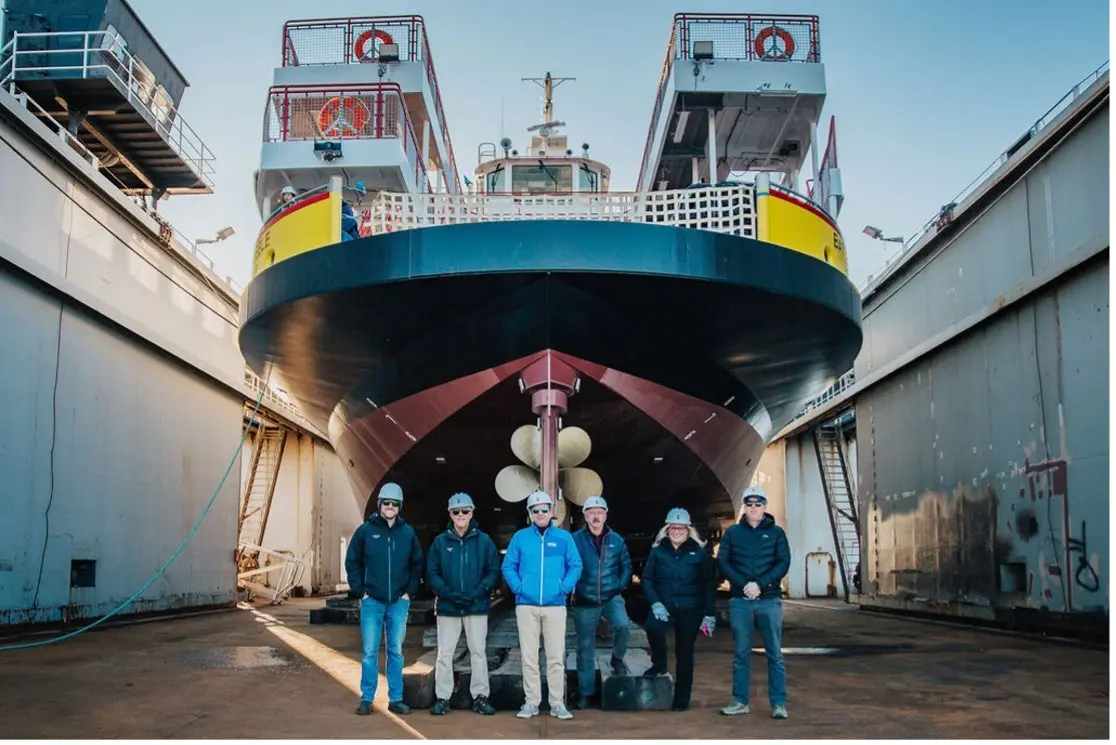
Once the design was finalized, construction commenced at Senesco Marine, a premier, highly respected shipbuilding facility located in North Kingstown, Rhode Island. Over months of intensive labor, skilled shipwrights, marine electricians, and metalworkers brought the hull to life, welding the 164-foot steel frame and integrating the intricate hybrid propulsion architecture.
The culmination of this exhaustive construction phase arrived in early April, marked by a time-honored maritime tradition. Members of the Casco Bay Lines leadership and operational teams traveled to Rhode Island to witness the vessel’s official launch. In a celebratory atmosphere that bridged centuries-old seafaring customs with modern industrial achievement, a bottle of champagne was smashed against the hull of the Battery Steele, sending the sleek vessel sliding down the ways and into the water for the very first time.

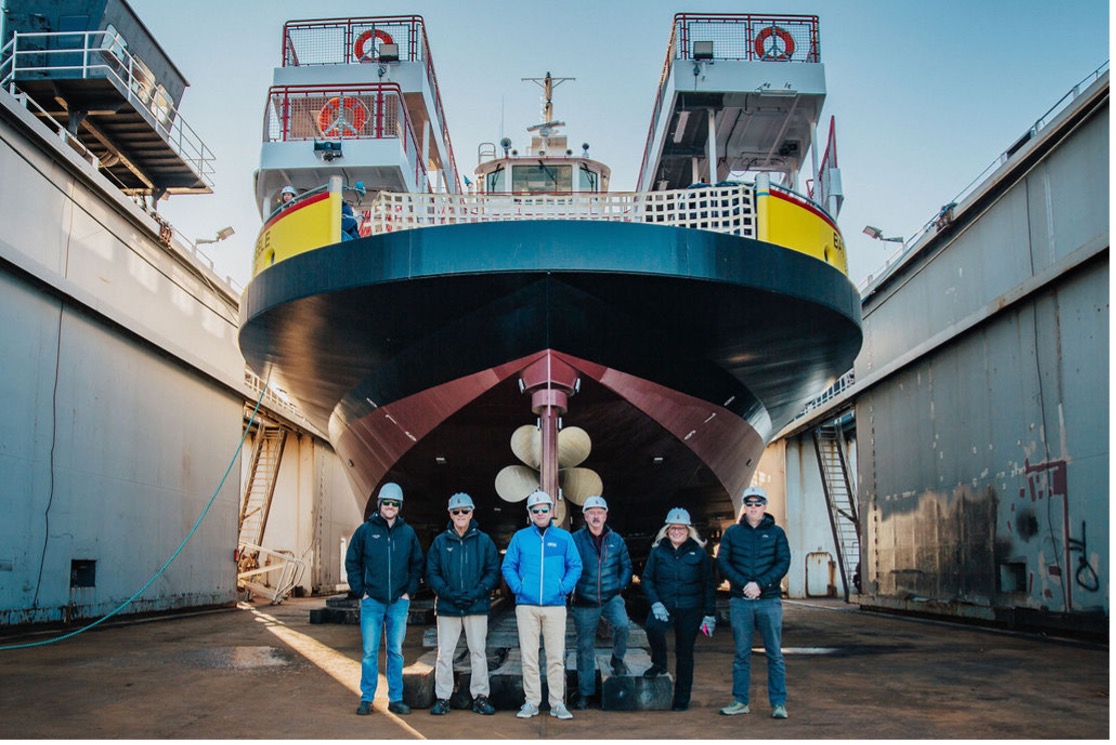
Following its launch in North Kingstown, the vessel entered a crucial preparatory phase at the shipyard, ensuring all internal systems, hull integrations, and safety mechanisms met stringent United States Coast Guard standards. Now, having officially cleared the shipyard and entered the open waters of the Atlantic Ocean, the Battery Steele is executing its transit voyage northward.
Upon its arrival in Portland later this summer, the timeline will enter its final preparatory stages. The vessel will undergo comprehensive commissioning processes—rigorous testing of its battery banks, charging infrastructure compatibility, backup generators, and navigational electronics. Concurrently, captains, engineers, and deckhands will undergo specialized training to master the nuances of handling a diesel-electric hybrid vessel. If all proceeds according to schedule, the Battery Steele will officially embark on its maiden commercial voyage between Portland and Peaks Island this autumn, officially integrating into the active Casco Bay Lines fleet.
Supporting Context & Metrics: Engineering a Greener Wake
To truly appreciate the engineering triumph that is the Battery Steele, one must examine the metrics and technological specifications that set it apart from conventional maritime vessels. For decades, passenger ferries have relied almost exclusively on direct diesel-mechanical propulsion systems. While reliable, these systems generate substantial noise, vibrate heavily, and emit continuous streams of greenhouse gases and particulate matter directly into the marine environment.
The Battery Steele shatters this paradigm by implementing a sophisticated diesel-electric hybrid propulsion system powered primarily by advanced energy storage batteries. This setup allows the vessel to operate largely on silent, emission-free electric power during its transit across Casco Bay. To ensure absolute reliability and year-round operational continuity—crucial for a ferry that serves as an essential lifeline for island residents during harsh Maine winters—the vessel is equipped with shoreside fast-charging infrastructure at the Portland terminal, complemented by clean-burning backup generators onboard.
The environmental dividends of this architecture are staggering. Projections indicate that once fully operational, the Battery Steele will prevent up to 800 metric tons of carbon dioxide emissions from entering the atmosphere every single year. To put that figure into perspective, it is equivalent to removing dozens of passenger vehicles from the road permanently or offsetting the annual energy consumption of numerous residential homes. Furthermore, the reduction in localized exhaust emissions directly improves air quality around the busy Portland waterfront and the densely populated ferry slips.
Beyond emissions, the community impact extends to noise pollution. Conventional diesel engines produce a persistent, low-frequency hum that resonates across the water and disturbs both marine wildlife and waterfront residents. The electric drive of the Battery Steele promises a dramatically quieter ride, transforming the passenger experience into a serene journey across the bay while minimizing acoustic disruption to the delicate marine ecosystem of Casco Bay.
Honoring Local Heritage: The Legacy of Battery Steele
While the vessel represents the pinnacle of modern green technology, its name is deeply anchored in the historical fabric of the region. The Battery Steele draws its moniker from one of the most iconic and imposing historical landmarks on Peaks Island: the historic military fortification constructed during World War II.
Originally built as a major coastal defense installation to protect Portland Harbor from potential enemy attack, Battery Steele was home to some of the largest gun batteries in the United States. It stands today as a monumental feat of mid-century military engineering, characterized by massive concrete bunkers and subterranean structures that long served as a source of mystery and local lore.
Over the decades, as the geopolitical landscape shifted, the military abandoned the site, leaving nature to reclaim the concrete monoliths. However, through visionary preservation efforts that commenced in the 1990s, the former military installation underwent a remarkable metamorphosis. Today, Battery Steele has been successfully transformed into a treasured public space. It is a destination for hikers, history enthusiasts, students, and residents seeking a quiet place for exploration, reflection, and community connection.
By christening their newest and most advanced vessel Battery Steele, Casco Bay Lines has woven this rich local narrative into the very identity of the ship. Just as the physical site on Peaks Island evolved from a fortress of war into a sanctuary for community connection and environmental appreciation, the ferry named in its honor represents a transition away from fossil-fuel dominance toward a harmonious, sustainable coexistence with the natural world. It is a powerful statement: honoring the stubborn, resilient spirit of Maine’s past while courageously investing in its ecological future.
Official Statements and Industry Significance
The introduction of the Battery Steele is not merely an internal milestone for Casco Bay Lines; it is widely regarded by transportation and maritime experts as a watershed moment for public transit infrastructure in New England. As coastal communities across the United States grapple with the dual pressures of increasing ridership and urgent climate mandates, the successful deployment of a high-capacity hybrid electric ferry serves as a vital blueprint for the industry.
Behind this achievement is a formidable partnership between regional transit operators, visionary naval architects, and elite American shipbuilders. Designed by the Elliott Bay Design Group—a firm globally recognized for innovative and practical marine engineering—and constructed with meticulous craftsmanship by Senesco Marine in Rhode Island, the project reflects a shared commitment to elevating domestic shipbuilding standards.
Maritime authorities have pointed out that building and operating a vessel of this complexity in the unpredictable waters of the North Atlantic requires immense technical daring. The integration of high-voltage marine battery systems, shoreside charging docks, and intelligent power-management software places Casco Bay Lines at the absolute forefront of cleaner maritime transportation in the Northeast.
While formal executive commentary accompanying the launch emphasizes the collaborative triumph of bringing the ship from concept to sea, the broader industry reaction is one of intense interest and anticipation. Transport agencies from Seattle to New York are closely watching the Battery Steele deployment. They recognize that the successes, operational efficiencies, and lessons learned from the Portland-to-Peaks Island route will likely inform the electrification strategies of municipal ferry systems nationwide for decades to come.
Future Outlook: A New Standard for Casco Bay
As the Battery Steele continues its historic transit up the Atlantic seaboard toward Portland, the horizon for Casco Bay Lines has never looked brighter—or greener. The arrival of the vessel this summer initiates a critical countdown toward autumn implementation, a period that will see the culmination of years of strategic financial planning, infrastructural upgrades at the Portland terminal, and rigorous staff training.
When the Battery Steele officially replaces the Machigonne II on the Peaks Island run later this year, daily commuters will immediately notice the difference. They will step aboard a vessel that not only provides modern amenities, enhanced accessibility, and reliable scheduling, but does so with a whisper-quiet electric hum and zero direct tailpipe emissions during transit.
Yet, the commissioning of the Battery Steele is viewed by leadership not as a final destination, but as a foundational milestone in an ongoing Fleet Evaluation Project. As environmental regulations tighten and climate realities demand bolder action, the insights gained from operating this hybrid ferry will pave the way for future fleet modernizations across the entire Casco Bay network.
For the residents of Peaks Island, the commuters who rely on punctual daily transit, and the countless visitors who experience the breathtaking beauty of Maine’s coastal waters each year, the Battery Steele is a promise kept. It is a testament to the fact that progress and tradition can coexist, that industrial innovation can respect ecological fragility, and that the historic waters of Casco Bay are entering a cleaner, more sustainable golden age. As the vessel rounds the breakwater and drops anchor in Portland Harbor later this summer, it will carry far more than passengers and vehicles—it will carry the renewed, unwavering commitment of an entire community to the future of its marine home.