








Executive Overview
For decades, the curb has been the great battleground of the American metropolis. It is a narrow, highly contested strip of asphalt where the competing demands of mass transit, commercial freight, private automobiles, cyclists, and pedestrians violently collide. In dense urban environments like Center City Philadelphia, this friction historically manifested as an unrelenting cycle of gridlock: delivery trucks idling in travel lanes, private vehicles squatting in commercial loading zones, and double-parking that choked traffic arteries to a crawl.
Enter the Philadelphia Parking Authority (PPA). Over the past 15 months, the state-run agency has introduced a high-tech automated enforcement initiative utilizing advanced camera systems to police loading zones and combat illegal double-parking. The results of this pilot program have sent ripples of optimism through the urban planning community nationwide. Traffic speeds in the target zones have surged by nearly 43%, commercial freight access to dedicated delivery spots has nearly doubled, and pedestrian and cyclist safety has markedly improved.
As cities across the United States struggle to adapt to the explosive rise of e-commerce—grappling with an endless stream of Amazon vans, rideshare vehicles, and food delivery couriers—Philadelphia’s innovative approach offers a compelling blueprint. By combining clear physical infrastructure, modern digital policy (via the CurbPass app), and unyielding automated regulation, the city may have forged the missing link in modern curb management. Yet, as transit experts note, technology is only half the battle. Navigating the politics of public compliance, privacy concerns, and behavioral adaptation requires a delicate balance of carrot and stick.
Detailed Chronology: From Gridlock to Smart Enforcement
To understand how Philadelphia achieved these breakthroughs, it is necessary to examine the timeline of the initiative and the operational mechanics that brought it to life.
The Genesis of the Pilot
The seeds of Philadelphia’s automated curb revolution were sown out of absolute necessity. Center City, with its narrow colonial-era streets, was never designed to handle the modern influx of vehicular traffic compounded by app-based delivery services. Delivery drivers, facing a dearth of legal parking spaces, routinely resorted to double-parking, effectively turning multi-lane thoroughfares into single-lane bottlenecks.
In May 2025, the PPA took a decisive step. Moving away from the slow, highly inefficient model of relying solely on foot patrol officers to manually ticket stationary vehicles, the agency deployed a network of automated enforcement cameras. Initially blanketing key commercial corridors in Center City, the system was designed to target chronic loading zone abuses and double-parking infractions without relying on human officers to constantly patrol every block.
Operational Mechanics: How the System Works
The technology underpinning Philadelphia’s program prioritizes precision over indiscriminate surveillance. The infrastructure relies on a network of over 50 specialized cameras (with more planned for deployment) strategically positioned to monitor designated commercial loading zones.
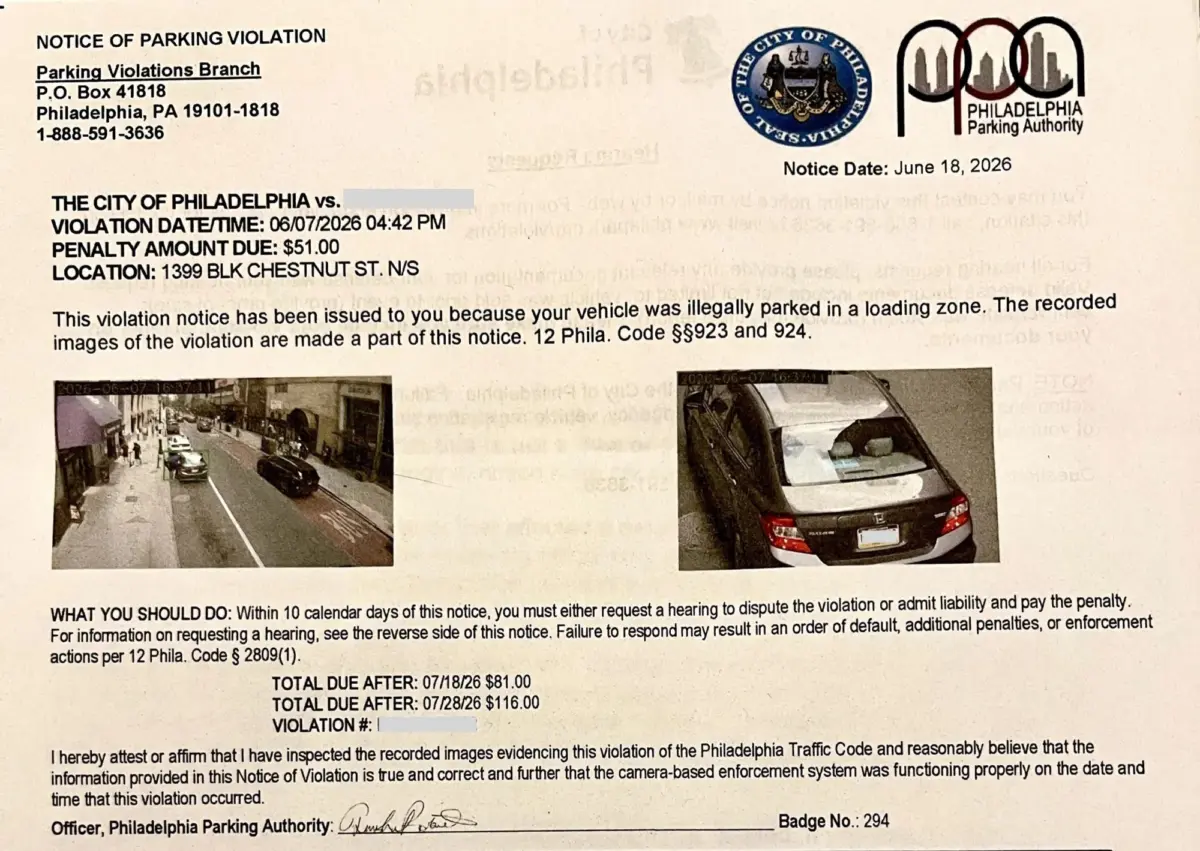
Crucially, these cameras are programmed for a singular purpose: license plate recognition. They do not track pedestrian faces, record vehicle interiors, or capture personally identifiable information unrelated to parking infractions. Furthermore, the system incorporates a vital human-in-the-loop safeguard. Before any citation is printed and mailed, PPA enforcement officers manually review the photographic and video evidence to ensure accuracy, thereby eliminating algorithmic errors.
The rules governing the zones are designed to balance commerce with fluidity:
- Registration: While commercial vehicles are prioritized, passenger vehicles and everyday drivers are permitted to use the zones only if they register their session via the CurbPass mobile application.
- The Grace Period: The first three minutes of parking are entirely free, accommodating quick passenger drop-offs or rapid package handoffs.
- The Pricing Structure: After the initial three-minute window, drivers are charged 10 cents per minute.
- The Penalties: Drivers who overstay their welcome past an hour, or who fail to register on the CurbPass app entirely, face a $51 fine. Those caught in the act of illegal double-parking face a steeper $76 penalty.
Expansion and Early Milestones
Within 15 months of its rollout, the program graduated from a localized experiment to a proven catalyst for change. Buoyed by measurable success metrics—detailed in the following section—the PPA announced formal plans to expand the automated camera network to additional commercial corridors throughout Center City, signaling a permanent shift in how Philadelphia manages its curbside real estate.
Supporting Context & Metrics: The Numbers Behind the Transformation
Urban planners often talk about the "curb deficit"—the widening gap between the demand for temporary vehicular stopping space and the static physical capacity of city streets. Philadelphia’s program provides rare, quantifiable data on what happens when that deficit is aggressively managed through automation.
Speed and Flow
According to data highlighted by the Philadelphia Inquirer, the immediate operational impact on traffic velocity was dramatic. Prior to the implementation of automated enforcement, average vehicle speeds in Center City crawl zones languished at a miserable 7 miles per hour. Within 15 months of the cameras going live, average speeds climbed to 10 miles per hour—a roughly 43% increase in traffic velocity.
While 10 mph may not sound blistering, in the context of dense urban cores, it represents the difference between total gridlock and functional, steady-state mobility. Buses move faster, emergency vehicles experience fewer delays, and internal combustion engines spend less time idling in traffic, resulting in tangible reductions in localized carbon emissions.
The Commercial Freight Renaissance
One of the most profound ironies of urban delivery logistics is that commercial freight carriers are often the primary victims of illegal parking. Because private passenger cars routinely squat in yellow loading zones, delivery trucks are forced to double-park in travel lanes, unloading goods under the constant threat of angry motorists and traffic citations.
Philadelphia’s automated cameras changed this dynamic overnight. By reliably keeping private vehicles out of commercial loading spaces, the PPA created a predictable environment for logistics operators. Parking authority officials reported that the number of legitimate freight vehicles utilizing dedicated loading zones increased by a staggering 97 percent. Delivery drivers could finally count on a legal, reliable space to drop off goods, dramatically reducing the time spent circling blocks or blocking traffic lanes.
Safety and the Vulnerable Road User
While official municipal crash data often lags behind real-time interventions, the qualitative safety metrics reported by neighborhood groups are overwhelmingly positive.
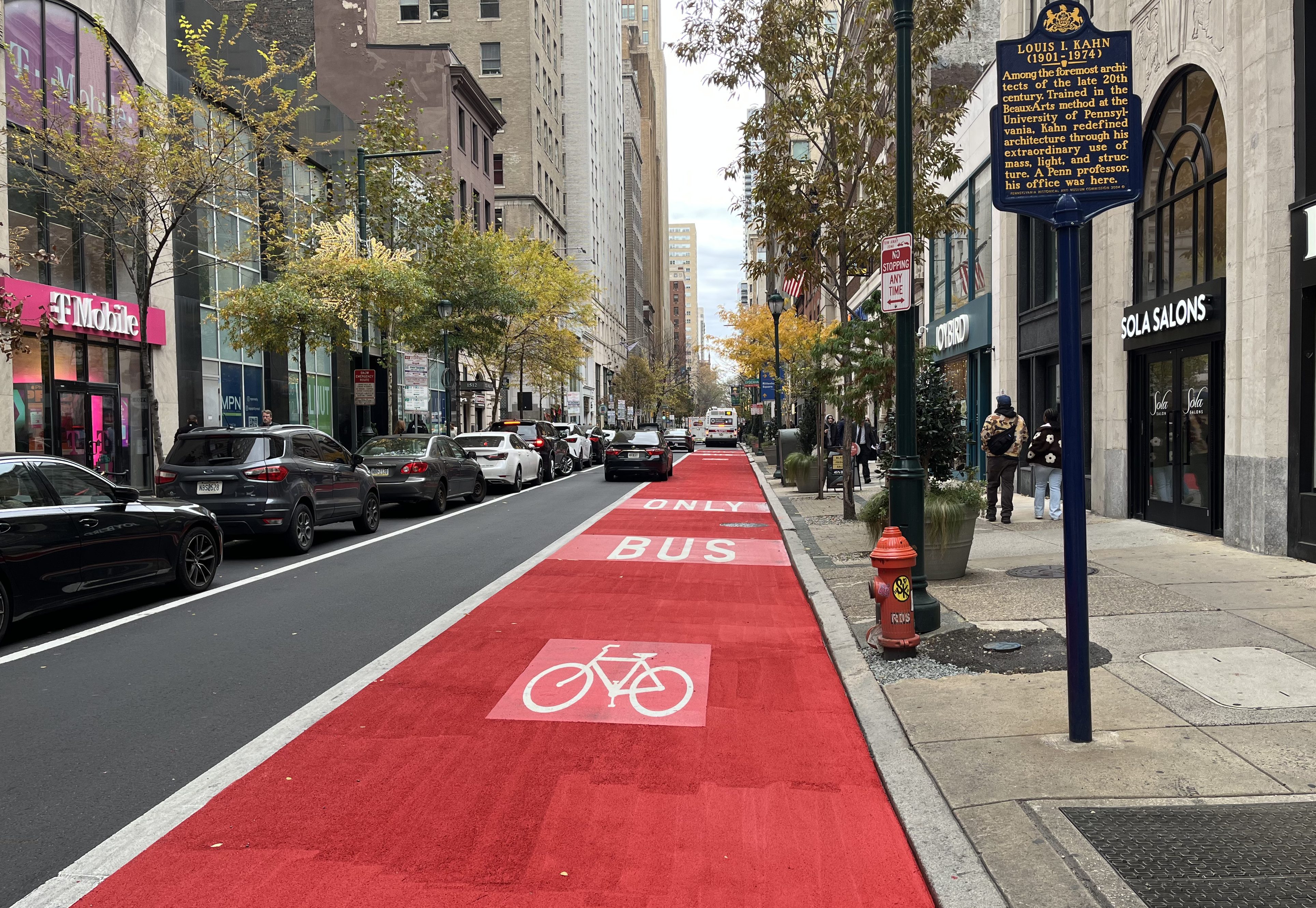
In dense urban environments, double-parked delivery vans and cars parked illegally in crosswalks or bike lanes create severe sightline hazards—a phenomenon transportation planners call "the visual blinder effect." A cyclist attempting to navigate around a double-packed SUV is thrust directly into the path of moving traffic. A pedestrian crossing the street hidden behind an improperly parked vehicle is virtually invisible to oncoming motorists.
Cody Cowper, chair of the Complete Streets Committee for the Washington Square West Civic Association, noted the palpable change in neighborhood safety. "These changes have probably shown a lot of safety improvements," Cowper observed. "You don’t have somebody… swerving around a car and they can’t see the pedestrians in the intersection."
Official Statements and Expert Perspectives
The success of Philadelphia’s initiative has turned the city into a living laboratory, attracting the attention of municipal leaders and urban logistics researchers across North America.
City and Authority Leadership
For the PPA, the program represents a triumph of governance and a validation of long-term strategic planning.
"We are making substantial progress in our effort to reduce congestion on Center City streets, which in turn improves public safety and the quality of life in Philadelphia,"
— Gabe Roberts, Acting Executive Director, Philadelphia Parking Authority
Beyond raw efficiency, supporters emphasize the democratization of enforcement. Human parking enforcement is inherently subjective, prone to resource limitations, and vulnerable to accusations of selective targeting. Automated cameras, by contrast, apply the law uniformly.
"Our enforcement shouldn’t be selective," noted Cody Cowper. "The things that people are being ticketed for were always illegal. We just didn’t have a good means of enforcing it."
Academic Insights: The Urban Freight Perspective
Giacomo Dalla Chiara, an urban freight management researcher at the University of Washington, has studied curb management systems across 13 major U.S. cities. His research reveals a sobering reality: the vast majority of American cities fail miserably at curb regulation. Many municipalities throw up their hands, painting a curb yellow and walking away, utterly failing to manage the dynamic pressures of modern commerce.
Dalla Chiara points out that effective curb management requires the simultaneous integration of three distinct pillars:
- Infrastructure: Physical assets like clearly painted curbs and designated zones.
- Policy: Regulatory frameworks, such as strict time limits on loading spaces.
- Regulation: Pricing mechanisms coupled with active, credible enforcement.
According to Dalla Chiara, it is this third pillar—regulation and enforcement—where Philadelphia truly distinguishes itself. "A lot of cities are scared of changing regulations," he noted.
Nevertheless, academic rigor demands caution. Dalla Chiara warns that it is still premature to label the Philadelphia pilot an unmitigated success on a national scale. Because the program launched relatively recently (May 2025) and covers a limited geographic footprint, comprehensive long-term data on curb behaviors remains scarce. "We know very little about curb behaviors," he cautioned. "[Philadelphia is] really trying something new."
Future Outlook: Replicating the "Philly Model" Nationwide
Philadelphia is not entirely alone in its embrace of automated street enforcement. Cities like Los Angeles, New York, Washington, D.C., and Oakland have increasingly turned to technology—deploying bus- and trolley-mounted, AI-assisted cameras to issue tickets to motorists who block dedicated transit lanes. Furthermore, automated speed and red-light cameras have proven lifesaving across numerous urban jurisdictions.
However, applying automated enforcement specifically to commercial loading zones and multi-modal corridors represents a frontier that could fundamentally revolutionize downtown street safety nationwide.
As other municipal governments look to emulate Philadelphia’s success, local officials have offered a vital roadmap for avoiding political backlash and operational failure. Drawing from internal communications, PPA representatives emphasize that technology cannot simply be dropped onto unsuspecting drivers overnight.
Best Practices for Other Cities:
- Robust Public Outreach: Cities must invest heavily in public education campaigns well before the cameras go live. Public awareness is the foundation of voluntary compliance.
- The Warning Period: Municipalities should incorporate an initial grace or warning period. Giving drivers several weeks of receiving zero-dollar warning notices allows human behavior to adapt organically without generating immediate, politically toxic public outrage.
- Human Oversight: To maintain public trust and prevent algorithmic overreach, cities must build in a mandatory internal review team to inspect every captured image before a ticket is finalized and mailed.
- Accommodating Real-World Needs: Incorporating structural flexibilities—such as free short-term windows for passenger drop-offs—ensures that enforcement targets deliberate obstruction rather than everyday human necessity.
The Road Ahead
The American street is evolving. As e-commerce continues to expand and urban populations densify, cities that fail to manage their curbs will inevitably choke on their own economic vitality. Philadelphia has demonstrated that automated enforcement, when implemented thoughtfully with clear digital tools like CurbPass and strict human oversight, is not merely a revenue-generating nuisance. Rather, it is a powerful catalyst for reclaiming public space, speeding up mass transit, protecting vulnerable cyclists and pedestrians, and restoring order to the urban core. For mayors and transit planners watching from coast to coast, the message from the City of Brotherly Love is clear: the future of the city is at the curb, and the technology to save it is already here.