






Executive Overview
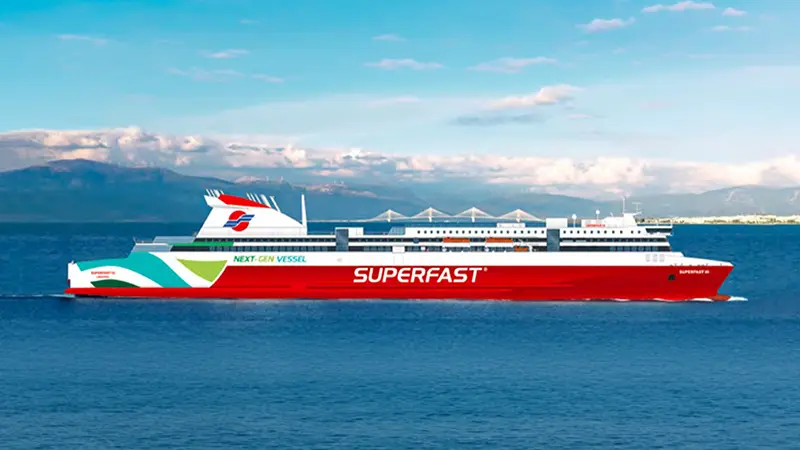
In a milestone event for European maritime infrastructure, SUPERFAST VI, the first of two state-of-the-art E-Flexer RoPax (roll-on/roll-off passenger) vessels ordered for Greece’s Attica Group, was officially launched at China Merchants Industry’s (CMI) Weihai shipyard on August 20, 2026. Designed to set new standards in energy efficiency, vessel capacity, and operational versatility, the ship represents a major capital investment aimed at modernizing key maritime transit arteries between Greece and Italy.
+---------------------------------------------------------------------------------+
|                              SUPERFAST VI AT A GLANCE                           |
+----------------------+----------------------------------------------------------+
| Shipyard / Builder   | China Merchants Industry (CMI) Weihai                    |
| Platform / Concept   | Stena RoRo E-Flexer Design                               |
| Delivery Schedule    | Spring 2027                                              |
| Length Overall (LOA) | 239.7 metres                                             |
| Passenger Capacity   | 1,500 passengers                                         |
| Freight Capacity     | 3,320 lane metres                                        |
| Commercial Structure | 10-year bareboat charter with 5th-year purchase option   |
| Primary Route        | Patras – Igoumenitsa – Ancona (Adriatic Corridor)        |
| Propulsion Concept   | Multi-fuel (Methanol-Ready, Battery-Ready notation)      |
+----------------------+----------------------------------------------------------+
The vessel is being integrated into the Attica Group network under a long-term commercial arrangement with Swedish RoRo specialist Stena RoRo. Under the terms of the agreement, SUPERFAST VI will be operated via a ten-year bareboat charter, which includes a contractual option for Attica Group to purchase the vessel outright following the completion of its fifth year of operational service.
Following its scheduled delivery in the spring of 2027, SUPERFAST VI will be deployed on the vital Patras–Igoumenitsa–Ancona route. Measuring 239.7 metres in overall length, the vessel has been engineered to balance high-volume freight capacity with premium passenger comfort. Operating with a capacity for 1,500 passengers and offering 3,320 lane metres for commercial trailers, trucks, and private vehicles, SUPERFAST VI incorporates future-proof propulsion engineering—featuring multi-fuel, methanol-ready main engines and a battery-ready notation designed to seamlessly integrate zero-emission technologies as alternative fuel supply chains mature.
Detailed Chronology and Technical Architecture
Construction Timeline and Milestone Progression
The launch on August 20, 2026, represents the culmination of an intensive multi-year engineering and construction workflow executed at the CMI Weihai yard in Shandong Province, China. The collaboration brings together Stena RoRo’s customized E-Flexer platform, Swedish naval architecture firm Deltamarin’s design baseline, and Attica Group’s operational requirements for the demanding open-sea conditions of the Adriatic.
                  CHRONOLOGY TO ENTRY INTO SERVICE

 [ Early Negotiations & ] ---> [ Keel Laying & Block ] ---> [ Hull Launch ]
 [ Charter Agreement    ]      [ Assembly            ]      [ 20 Aug 2026 ]
                                                                  |
                                                                  v
 [ Spring 2027          ] <--- [ Sea Trials & Fuel   ] <--- [ Outfitting & ]
 [ Adriatic Deployment  ]      [ System Tests        ]      [ Commissioning ]
Following the successful slipway launch, SUPERFAST VI has transitioned to the outfitting berth at Weihai. Over the coming months, shipyard technicians and marine engineers will complete interior accommodation spaces, install advanced navigation and automation suites, and conduct extensive integration testing of the vessel’s complex dual-fuel mechanical systems. Sea trials, scheduled for late 2026 and early 2027, will rigorously validate hull hydrodynamics, speed-power performance, maneuverability, and vibration thresholds prior to formal handover and transit to the Mediterranean in spring 2027.
Engineering Specifications and Decarbonization Features
At 239.7 metres long, SUPERFAST VI ranks among the largest RoPax vessels designed for Mediterranean service. Its hull form has been computationally optimized using advanced Computational Fluid Dynamics (CFD) modeling to minimize hydrodynamic resistance, drastically reducing fuel consumption per payload unit compared to legacy RoPax tonnage.
+---------------------------------------------------------------------------------+
|                       PROPULSION & EFFICIENCY HIGHLIGHTS                        |
+---------------------------------------------------------------------------------+
| • Multi-Fuel Core: Optimized for conventional fuels with direct conversion path |
|   to e-methanol / green methanol.                                               |
| • Battery-Ready Architecture: Pre-engineered space and electrical switchboard   |
|   reserves for future energy storage integration (peak shaving / zero-emission  |
|   port stays).                                                                  |
| • Hydrodynamic Hull Design: CFD-optimized bow and underwater profile to reduce   |
|   wave-making resistance in open-sea conditions.                                |
| • Efficient Cargo Flow: Flexible bow and stern loading ramps designed to yield  |
|   rapid port turnaround times.                                                  |
+---------------------------------------------------------------------------------+
Propulsion and Fuel Architecture
The vessel’s main machinery features a multi-fuel engine configuration capable of burning conventional marine fuels while engineered with a DNV/BV "Methanol-Ready" class notation. This structural and mechanical pre-configuration ensures that retrofitting the fuel storage, supply piping, and engine injection components for green methanol can be accomplished during routine scheduled drydockings, without requiring structural reconstructive work.
Energy Storage and Auxiliaries
The vessel carries a "Battery-Ready" notation. The electrical distribution systems and main switchboards have been designed with modular reserves and pre-allocated footprint space to accommodate large-scale marine energy storage systems (ESS). Once retrofitted, these battery banks will facilitate peak shaving during transit and enable zero-emission power generation during port calls, eliminating localized emissions in densely populated harbor environments such as Ancona and Patras.
Vehicle and Passenger Capacity
The vessel’s 3,320 lane metres of freight capacity are arranged across multiple vehicle decks optimized for quick turnaround times. The internal ramp design facilitates simultaneous loading and unloading of heavy freight vehicles and passenger cars, reducing port stay durations and allowing lower operational sea speeds without disrupting published sailing schedules. Passenger accommodation areas are laid out for 1,500 travelers, featuring modern cabin configurations, quiet lounges, dining areas, and outdoor decks designed for long-distance European passenger routes.
Supporting Context and Operational Metrics
The Strategic Imperative of the Adriatic Corridor
The deployment of SUPERFAST VI onto the Patras–Igoumenitsa–Ancona line highlights the critical role of the Adriatic Sea as a maritime land-bridge connecting Southern Europe and the Balkan peninsula to Central and Western Europe. As part of the European Union’s Trans-European Transport Network (TEN-T) Scandinavian-Mediterranean and Orient/East-Med Corridors, this route serves as an alternative to overland road transit, bypassing geopolitical and infrastructure bottlenecks across Europe.
                  THE ADRIATIC MARITIME BRIDGE

  +------------------+                    +------------------+
  |  Port of Ancona  | <================> | Port of Patras / |
  |     (Italy)      |   SUPERFAST VI     |   Igoumenitsa    |
  |                  |  3,320 Lane Metres |     (Greece)     |
  +------------------+                    +------------------+
          |                                        |
          v                                        v
   Central / Western                        Southern Europe /
    European Markets                         Balkan Trade Hubs
By introducing a vessel capable of carrying 3,320 lane metres of cargo alongside high passenger volumes, Attica Group addresses ongoing supply chain demands for reliable, high-capacity ro-ro transport. The addition of SUPERFAST VI increases daily payload throughput while positioning the carrier to comply with increasingly stringent environmental standards.
Regulatory Pressures and Fleet Renewal Economics
The European shipping sector operates under strict decarbonization regulations, most notably the integration of maritime transport into the EU Emissions Trading System (EU ETS) and the implementation of the FuelEU Maritime initiative. These regulatory frameworks impose direct financial penalties on operators utilizing carbon-intensive, fuel-inefficient vessels.
+---------------------------------------------------------------------------------+
|                       REGULATORY COMPLIANCE DRIVERS                             |
+---------------------------------------------------------------------------------+
| EU ETS          | Imposes direct financial costs per tonne of CO2 emitted on   |
|                 | European voyages, rewarding fuel-efficient tonnage.           |
+-----------------+---------------------------------------------------------------+
| FuelEU Maritime | Establishes progressive caps on the greenhouse gas (GHG)      |
|                 | intensity of energy used on board ships.                      |
+-----------------+---------------------------------------------------------------+
| IMO CII / EEXI  | Global rating systems enforcing annual efficiency            |
|                 | improvements and structural carbon reductions.                |
+-----------------+---------------------------------------------------------------+
For Attica Group—which operates a major fleet under the Superfast Ferries, Blue Star Ferries, Hellenic Seaways, and ANEK Lines brands—fleet renewal is an economic necessity. Older tonnage operating on long-distance international routes faces escalating compliance costs under EU ETS pricing mechanisms. The E-Flexer design’s built-in fuel economy cuts fuel consumption per gross-tonne-kilometre significantly compared to 1990s- and 2000s-era tonnage, shielding the company from volatile carbon markets and high bunker prices.
Strategic Partnerships and Corporate Perspectives
The bareboat charter strategy executed between Attica Group and Stena RoRo reflects a flexible approach to capital allocation in modern ship finance. By committing to a 10-year bareboat agreement with an embedded purchase option executable after five years, Attica Group preserves balance sheet flexibility while securing long-term operational access to primary tonnage.
               CHARTER AND ASSET STRUCTURE

  +-----------------------+              +-----------------------+
  |      Stena RoRo       |              |     Attica Group      |
  |   (Asset Developer    |              | (Charterer / Operator |
  |     & Specifier)      |              |   Superfast Ferries)  |
  +-----------------------+              +-----------------------+
              |                                      |
              |------ 10-Year Bareboat Charter ------|
              |                                      |
              |-- Purchase Option (Executable Yr 5) -|
Stena RoRo’s proprietary E-Flexer platform has become one of the modern shipping industry’s most successful standardized RoPax concepts. By utilizing a standardized basic hull design and main machinery footprint, Stena RoRo achieves economies of scale during construction at CMI Weihai, while allowing individual charterers—such as Attica Group, Brittany Ferries, and DFDS—to customize internal layouts, passenger amenities, deck heights, and alternative fuel options.
Speaking on the broader impact of the E-Flexer deployment strategy, industry analysts note that chartering flexible, alternative-fuel-ready tonnage allows vessel operators to hedge against fuel availability risks. As green methanol bunkering infrastructure is developed across major Mediterranean ports such as Ancona and Patras, Attica Group can transition SUPERFAST VI to low-carbon fuels without undertaking extensive ship-rebuilding programs.
Future Outlook and Decarbonization Trajectory
The launch of SUPERFAST VI marks the beginning of a key operational transition period for Attica Group. The primary milestones over the next 24 months include:
+---------------------------------------------------------------------------------+
|                         LOOKING AHEAD: KEY MILESTONES                           |
+---------------------------------------------------------------------------------+
| Late 2026       | Completion of internal outfitting & machinery commissioning    |
|                 | at CMI Weihai Shipyard.                                       |
+-----------------+---------------------------------------------------------------+
| Early 2027      | Comprehensive sea trials testing hull, propulsion, and        |
|                 | dual-fuel systems.                                            |
+-----------------+---------------------------------------------------------------+
| Spring 2027     | Formal handover, delivery transit to the Mediterranean, and    |
|                 | operational entry on the Patras–Igoumenitsa–Ancona route.     |
+-----------------+---------------------------------------------------------------+
| 2027–2028       | Construction and launch of the second E-Flexer vessel for     |
|                 | Attica Group's international network.                         |
+-----------------+---------------------------------------------------------------+
The arrival of SUPERFAST VI and its upcoming sister vessel will trigger a broader realignment across Attica Group’s fleet. The introduction of these high-capacity ships on the primary Adriatic corridor will allow the operator to cascade existing, highly capable tonnage onto domestic Greek archipelago routes, modernizing Aegean network capacity and phasing out legacy assets.
Furthermore, SUPERFAST VI serves as a practical testing platform for Mediterranean green corridor initiatives. As shore power (cold-ironing) infrastructure expands across European ports in compliance with the EU’s Alternative Fuels Infrastructure Regulation (AFIR), the vessel’s battery-ready design will enable seamless integration with shore-side electricity networks, laying the groundwork for zero-emission harbor operations long before regional net-zero mandates take full effect.
Through strategic capital structuring, advanced naval engineering, and a focus on operational flexibility, the launch of SUPERFAST VI establishes a clear benchmark for the next generation of Southern European RoPax shipping.