






Executive Overview
In the fast-paced world of modern cruise operations, safety remains the undisputed priority, even when Mother Nature forces massive disruptions to meticulously planned vacations. As the Eastern Pacific basin witnesses one of its most ferocious meteorological events in recent memory, cruise lines operating along the Mexican Riviera are scrambling to keep passengers and vessels out of harm’s way.
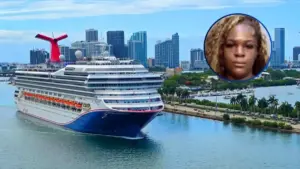
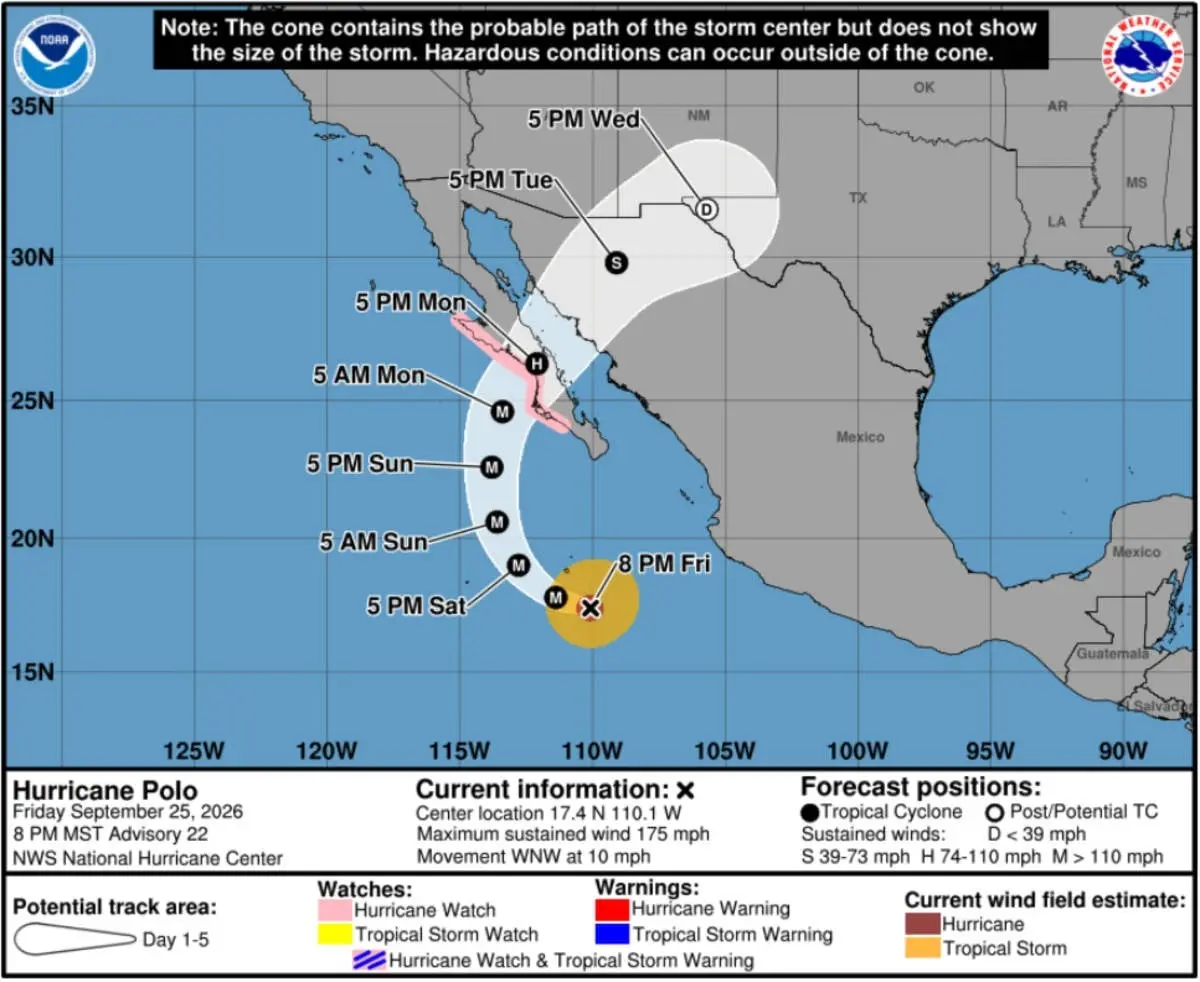
Hurricane Polo—a catastrophic Category 5 tempest packing maximum sustained winds of 175 miles per hour—has forced Carnival Cruise Line to take decisive action. On September 25, the company issued an urgent travel advisory to guests booked on the upcoming September 26 sailing of the Carnival Panorama out of the Long Beach Cruise Terminal in California. Rather than embarking on its standard Mexican Riviera itinerary, the mega-ship will alter its course to avoid the dangerous outer bands and destructive path of the hurricane.
The operational adjustment sees the cancellation of scheduled stops in mainland Mexico’s popular ports of Puerto Vallarta and Mazatán. In their place, the ship’s captain, working in tandem with Carnival’s high-tech Fleet Operations Center in Miami, has plotted a safer course north of the storm’s destructive zone. Passengers will instead enjoy an alternative port call in Ensenada, Baja California, before continuing onward to the latter half of their original voyage, which includes stops in La Paz and Cabo San Lucas.
This report provides a comprehensive breakdown of the Carnival Panorama’s altered itinerary, the meteorological fury driving Hurricane Polo, the financial and logistical impacts on travelers, and an authoritative look at how contemporary cruise lines handle catastrophic weather events in real time.
Detailed Chronology: The Carnival Panorama Rerouting Timeline
The decision to modify the Carnival Panorama’s late-September voyage was not made lightly. Cruise lines continuously balance the desire to deliver a dream vacation with the absolute legal and moral obligation to protect thousands of lives at sea. The sequence of events leading up to the modification highlights the rapid deployment of meteorological monitoring and corporate communication.
September 25: The Pre-Departure Advisory
Recognizing the impending threat posed by the rapidly intensifying storm system, Carnival Cruise Line’s executive and operational teams evaluated the National Hurricane Center’s data models. With forecasts locking in Polo’s trajectory and explosive intensification, the decision was made over 24 hours before embarkation to notify booked guests.
The advisory landed in the inboxes of thousands of travelers preparing to drive or fly to Southern California for the September 26 departure. It laid out the preliminary changes: Puerto Vallarta and Mazatlán were officially off the table.
September 26: Embarkation Day in Long Beach
Despite the itinerary change, thousands of eager passengers arrived at the Long Beach Cruise Terminal, boarding the massive Vista-class vessel. Check-in agents and onboard staff were fully prepped to brief travelers on the revised voyage, handing out updated daily schedules (known on Carnival ships as Funtimes). Spirits remained relatively high, tempered by the understanding that safety superseded sightseeing.
September 27: A Day at Sea
The voyage commenced with a full day at sea. This buffer day allowed the Carnival Panorama to steam southward into open waters while maintaining a comfortable, wide berth from Hurricane Polo’s northern extent. Shipboard life hummed along as usual, featuring poolside activities, trivia, comedy shows, and specialty dining, even as the vessel’s navigation officers monitored the storm’s every twitch on radar and satellite feeds.
September 28: Diversion to Ensenada
Breaking from the original itinerary, the Carnival Panorama will nose into Ensenada, Mexico, on September 28. Scheduled to dock from 8:00 AM to 5:00 PM, the port gives passengers a vibrant alternative for shore exploration. Situated just south of the U.S.–Mexico border, Ensenada offers coastal charm, culinary delights, and wine-country excursions, ensuring that the start of the cruise is not spent entirely at sea.

September 29 – September 30: Navigating Around the Storm
While the ship would normally be calling at Puerto Vallarta (September 29) and Mazatlán (September 30) during these dates, the Carnival Panorama will instead utilize this window for extended sea days. These additional days at sea are strategically mapped out to keep the vessel well outside the dangerous cone of uncertainty, ensuring smooth sailing and stable sea conditions for guests and crew alike.
October 1 – October 2: Rejoining the Original Itinerary
As Hurricane Polo tracks further away or dissipates, the storm threat subsides enough for the vessel to safely navigate back toward the lower Baja Peninsula. On October 1, the Carnival Panorama will make its scheduled call to La Paz, followed by a visit to Cabo San Lucas on October 2. These iconic destinations allow guests to experience a taste of the original itinerary’s charm.
October 4: Return to Long Beach
The voyage will wrap up on schedule, with the Carnival Panorama sliding back into the Long Beach Cruise Terminal on October 4. Despite the mid-voyage adjustments, the cruise duration remains unchanged, bringing a safe and orderly close to a dramatic journey.
Supporting Context & Metrics: The Anatomy of Hurricane Polo
To truly understand why a massive cruise ship must alter its course hundreds of miles in advance, one must examine the raw, terrifying power of the weather system driving the change.
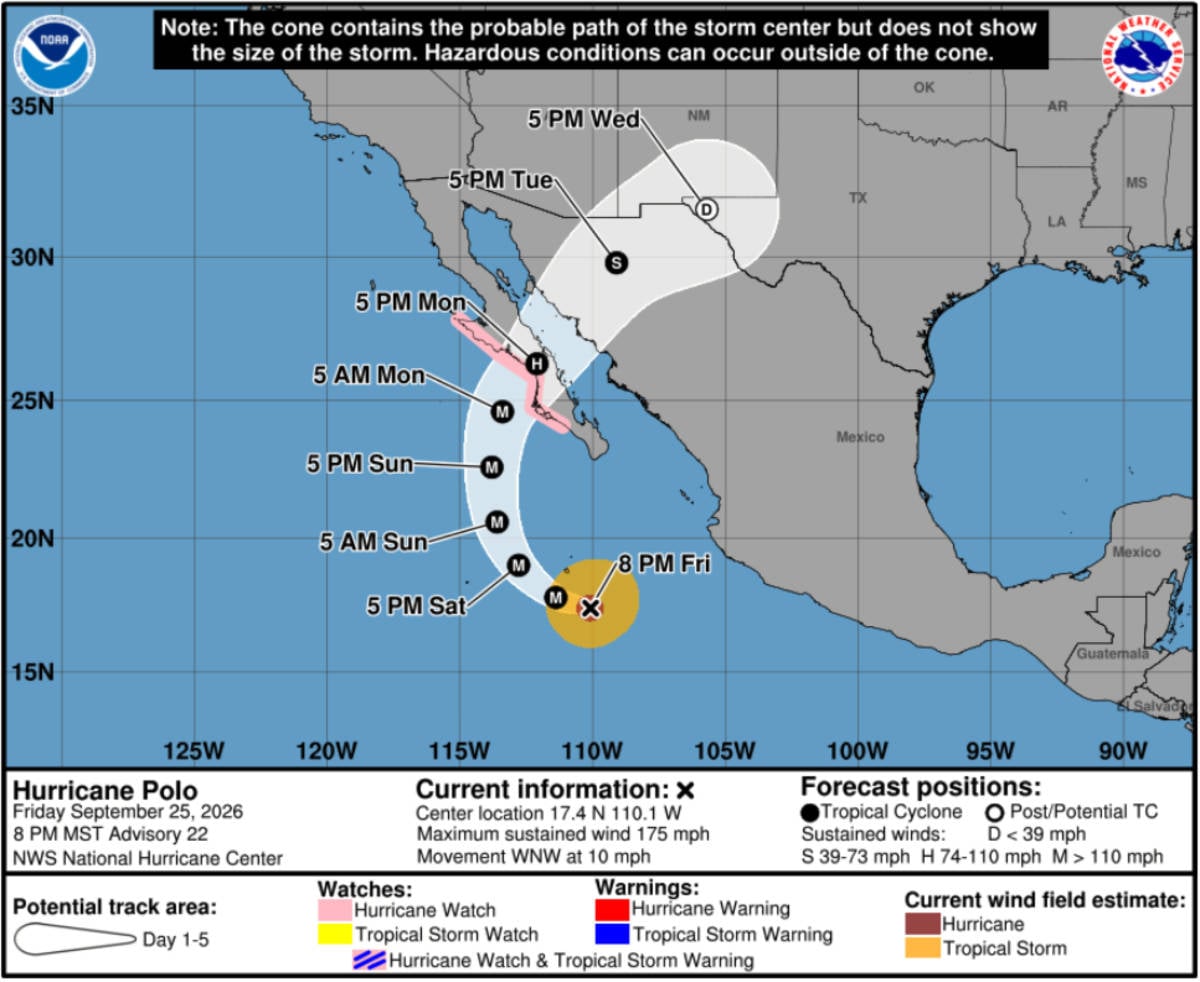
According to Advisory 22 issued by the National Hurricane Center (NHC) at 8:00 PM, Hurricane Polo attained rare and devastating status in the Eastern Pacific basin:
- Classification: Major Category 5 Hurricane on the Saffir-Simpson Hurricane Wind Scale.
- Maximum Sustained Winds: A staggering 175 miles per hour (approx. 282 km/h), capable of inflicting catastrophic structural damage upon landfall.
- Current Location: Approximately 380 miles south of Cabo San Lucas, Mexico.
- Forward Motion: Moving west-northwest at a steady clip of 10 miles per hour.
- Wind Fields and Sea States: Beyond the core winds, hurricane-force winds extend outward for tens of miles, while tropical-storm-force winds span a massive radius. More critically for mariners, the storm generates colossal swells, treacherous rip currents, and erratic wave heights that can make navigation hazardous even for vessels as large as a 133,500-gross-ton cruise ship.
Why Cruise Ships Avoid Hurricanes
Cruise ships are marvels of modern engineering, equipped with advanced stabilizers, powerful bow thrusters, and state-of-the-art meteorological radar. However, they are fundamentally floating cities carrying thousands of civilians.
Operating a ship through or near a Category 5 hurricane introduces unacceptable risks:
- Extreme Wave Action: Even if a ship can structurally withstand high seas, severe rolling can injure passengers and crew, damage interior furnishings, and disrupt critical shipboard systems.
- Port Closures: Local authorities in ports like Puerto Vallarta and Mazatlán routinely close harbors when major hurricanes approach, rendering docks inaccessible and unsafe for docking or tendering operations.
- Loss of Maneuverability: High, erratic winds can overpower a ship’s propulsion during harbor maneuvers, making docking in narrow channels perilous.
By modifying the itinerary early, Carnival avoids these hazards entirely, prioritizing passenger comfort and safety over rigid schedule adherence.
Official Statements and Corporate Communication
Corporate transparency during a weather crisis is paramount. When thousands of travelers have invested hard-earned money into a vacation, clear, empathetic, and authoritative communication helps mitigate anxiety and frustration.
Carnival Cruise Line’s official advisory released on September 25 struck a balance between operational firmness and customer care:
“With support from our Fleet Operations Center, we are closely monitoring Hurricane Polo in the Eastern Pacific. Given the current forecasts, it is necessary to partially modify our itinerary to remain a safe distance from the storm.”
The statement underscores the vital role played by Carnival’s land-based meteorological and navigational nerve center in Miami. Fleet operations teams work around the clock during hurricane season, feeding real-time satellite data and computer models directly to the bridge teams of ships at sea.
Furthermore, Carnival addressed the inevitable uncertainties of tropical weather tracking:
“Because forecasts can change, we will continue to monitor the storm along the way and make further changes if necessary. It is always our goal to deliver our original planned itinerary and we are sorry the weather is not cooperating with our plan. We are confident you will agree that it is better for us to prioritize safety.”
The Financial and Logistical Impact on Shore Excursions
One of the most complex logistical challenges of a sudden itinerary change involves shore excursions. Passengers often book tours—ranging from zip-lining through jungle canopy in Puerto Vallarta to historical city tours in Mazatlán—months in advance.
Carnival moved quickly to mitigate the financial inconvenience for its guests:
- Automatic Refunds: All shore excursions booked through Carnival Cruise Line for the cancelled ports of Puerto Vallarta and Mazatlán will be automatically refunded directly to the guests’ onboard accounts. This eliminates the need for passengers to stand in long customer service lines to dispute charges.
- New Opportunities: To replace the lost ports, Carnival ensured that shore excursion options for the newly added stop in Ensenada were quickly made available for booking through the HUB app and guest services desk.
Independent excursions booked outside of the cruise line, however, operate under the independent tour operators’ cancellation policies, serving as a reminder of the inherent risks of booking third-party tours during peak hurricane season.
Future Outlook: Cruising During the Eastern Pacific Hurricane Season
The Eastern Pacific hurricane season officially runs from May 15 to November 30, peaking between July and September. During these months, warm ocean waters and favorable atmospheric conditions frequently spawn tropical depressions that rapidly escalate into major hurricanes like Polo.
For cruise lines like Carnival, Royal Caribbean, Princess, and Disney operating along the Mexican Riviera, this period requires constant vigilance. The Carnival Panorama incident serves as a textbook example of modern cruise resilience:
- Proactive Rerouting: Moving ships out of harm’s way days before impact.
- Flexible Alternative Porting: Utilizing regional ports such as Ensenada or extending sea days to keep passengers engaged and safe.
- Advanced Technology: Leveraging satellite communications and shore-side meteorology teams to outmaneuver severe weather.
As global climate patterns continue to influence the frequency and intensity of severe tropical storms, the cruise industry’s sophisticated risk-management frameworks will only become more critical. For travelers stepping aboard ships during the peak of hurricane season, the Carnival Panorama’s voyage stands as a testament to the fact that while Mother Nature may dictate the weather, a well-prepared cruise line ensures that safety always steers the ship home.