











Executive Overview
The maritime industry stands on the precipice of a digital and operational revolution, driven by the rapid maturity of Maritime Autonomous Surface Ships (MASS) technologies. At the heart of this transition is the critical requirement for absolute safety, predictability, and compliance with international maritime laws. In a landmark development for marine autonomy, Robosys Automation, a leading developer of intelligent marine autonomy systems, recently completed a rigorous testing campaign of its flagship VOYAGER AI Autonomous Navigation System (ANS).
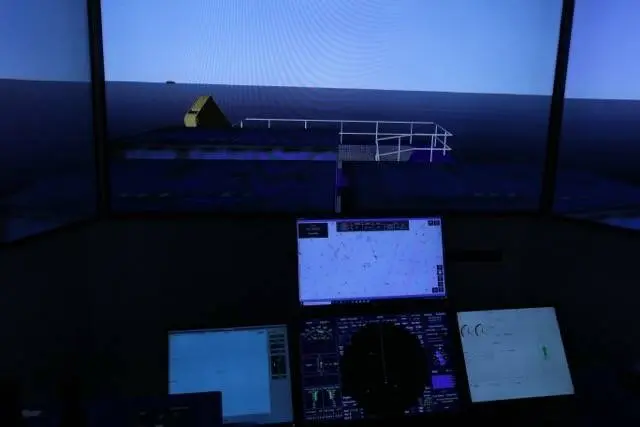
The evaluation was conducted at the world-renowned Maritime Research Institute Netherlands (MARIN), utilizing its newly developed Autonomy Testbed. The VOYAGER AI software was subjected to 55 recognized DNV (Det Norske Veritas) benchmark marine traffic scenarios, designed to evaluate the software’s capability to make safe, COLREG-compliant (International Regulations for Preventing Collisions at Sea) decisions under complex and stress-inducing operational conditions.
As shipping companies face mounting pressure to optimize fuel efficiency, mitigate acute crew shortages, and eliminate human error—which marine insurers attribute to upwards of 75% to 96% of all maritime casualties—the validation of autonomous navigation software becomes paramount. MARIN’s independent evaluation of VOYAGER AI represents a crucial milestone in establishing standardized, repeatable, and objective validation methodologies for autonomous marine systems. By stress-testing the AI against both standardized DNV benchmarks and highly complex, real-world operational scenarios, this campaign provides the maritime sector with verifiable performance data, paving the way for wider commercial adoption of autonomous navigation solutions.

Detailed Chronology: From North Sea Trials to Digital Twin Stress-Testing
The collaboration between Robosys Automation and MARIN is not a recent development, but rather the culmination of a structured, multi-year relationship aimed at pioneering safe autonomous shipping. To understand the significance of the recent simulation campaign, it is necessary to trace the developmental timeline that brought both organizations to this point.
+-----------------------------------------------------------------------------+
|                                  TIMELINE                                   |
+-----------------------------------------------------------------------------+
|                                                                             |
|  2018: Netherlands Joint Industry Project (JIP) on Autonomous Shipping       |
|  │      * Partnership initiated                                             |
|  │      * Exploratory frameworks for autonomous operations established      |
|  ▼                                                                          |
|  2019-2020: First Autonomous Commercial Vessel Trials (North Sea)           |
|  │      * Physical trials onboard the "SeaZip 3"                            |
|  │      * Damen Fast Crew Supplier 2610 platform used                       |
|  ▼                                                                          |
|  2021-2023: Autonomy Testbed Development & Scenario Integration            |
|  │      * MARIN designs a dedicated testbed for Collision Avoidance Systems |
|  │      * Integration of 55 DNV benchmark marine traffic scenarios          |
|  ▼                                                                          |
|  Recent: Advanced Simulation Campaign                                       |
|         * VOYAGER AI subjected to DNV benchmarks and specialist scenarios   |
|         * Comprehensive validation of COLREG-compliant decision-making      |
+-----------------------------------------------------------------------------+
2018: The Genesis of the Partnership
The relationship began in 2018 under the auspices of the Netherlands Joint Industry Project (JIP) on Autonomous Shipping. This collaborative initiative brought together shipbuilders, technology providers, regulators, and research institutes to outline the operational, legal, and technical frameworks required to safely deploy autonomous vessels in one of the world’s busiest maritime regions: the North Sea.
2019–2020: Physical Sea Trials onboard SeaZip 3
The JIP culminated in pioneering real-world trials conducted in the harsh and crowded waters of the North Sea. The trials utilized the SeaZip 3, a 26-meter Damen Fast Crew Supplier (FCS) 2610. Equipped with early iterations of autonomous decision-making software, the vessel successfully demonstrated autonomous collision avoidance and path-planning capabilities. These trials proved that autonomous systems could operate safely on a physical commercial platform under real-world meteorological and oceanographic conditions.
2021–2023: Developing the Autonomy Testbed
While physical sea trials are invaluable, they are inherently limited by safety constraints, cost, and the inability to repeat exact environmental conditions. Recognizing these limitations, MARIN embarked on developing its specialized Autonomy Testbed. This state-of-the-art simulation environment was designed specifically to test, compare, and validate Collision Avoidance Systems (CAS) in a highly controlled, repeatable, and digitally rich environment. Over this period, MARIN integrated the 55 DNV-recognized benchmark scenarios into the testbed, establishing a standardized gauntlet for any autonomous navigation software seeking industry validation.

The Recent Campaign: Deep-Dive Simulation and Validation
In the latest phase of this partnership, Robosys Automation integrated its VOYAGER AI software directly into MARIN’s Autonomy Testbed. Over an intensive testing campaign, VOYAGER AI was subjected to the 55 DNV benchmarks alongside complex, specialist operational scenarios. Unlike physical trials, this digital-twin-enabled environment allowed testers to push the software to its absolute limits, simulating near-miss situations, sensor degradation, and highly erratic target behaviors without physical risk or prohibitive operational costs.
Supporting Context & Technical Metrics: Demystifying the Testing Framework
To appreciate the rigor of the evaluation, it is essential to analyze the technical components of the testing framework, including the DNV benchmarks, COLREG requirements, and the specialist scenarios designed to mimic the chaos of commercial maritime corridors.
+-----------------------------------------------------------------------------+
|                         VOYAGER AI EVALUATION MATRIX                        |
+-----------------------------------------------------------------------------+
|                                                                             |
|  [DNV BENCHMARKS] ────────────────────────► Head-on, Crossing, Overtaking   |
|                                             (55 Standardized Scenarios)     |
|                                                                             |
|  [COLREG COMPLIANCE] ─────────────────────► Rules 13, 14, 15 & 17           |
|                                             (Action by Give-Way/Stand-On)   |
|                                                                             |
|  [SPECIALIST SCENARIOS] ──────────────────► Dense AIS Traffic, Fishing,     |
|                                             Near-Shore, Random Encounters   |
|                                                                             |
|  [PERFORMANCE METRICS] ───────────────────► Safety Margin, Predictability,  |
|                                             Mission Recovery Efficiency     |
+-----------------------------------------------------------------------------+
The 55 DNV Benchmark Scenarios
DNV’s benchmark program is designed to cover the entire spectrum of maritime encounter types, escalating in complexity from simple single-vessel interactions to highly chaotic multi-vessel scenarios. The 55 scenarios are categorized into several core encounter types:
- Head-On Encounters: Two vessels meeting on reciprocal or nearly reciprocal courses, requiring both to alter course to starboard to pass on each other’s port side.
- Crossing Situations: Two vessels crossing, where the vessel that has the other on its starboard side must keep out of the way (the "give-way" vessel) while the other maintains course and speed (the "stand-on" vessel).
- Overtaking Manoeuvres: A vessel coming up with another from a direction more than 22.5 degrees abaft her beam, requiring the overtaking vessel to keep out of the way of the overtaken vessel.
- Multi-Target Interactions: Scenarios involving three or more vessels, where the autonomous system must calculate a path that simultaneously resolves multiple, potentially conflicting COLREG obligations.
- Mission Recovery: Assessing how quickly and efficiently the autonomous system returns to its original planned route once a collision hazard has been successfully cleared.
Deciphering COLREG Compliance in AI Algorithms
Programming an AI to follow COLREGs is incredibly complex. Unlike driving rules on land, which are largely binary (e.g., stopping at a red light), COLREGs rely heavily on qualitative terms such as "safe speed," "ample time," and "due regard to all dangers of navigation."
During the MARIN trials, VOYAGER AI was evaluated on its ability to translate these qualitative human concepts into quantitative mathematical constraints. Specifically, the testbed measured:
- Predictability: Did VOYAGER AI make early and substantial course/speed alterations that clearly signaled its intentions to other vessels, as mandated by COLREG Rule 8?
- Proportionality of Response: Did the system avoid overreacting, which can confuse surrounding vessels and lead to secondary close-quarters situations?
- Stand-On Integrity: In scenarios where VOYAGER AI was the "stand-on" vessel (COLREG Rule 17), did it maintain its course and speed to allow the give-way vessel to maneuver, while still calculating a safe "last-moment" evasion maneuver should the give-way vessel fail to act?
Beyond the Benchmarks: Specialist Operational Scenarios
To ensure VOYAGER AI was prepared for the unpredictable nature of real-world commercial operations, MARIN and Robosys went beyond the standard 55 DNV benchmarks, introducing specialist scenarios designed to simulate high-stress maritime environments:
- Dense AIS-Derived Traffic: Utilizing historical Automatic Identification System (AIS) data from highly congested areas, such as the English Channel and the Singapore Strait, the system had to navigate through real-world traffic flows.
- Erratic Fishing Vessel Operations: Fishing vessels often deviate from standard routing and COLREG expectations due to gear deployment. The AI was tested on its ability to identify and safely circumvent these highly unpredictable targets.
- Near-Shore Navigation: Shallow waters, narrow channels, and geographical constraints limit the room a vessel has to maneuver. VOYAGER AI had to balance collision avoidance maneuvers with strict bathymetric and geographical boundary constraints.
- Randomly Generated Encounters: To prevent algorithmic overfitting (where an AI excels at known test scenarios but fails in novel situations), the testbed generated random, unpredictable encounters to evaluate the system’s real-time heuristic decision-making.
Official Statements & Industry Perspectives
The successful execution of this testing campaign has drawn praise from both technical analysts and the participating organizations, highlighting the importance of third-party validation in the path toward autonomous commercial operations.
Speaking on the significance of the Autonomy Testbed, representatives from MARIN emphasized the necessity of independent, standardized testing:
"The development of our Autonomy Testbed represents a major leap forward in the validation of autonomous marine systems. By providing a highly realistic, repeatable, and independent testing environment, we can help developers like Robosys prove the safety and reliability of their systems. The data gathered from testing VOYAGER AI against the 55 DNV benchmarks and our specialist operational scenarios provides invaluable technical insight that will support the continuous, safe evolution of autonomous navigation technology."
Robosys Automation’s engineering team highlighted how the rigorous testing environment accelerates software development cycles:
"Working with MARIN has allowed us to stress-test VOYAGER AI under conditions that would be impossible or highly dangerous to replicate during physical sea trials. Navigating through dense, AIS-derived traffic and managing multi-vessel crossing situations in a simulated environment gives us the quantitative proof of our software’s safety, predictability, and COLREG compliance. This validation is critical as we scale our solutions for larger commercial vessels and more complex operational profiles."
Industry observers note that this collaboration sets a precedent for how future autonomous navigation software should be certified. By combining the digital twin capabilities of MARIN with the standardized benchmarking of DNV, the maritime industry is establishing a clear pathway for regulatory approval of autonomous systems.
Future Outlook: The Road to Commercial Autonomy
The validation of Robosys’s VOYAGER AI software at MARIN’s Autonomy Testbed is more than a successful software audit; it is a critical step forward for the global maritime industry’s adoption of autonomous technologies. As the industry looks toward the horizon, several key trends and regulatory shifts will shape the deployment of these systems.
+-----------------------------------------------------------------------------+
|                        THE FUTURE PATHWAY TO AUTONOMY                       |
+-----------------------------------------------------------------------------+
|                                                                             |
|  [PHASE 1: Crew Support] ─────────────────► AI acts as a decision support   |
|                                             system, reducing watchkeeper    |
|                                             fatigue and cognitive load.     |
|                                                                             |
|  [PHASE 2: Remote Operations] ────────────► Shore-based operators monitor    |
|                                             and control vessels via high-   |
|                                             bandwidth satellite links.      |
|                                                                             |
|  [PHASE 3: Fully Autonomous] ─────────────► Vessels execute voyages with    |
|                                             onboard AI, operating under     |
|                                             strict regulatory codes.        |
+-----------------------------------------------------------------------------+
The IMO MASS Code and Regulatory Evolution
The International Maritime Organization (IMO) is actively working on the development of a non-mandatory goal-based instrument for Maritime Autonomous Surface Ships (MASS), commonly referred to as the MASS Code. Expected to become mandatory in the late 2020s, the MASS Code will require rigorous, standardized proof of safety for any autonomous navigation system deployed on international voyages.
The testing methodology pioneered by MARIN and Robosys—using digital twins, standardized DNV benchmarks, and independent validation—is widely seen as the blueprint for how compliance with the upcoming MASS Code will be demonstrated.
Economic and Environmental Imperatives
The commercial drivers for autonomous navigation systems are becoming increasingly urgent:
- Fuel Efficiency and Decarbonization: Autonomous navigation systems like VOYAGER AI optimize path planning, speed profiles, and steering inputs. Even a minor 2-3% improvement in voyage efficiency translates to significant fuel savings and reduced greenhouse gas emissions, aiding compliance with IMO’s decarbonization targets.
- Addressing the Crew Shortage: The maritime sector faces a severe shortage of qualified seafarers, particularly officers. Autonomous and semi-autonomous systems can alleviate this pressure by reducing the required crew complement on certain voyages or enabling shore-based operators to manage multiple vessels simultaneously.
- Enhancing Safety: By acting as an unblinking, tireless co-pilot, an AI-driven Autonomous Navigation System can eliminate watchkeeper fatigue, distracted driving, and cognitive overload, drastically reducing collision rates in congested waterways.
Conclusion: A Proven Foundation for the Autonomous Era
The collaboration between Robosys Automation and MARIN demonstrates that the technology required for safe, predictable, and COLREG-compliant autonomous shipping is no longer a distant vision—it is a verified reality. By successfully navigating the gauntlet of DNV benchmarks and complex specialist scenarios, VOYAGER AI has proven its capability to handle the unpredictable challenges of the modern marine environment. As regulators, shipowners, and technology providers continue to align, this landmark testing campaign will be remembered as a pivotal moment in the voyage toward a safer, cleaner, and more efficient autonomous maritime future.


