








Executive Overview
While the global reputation of Indianapolis is inextricably linked to the roaring engines of the Indianapolis Motor Speedway and the high-octane pageantry of "The Greatest Spectacle in Racing," a striking ecological counter-narrative unfolds less than an hour to the west. Spanning 232 protected acres in Hendricks County, McCloud Nature Park stands as a premier destination for conservation, outdoor recreation, and environmental education. Operating entirely free of charge since its inception in 2003, the park represents a masterclass in regional land stewardship, transforming diverse Midwestern habitats—ranging from expansive prairies and deep ravines to mature woodlands and sensitive wetlands—into an accessible sanctuary for both local wildlife and human visitors.
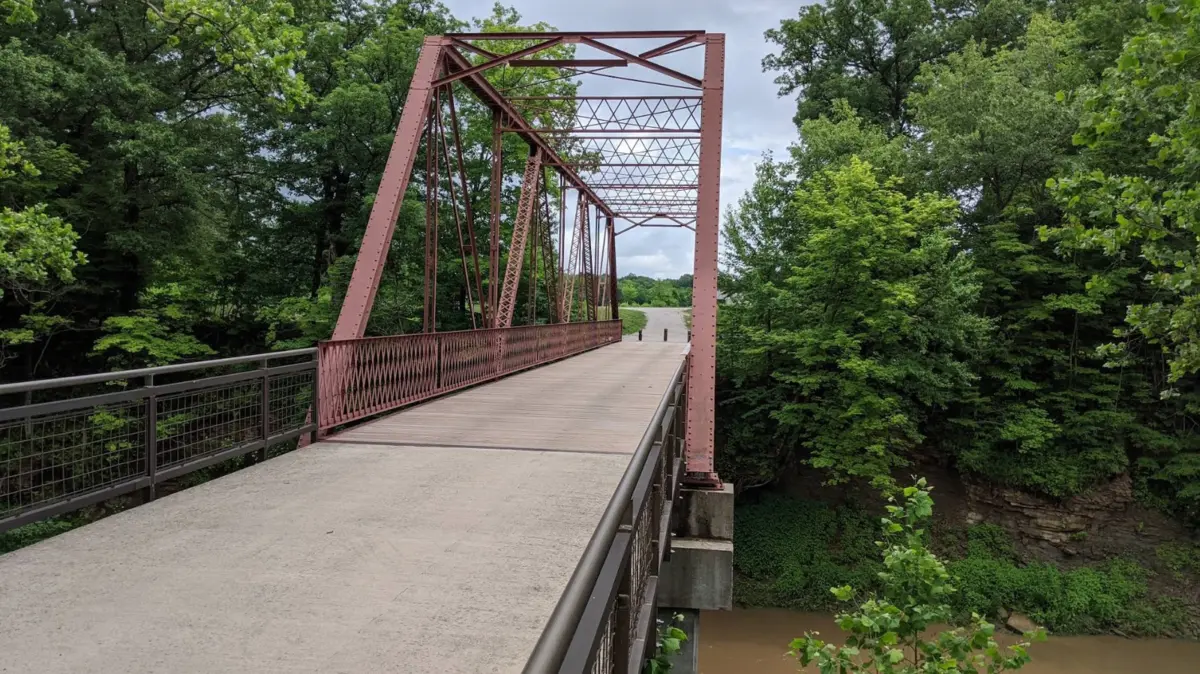
Characterized by its iconic restored iron truss bridge arching gracefully over the meandering Big Walnut Creek, McCloud Nature Park serves as a vital ecological corridor. It offers over seven miles of meticulously maintained hiking trails, premier paddling and angling access, and the architectural and educational anchor that is the Ray & Mary Benson Nature Center. Far from being merely a local park, McCloud functions as a critical regional asset. Located just a 40-minute drive from the Indianapolis International Airport (IND), it bridges the gap between urban accessibility and profound wilderness immersion.
This comprehensive report examines the infrastructural evolution, ecological richness, recreational offerings, and strategic significance of McCloud Nature Park. By analyzing its trail systems, aquatic ecosystems, and educational programming, this piece explores how the park continues to redefine the natural identity of the greater Indianapolis region.
Detailed Chronology and Historical Development
The trajectory of McCloud Nature Park from a private rural landscape to a publicly revered conservation area is a testament to persistent regional park planning and community advocacy.
The Pre-Park Era and Land Acquisition
Long before the establishment of the park in 2003, the land flanking Big Walnut Creek held deep historical and ecological significance. Indigenous peoples hunted and foraged along the heavily forested banks of the creek, which served as a critical water source and transit route. During the 19th and early 20th centuries, European settlers utilized the surrounding timber and fertile soils for agriculture and infrastructure. The historic iron truss bridge, which now stands as a beloved architectural landmark within the park boundaries, echoes this era of rural development and engineering.
As the twentieth century drew to a close, local conservationists and the Hendricks County Park Board recognized the urgent need to protect the sensitive riparian corridors and diverse ecosystems of western Hendricks County from encroaching suburban development. Through strategic land acquisitions, conservation grants, and community support, the initial acreage that would become McCloud Nature Park was secured.
2003–2010: Foundation and Initial Infrastructure
McCloud Nature Park officially opened its gates to the public in 2003. The early years of the park’s operation focused heavily on stabilizing native habitats, establishing foundational trail networks, and introducing the public to the property’s unique geographical features.
A pivotal moment in the park’s institutional history was the establishment of the Ray & Mary Benson Nature Center. Named in honor of generous local benefactors, the center provided a permanent, indoor home for environmental education, housing interactive exhibits, a resource library, and specialized wildlife-viewing infrastructure. During this formative decade, park management focused on reforestation efforts, planting native tree species in designated areas to restore degraded agricultural parcels back into robust woodland and prairie ecosystems.
2010–Present: Expansion, Education, and Community Integration
Over the past decade and a half, McCloud Nature Park has evolved from a quiet local secret into a regionally celebrated outdoor recreation hub. Trail systems have been systematically expanded and mapped, reaching a total of 16 distinct, named paths covering more than seven miles.
Concurrently, the park has refined its programmatic offerings. Annual fixtures such as Maple Syrup Days in March—where visitors witness the traditional process of tapping local sugar maples and boiling sap—and the vibrant Fall Colors Festival in October have become cultural staples for Hendricks County residents and travelers alike. Furthermore, seasonal installations, such as the intricate prairie maze constructed within the park’s 52-acre prairie, have successfully blended agricultural education with family-friendly outdoor recreation. Today, the park operates year-round, adapting its infrastructure to support everything from autumn hiking to winter cross-country skiing.
Supporting Context & Metrics: Ecosystems and Infrastructure
To fully appreciate the scope of McCloud Nature Park, one must examine the quantitative and qualitative data that define its natural and built environments.
Geographical and Ecological Metrics
- Total Acreage: 232 acres of protected land.
- Trail Network: Over 7 miles distributed across 16 named trails, varying in length and terrain difficulty.
- Waterfront Access: Direct frontage along Big Walnut Creek, featuring convenient canoe and kayak launch points.
- Avian Diversity: Home to more than 90 documented bird species.
- Geographical Accessibility: Located approximately 40 minutes west of Indianapolis International Airport (IND).
Habitat Diversity and Flora
The park’s ecological richness stems from its varied topography. McCloud features a mosaic of distinct micro-habitats:
- Wetlands and Riparian Zones: Centered around Big Walnut Creek and low-lying drainage areas, these saturated soils support lush plant communities and serve as breeding grounds for amphibians, reptiles, and aquatic mammals.
- The 52-Acre Prairie: A vast, open grassland area that hosts warm-season grasses, native wildflowers, and the park’s famous seasonal prairie maze.
- Mature Woodlands and Ravines: Shaded canopy areas featuring towering oaks, hickories, and sycamores, providing nesting grounds for raptors and songbirds.
- The Arboretum: A curated botanical space showcasing native Indiana trees, shrubs, and pollinator plants, complete with the McCloud Bee House for observing honeybee activity through protective plexiglass.
Recreational Infrastructure Metrics
While motorized vehicles, horses, and bicycles are strictly prohibited on park trails to preserve the delicate balance of the flora and fauna, pedestrian access is exceptionally well-facilitated.
- Smallmouth Run Trail: At just 0.35 miles, this highly trafficked, accessible path features a boardwalk and observation deck circling the wetland habitat near the main parking lot.
- Sycamore Bend Trail: A moderate 0.88-mile loop offering intimate views of wetland ecosystems and tranquil vistas overlooking Big Walnut Creek.
- Overlook Trail: A concise 0.13-mile route leading hikers to three distinct elevated viewpoints—Cardinal Perch, Eagle Aerie, and Pileated Peak.
- Red-Tailed Ridge: The longest named trail in the park at 1.1 miles, providing an immersive, shaded woodland hiking experience.
Official Statements and Visitor Perspectives
The operational philosophy of McCloud Nature Park centers on accessibility, conservation, and experiential environmental education. While park staff and Hendricks County Parks officials continually emphasize the importance of low-impact recreation, the true measure of the park’s success is mirrored in the public’s reception.
Insights from Park Management and Conservationists
Park naturalists and administrators have consistently championed McCloud as an outdoor classroom. In guiding the development of facilities like the Ray & Mary Benson Nature Center, park leadership has prioritized hands-on learning over passive observation.
"Our mission has always been to foster a deep, lasting connection between our visitors and the natural world," notes park educational literature. "By providing spaces where individuals can safely wade into Big Walnut Creek, observe honeybees up close, or hike through a restored prairie, we cultivate the next generation of environmental stewards."
Public Reception and Community Voices
The sentiment among visitors underscores McCloud Nature Park’s status as an under-appreciated regional treasure. Online review platforms and travel forums overflow with praise for the park’s tranquility and wildlife-viewing opportunities.
One prominent Google reviewer highlighted the park’s covert appeal, noting:
"This park is a hidden gem, not that many people know about it. That provides lots of opportunities to see wildlife such as bald eagles, soft-shell turtles, black rat snakes, etc. Big Walnut Creek is also a good fishing spot. Don’t forget to check out the nature center, where they host educational programs."
Aquatic enthusiasts have similarly praised the park’s strategic placement along Big Walnut Creek. A kayaker shared their experience on community mapping platforms:
"Fantastic canoe launch area. We put in here and took out at Bakers Camp Covered bridge. Great float! We saw 2 beavers, 2 deer, Great Blue Herons. It was a great day!"
Botanical and birdwatching enthusiasts frequently express astonishment at the diversity of native flora encountered along the trails. A visitor remarked after exploring the arboretum and prairie:
"I especially loved the prairie and arboretum because they featured dozens of bird species, insects, and wildflowers and grasses. In fact, this was the first time I had encountered buttonbush, Illinois bundle flower, and arrowwood."
Future Outlook: Preservation, Programming, and Regional Tourism
As central Indiana experiences continued suburban growth and population expansion, the strategic importance of protected green spaces like McCloud Nature Park cannot be overstated. Looking ahead, park planners face the dual challenge of accommodating rising visitor numbers while safeguarding sensitive ecological zones.
Strategic Conservation Priorities
Future initiatives for McCloud Nature Park are expected to focus heavily on proactive land management. This includes ongoing invasive species eradication programs—targeting aggressive non-native plants that threaten the park’s delicate understory—along with expanded wetland restoration projects to improve watershed health along Big Walnut Creek. By reinforcing these natural buffers, the park will continue to protect local water quality while securing vital habitats for vulnerable bird and mammal populations.
Enhancing Educational and Recreational Programming
In response to growing public interest in outdoor wellness and ecological literacy, park administration plans to scale up its calendar of public programs. The Ray & Mary Benson Nature Center will likely see enhanced interactive exhibits and expanded operating hours, further cementing its role as a regional hub for environmental science education. Additionally, digital mapping initiatives and improved trail signage will ensure that first-time visitors and seasoned hikers alike can navigate the property sustainably.
Tourism Integration and Economic Impact
While McCloud Nature Park maintains its primary identity as a tranquil sanctuary, its proximity to Indianapolis International Airport and major regional transport corridors positions it as a premier eco-tourism destination. Tourism boards increasingly market the park as an ideal complement to urban itineraries—allowing travelers to transition seamlessly from the vibrant cultural hubs of downtown Indianapolis to the quiet, sweeping vistas of Big Walnut Creek in under an hour.
Ultimately, McCloud Nature Park proves that the natural heritage of Indiana extends far beyond its storied racing tracks. Through rigorous conservation, thoughtful infrastructure, and an unwavering commitment to free public access, McCloud remains a vital lung for the region—a living, breathing landscape where community and conservation harmoniously coexist.