






Executive Overview
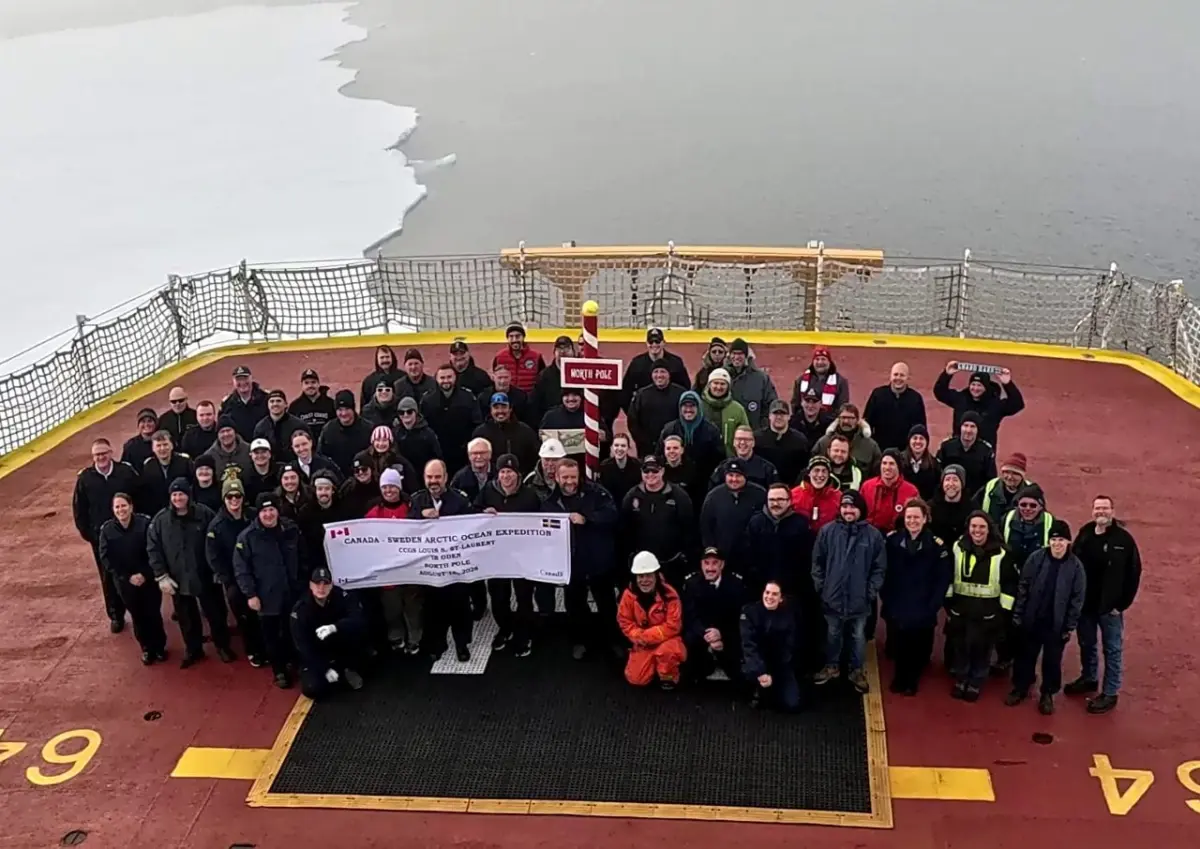
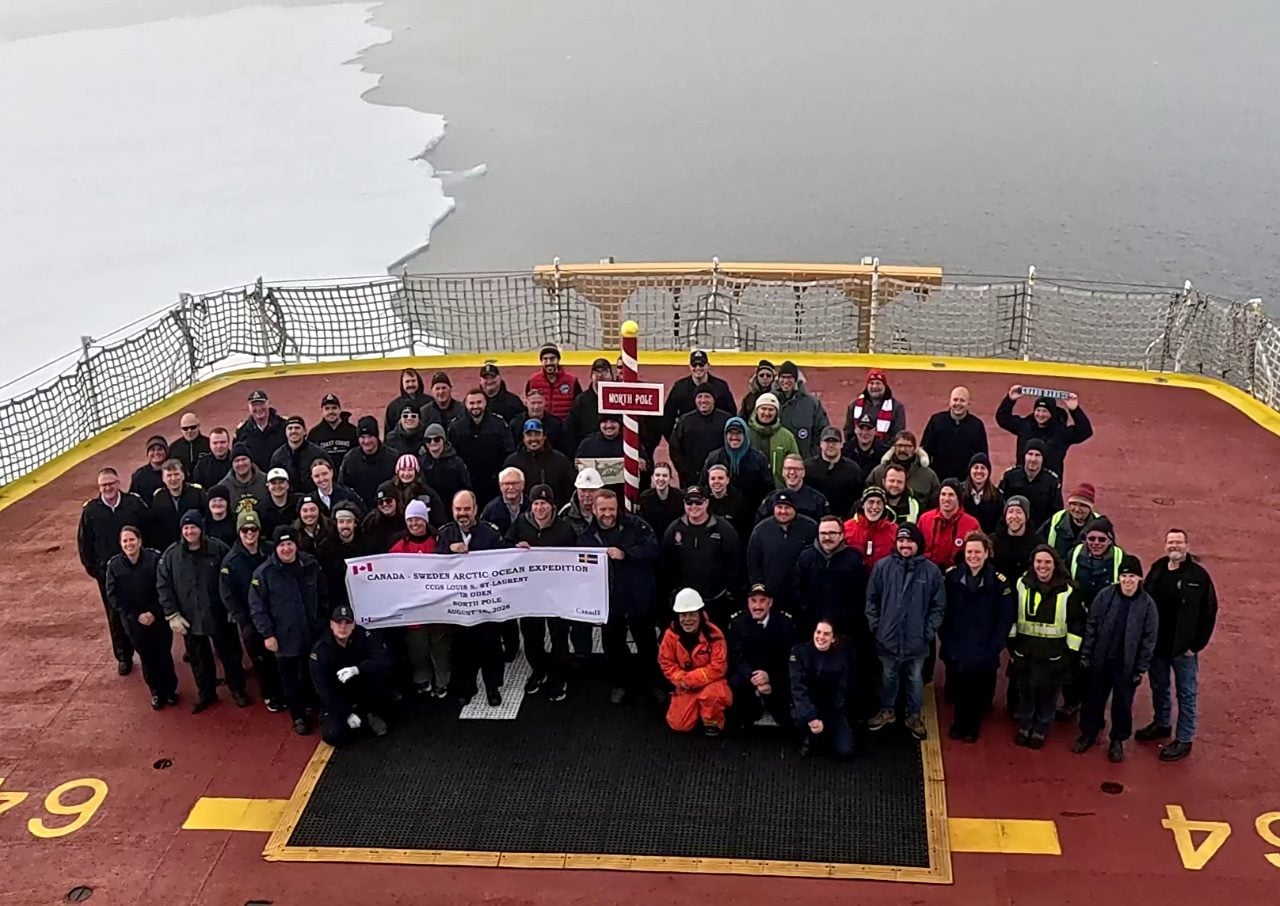
On August 16, 2026, the Canadian Coast Guard Ship (CCGS) Louis S. St-Laurent successfully reached the geographic North Pole. This voyage represents a critical milestone in Canada’s multi-year campaign to map its extended continental shelf and assert its sovereign interests in an increasingly contested region. Operating under the joint auspices of the Department of National Defence, the Canadian Coast Guard, Natural Resources Canada, and Fisheries and Oceans Canada, the heavy icebreaker’s deployment serves a dual purpose: gathering high-resolution scientific data to support Canada’s submissions under international law, and projecting a physical security presence in the High Arctic.
The mission takes place against a backdrop of profound ecological and geopolitical transformation. As rising global temperatures accelerate the decline of polar sea ice, the Arctic is transitioning from an inaccessible frozen barrier into a theater of active commercial, maritime, and strategic competition. Countries such as Russia, Denmark (via Greenland), and the United States are engaged in overlapping claims over the Arctic seabed, which is estimated to hold vast undiscovered reserves of oil, natural gas, and critical minerals. By reaching the North Pole, Canada has signaled its operational capacity to navigate and control these remote waters, validating its long-term security strategy and scientific ambitions in the polar north.
Detailed Chronology
The 2026 Arctic Deployment
The journey of the CCGS Louis S. St-Laurent to the North Pole is the centerpiece of its 2026 Arctic summer deployment, part of a broader operational campaign spanning from 2024 through 2027. The vessel departed its home port in eastern Canada in early summer, embarking on a route designed to navigate some of the most challenging ice regimes on Earth.
During its transit northward, the vessel served as a floating research platform for scientists from Natural Resources Canada and Fisheries and Oceans Canada. The primary objective was the collection of high-resolution hydrographic and geoscience data. Navigating through dense pack ice and multi-year ice floes, the crew utilized specialized hull-mounted sonar systems and deep-sea seismic profiling equipment to map the bathymetry and geological structure of the seabed far beyond Canada’s established 200-nautical-mile Exclusive Economic Zone (EEZ).
[Early Summer 2026] Departure from Home Port
       │
       ▼
[July–August 2026] Scientific Mapping & Bathymetric Surveying (High-Resolution Sonar)
       │
       ▼
[August 16, 2026] Arrival at the Geographic North Pole
       │
       ▼
[Late August–November 2026] Southern Transit, Community Support & Escort Operations
Historic Precedents
This is not the first time the CCGS Louis S. St-Laurent has made history at the top of the world. In 1994, the ship, alongside the United States Coast Guard Cutter Polar Sea, completed the first transit of the Arctic Ocean by North American surface vessels, reaching the North Pole on August 22, 1994. The 2026 voyage reinforces this legacy, demonstrating that despite her advancing age, the flagship remains capable of executing complex, deep-water missions in the central Arctic Ocean.
Following its departure from the North Pole, the vessel is scheduled to continue its seasonal operations through November. This latter phase of the deployment focuses on supporting remote northern communities, providing ice escorts for commercial shipping vessels, and conducting essential search-and-rescue standby duties in Canada’s northern waters.
Supporting Context & Metrics
The Science of Sovereignty: UNCLOS Article 76
The geopolitical significance of the Louis S. St-Laurent’s voyage is rooted in international maritime law, specifically Article 76 of the United Nations Convention on the Law of the Sea (UNCLOS). Under UNCLOS, coastal states enjoy sovereign rights over the resources of the seabed and subsoil within their 200-nautical-mile EEZs. However, a state may claim extended rights over the continental shelf beyond this limit if it can provide definitive scientific proof that its landmass naturally extends beneath the ocean.
| Country | Key Arctic Seabed Claims | Primary Geological Target | Status under UNCLOS |
|---|---|---|---|
| Canada | Over 1.2 million km² | Lomonosov Ridge, Alpha Ridge | Addenda and scientific reviews ongoing |
| Russia | Extended claim to North Pole | Lomonosov Ridge, Mendeleev Rise | Partially recommended by CLCS (2023) |
| Denmark | Claims area extending past Pole | Lomonosov Ridge (via Greenland) | Submitted; awaiting full commission review |
| United States | Extended continental shelf announced | Chukchi Borderland | Unilateral announcement (Non-signatory to UNCLOS) |
To secure these rights, nations must submit detailed bathymetric (depth) and seismic (sub-seabed structure) data to the Commission on the Limits of the Continental Shelf (CLCS). The data collected by the Louis S. St-Laurent during its 2024–2027 campaigns will form the basis of Canada’s technical defenses of its claims, particularly regarding the Lomonosov Ridge—an underwater mountain range that stretches across the Arctic Ocean floor and is contested by Canada, Russia, and Denmark.
Technical Profile: CCGS Louis S. St-Laurent
Operating in the High Arctic requires an exceptionally robust platform. The CCGS Louis S. St-Laurent remains the vanguard of Canada’s polar fleet:
- Vessel Class: Heavy Icebreaker (Polar Class 4 equivalent)
- Year Built: 1969 (Constructed by Canadian Vickers, Montreal)
- Length: 119.8 meters
- Beam: 24.38 meters
- Draft: 9.9 meters
- Displacement: 15,324 gross tonnage
- Propulsion: Diesel-electric; 5 cruising engines driving three shafts, producing approximately 27,000 shaft horsepower (shp)
- Operational Endurance: Up to 120 days without refueling
Despite entering service more than five decades ago, the ship has undergone numerous major refits. The most significant occurred between 1988 and 1993, during which the vessel was stripped down to its hull, fitted with a modern, more efficient bow design, and repowered with a brand-new propulsion system. Subsequent life-extension refits have updated its navigation, communications, and scientific suites, keeping the aging giant operational well into the 21st century.
+------------------------------------------------------------+
|             CCGS Louis S. St-Laurent (Refit History)        |
+------------------------------------------------------------+
| 1969: Commissioned (Steam Propulsion)                      |
| 1988–1993: Major Mid-Life Modernization (New Bow & Diesel) |
| 2014–2020: Incremental Life-Extension & Scientific Upgrades|
| 2024–2027: Dedicated Continental Shelf Mapping Campaigns   |
+------------------------------------------------------------+
Official Statements
The successful arrival of the icebreaker at the North Pole elicited strong support from Ottawa, highlighting the political importance of the mission.
Defence Minister David J. McGuinty emphasized the strategic value of the voyage:
"The arrival of CCGS Louis S. St-Laurent at the North Pole is an important milestone that reflects Canada’s enduring commitment to the Arctic. Supported by the expertise of Canadian Coast Guard personnel, this mission advances scientific knowledge, strengthens our presence in the North, and reinforces Canada’s sovereignty and security."
This statement reflects a broader shift in Canadian defense policy, which increasingly views the Arctic as a potential vector for security challenges. The presence of the Louis S. St-Laurent at 90 degrees North is a clear signal to both allies and adversaries that Canada maintains the capability to operate in the most remote maritime environments on Earth.
Canadian Coast Guard Commissioner Kevin Brosseau focused on the operational and human dimensions of the achievement:
"Reaching the North Pole reflects the professionalism and dedication of the crew of CCGS Louis S. St-Laurent and everyone who supports our Arctic operations. Our icebreakers enable the Canadian Coast Guard to operate safely and effectively in Canada’s Arctic, supporting northern communities, scientific research, and Government of Canada priorities across the North."
Future Outlook
The Geopolitical Reality of a Warming Arctic
The Arctic is warming at nearly four times the global average. This rapid change is reducing the extent and thickness of summer sea ice, making the region more accessible to international shipping, commercial fishing, and resource extraction. The Northern Sea Route along Russia’s coast and the Northwest Passage through Canada’s Arctic Archipelago are seeing incremental increases in traffic, heightening the risk of accidents, environmental disasters, and sovereign disputes.
Furthermore, Russia’s militarization of its northern coastline—including the reopening of Soviet-era bases, the deployment of advanced radar networks, and the expansion of its nuclear-powered icebreaker fleet—has forced NATO and its Arctic members to reassess their northern defenses. Canada’s deployment of the Louis S. St-Laurent is part of a coordinated response to show that Western democratic nations retain icebreaking capabilities and scientific authority in the High Arctic.
       ┌────────────────────────────────────────────────────────┐
       │             Drivers of Arctic Geopolitics              │
       └───────────────────────────┬────────────────────────────┘
                                   │
         ┌─────────────────────────┼─────────────────────────┐
         ▼                         ▼                         ▼
┌──────────────────┐      ┌──────────────────┐      ┌──────────────────┐
│  Climate Change  │      │ Resource Access  │      │ Security Rivalry │
│ - Melting ice    │      │ - Seabed oil/gas │      │ - Russian bases  │
│ - Open passages  │      │ - Rare minerals  │      │ - NATO posture   │
└──────────────────┘      └──────────────────┘      └──────────────────┘
Canada’s National Shipbuilding Strategy (NSS)
While the success of the 2026 deployment is a testament to the crew and engineering of the Louis S. St-Laurent, the vessel is nearing the end of its operational life. At over 55 years old, maintaining a ship of this vintage in polar conditions is increasingly costly and logistically difficult.
To preserve its capabilities, Canada is executing a comprehensive fleet renewal under the National Shipbuilding Strategy (NSS). The centerpiece of this plan for the Coast Guard is the construction of two new Polar Icebreakers. These next-generation vessels will be significantly larger and more capable than the Louis S. St-Laurent, designed to operate year-round in the High Arctic.
- The Build Plan: The polar icebreakers will be constructed by Seaspan Shipyards in Vancouver, British Columbia, and Chantier Davie in Lévis, Quebec.
- Capabilities: The new ships will feature state-of-the-art environmental systems, advanced scientific laboratories, and the ability to break through thicker multi-year ice, ensuring Canada maintains a continuous, year-round presence in its northern waters for decades to come.
As the Louis S. St-Laurent prepares for its eventual retirement, its current mapping missions are laying the legal and scientific groundwork for Canada’s future Arctic policy. The data gathered during this voyage will shape the country’s maritime borders and strategic posture in the polar region for the next century.