Executive Overview
The luxury yachting landscape has long been defined by a constant tension between high-octane performance and refined onboard comfort. For decades, open yachts—with their low profiles, sleek lines, and open-air layouts—have prioritized the visceral thrill of speed and direct communion with the marine environment. Yet, this aggressive styling often came at the expense of interior volume, protected living spaces, and multi-day cruising capabilities. Enter the new Itama 70, a striking 70-foot open cruiser that effortlessly shatters these historical compromises.
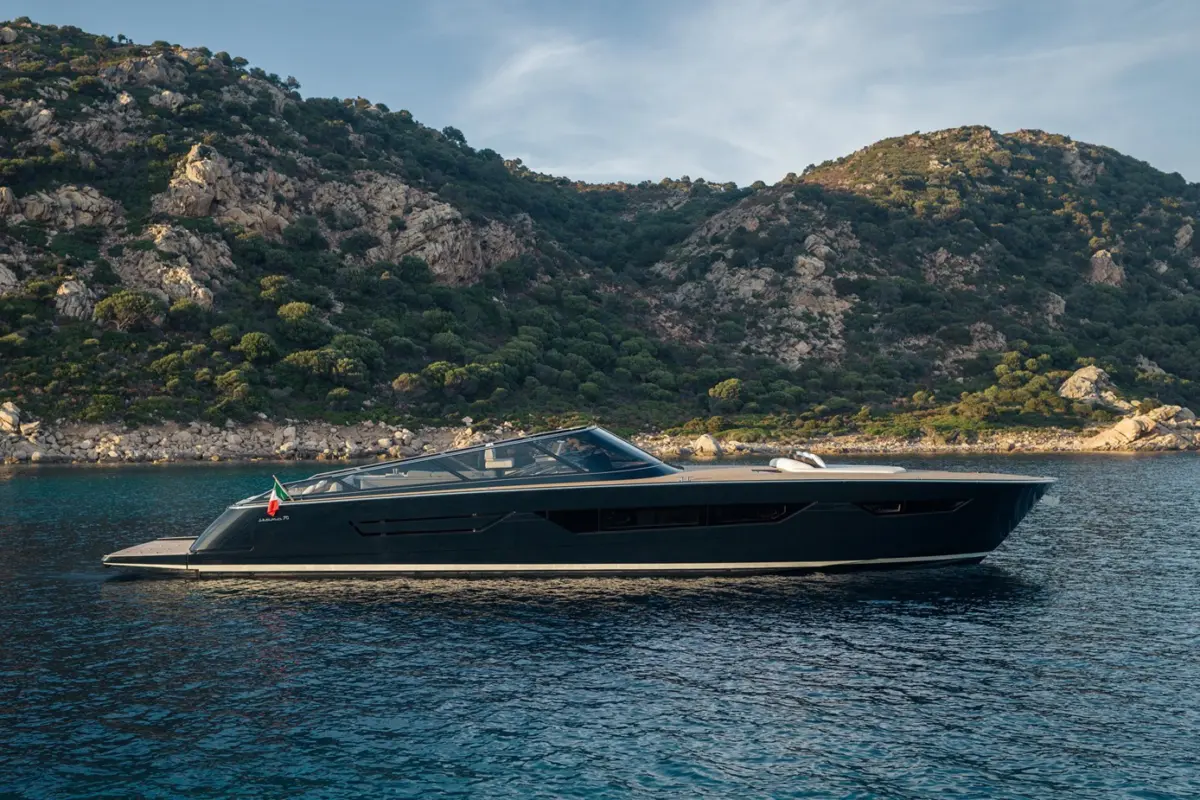
Officially unveiled to global acclaim at the prestigious Cannes Yachting Festival, the Itama 70 represents a monumental milestone for the storied Italian builder. It stands as the second major release in a comprehensive brand renewal strategy, bridging the gap between legendary heritage and modern yachting demands. By fusing the aggressive exterior styling of Vallicelli Design with the sophisticated interior architecture of IdeaeItalia, the Itama 70 delivers a masterclass in modern naval architecture.
Beneath its deceptively sleek, sporty profile lies a meticulously engineered platform boasting expansive outdoor entertainment zones, a highly accommodating three-stateroom layout, and staggering propulsion metrics. Driven by twin MAN V12 diesel engines, the vessel approaches a blistering top speed of 40 knots while maintaining the refined handling characteristics expected of a modern luxury cruiser. From its reshaped hull-to-deck geometry to its cutting-edge helm stations and customizable luxury amenities, the Itama 70 is not merely a new model launch; it is a definitive statement on the future of fast, open-water cruising.

Detailed Chronology: From Concept to Cannes
The genesis of the Itama 70 is a story of deliberate evolution, strategic partnerships, and meticulous craftsmanship rooted deeply in Italian maritime tradition. Understanding how this high-performance cruiser came to life requires examining the step-by-step progression from initial design briefs to its dramatic international debut.
Phase One: The Strategic Renewal of an Icon
Itama has long occupied a revered niche in the hearts of purists who value the classic Mediterranean open-yacht layout. Characterized by deep-V hulls, crisp white gelcoat finishes, contrasting dark navy accents, and uncompromising speed, Itama boats have always been driver’s yachts. However, modern yacht owners demand more than raw speed; they require ergonomic versatility, seamless indoor-outdoor transitions, and elevated interior comfort without diluting the vessel’s aggressive aesthetic DNA.
The renewal strategy began with a mandate to modernize the fleet while preserving the unmistakable Itama pedigree. The shipyard enlisted two powerhouses of Italian marine design: Vallicelli Design for the exterior styling and naval architecture, and IdeaeItalia for the interior living spaces. This collaborative synergy ensured that every square inch of the 70-footer would serve a dual purpose—maximizing aerodynamic and hydrodynamic efficiency while elevating luxury standards.
Phase Two: Engineering the Hull and Deck Geometry
A critical breakthrough in the development of the Itama 70 occurred during the naval architecture phase, specifically concerning the hull-to-deck junction. Traditional open yachts often struggle with forward deck space due to the aggressive rake of the windshield and the sleek sweep of the bow. Vallicelli Design engineered a reshaped hull-to-deck junction that subtly alters the vessel’s internal volume without compromising its iconic, low-slung profile.
This engineering feat created significantly more usable square footage on deck, particularly in the bow area. Concurrently, the aft deck was reconfigured to establish a fluid, uninterrupted social zone. Tank-testing and computational fluid dynamics (CFD) modeling were extensively utilized to optimize the deep-V hull shape, ensuring that the Itama 70 could slice through choppy Mediterranean seas with minimal slamming while retaining stable, predictable cornering at high velocities.
Phase Three: The Italian Launch and Cannes Debut
Prior to its international boat show circuit, the maiden hull of the Itama 70 hit the water in Italy, undergoing a rigorous series of sea trials in the Tyrrhenian Sea. These tests validated the structural integrity of the composite build, fine-tuned the Xenta steering and trim dynamics, and confirmed the performance projections of the MAN propulsion packages.
Following successful trials, the yacht made its public debut at the Cannes Yachting Festival. Positioned centrally among the world’s finest marine showcases, the Itama 70 immediately drew crowds of industry critics, prospective buyers, and maritime enthusiasts. Its ability to command attention through understated aggression, combined with the palpable quality of its fit and finish, cemented its status as one of the most significant open-yacht introductions of the decade.
Supporting Context & Metrics: Design, Layout, and Performance
To truly appreciate the Itama 70, one must delve into the granular specifications that define its architecture. From its multi-zone deck layout to its formidable engine room, the vessel is a triumph of spatial planning and marine engineering.
Exterior Living and Deck Ergonomics
The deck layout of the Itama 70 is purposefully designed for life under the sun. The newly optimized bow features a sprawling, integrated sunpad that invites lounging while underway or at anchor. Moving aft, the cockpit transitions into a masterclass of outdoor hospitality.
An expansive aft sunpad abuts a generous U-shaped dining area, creating an ideal setting for al fresco dining or evening cocktails. Directly opposite the dining space sits a fully appointed wet bar. Shipyard clients can customize this station with a built-in grill, a commercial-grade cooktop, or an ice maker, transforming the aft deck into an outdoor galley.
For climate control and protection from the elements, an integrated electric bimini system extends smoothly over the cockpit, providing instant shade at the touch of a button. Forward of the social areas, the helm station is engineered with the captain in mind. Ergonomically sculpted seating accommodates three people abreast, ensuring that guests can share the driving experience. The dash is anchored by twin 12-inch Simrad multifunction displays as standard equipment, with scalable upgrades to 16-inch screens available for those who prefer an expanded glass-bridge interface.
Interior Accommodations and Belowdecks Luxury
While traditional open yachts frequently relegate the interior to an afterthought, IdeaeItalia has transformed the belowdecks environment of the Itama 70 into a luxurious, light-filled sanctuary. Descending from the cockpit reveals a three-stateroom, three-head layout that rivals the accommodation standards of larger displacement motor yachts.
- Master Stateroom: Positioned aft to maximize privacy and utilize the full 16-plus-foot beam of the hull, the master suite is a quiet retreat featuring a generous double berth, ample storage, and an ensuite head.
- Guest Staterooms: Two additional well-appointed guest cabins provide comfortable berths for family and friends, each accompanied by dedicated head facilities.
- Galley and Dinette: An amidships galley equipped with modern appliances pairs with an L-shaped dinette, offering an intimate indoor dining space for mornings when the weather turns or when maximum air-conditioned comfort is desired.
- Natural Light: Large, custom hull windows cut directly into the topsides flood the lower deck spaces with natural sunlight and provide sweeping views of the water line from the staterooms.
- Crew Quarters: For owners who prefer professional assistance on longer voyages, a separate crew cabin complete with its own private head is available as an optional configuration.
Propulsion and Performance Metrics
Performance is the heartbeat of the Itama brand, and the 70-footer delivers breathtaking velocity without sacrificing control. In its standard configuration, the yacht is powered by twin MAN V12 diesel engines, each outputting an impressive 1,400 horsepower. This robust powertrain propels the vessel to a reported top speed of 37 knots and allows for a lightning-fast cruising speed of 33 knots, making island-hopping trips remarkably swift.
For owners demanding even higher performance figures, an optional upgrade to twin 1,550-horsepower MAN engines pushes the envelope further. Preliminary sea trial data indicates that this upgraded powerplant elevates the top speed to a thrilling 39 knots while bumping the comfortable cruising speed to 35 knots.
Handling such immense power requires state-of-the-art control systems. Xenta electronic steering and automated trim systems come standard, ensuring smooth, responsive maneuverability whether docking in tight Mediterranean marinas or carving high-speed arcs across open water. Additionally, for maximum comfort at anchor or while resting in rolling roadsteads, an optional Seakeeper NG14 gyrostabilizer can be integrated to virtually eliminate vessel roll.
Official Statements and Industry Perspectives
The introduction of the Itama 70 has generated widespread commentary across the international marine industry. Executives, designers, and naval architects have been eager to share their insights regarding the philosophy and execution of this flagship open cruiser.
Bridging Heritage and Modernity
Speaking at the launch event during the Cannes Yachting Festival, brand representatives emphasized that the Itama 70 was conceived as a bridge between the uncompromising design codes of the past and the technological demands of the future.
"Itama has always represented a very specific, highly passionate segment of the yachting community," noted a lead brand spokesperson. "Our clients do not want a floating apartment building; they want a pure expression of speed, style, and freedom. With the Itama 70, we proved that you can dramatically expand livable volume and interior comfort without ever betraying the aggressive, sporty DNA that makes an Itama instantly recognizable on any horizon."
The Design Collaboration: Vallicelli and IdeaeItalia
The partnership between Vallicelli Design and IdeaeItalia was hailed by critics as a masterstroke of collaborative execution. Balancing the aerodynamics of the exterior shell with the warm, tactile materials of the interior required constant dialogue between the design teams.
Alessandro Vallicelli reflected on the exterior development: "The primary challenge with a 70-foot open yacht is maintaining a low, predatory stance while carving out enough interior height and deck space to make extended stays comfortable. By carefully refining the hull-to-deck joint and shifting proportions by mere inches in critical areas, we achieved a silhouette that looks as though it is moving at 40 knots even when it is securely tied to the dock."
Meanwhile, representatives from IdeaeItalia detailed the interior philosophy: "Belowdecks, our goal was to create a sanctuary of calm that contrasts with the high-adrenaline experience of driving the boat at speed. We utilized natural light, soft woods, neutral leathers, and clean architectural lines to ensure that guests feel enveloped in luxury from the moment they step down the companionway."
Future Outlook: The Trajectory of Itama and the Open Yacht Sector
The successful launch and reception of the Itama 70 signal much more than the introduction of a single new model; they provide a clear window into the future trajectory of the luxury open-yacht sector and the broader strategic roadmap of the shipyard.
Setting a New Benchmark in the 70-Foot Class
The 70-foot segment is one of the most fiercely contested categories in the global yachting market. Buyers looking in this size range have access to a dizzying array of flybridge cruisers, coupe yachts, and sportfishers. By doubling down on the pure open-yacht concept while injecting superyacht-level amenities, Itama has carved out a distinct defensive moat.
The inclusion of options like the Seakeeper NG14 gyrostabilizer, advanced glass-bridge Simrad navigation suites, and customizable wet bars demonstrates that open yachts no longer require owners to sacrifice modern conveniences. As yachting demographics shift toward younger, more active buyers who value experiential cruising and high-speed transit, vessels like the Itama 70 are exceptionally well-positioned to capture market share.
The Broader Range Renewal
As the second model in the brand’s ongoing fleet renewal—following the enthusiastic reception of earlier transitional concepts—the Itama 70 proves that the shipyard’s strategic vision is bearing fruit. Industry analysts anticipate that the design language, engineering breakthroughs, and modular interior concepts established in the 70 will heavily influence upcoming models in the pipeline.
The integration of lighter, stronger composite materials, more efficient hull forms, and cleaner, high-output diesel propulsion systems points toward a sustainable evolution for high-performance motor yachts. Furthermore, as hybridization and advanced electronic stabilization become baseline expectations for luxury buyers, Itama’s flexible engineering platforms ensure the brand will remain at the vanguard of marine innovation.
Conclusion: The Ultimate Expression of Open-Air Freedom
In summary, the new Itama 70 is a triumph of design integrity and engineering prowess. It honors the rich, roaring legacy of Italian open-yacht building while fearlessly embracing the future of onboard comfort, technological integration, and blistering performance. Whether screaming across the open sea at nearly 40 knots, entertaining guests at a sunset anchorage, or relaxing in the light-filled master stateroom below, the Itama 70 offers an unrivaled marine experience. It is not merely a boat designed to travel from one destination to another; it is a vessel where the journey itself is the ultimate reward.