Executive Overview
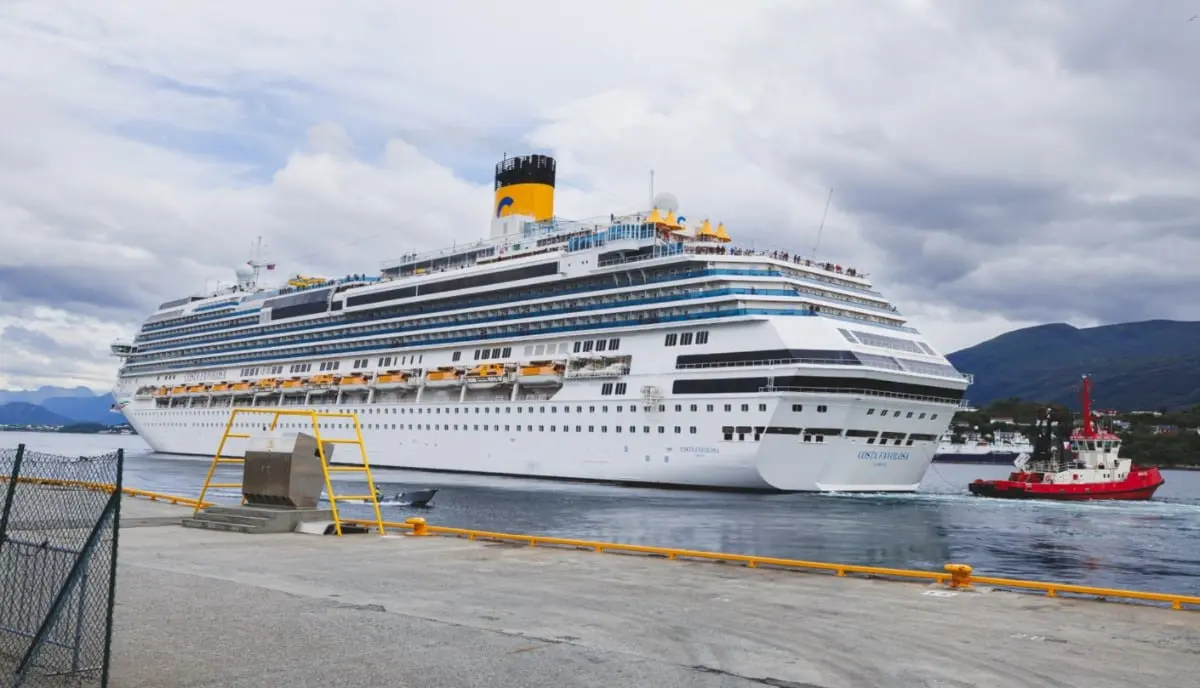
For travelers embarking on a cruise to the majestic Norwegian fjords, Mother Nature holds the ultimate authority. Passengers aboard the current voyage of Costa Cruises’ Costa Favolosa recently experienced this firsthand, receiving a dramatic, last-minute itinerary disruption as a rapidly intensifying weather system bore down on northern Norway.
The 3,000-passenger vessel, which originally departed Hamburg, Germany, on October 5, 2026, for a 14-night extended exploration of the Scandinavian coastline, was forced to alter its course abruptly. Citing severe gale-force winds and dangerously rough seas forecasted for the Arctic Circle regions, Captain Valentino Savarese and the ship’s operational team made the preemptive decision to bypass two high-profile ports of call: Gravdal (Leknes) in the Lofoten Islands and Bodø.
Rather than steaming into hazardous conditions, the ship turned south ahead of schedule, setting off a domino effect of port cancellations, newly added stops, and significantly extended stays. While the sudden detour meant that guests missed out on the jagged, snow-capped peaks and dramatic landscapes of the Lofoten archipelago, the revised routing gifted travelers an unprecedented, extended overnight stay in Trondheim, alongside a surprise bonus call in Kristiansand.
To mitigate the disappointment of altered vacation plans, Costa Cruises swiftly deployed a comprehensive compensation package, offering monetary onboard credits alongside automatic refunds for pre-booked shore excursions. This latest weather-induced disruption highlights the escalating unpredictability of maritime navigation in northern European waters during the shoulder seasons—a challenge increasingly faced by cruise operators striving to balance passenger safety with memorable vacation itineraries.
Detailed Chronology of the Voyage and Alterations
The voyage began with seamless precision. Costa Favolosa cast off from the bustling German port of Hamburg on October 5, 2026, setting a northerly course toward the stunning fjords and coastal cities of Norway. For the first week of the journey, everything went according to plan. The ship successfully navigated and docked at its scheduled early-leg destinations, including Bergen, Narvik, Harstad, and Hammerfest, treating guests to classic Norwegian vistas, historical architecture, and crisp autumn air.
However, maritime weather in the North Atlantic and Norwegian Sea is notoriously volatile. On October 12, just as the ship was preparing to transition toward the Lofoten Islands, meteorological reports flagged an incoming heavy weather system characterized by fierce gales and high wave action. The forecast indicated that the areas surrounding Leknes and Bodø would become unsafe for navigation and tender operations.
The Turning Point: Captain’s Notice to Guests
Realizing that delaying the transit would trap the vessel in punishing sea conditions, Captain Valentino Savarese issued an official notice to all passengers on October 12. The communication outlined the immediate necessity of moving the vessel south earlier than originally planned to outrun the severe weather front.

The immediate casualties of this tactical retreat were the scheduled stops in:
- Gravdal (Leknes): Originally slated for October 13, offering travelers a chance to immerse themselves in the dramatic beauty of the Lofoten Islands.
- Bodø: Originally scheduled for October 14, known as the gateway to the Saltstraumen maelstrom.
The Domino Effect: A Rewritten Schedule
To salvage the remainder of the voyage and keep guests comfortable and safe, the cruise line’s operations desk, in coordination with the ship’s command, formulated an aggressive plan to restructure the remaining days at sea:
- The Trondheim Extension: The ship bypassed its original approach and instead headed straight for Trondheim, securing an early arrival. Rather than a standard daytime call, Costa Favolosa pulled into port for a rare, highly coveted overnight stay. The ship arrived at 9:00 p.m. on October 13 and did not depart until 11:00 p.m. on October 14. This change nearly tripled the time guests could spend exploring Norway’s historic former capital, expanding a modest 9-hour window (originally 1:00 p.m. to 10:00 p.m.) into an immersive 27-hour port experience.
- The Created Sea Day: Because the initial October 15 call to Trondheim had now been consumed by the extended overnight stay, that specific calendar slot was cleanly converted into a relaxing day at sea, allowing guests to enjoy the ship’s amenities while transiting coastal waters.
- The Haugesund Shift: The scheduled call in Haugesund was bumped up by a full day. The vessel arrived on October 16, docking from 7:00 a.m. to 6:00 p.m., ensuring travelers did not miss out on the region’s coastal charm.
- The Kristiansand Addition: To fill the void left by Haugesund’s previous slot on October 17, Costa Cruises secured a brand-new port call in Kristiansand. Passengers were treated to a daytime visit from 10:30 a.m. to 7:00 p.m., introducing an extra cultural stop to the tail-end of the voyage.
- The Final Stretch Home: The previously scheduled sea day on October 18 remained completely unaffected, giving passengers a full 24 hours to pack, relax, and reflect on their journey before the ship’s scheduled return to Hamburg on October 19.
Supporting Context, Metrics, and Maritime Precedents
To fully understand the weight of these operational decisions, one must examine the metrics of the vessel involved and the broader context of weather-related disruptions in the European cruise sector.
Vessel Profile: Costa Favolosa
- Class and Design: Costa Favolosa is a Concordia-class cruise ship operated by Costa Cruises. Constructed by Fincantieri at their Marghera shipyard, the vessel was christened in July 2011.
- Passenger Capacity: The ship boasts a double-occupancy capacity of approximately 3,012 passengers, scaling up to a maximum capacity of roughly 3,800 guests when upper berths are fully utilized.
- Crew Complement: To service this floating resort, the ship carries an international crew numbering around 1,100 personnel.
- Gross Tonnage: At 113,216 GT, the vessel is a massive floating structure spanning nearly 290 meters in length. Despite its size, windage—the force exerted by the wind on the vast surface area of a cruise ship’s superstructure—makes maneuvering in tight Norwegian fjords during gale-force winds exceptionally hazardous, particularly when executing tender operations or precision docking maneuvers.
A Pattern of Nordic Weather Disruptions
Northern European itineraries—particularly those venturing above the Arctic Circle during transitional months—are frequently at the mercy of unpredictable meteorological phenomena. The October 2026 disruption on Costa Favolosa is part of a broader trend of climate-driven schedule volatility.
For instance, earlier in 2026, the cruise industry witnessed a similar high-profile weather event when Ambassador Cruise Line’s Ambition was forced to entirely scrap its specialized Northern Lights itinerary in March. Intense, worsening polar weather systems completely barred the ship from entering its targeted viewing zones, forcing a total rewrite of the voyage.
Furthermore, Costa Favolosa itself is no stranger to the raw, untamed power of the elements. In February 2026, the vessel made international headlines when it encountered an aggressive extratropical cyclone while sailing off the coast of southern Brazil. The violent seas battered the ship overnight, resulting in dramatic rolling and widespread passenger anxiety. While that particular South American incident did not necessitate an itinerary change, it served as a stark reminder that modern cruise ships—despite their technological sophistication and advanced stabilizer systems—remain vulnerable to extreme oceanic conditions.
Official Statements and Guest Compensation
When a cruise line is forced to strip away bucket-list destinations like the Lofoten Islands due to forces outside human control, passenger relations and prompt remediation are critical. Costa Cruises implemented a transparent, multi-layered compensation framework designed to cushion the blow of the missed ports while ensuring guests retained maximum flexibility.
Financial Compensation and Onboard Credit (OBC)
To recognize the disruption to the published contract, Costa Cruises announced that every guest aboard the current sailing would receive €100 in onboard credit (OBC) per person. To ensure fair distribution across varied cabin configurations, this credit was capped at a maximum of two guests per stateroom, injecting a substantial spending pool into the passenger population for use during the remainder of the voyage.
The operational mechanisms of this credit were structured for maximum guest convenience:
- Applicability: The €100 per person credit could be freely applied to a wide array of onboard expenditures, including retail purchases in the duty-free shops, rejuvenating treatments at the onboard wellness and spa facilities, meals at specialty dining venues, and daily hotel service charges (tips).
- Settlement: The credits were automatically logged and deducted from the guests’ final folio accounts prior to disembarkation. In instances where a passenger’s total OBC exceeded their final bill, the remaining balance was structured to be issued directly as a monetary refund.
Shore Excursion Adjustments
The cascading changes to the port schedule necessitated an immediate logistical overhaul of the ship’s shore excursion program:
- Automatic Refunds: All pre-booked excursions purchased directly through Costa Cruises for the cancelled stops in Leknes and Bodø were automatically canceled, with full refunds promptly routed back to the guests’ original forms of payment.
- New Excursion Offerings: Recognizing that the newly added time in Trondheim, the shifted call in Haugesund, and the brand-new stop in Kristiansand presented sudden opportunities for exploration, the cruise line’s shore excursion team mobilized quickly. Replacement tours and local excursion packages for Trondheim, Haugesund, and Kristiansand were made available for booking at the guest services desk starting on the morning of October 13.
Captain’s Message of Safety and Transparency
In his official address to the passengers, Captain Valentino Savarese struck a tone of professional empathy and unwavering authority. He expressed deep gratitude to the travelers for their patience, understanding, and remarkable cooperation as the crew worked around the clock to revise nautical charts, secure port clearances, and adjust logistical pipelines.
Captain Savarese firmly reiterated the core tenet of modern cruise operations: absolute prioritization of human life and well-being over itinerary completion. He noted that pushing northward into the projected storm track would have exposed the ship to structural stress and passenger discomfort far exceeding acceptable thresholds, making the southward diversion not just a prudent choice, but an obligatory one.
Future Outlook: The Resilience of Modern Cruising
As the global cruise industry continues to expand—with lines like Costa Cruises actively refining and optimizing their fleet deployments (including strategic fleet adjustments planned through 2026)—the relationship between cruise itineraries and meteorological reality remains under intense scrutiny.
The modern passenger expects precision, luxury, and the fulfillment of advertised travel dreams. However, the realities of maritime geography, particularly in regions as wild and untamed as the Norwegian fjords, dictate that flexibility must remain the primary currency of the sea. Incidents like the Costa Favolosa weather diversion demonstrate the immense logistical agility required by contemporary cruise operators. Within a matter of hours, a shipboard management team must coordinate with foreign port authorities, secure new docking slots, rewrite entertainment schedules, adjust provisioning supply chains, and manage thousands of consumer expectations.
For the guests aboard Costa Favolosa, the voyage did not end as originally drawn on the promotional brochures. They missed the jagged, iconic spires of the Lofoten Islands—a disappointment that no amount of onboard credit can entirely erase. Yet, by trading those Arctic vistas for an extended, deeply immersive overnight stay in Trondheim and an unexpected coastal stop in Kristiansand, travelers were afforded a unique perspective on Norwegian culture that few standard itineraries provide.
Ultimately, the voyage stands as a testament to the unpredictable nature of expedition-style cruising in northern waters. It highlights that while weather may dictate the physical path a ship must travel, the true measure of a cruise line’s quality lies in how gracefully, safely, and generously it pivots when the winds refuse to cooperate.