











Executive Overview
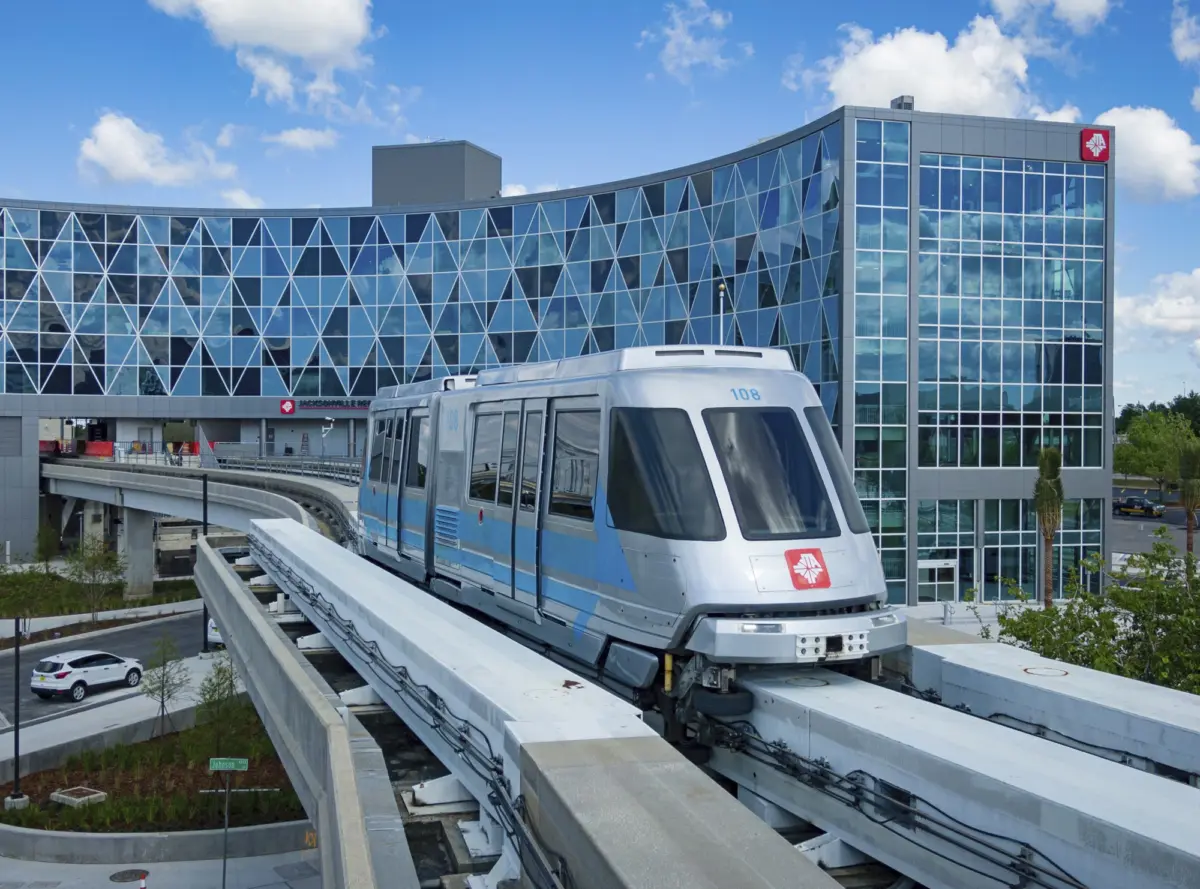
What was envisioned as a revolutionary milestone in American urban mobility has instead devolved into a sobering cautionary tale of fiscal mismanagement, technological overreach, and systemic neglect. The Jacksonville Transportation Authority (JTA) in Florida—long celebrated by its leadership for its pioneering spirit—finds itself reeling from a catastrophic $39 million budget shortfall. This fiscal crisis has forced the temporary shuttering of the city’s historic eight-stop Skyway monorail system, the indefinite suspension of the much-touted Neighborhood Autonomous Vehicle Innovation (NAVI) system, and the layoff of nearly 200 public transit workers.
For a sprawling metropolis that spans an immense 747.3 square miles and ranks consistently among the most vehicle-dependent and pedestrian-dangerous urban areas in the nation, the collapse of NAVI is more than a localized administrative failure. It represents a systemic indictment of transit agencies chasing glittering technological novelties at the expense of reliable, high-capacity, tried-and-true public transit solutions.
As Florida Attorney General James Uthmeier steps in with sweeping subpoenas for financial documents—scrutinizing everything from inflated ridership metrics to unorthodox agency expenditures like professional massages—transit advocates, urban planners, and everyday commuters are left asking a fundamental question: How did America’s self-proclaimed first autonomous transit system become an expensive administrative ghost town, and can public trust in Jacksonville’s transit network ever be restored?
Detailed Chronology: From Launch to Collapse
The rise and fall of the Jacksonville Transportation Authority’s flagship driverless initiative did not happen in a vacuum. It was a multi-year saga characterized by escalating costs, questionable operational realities, and mounting public skepticism.
June 2025: The Grand Debut and Heavy Price Tag
When the NAVI system officially launched in June 2025, JTA officials heralded it as a historic leap forward for municipal transportation. Touted as America’s premier autonomous transit network, the service was rolled out with ambitious promises of modernizing downtown mobility. However, the celebration was immediately tempered by the project’s staggering $65 million price tag. Local taxpayers were forced to shoulder $39.5 million of that burden directly—a local contribution larger than the entire annual operating budget of entire transit agencies in mid-sized American cities, such as the Capital Area Transportation Authority (CATA) in Lansing, Michigan.
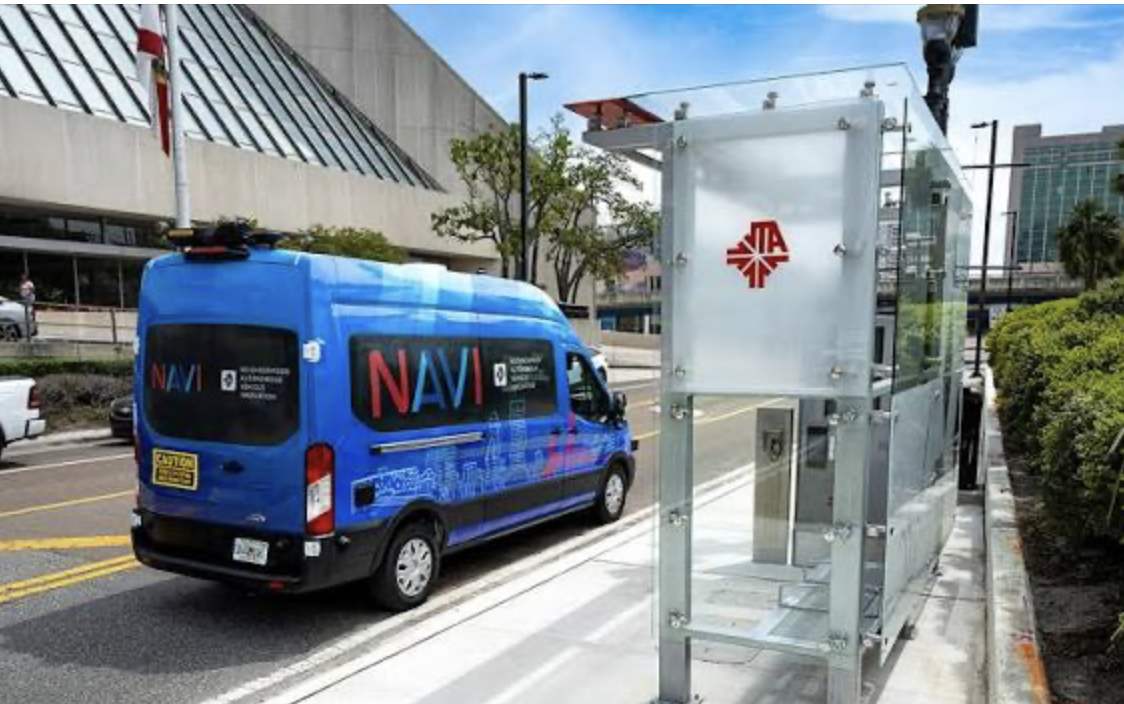
Despite the astronomical investment, the physical scope of the NAVI system was remarkably modest. The fleet consisted of just 14 Ford shuttle vans, each capped at a meager nine-passenger capacity. These vehicles serviced a tight, downtown-only route measuring a mere 3.5 miles, predominantly hugging a single urban corridor. Critics immediately pointed out that a localized nine-passenger van loop did nothing to solve the severe mobility challenges of America’s largest major city by land mass outside of Alaska.
November 2025: The Ridership Scrutiny
Cracks in the narrative of public demand and operational success began to show mere months into the experiment. In November 2025, local investigative journalists broke a damaging story alleging that JTA employees were being paid to spend hours riding the NAVI autonomous shuttles to artificially inflate passenger numbers and project an illusion of high demand on paper. While the agency fiercely denied the allegations, countering that staff were merely acting as "ambassadors to help riders become familiar with the service," public confidence was irrevocably shaken. Compounding the PR disaster was the revelation that NAVI was not truly "autonomous" at all. Federal safety constraints and technical limitations meant that every single vehicle required a human driver—euphemistically termed an "attendant"—sitting behind the wheel at all times.
July 2026: Leadership Exodus
As whispers of an impending fiscal cliff grew louder inside JTA headquarters, executive leadership made a swift exit. In July 2026, long-serving CEO Nat Ford announced his departure from the agency amid growing rumors of the NAVI suspension. Ford’s exit—he took the helm at the Dallas Area Rapid Transit (DART) agency shortly thereafter—left remaining staff and local taxpayers feeling abandoned. Critics were quick to point out the poor optics of an executive loudly spearheading an expensive, high-risk project only to jump ship the moment the financial consequences materialized.
September–October 2026: The Fiscal Precipice and State Subpoenas
The house of cards finally collapsed in September 2026. The JTA formally announced a crushing $39 million budget shortfall for the upcoming fiscal year. To staunch the bleeding, the agency took drastic measures: suspending NAVI operations indefinitely, shuttering the downtown Skyway monorail, and handing out pink slips to approximately 200 employees.
The fiscal emergency quickly escalated into a legal and political crisis. Florida Attorney General James Uthmeier issued an official subpoena demanding a broad range of financial records from the JTA. Investigators zeroed in on NAVI ridership data—metrics that directly influenced state-level funding allocations—as well as highly controversial agency expenditures, including thousands of dollars spent on employee massages.
Supporting Context & Metrics: Sprawl, Spending, and Structural Flaws
To fully understand why the NAVI experiment proved so toxic to Jacksonville’s transit ecosystem, one must examine the broader geographic and historical framework of the city.
The Sprawl Challenge
Jacksonville is a geographic anomaly. Encompassing 747.3 square miles, it is geographically expansive, decentralized, and deeply autocentric. Recent urban planning studies rank Jacksonville among the top 10 most sprawling large metropolitan areas in the United States, as well as placing it in the top 20 most dangerous metro areas for pedestrians.
In a city built entirely around the automobile, deploying a 3.5-mile loop of nine-passenger shuttle vans was akin to using a band-aid on a compound fracture. NAVI offered zero scalability to reach peripheral neighborhoods where car-free residents desperately needed reliable transportation to jobs, healthcare, and education.
The "U2C" Rebranding and the Skyway Shadow
The obsession with autonomous vehicles did not emerge out of nowhere; it was the spiritual successor of a decades-long transit identity crisis.
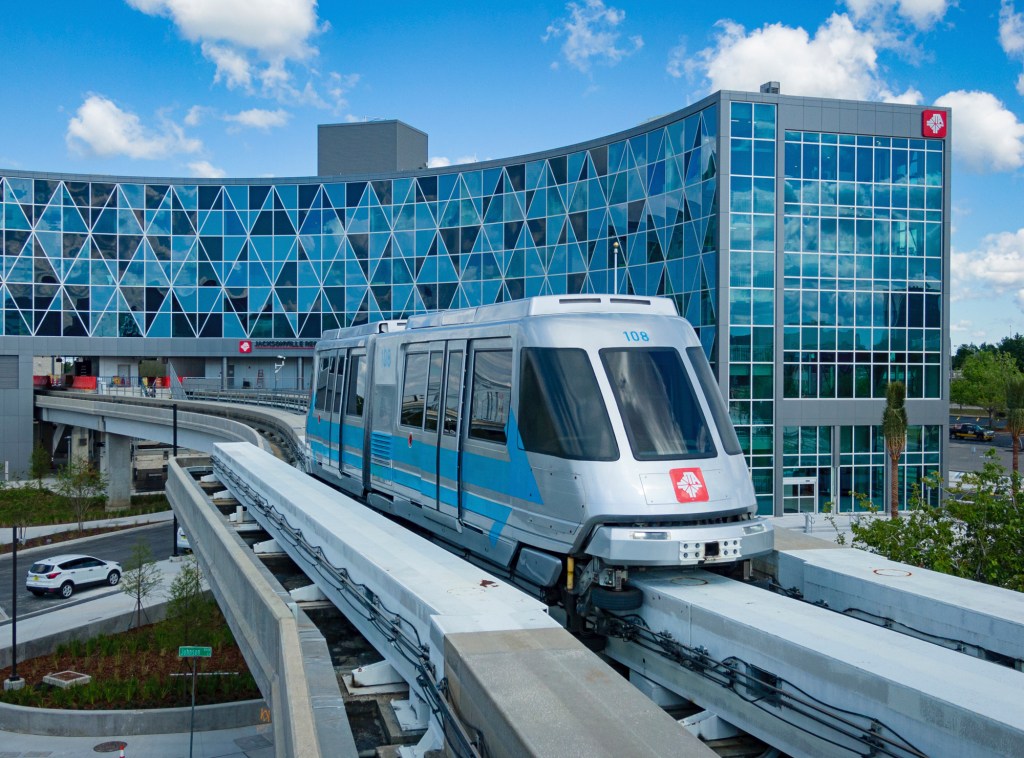
In the 1970s, Jacksonville won a coveted federal grant under the Downtown People Mover program to construct the Skyway—an automated, genuinely driverless monorail system. Conceived as the core high-capacity spine for a future multi-modal transit network, the Skyway was systematically undermined by decades of regional policies that prioritized suburban sprawl and highway expansion. By 2015, despite carrying a modest 5,000 riders daily, the aging monorail faced mounting maintenance costs and widespread public derision.
Rather than addressing the structural failures of regional planning, local politicians and transit officials realized the name "Skyway" had become toxic political poison. It was synonymous with a white-elephant boondoggle. To pivot away from this stigma, the JTA launched the "Ultimate Urban Connector" (U2C) program.
However, public consultation sessions revealed a profound disconnect between the agency and the citizenry. While community stakeholders overwhelmingly voiced a desire to see the existing Skyway modernized, repaired, and expanded into a true regional network, JTA officials interpreted the feedback as a mandate to chase futuristic technology. The U2C program quietly morphed from a revitalization initiative into a vehicle for forcing unproven autonomous technology onto city streets.
Official Statements and Stakeholder Perspectives
The fallout from the NAVI suspension has laid bare a deep rift between municipal transit planners, local activists, and taxpayers.

Marcus Nelson, a lifelong Jacksonville resident and prominent public transportation activist, did not mince words when assessing the situation:
"It all spiraled out of control. NAVI was originally supposed to be affordable—and then it became this expensive monstrosity, which I guess that might not happen at all now."
Nelson emphasized the profound betrayal felt by taxpayers who funded the project only to watch administrative leaders abandon the sinking ship:
"Obviously, it’s a pretty bad look to have a large public agency very loudly and proudly chasing this dream to then have their financial position erode in front of them—and then the CEO in charge runs off to another state. Taxpayers feel like they’re being handed a bag… You’re going to be stuck with this zombie agency walking around with all this infrastructure that they can’t really afford to take advantage of."
Ennis Davis, a local transportation planner, urban historian, and co-founder of Jacksonville Magazine, offered a scathing critique of the JTA’s strategic priorities:
"If there wasn’t this insistence to force this type of autonomous technology into the transit system and to be the first to do this, you’d have plenty of money within budget to maintain your core operations and keep the Skyway running—not lay people off."
Davis noted that the technological hurdles were entirely predictable, pointing out that external federal regulations and immature software meant the "autonomous" vehicles were never truly driverless.
"The technology is still risky. There are a lot of things beyond the city of Jacksonville’s control, beyond JTA’s control; there are federal regulations that have got to be dealt with. But still, a lot of the promises that JTA has made are not coming to fruition."
Furthermore, Davis argues that the JTA weaponized community outreach surveys to justify pre-determined outcomes, utilizing inflated estimates for Skyway rehabilitation to steer public opinion toward AV-centric alternatives, such as converting the elevated monorail tracks into private roadways exclusively for autonomous vans.
Future Outlook: Lessons from Miami and the Path Forward
Despite the gloom surrounding the current fiscal crisis, urban planners point to positive regional counter-examples that offer a blueprint for recovery—if Jacksonville is willing to learn from them.
Looking South to Miami
Downstate, Miami’s Metromover system shares a remarkably similar historical origin. Built under the exact same federal Downtown People Mover program that birthed Jacksonville’s Skyway, Miami’s automated circulator initially struggled with depressed ridership and skepticism.
However, instead of abandoning the infrastructure or pivoting to unproven gimmicks, Miami officials integrated the Metromover into a comprehensive land-use policy. The city actively incentivized dense, transit-oriented development directly around station footprints, coupling it with robust investments in the broader municipal bus and rail network. The strategy paid off: bolstered by major international events like the World Cup, the Miami Metromover recently reported a staggering 54.5% year-over-year surge in monthly ridership.
Charting a New Course for Jacksonville
For Jacksonville to salvage its public transit future, transportation experts argue that the JTA must undergo a fundamental philosophical reset. This recovery requires three critical steps:
- Back-to-Basics Planning: The agency must abandon its fixation on securing "national firsts" and chasing high-tech marketing titles. Transit planning must be driven by community needs—asking where residents actually need to go and selecting the most reliable, cost-effective mode to get them there.
- Holistic Ecosystems: Autonomous technology is not inherently evil; vehicles like NAVI could potentially serve niche first-mile/last-mile distribution roles. However, they must function as supportive cogs within a diverse, high-capacity mobility ecosystem—not as vanity projects designed to secure headlines.
- Transparent Governance: Restoring public trust requires absolute financial transparency, genuine community engagement, and accountability from executive leadership.
As Ennis Davis aptly concluded:
"We really need to have an honest conversation about transit in general in Jacksonville, and understand that there is no such thing as a one-size-fits-all solution. We’ve always tried to come up with the thing that no one else has ever done… You can wait to see other cities touch the hot stove and burn themselves; you don’t need to touch the hot stove, too."
For the 200 laid-off workers, the stranded commuters of downtown Jacksonville, and taxpayers facing an uncertain fiscal horizon, the pain of the current shutdown is undeniable. Yet, as transit advocates insist, hitting rock bottom may finally provide the necessary catalyst to dismantle failed experiments, purge administrative hubris, and build a transit network that truly serves the people of Jacksonville.


