











Executive Overview
The United Kingdom’s Marine Accident Investigation Branch (MAIB) has officially published its comprehensive accident investigation report detailing the tragic death of a crew member aboard the Bermuda-registered cruise vessel Arvia. The fatal incident occurred on October 26, 2025, while the luxury passenger ship was navigating the open waters of the Atlantic Ocean on a routine voyage from Southampton, England, to Santa Cruz de Tenerife in the Canary Islands, Spain.
This exhaustive investigation was conducted by the MAIB acting on behalf of the Bermuda Ship Registry. Because Bermuda is a esteemed member of the Red Ensign Group (REG)—a collective of British shipping registers—the inquiry was executed in strict accordance with a formal memorandum of understanding (MoU) established between the MAIB and the various REG member administrations. This framework ensures that high standards of marine safety, transparency, and technical expertise are upheld across vessels flying the Red Ensign, regardless of where in the world an incident takes place.
The publication of this report brings a degree of closure to the affected family, colleagues, and the broader maritime community, while casting a sharp light on the inherent hazards faced by seafarers. Modern cruise ships are floating cities, operating complex machinery and intricate logistical systems around the clock. When safety protocols falter or unforeseen mechanical hazards manifest, the consequences can be catastrophic. The Arvia report serves as a critical pedagogical tool for the global maritime industry, underscoring that safety management systems must never be treated as mere administrative checkboxes, but rather as life-saving operational lifelines.

Detailed Chronology of the Voyage and Incident
Departure from Southampton
The voyage began under typical autumn conditions in southern England. On October 24, 2025, the Arvia—one of the crown jewels of modern cruise tourism—cleared port operations in Southampton, setting a southward course toward the sunnier climes of the Canary Islands. Aboard the vessel were thousands of holidaymakers and a large, multi-national crew dedicated to maintaining the ship’s hospitality and operational integrity.
For the first forty-eight hours of the passage, the transit was largely uneventful. The ship made steady headway through the English Channel and out into the Bay of Biscay, experiencing standard open-ocean sea states. Crew members settled into their routine shifts, managing passenger services, engineering plant operations, and deck maintenance.
The Critical Window: October 26, 2025
As the Arvia pressed further south along the Iberian coast toward the open expanse of the Atlantic, operational tasks continued across various departments. It was during this phase of the passage on October 26 that the fatal accident occurred.
While the report’s specific timeline preserves the privacy and dignity of the victim by focusing strictly on procedural and mechanical sequences, the MAIB chronology outlines a rapid sequence of events:

- Pre-Incident Operations: Routine maintenance and operational duties were being carried out by crew personnel in a designated workspace on board.
- The Incident: An unexpected failure or hazard materialized, leading directly to severe trauma for the crew member.
- Emergency Response: Immediate alarms were raised by nearby colleagues. The ship’s onboard medical team, trained in trauma response and advanced life support, was mobilized and rushed to the scene within minutes.
- Medical Intervention: Despite the rapid administration of emergency medical care by the ship’s onboard physician and nursing staff, the crew member succumbed to their injuries.
- Vessel Diversion and Notification: The vessel’s command team immediately informed maritime rescue coordination centers ashore. While the ship maintained its general heading toward Tenerife to utilize shoreside facilities and authorities as required, the tragic news riounded through the ship’s ranks, prompting grief support services for the crew.
Supporting Context & Metrics: Safety at Sea and the Arvia Profile
Understanding the Arvia
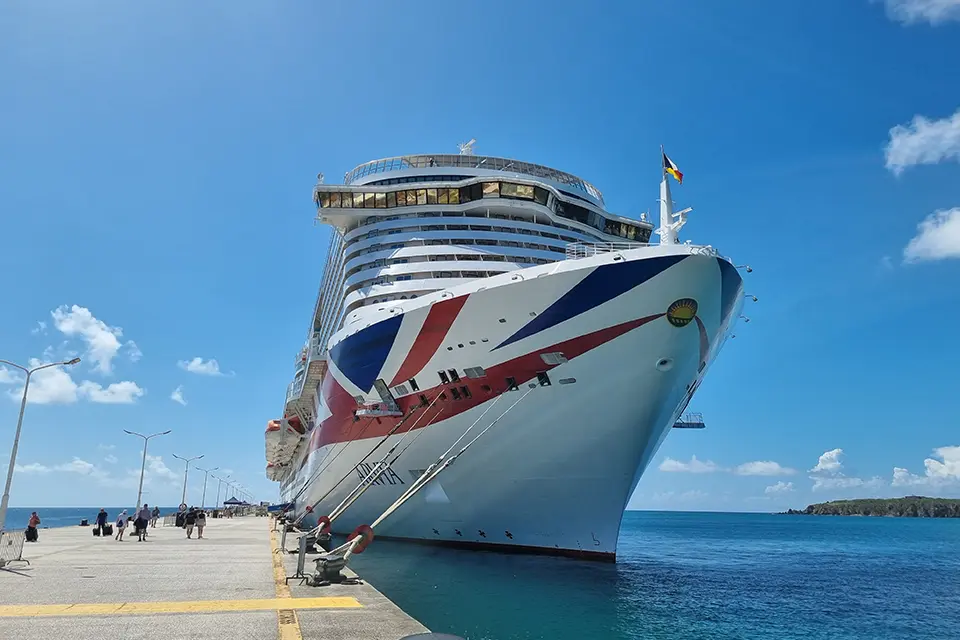
The Arvia is a massive, state-of-the-art cruise vessel designed to accommodate thousands of passengers. Measuring over 340 meters in length and boasting a gross tonnage exceeding 180,000 GT, the ship represents the pinnacle of contemporary cruise engineering. Powered by liquefied natural gas (LNG)—a cleaner-burning marine fuel—and equipped with cutting-edge navigation, stabilization, and hotel services infrastructure, vessels of this scale require immense human capital to operate safely.
Operating a floating metropolis of this magnitude requires hundreds of crew members working in high-tempo environments. From heavy machinery spaces and technical workshops to galley operations and deck maintenance, the occupational hazards aboard modern cruise ships are diverse and continuous.
The Regulatory Landscape: The Red Ensign Group and MAIB
The Marine Accident Investigation Branch is an independent branch of the UK Department for Transport. Its core statutory mandate is to investigate marine accidents and incidents occurring in UK waters, as well as accidents involving UK-registered ships (and, by extension under specific agreements, vessels flying flags from Red Ensign Group jurisdictions such as Bermuda).

The Red Ensign Group comprises the UK, the Crown Dependencies (Isle of Man, Guernsey, and Jersey), and the UK Overseas Territories (including Bermuda, the Cayman Islands, and Gibraltar). Ships registered within the REG are subject to rigorous safety standards that align closely with international maritime conventions established by the International Maritime Organization (IMO), such as:
- SOLAS (International Convention for the Safety of Life at Sea)
- STCW (Standards of Training, Certification and Watchkeeping for Seafarers)
- MLC (Maritime Labour Convention)
When an accident occurs on a Bermuda-flagged vessel operating internationally, the MAIB frequently conducts the technical investigation on behalf of the Bermuda Maritime Authority. This cooperative arrangement ensures that independent, highly skilled investigators analyze the root causes of marine casualties without bias or commercial interference.
Occupational Safety Metrics in Modern Cruise Shipping
While the cruise industry maintains a generally favorable passenger safety record, occupational safety for crew members remains a persistent challenge. Data from international maritime labor organizations indicates that seafarers face significantly higher rates of fatal and non-fatal injuries compared to shoreside workers. Key risk factors include:
- Fatigue: Long working hours, shift rotations, and time zone changes can degrade cognitive function and reaction times.
- Complex Machinery: Working with high-pressure systems, heavy lifting gear, and automated engineering plants presents ongoing physical hazards.
- Dynamic Environments: Ship movement caused by sea states introduces instability into routine physical tasks.
Official Statements and Investigation Findings
The publication of the MAIB report has brought significant attention from maritime regulators, shipping companies, and labor unions alike. While the full technical report contains detailed diagrams, witness testimonies, and expert analyses, summary statements from the investigating authorities highlight the primary takeaways.
Key Insights from the Investigation
The MAIB investigation sought to answer three fundamental questions: What happened? How did it happen? And how can it be prevented from ever happening again?
- Procedural Adherence: The investigation evaluated whether established safety management systems (SMS) were being strictly followed at the time of the incident. It examined the adequacy of permit-to-work systems, risk assessments, and supervisory oversight.
- Human Factors: Investigators analyzed the operational pressure, communication channels between team members, and the clarity of instructions given prior to the task being undertaken.
- Equipment and Design: The physical workspace and equipment involved in the accident were scrutinized to determine if engineering controls, guards, or fail-safes were sufficient to protect workers from harm.
Industry and Flag State Reactions
In response to the report’s release, representatives from the Bermuda Ship Registry emphasized their unwavering commitment to seafarer welfare and regulatory compliance. "The safety and well-being of every single crew member aboard a Bermuda-registered ship is our absolute priority," a spokesperson noted. "We are carefully reviewing the findings, safety recommendations, and lessons identified by the MAIB to ensure that appropriate corrective actions are implemented globally."
Maritime unions and seafarer advocacy groups have also weighed in, using the publication as an opportunity to call for renewed vigilance across the cruise sector. They stress that while technical compliance is essential, a genuine "safety culture" must empower crew members at all levels to halt work if they perceive unmitigated risks, free from fear of professional reprisal.
Future Outlook: Preventing Future Tragedies
The true value of any marine accident investigation report lies not in assigning retrospective blame, but in driving forward-looking systemic improvements. The Arvia investigation concludes with a series of concrete safety recommendations aimed at the ship’s operators, the broader cruise industry, and regulatory bodies.
Implementing Safety Recommendations
- Enhancing Risk Assessments: Operators are urged to review and refine task-specific risk assessments, ensuring they account for real-world variables encountered during active shipboard operations.
- Refining Permit-to-Work Systems: Stronger oversight mechanisms must be integrated into daily routines, ensuring that safety barriers are physically and procedurally verified before high-risk tasks commence.
- Continuous Crew Training: Training programs must go beyond baseline certification, incorporating practical hazard-recognition scenarios and empowering crew members to exercise Stop Work Authority.
A Call for Cultural Evolution
As the maritime industry continues to evolve—incorporating larger vessels, alternative green fuels, and advanced digital automation—the human element remains the most critical component of safety at sea. The tragedy aboard the Arvia is a stark reminder of the unforgiving nature of the marine environment and the heavy responsibilities shouldered by those who work upon the oceans.
By embracing the lessons contained within the MAIB report, ship owners, operators, and seafarers can honor the memory of the fallen crew member by building a safer, more resilient maritime future. The findings serve as an urgent call to action for the entire global shipping community to close safety gaps, enforce rigorous operational standards, and ensure that every seafarer returns home safely at the end of their contract.


