Executive Overview
For generations, the nautical rite of passage known colloquially as the "dockmare" has tested the nerves of even the most seasoned mariners. Whether navigating a tight slip in a howling crosswind, dodging crowded fairways after dusk, or relying on well-meaning crew members whose nautical competence has been compromised by festive dockside libations, high-consequence close-quarters maneuvering remains one of recreational boating’s most persistent friction points.
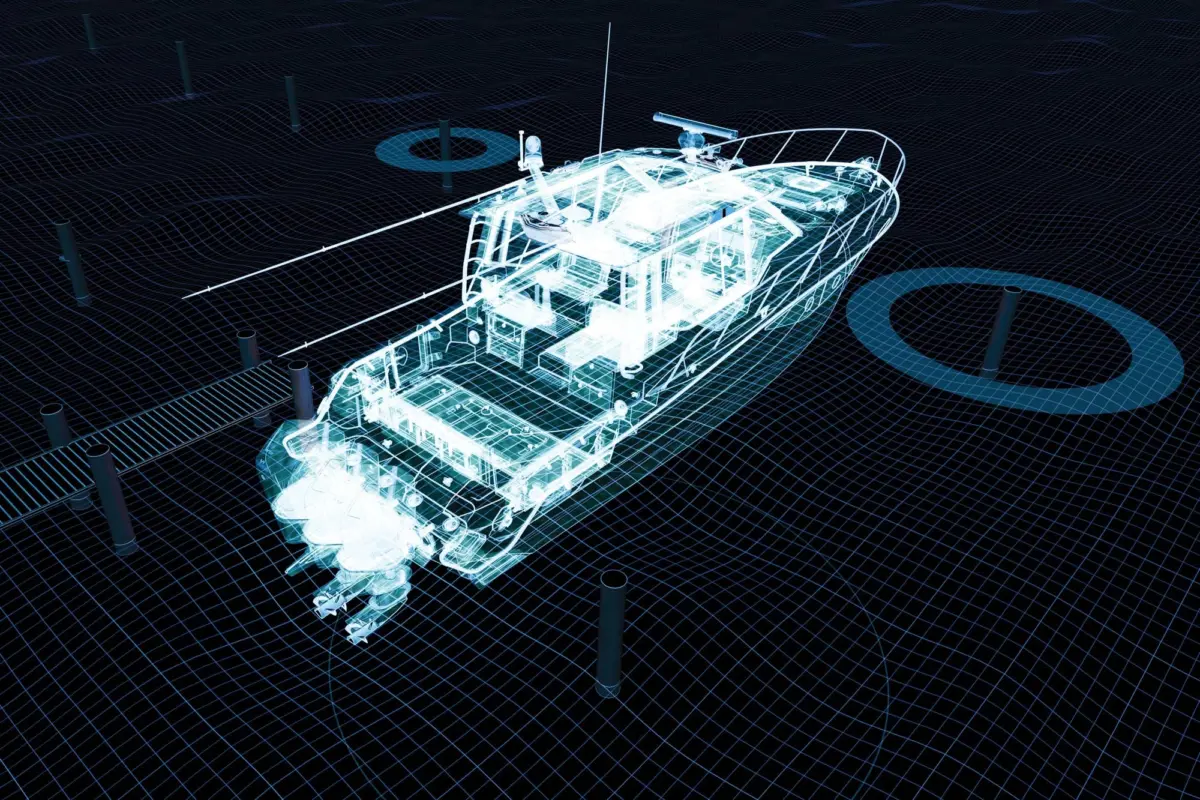
Enter Simrad Yachting’s AutoCaptain—a watershed technological leap that aims to banish the anxiety of docking forever. By fusing an array of factory-installed stereo vision cameras, advanced machine learning algorithms, and seamless integration with Mercury Marine’s proprietary Joystick Piloting architecture, AutoCaptain delivers true autonomous docking, undocking, and short-range spatial management.
What separates AutoCaptain from previous generations of sensor-based docking assistants is its pedigree. Developed under the corporate umbrella of Brunswick Corporation—which owns Navico Group, Simrad Yachting, and Mercury Marine—AutoCaptain represents the industry’s first fully vertically integrated autonomous docking solution. By controlling everything from the multifunction displays and routing processors to the steering systems and outboards, Brunswick has engineered a closed-loop ecosystem designed to eliminate hardware finger-pointing, streamline troubleshooting, and pave the way for rapid, software-driven autonomy enhancements.
Detailed Chronology: From College Cruisers to Autonomous Masterpieces
To understand the profound impact of systems like AutoCaptain, one must look back at the historical pain points of modern boating.
In the mid-1990s, the operational reality of running a race-committee boat for a local yacht club often culminated in the dreaded end-of-day return to the slip. Operating heavy, single-screw cabin cruisers devoid of thrusters in poorly lit marinas required an immense amount of manual calculation, precise throttle feathering, and luck. A college student running race committee might possess superior tactical sailing knowledge, but handling a heavy powerboat in close quarters with zero electronic safety nets often resulted in scraped gelcoat, frayed nerves, and awkward morning-after conversations with marina management.
While historical logs do not officially record the very first dockmare, the maritime industry has spent the last three decades searching for mechanical and digital antidotes to close-quarters stress. Early solutions relied heavily on manual twin-engine balancing, followed later by the introduction of mechanical bow thrusters. In recent years, sensor-assisted docking systems began to emerge on the market, but these were typically patched together using third-party components, disparate wiring harnesses, and aftermarket sensors bolted onto hulls not originally designed for automation.
Simrad’s AutoCaptain changes this dynamic completely. Rather than serving as an afterthought or a complex dealer-installed retrofit, AutoCaptain is engineered directly into the vessel’s DNA from the factory floor. Currently debuting aboard the premier Boston Whaler 405 Conquest, AutoCaptain requires deep factory integration. As Jeremiah Clark, Navico Group’s vice president of product management for electronics solutions, succinctly puts it:

"There’s no aftermarket. There’s no dealer install. The only way to get this is with a new boat."
System Architecture: Hardware, Software, and Sensors
Achieving true level two-plus autonomy on the water—defined by the National Highway Traffic Safety Administration’s scale as hands-off operation where the human remains at the helm—requires a sophisticated symphony of hardware and artificial intelligence.
The Hardware Suite
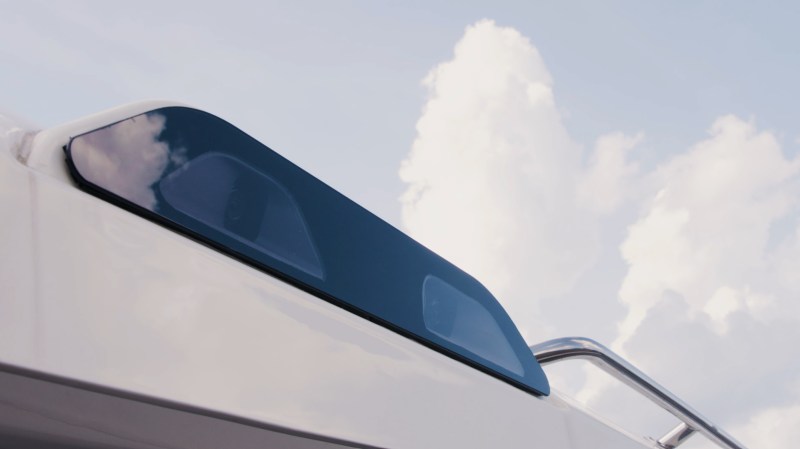
An AutoCaptain installation is comprehensive, robust, and completely hidden within the vessel’s architecture. On the Boston Whaler 405 Conquest, the hardware checklist includes:
- Six Stereo Cameras: Strategically mounted within the hardtop to provide uninterrupted 360-degree visibility around the vessel.
- Black-Box Processor: The central computational brain that ingests video feeds, maps environments, and calculates collision-avoidance vectors.
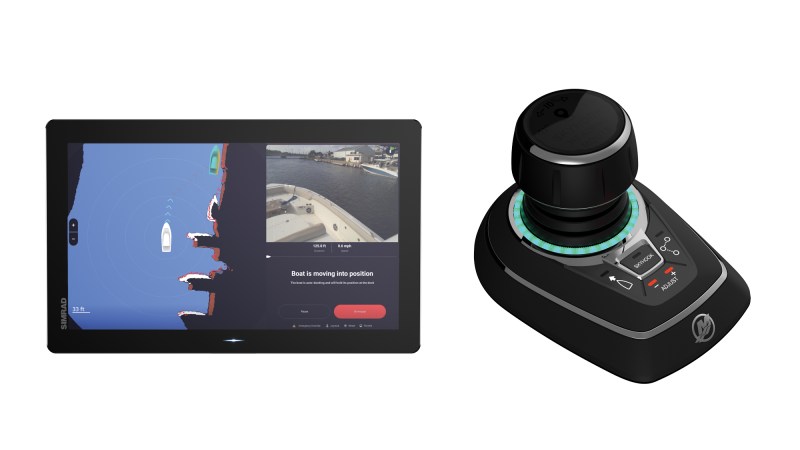
- Multifunction Displays: At least one Simrad NSO 4 or NSS 4 display running the dedicated AutoCaptain app interface.
- GNSS Receiver: A high-precision Global Navigation Satellite System receiver providing exact positional awareness relative to the boat’s generated map.
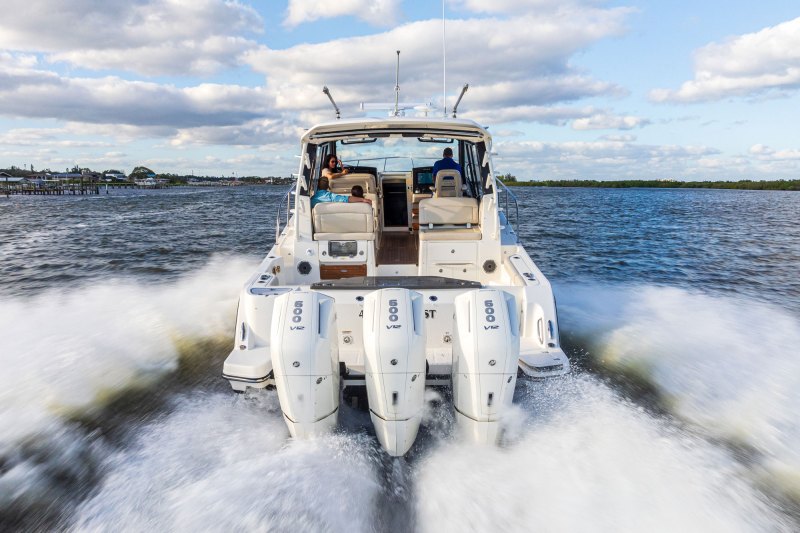
- Propulsion and Steering: At least two compatible Mercury outboards paired with Mercury’s advanced Joystick Piloting system. (While a bow thruster can enhance low-speed vectoring, it is not strictly mandatory; as Clark notes, "Anything you can do with a joystick outboard, you can do with AutoCaptain.")
The Software and AI Framework
The digital foundation of AutoCaptain relies on two primary algorithms—one dedicated to non-water object detection and another focused on dynamic route planning. More importantly, the system incorporates two distinct pillars of artificial intelligence:
- Machine Vision: Allows the black-box processor to "see" and categorize above-the-waterline objects in real-time video streams.
- Machine Learning: Empowers the system to evolve continuously without explicit programming updates.
Brandon Ferriman, Brunswick’s senior director of program management, explains the learning curve: "We’ve taught it what are boats, what are docks, what are obstacles in the water. But over time, the more of those things it sees, the smarter it actually gets."
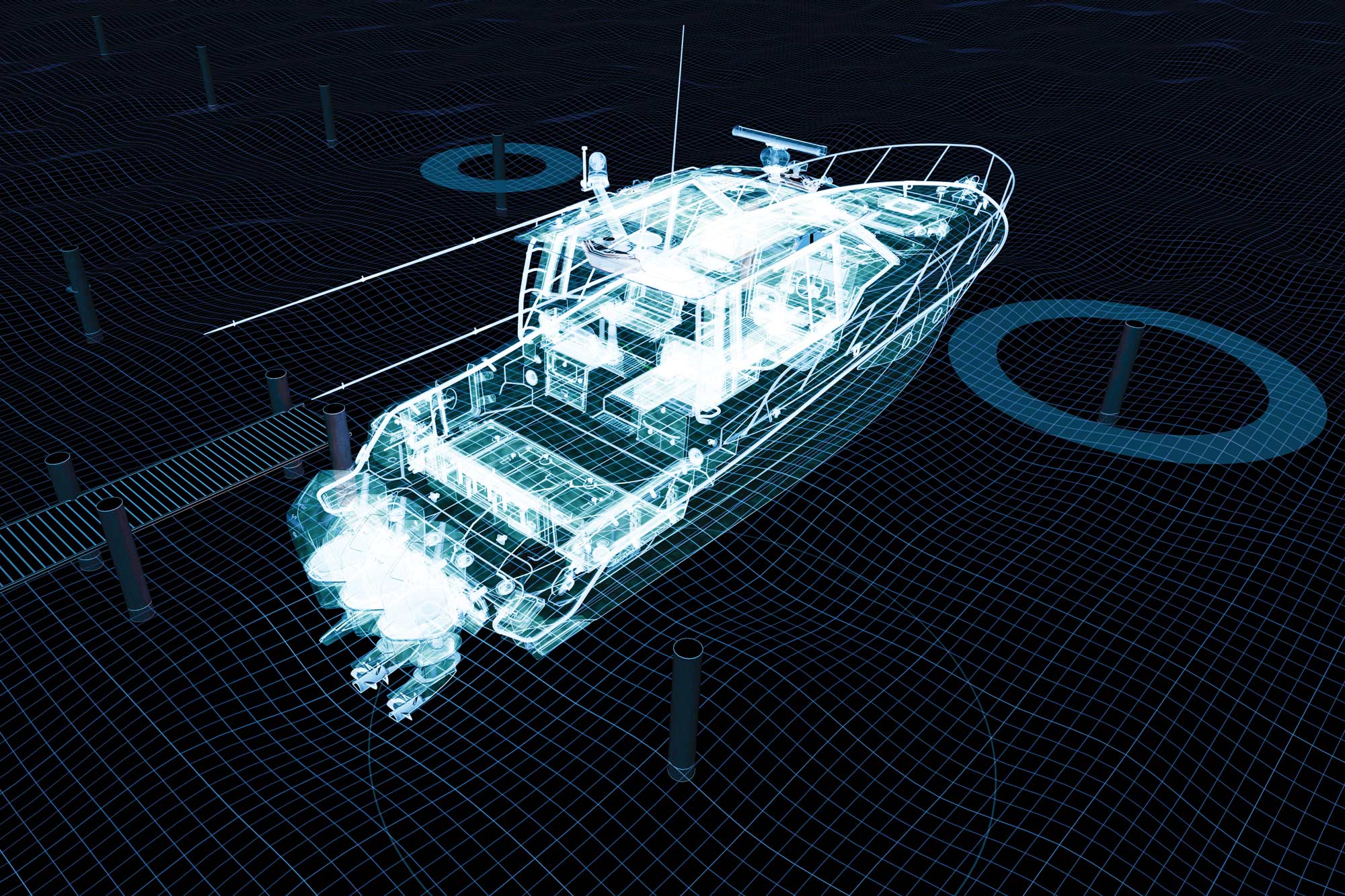
When a vessel enters a new marina for the first time, AutoCaptain utilizes its stereo cameras and GNSS receiver to build a ground-up vector map of the local topography. Because the system retains this data in its onboard storage, every subsequent visit refines the map, increasing operational efficiency and docking precision.
Supporting Context & Metrics: How AutoCaptain Operates in Practice
Operating AutoCaptain is designed to be intuitive, minimizing cognitive load for the captain while maintaining strict safety parameters.
The User Experience
To initiate an automated sequence, the operator opens the AutoCaptain application on a Simrad NSO 4 or NSS 4 display, reviews and acknowledges the safety prompt confirming they will remain helmside, and uses the intuitive touchscreen interface to designate the desired vessel position (e.g., parking in a starboard-side slip with the bow facing outward).
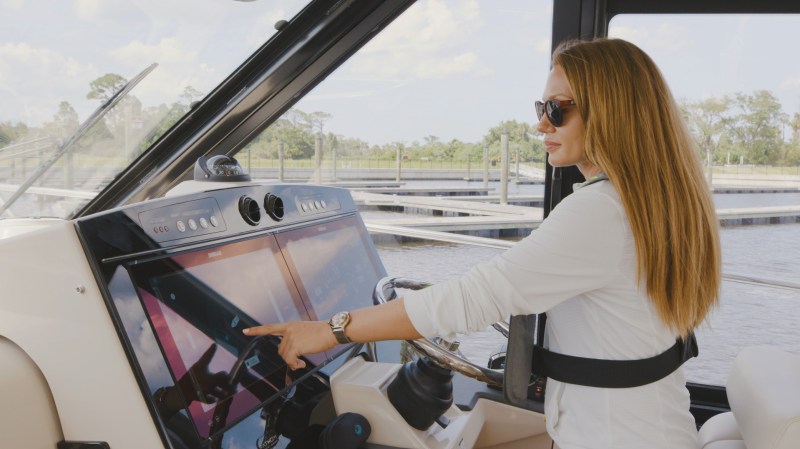
The screen layout is intelligently partitioned into three distinct panes:
- The Port Two-Thirds: Features a live, camera-generated vector map of the immediate surroundings.
- The Starboard Upper Third: Displays a live camera feed showing the exact direction of travel.
- The Starboard Lower Third: Houses the critical dialog box containing prominent "Pause" and "Disengage" buttons.
Safety Protocols and the "Pause" Feature
Safety is paramount in any autonomous maritime system. AutoCaptain continuously monitors its environment. If the system detects a potential collision risk, it immediately recalculates a safe alternative route. Should it encounter a scenario it cannot definitively resolve, it initiates a safety pause and eventually hands full control back to the human operator.
The innovative Pause feature functions similarly to Mercury’s popular Skyhook dynamic positioning, but is governed entirely by the autonomy software. Once engaged, the pause mode holds the yacht’s exact position and heading to within a single meter, effectively acting as a digital time-out while the captain assesses the surroundings.
Furthermore, AutoCaptain instantly transitions into standby mode the moment the human operator interacts manually with the steering wheel, throttles, joystick controls, or taps the "disengage" button on the screen. Once docking is complete, an automated dock-hold function maintains the vessel’s position against wind and tide, buying the crew vital seconds to secure bow and stern lines safely.
Official Statements and Industry Perspective
The launch of AutoCaptain highlights a broader strategic shift within the marine industry toward complete vertical integration. By housing Simrad, Navico, Mercury Marine, and boat brands like Boston Whaler under the Brunswick Corporation banner, the company has bypassed the traditional friction points of mixed-brand electronics integration.
According to Jeremiah Clark, this unified corporate structure unlocks major advantages in support and future development:
"We’re open to looking at other sensor technologies. And we don’t need a license to talk to our own sensors."
Future iterations of AutoCaptain will not require costly hardware overhauls; instead, advanced capabilities will be deployed seamlessly via over-the-air software updates. Developers are already eyeing ways to integrate other existing onboard sensors—such as forward- and side-scanning sonar, Doppler-enabled marine radar, and Automatic Identification System (AIS) transceivers—into the autonomy stack.
At the same time, Brunswick executives are transparent about the current limitations of the technology. AutoCaptain is not currently trained on international regulations for preventing collisions at sea (COLREGS), nor is it intended for high-speed, long-range open-ocean collision avoidance. It is strictly optimized for close-quarters maneuvering, docking, and undocking at slow speeds.
Furthermore, while the system opens up recreational boating to novices by removing the intimidation factor of docking, industry veterans emphasize that core seamanship skills should not be abandoned. Owners remain entirely free to take the helm manually and practice the "dark arts" of traditional docking whenever they choose.
Future Outlook and Market Positioning
AutoCaptain currently occupies the upper echelon of the recreational marine market. Designed primarily for premium midsize builds featuring hardtops capable of housing the 360-degree camera array, the system is not targeted at small runabouts or entry-level skiffs. Similarly, while elements of the autonomy stack could theoretically scale upward, the current requirement for deep Mercury propulsion integration means AutoCaptain’s immediate roadmap remains tethered to outboard-powered vessels utilizing Mercury Joystick Piloting.
For yacht owners investing in new Mercury-powered vessels, AutoCaptain represents a transformative leap in vessel management. By combining the safety net of machine vision with the unmatched vector-thrust authority of Mercury outboards, Simrad has successfully engineered a future where the dreaded dockmare is nothing more than a historical footnote.
Looking back across the decades, had such technology been available during those humid summer nights managing race-committee boats in Connecticut, countless topside scuffs, strained communications, and tense post-docking debriefs could have been entirely avoided. Today, that future has arrived—proving that when hardware, software, and propulsion speak the exact same language, the open water becomes a significantly more welcoming place for all.