











Executive Overview
For decades, the global traveler’s map of Scandinavia has been dominated by a predictable set of marquee destinations. Iceland’s roaring waterfalls and volcanic calderas, Norway’s dizzying fjords, Finland’s pristine winter wonderlands, and the urban design hubs of Stockholm and Copenhagen have long soaked up the lion’s share of international tourism. Yet, a quiet paradigm shift is underway across the travel landscape. As overtourism chokes traditional hotspots and pushes heritage cities to their ecological limits, conscious globetrotters are hunting for places that offer genuine immersion without the footprint of mass tourism.
Enter Dalsland. Tucked away between the rugged Norwegian border and the sprawling freshwater expanse of Lake Vänern—the largest lake in both Sweden and the entire European Union—this lesser-known region has officially made waves by landing a spot on Intrepid Travel’s coveted "Not Hot List" for 2027. Affectionately and accurately nicknamed "Sweden in Miniature," Dalsland packs the nation’s finest cultural traditions, topographical extremes, and outdoor pursuits into a compact, remarkably tranquil geographic footprint.
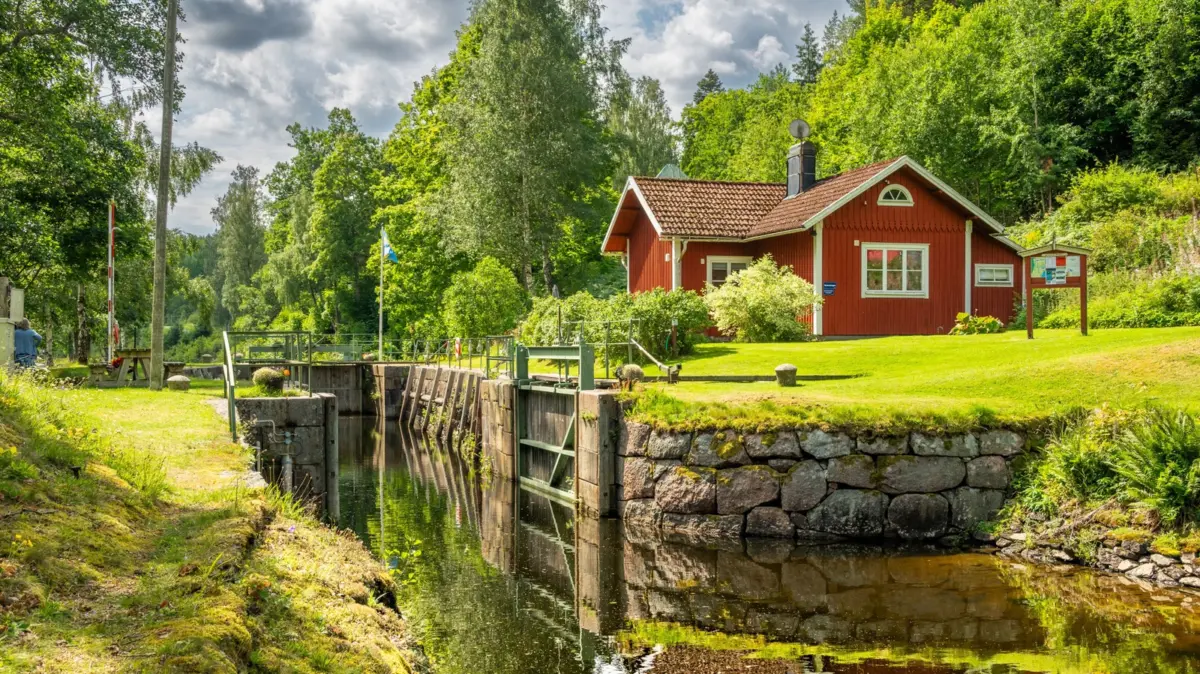
Far from the bustling cruise terminals of the Baltic or the congested ring roads of the Arctic Circle, Dalsland offers an antidote to modern travel fatigue. It is a destination defined by the slow-travel ethos: where ancient pilgrim trails cut through silent pine forests, historic waterways weave past red-timbered countryside homes, and accommodations range from century-old grain silos transformed into boutique sanctuaries to floating cabins anchored in total solitude. For travelers seeking a sophisticated, sustainable escape that captures the true essence of Scandinavian heritage, Dalsland is no longer just an alternative—it is the ultimate Nordic destination.
Detailed Chronology: From Ancient Footpaths to Modern Sustainable Sanctuary
To truly understand Dalsland’s ascent as a premier hidden-gem destination, one must look at how the region’s landscape has been shaped over millennia, evolving from a rugged frontier into a model for modern, low-impact tourism.
The Ancient Foundations: Glaciers and Pilgrims
Dalsland’s dramatic topography is a direct legacy of the Weichselian glaciation, which retreated some 10,000 years ago, leaving behind a scarred, beautiful mosaic of granite bedrock, dense emerald forests, and over a thousand crystal-clear lakes. Long before tourists mapped the region, these valleys and ridges served as critical communication and trade corridors.
The most enduring historical artifact of this era is the Pilgrim Trail (Pilgrimsleden). For centuries, medieval travelers, monks, and pilgrims traversed this 62-mile (100 km) network of paths on foot, journeying through remote wilderness, serene valleys, and historic parishes. Today, this ancient route has been meticulously preserved, serving not merely as a historical relic, but as the backbone of Dalsland’s modern adventure tourism infrastructure.
The Industrial Era: The Engineering Marvel of the Dalsland Canal
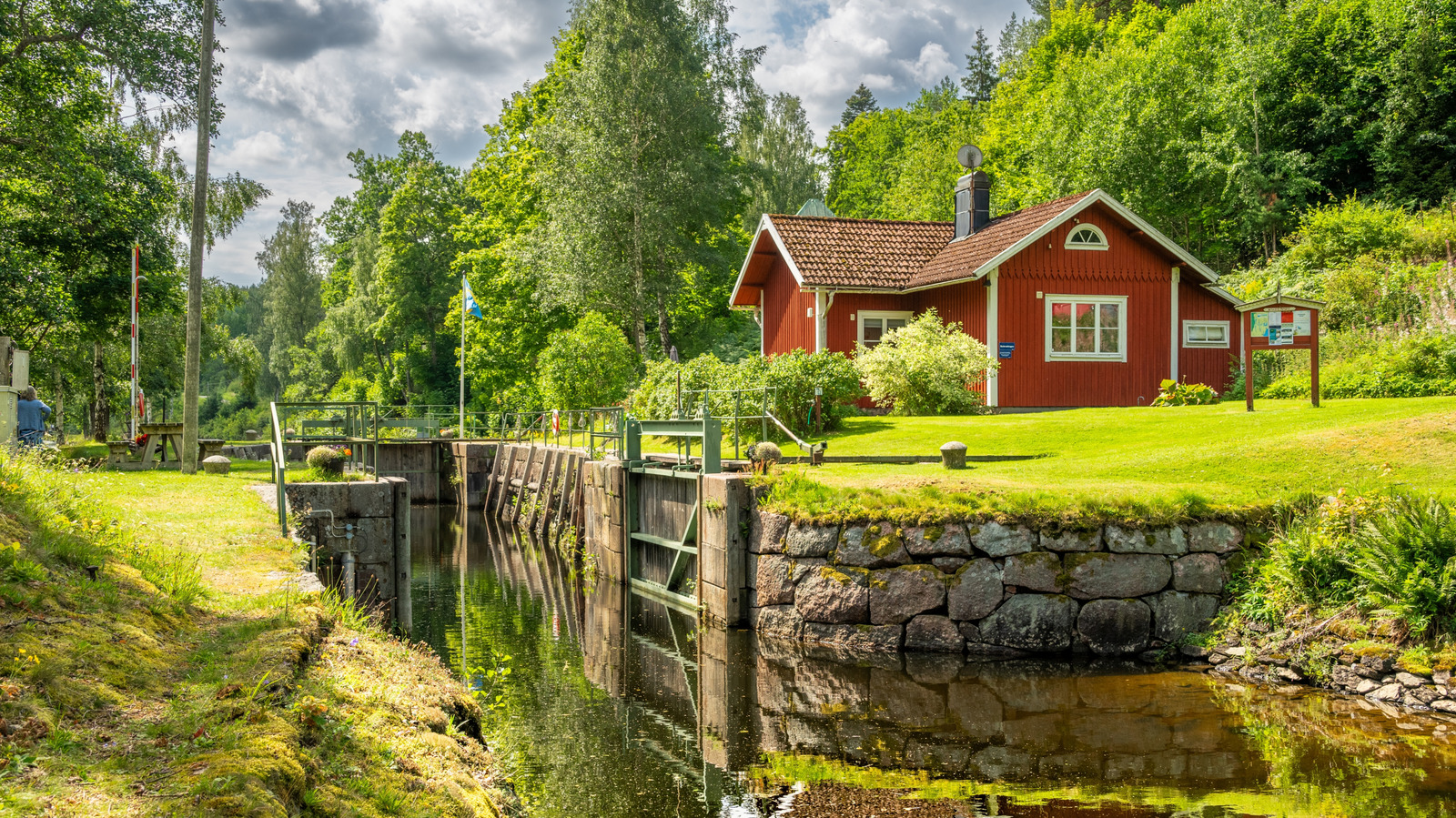
The 19th century brought industrial ingenuity to Dalsland’s untamed waters. Completed in 1868 under the visionary direction of engineer Nils Ericson, the Dalsland Canal was constructed to transport timber, iron, and goods from the interior forests down to Lake Vänern and out to the Atlantic.

Rather than tearing through the landscape with massive industrial locks, Ericson utilized a brilliant system of natural lakes linked by artificial channels, lock gates, and aqueducts—most famously the stunning aqueduct at Håverud. What was once a vital artery for the Swedish timber trade has since evolved into one of Europe’s premier boating, kayaking, and slow-travel corridors. Today, the canal acts as a serene aquatic highway, drawing travelers who wish to experience the countryside from the water at a pace dictated by nature rather than engines.
The Sustainable Renaissance of the 21st Century
As global travel entered the 2020s, a collision of post-pandemic wanderlust and mounting ecological awareness triggered a surge in overtourism across traditional European hubs. Popular destinations from Venice to Reykjavik began implementing visitor caps and emergency taxes to curb the degradation of local ecosystems.
In response, international travel curators and sustainability advocates shifted their focus toward regions capable of absorbing tourism without compromising local integrity. Dalsland emerged as a prime beneficiary of this shift. By consciously avoiding mass-market resort development in favor of localized, high-value, low-impact hospitality—such as repurposed industrial architecture and floating eco-cabins—the region positioned itself at the vanguard of 21st-century regenerative tourism. Its inclusion in Intrepid Travel’s 2027 "Not Hot List" marks the culmination of a decades-long effort to prioritize ecological preservation while inviting the world to experience authentic Swedish living.
Supporting Context & Metrics: Unpacking the "Sweden in Miniature" Phenomenon
Why does Dalsland hold the moniker "Sweden in Miniature"? The answer lies in its unique geographic and cultural concentration. Within its borders, a traveler can experience virtually every ecosystem and cultural archetype that defines Sweden as a whole, all without traversing thousands of miles.
Geographic and Topographical Metrics
- The Lake Vänern Border: To the east, Dalsland is bordered by Lake Vänern, a colossal inland sea covering 5,650 square kilometers (2,180 sq mi). It is the largest lake in the European Union, boasting an archipelago of over 20,000 islands and islets.
- Forest Density & National Parks: Dalsland’s interior is a dense tapestry of boreal forest, dominated by pine, spruce, and birch. At its core lies Tresticklan National Park, one of Sweden’s few remaining roadless wilderness areas. Covering roughly 3,000 hectares, Tresticklan offers a network of pristine ridge-and-valley hiking terrain completely untouched by modern infrastructure.
- The Trail Network: The region features 29 distinct hiking trails, catering to everyone from casual day-walkers to multi-day endurance backpackers. The centerpiece remains the 62-mile Pilgrim Trail, which links Mellerud and Bengtsfors, passing through remote valleys where wildlife—including moose, wolves, lynx, and rare bird species—thrives.
Sweden’s Island Supermacy and the Culture of Allemansrätten
A vital component of Dalsland’s appeal is its alignment with Sweden’s broader geographic and legal identity. While tropical nations like Indonesia and Japan frequently dominate conversations about island density, Sweden actually holds the highest number of islands of any country in the world, boasting nearly 270,000 islands, a vast majority of which sit quietly within its massive freshwater lakes and archipelagos. Dalsland’s lake-locked islands contribute heavily to this staggering national statistic.
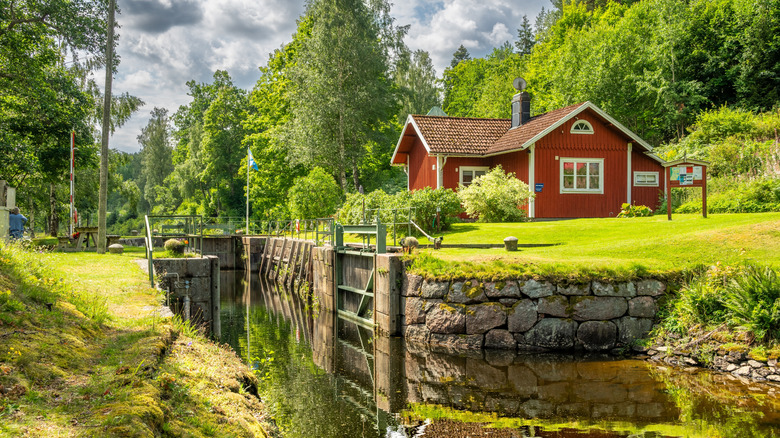
Furthermore, exploring Dalsland is governed by Allemansrätten (The Right of Public Access). enshrined in the Swedish constitution, this legal principle guarantees every individual the right to roam freely across the countryside, forage for wild berries and mushrooms, swim in pristine lakes, and pitch a tent for a night, provided they leave no trace. This deep-rooted cultural ethos transforms a visit to Dalsland from a standard vacation into an immersive, egalitarian reconnection with the natural world.
Official Statements and Expert Insights
Industry leaders, sustainable travel advocates, and regional tourism authorities have increasingly pointed to Dalsland as a blueprint for the future of European travel.
"Dalsland represents the very best of what intentional travel should be in the coming decade," notes an editorial briefing from sustainable tourism networks analyzing the 2027 travel trends. "When we talk about ‘Sweden in Miniature,’ we aren’t just talking about picturesque red cabins and pine trees. We are talking about an ecosystem where tourism acts as a guardian of heritage rather than a consumer of it. Visitors to Dalsland are not spectators peering through a glass window; they are participants in a living, breathing landscape."
Local conservationists within Tresticklan National Park emphasize the delicate balance required to scale tourism responsibly:
"Our greatest asset is our quiet," explains a regional park ranger and conservation liaison. "People come here to escape the noise of global hubs. By keeping our trails roadless, our lakes pristine, and our accommodations intimately scaled—such as our floating cabins and restored historic mills—we ensure that Dalsland retains its soul. We don’t want millions of visitors; we want the right visitors who respect the rhythm of the forest."
Hospitality innovators in the region echo this sentiment. The creators behind unconventional properties like Upperud 9:9—a hotel built within a century-old grain silo—have long championed the integration of industrial heritage with modern comfort:
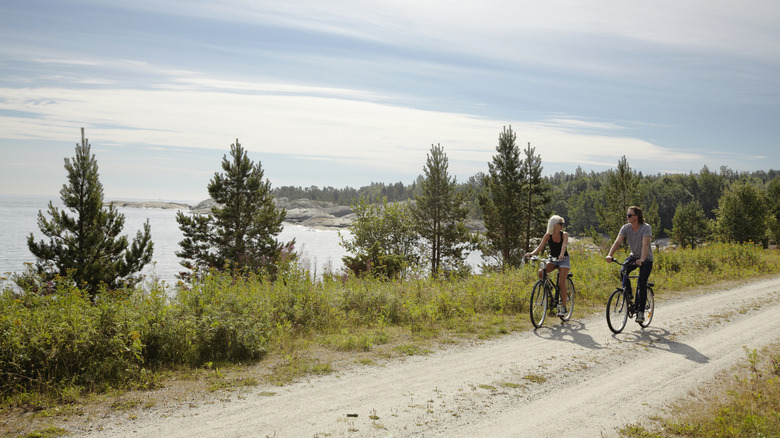
"Transforming an abandoned concrete grain silo into a sanctuary for contemporary travelers was about honoring Dalsland’s working-class past while embracing its creative future," says a project representative. "When a guest sits on the wooden deck watching the mist rise off Lake Vänern, or takes a wood-fired sauna after a day of gravel cycling along the Dalsland Canal, they are experiencing Swedish culture in its purest, most unfiltered form."
Future Outlook: Navigating Dalsland’s Horizon Toward 2027 and Beyond
As international tourism continues its aggressive rebound, the pressure on primary European hubs will only intensify. For destinations like Dalsland, the coming years represent a critical window of opportunity balanced against the risk of inadvertent degradation.
Sustainable Growth Strategies
Regional tourism boards, in tandem with organizations like Intrepid Travel, are deliberately steering clear of high-density marketing campaigns. Instead, the focus for 2027 and beyond is on dispersed seasonal travel and deep-immersion itineraries. Rather than promoting peak summer months exclusively, tourism stakeholders are highlighting the rich tapestry of shoulder-season experiences—such as autumn mushroom foraging, spring heritage celebrations, and quiet winter cross-country skiing across frozen lakebeds.
Infrastructure and Accessibility
Dalsland’s future accessibility strikes a careful balance between convenience and isolation. Located roughly a two-and-a-half-hour drive (116 miles / 186 km) across the border from Norway’s capital, Oslo, and easily reachable from Sweden’s Gothenburg Landvetter Airport (GOT) to the south, the region is remarkably well-connected for international arrivals while remaining blissfully insulated from major highway gridlock. Future infrastructure upgrades are projected to focus exclusively on green transit corridors—expanding electric vehicle charging networks, enhancing gravel cycling paths, and promoting rail-and-trail packages that allow visitors to arrive via Sweden’s efficient rail network without ever renting a car.
The Ultimate Takeaway for the Discerning Traveler
Dalsland’s emergence on the global stage signals a maturing of traveler tastes. The era of checking off crowded bucket-list landmarks is giving way to a desire for depth, silence, and ecological harmony. By offering an unvarnished slice of Scandinavian culture—complete with ancient pilgrim tracks, mirrored lake surfaces, floating wilderness cabins, and a profound respect for Allemansrätten—Dalsland proves that the most rewarding journeys are often found off the beaten path. For those looking beyond Iceland and Finland in the years to come, "Sweden in Miniature" stands ready to redefine what it means to truly explore the North.


