Executive Overview
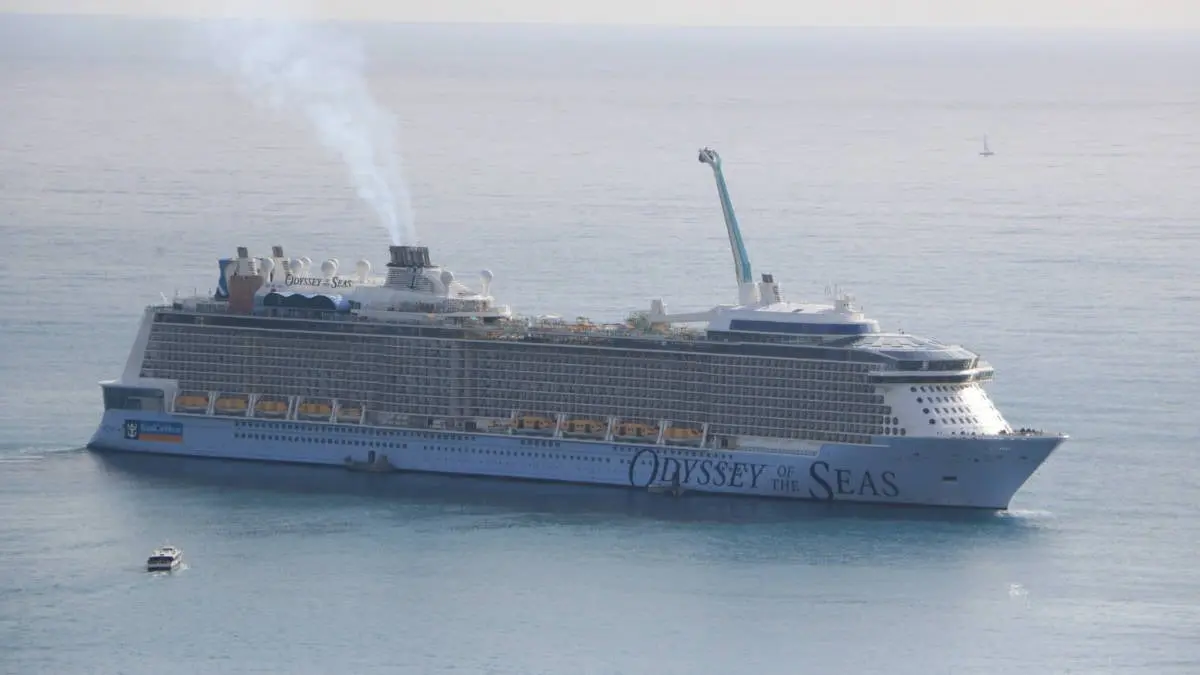
In what maritime authorities are calling an extraordinarily rare and fortunate outcome, a 44-year-old Salvadoran woman was rescued alive from the open waters of the Ionian Sea early on the morning of October 10, 2026. The passenger had gone overboard nearly 20 hours prior from Royal Caribbean International’s mega-cruise ship, Odyssey of the Seas.
The survivor, whose identity has been withheld to protect her privacy, was spotted by a passing commercial cargo vessel approximately 70 nautical miles southwest of Zakynthos, Greece. A Hellenic Coast Guard vessel subsequently recovered her alive and conscious from the water before transferring her ashore for emergency medical evaluation and treatment for hypothermia.
The incident triggered a massive, multi-agency search and rescue operation coordinated by the Hellenic Coast Guard’s Joint Search and Rescue Coordination Center (EKSED). While survival rates in open-ocean overboard scenarios—particularly those extending past a few hours—are vanishingly small due to factors like hypothermia, dehydration, and exhaustion, this case adds a remarkable chapter to maritime rescue lore.
The emergency response profoundly disrupted the voyage of the 167,704-gross-ton cruise ship, forcing the captain to abort a scheduled port stop in Naples, Italy, and alter the itinerary as the vessel returned toward its homeport. This comprehensive report details the chronology of the incident, the coordination of international rescue forces, the operational impacts on the cruise, and the broader context of passenger safety and overboard survivability in the modern cruise industry.
Detailed Chronology: From Emergency Alert to Midnight Rescue
The Incident: October 9, 2026
The crisis began in the early morning hours of October 9, 2026. Odyssey of the Seas was navigating the Mediterranean waters of the Ionian Sea, en route from Mykonos toward Naples, Italy. The ship was operating the final legs of a seven-night, round-trip Greek Isles itinerary that had departed Civitavecchia on October 4.
At some point during the early morning hours, the 44-year-old Salvadoran national went overboard. While cruise ship security systems—including advanced radar, closed-circuit television (CCTV), and optical overboard detection technology—frequently monitor the perimeter of modern vessels, the exact circumstances leading to the passenger entering the water remain unconfirmed by authorities.

As soon as the crew was alerted to the missing person and the possibility of an overboard event, standard maritime safety protocols were immediately engaged. The captain of Odyssey of the Seas initiated a man-overboard maneuver, turning the massive 1,138-foot vessel around to retrace its path and begin a localized search pattern.
The Immediate Search and Rescue Operation
Upon confirming the potential location of the incident—approximately 72 nautical miles southwest of Zakynthos—the ship’s crew deployed rescue assets and maintained visual and radar watches. Simultaneously, the Hellenic Coast Guard’s Joint Search and Rescue Coordination Center (EKSED) was notified and assumed operational command of the broader search.
Odyssey of the Seas remained on the scene, participating actively in the search grid for approximately 14 hours. The coordinated operation was extensive, drawing upon multiple maritime and aerial resources. According to local reports, the Hellenic Coast Guard deployed patrol vessels, and search-and-rescue helicopters swept the turbulent waters of the Ionian Sea. Other commercial vessels navigating the busy maritime corridor were also alerted to participate as lookouts, expanding the geographic scope of the search grid.
The Turning Point: October 10, 2026
As daylight faded on October 9 and hours ticked past, the likelihood of finding the passenger alive diminished dramatically. However, hope was dramatically renewed in the early hours of October 10.
According to local Greek media outlet Ellada24 and passenger reports gathered via maritime forums, a passing cargo vessel patrolling the search sector sighted a person in the water. The sighting occurred approximately 70 nautical miles southwest of Zakynthos.
At approximately 2:00 a.m. on October 10—roughly 20 hours after she had first entered the sea—the woman was reached by a Hellenic Coast Guard rescue vessel. Rescuers pulled her from the water alive and conscious. She was immediately given initial stabilization care on the patrol boat before being rushed to port in Katakolo, Greece, and subsequently transferred to a regional hospital for specialized medical intervention.
Passengers aboard Odyssey of the Seas reported that the ship’s captain made an emotional public address over the public address system at approximately 2:00 a.m., sharing the news of the successful rescue with the relieved cruise guests. The captain noted that the woman was receiving immediate hospital treatment primarily for severe hypothermia, though official medical bulletins regarding her ongoing condition have remained tightly restricted.

Supporting Context & Metrics: The Anatomy of the Response
Vessel and Itinerary Profile
Odyssey of the Seas is one of Royal Caribbean’s premier Quantum Ultra-class ships. Entering service in 2021, the vessel boasts a gross tonnage of 167,704, a length of 1,138 feet, and a guest capacity of 4,198 passengers across double occupancy (with a maximum capacity exceeding 5,000 guests, supported by a crew of approximately 1,550).
The ship was executing a standard 7-night Greek Isles itinerary. Following its departure from Civitavecchia (the port serving Rome), the voyage included stops at popular Mediterranean destinations before heading toward Mykonos and ultimately setting a course for Naples as its final port of call prior to debarkation.
Operational Disruptions and Itinerary Alterations
The necessity of a 14-hour search-and-rescue deployment fundamentally altered the operational timeline of the voyage. Because Odyssey of the Seas had to dedicate its propulsion and crew resources to combing the Ionian Sea, it lost critical transit time required to maintain its scheduled itinerary.
Consequently, Royal Caribbean management and the ship’s command team made the decision to cancel the scheduled October 10 port call in Naples, Italy. Rather than stopping in Campania, the ship redirected its course, setting a straight line back toward its homeport of Civitavecchia.
The cancellation of Naples turned what should have been a bustling sightseeing day into an unexpected sea day for the more than 4,000 passengers on board. While guests expressed disappointment over the lost port day, social media sentiment on platforms like Reddit reflected broad understanding and empathy, with travelers prioritizing the human life saved over scheduled sightseeing.
Despite the detour, Royal Caribbean confirmed that the scheduled disembarkation date of October 11 remained unchanged, and subsequent sailings were not impacted by the incident. Tracking data from maritime monitoring systems confirmed that the ship bypassed Naples entirely, steaming steadily toward Civitavecchia to prepare for the turnaround day.
Official Statements and Industry Perspectives
Response from Authorities
The Hellenic Coast Guard and EKSED have maintained a professional, measured approach regarding the incident. Search and rescue coordinators praised the synergy between civilian commercial shipping, the cruise ship’s bridge crew, and state-operated maritime assets.
The spotting of the victim by a random cargo vessel highlights the vital importance of the international "Man Overboard" broadcast protocol, which requires all vessels in the vicinity of a reported incident to maintain heightened watches and assist designated rescue authorities.
The Rarity of Survival
Maritime safety experts emphasize just how extraordinary this rescue is. According to historical data compiled by various cruise industry and maritime safety groups, the survival rate for individuals who go overboard from large cruise ships is historically low—estimated at roughly 20 to 25 percent overall.
When survivors are recovered, it is typically within the first hour or two following the fall. Surviving in open ocean waters for nearly 20 hours places this incident in an exceptionally rare category. Factors that likely contributed to this miraculous outcome include:
- Sea Temperature and Conditions: While the Ionian Sea experiences cooling autumn temperatures, environmental factors in certain Mediterranean sectors during early October can sometimes stave off rapid, fatal hypothermia compared to arctic or deep-winter waters.
- Buoyancy and Physiology: The ability of the individual to stay afloat—whether aided by clothing, debris, or physiological endurance—is paramount.
- Prompt Multi-Agency Coordination: The rapid mobilization of the Hellenic Coast Guard, combined with the vigilance of the passing cargo ship, ensured that rescue assets were blanketing the correct drift sector when the victim was spotted.
Future Outlook and Ongoing Investigations
Investigation into the Cause
While the immediate rescue operation concluded successfully, local authorities and maritime investigators continue to look into the circumstances surrounding how the 44-year-old woman ended up in the sea.
Standard protocol in cruise ship overboard incidents involves a thorough forensic review by law enforcement agencies, flag state authorities (in this case, the vessel sails under the flag of the Bahamas), and cruise line security teams. Investigators analyze CCTV footage, electronic keycard swipes, witness statements, and marine environmental data to piece together the timeline and determine whether the event was accidental, intentional, or the result of external factors.
Cruise Industry Safety Enhancements
Incidents of this nature invariably reignite industry-wide discussions regarding passenger safety measures. Over the past decade, major cruise lines—including Royal Caribbean—have increasingly invested in advanced technological safeguards. These include:
- Automated Overboard Detection Systems: Utilizing thermal imaging, radar, and optical sensors mounted along the ship’s superstructure to automatically alert the bridge the moment an object crosses the ship’s perimeter.
- Enhanced CCTV Monitoring: Dedicated security personnel monitoring high-definition camera grids 24 hours a day.
- Rigorous Safety Briefings: Mandatory muster drills and continuous passenger education regarding deck safety, high railings, and restricted areas.
As the legal and operational review of the Odyssey of the Seas incident proceeds, the primary focus remains on the health and recovery of the survivor. Her miraculous 20-hour survival serves as both a testament to human resilience and a shining example of effective international maritime search-and-rescue cooperation.