By Philippe Lazaro
Digital Content Manager
Estimated Reading Time: 7 minutes
Executive Overview
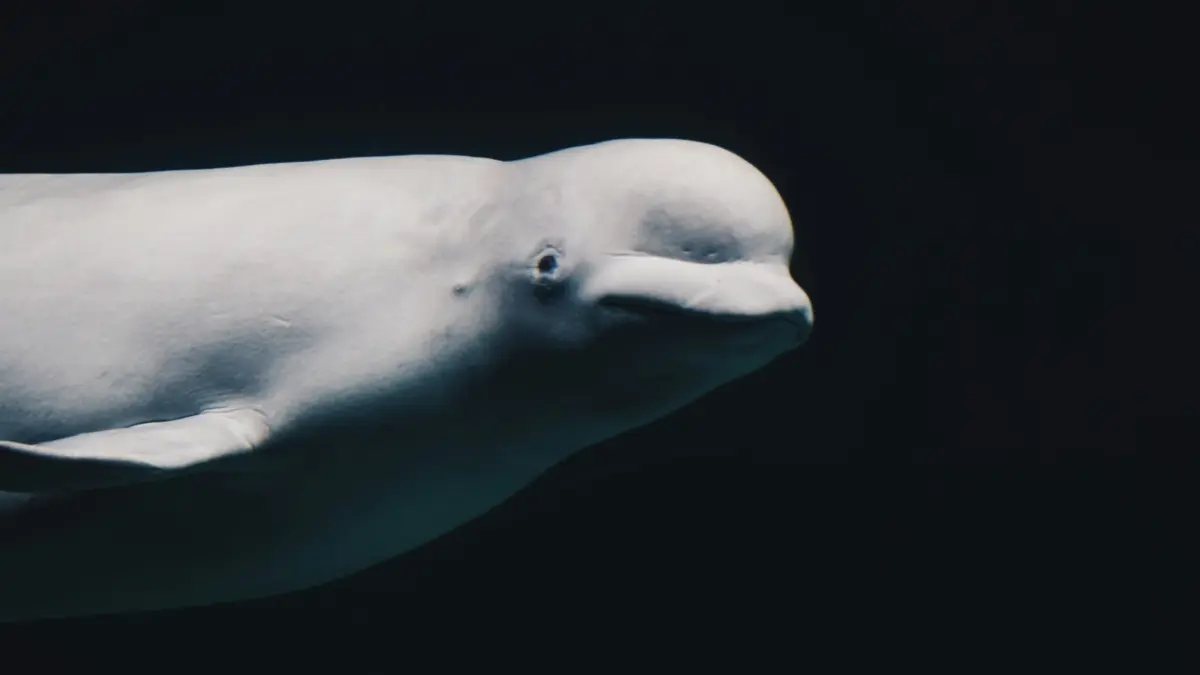
To stand on the banks of the St. Lawrence River in Quebec is to bear witness to a geological and biological anomaly. Hundreds of miles away from the roaring swells of the open Atlantic, beneath the shadow of cargo ships and recreational kayaks, a flash of iridescent ivory breaks the river’s surface. It is a beluga whale (Delphinapterus leucas)—an iconic resident of the high Arctic, thriving here in a freshwater-infused estuary system deep within the North American continent.
The presence of these small, gregarious, white-skinned cetaceans in the St. Lawrence is not a modern migration, nor is it a temporary straying. It is a biological legacy etched into the earth more than 15,000 years ago by the slow, grinding retreat of a colossal ice sheet. For millennia, this geographically isolated population has adapted to the unique ecological rhythms of the St. Lawrence, developing distinct behaviors, vocalizations, and cultural ties with both the river and the human communities along its shores.

Yet, this living prehistoric archive is now facing an unprecedented convergence of threats. Once numbering around 10,000 individuals at the dawn of the 20th century, the St. Lawrence beluga population has plummeted to an estimated 900 to 1,800 whales. Decimated historically by commercial hunting—which persisted until 1979—the population is now blocked from recovery by a compounding cocktail of heavy industrial contamination, relentless vessel traffic, and anthropogenic noise pollution.
Compounding these localized pressures is a planetary crisis: rapid climate change in the Arctic. As northern ice retreats and ocean temperatures climb, new apex predators and ecological disruptions are bleeding into the St. Lawrence corridor. The warming ocean is rewriting the rules of survival for a population that has spent ten millennia fine-tuning its place in a changing world. Unless immediate, aggressive conservation interventions are taken, the St. Lawrence beluga risks becoming a permanent casualty of the modern Anthropocene.
Detailed Chronology: From Glacial Sea to Riverine Refuge
The story of the St. Lawrence belugas begins not with water, but with ice—specifically, the Wisconsin glaciation, an immense continental ice sheet that smothered much of North America during the last glacial period.
The Champlain Sea Epoch (c. 15,000–10,000 Years Ago)
As global temperatures began to warm approximately 15,000 years ago, the massive Wisconsin glacier commenced its slow, destructive, and ultimately transformative retreat. The sheer weight of the ice sheet had depressed the Earth’s crust beneath it by hundreds of meters. As the glacier melted, this profound geological depression invited marine waters to surge inland from the North Atlantic.

The result was the creation of the Champlain Sea—a vast, temporary inland ocean that stretched from the present-day Atlantic coastline westward into the Great Lakes basin and northward toward the Ottawa Valley. Arctic-adapted marine mammals, including early belugas, bowhead whales, humpbacks, fin whales, porpoises, walruses, and seals, flooded into this inland sea.
Subsequent geological shifts left a permanent record of this epoch. Today, paleontologists regularly unearth the fossilized remains of whales and marine invertebrates buried deep beneath the fertile farmlands, suburban housing developments, and rolling fields of Quebec and eastern Ontario. Notably, in 2001, researchers at the Université du Québec à Montréal (UQAM) recovered a remarkably well-preserved beluga fossil carbon-dated to more than 10,000 years old from St. Lawrence lowlands sediment.
Isolation and Adaptation (10,000 Years Ago–Present)
As the glacial ice continued to vanish, the relieved Earth’s crust rebounded in a process known as isostatic uplift. The Champlain Sea gradually drained away, leaving behind the modern St. Lawrence River basin.
While most marine mammals retreated back to the open ocean as the saltwater receded, one group of belugas stayed behind. Trapped in the newly formed estuary, this vanguard adapted to the brackish, fluctuating waters of the St. Lawrence. Over millennia, they became genetically isolated from all other beluga populations inhabiting the high Arctic waters of Canada, Alaska, and Russia.
For more than 10,000 years—a timespan far exceeding recorded human history in the region—this lineage has known no other home. They evolved distinct seasonal behaviors, localized feeding strategies, and social structures finely tuned to the river’s unique tidal and seasonal pulses. For generations, Indigenous nations along the St. Lawrence relied on these whales for subsistence, weaving them deeply into the cultural fabric, spiritual traditions, and food security of the region.
Supporting Context & Metrics: A Population Under Siege
Despite surviving the end of an ice age, the St. Lawrence belugas are failing to survive the modern industrial era. Listed as endangered under Canadian conservation legislation, the population’s downward trajectory highlights the fragile interplay between wildlife survival and human encroachment.
The Numbers Game
- 10,000: Estimated population of St. Lawrence belugas at the turn of the 20th century.
- 1979: The year commercial hunting of St. Lawrence belugas was finally banned, long after over-harvesting had broken the back of the population.
- 900 – 1,800: Current estimated population range. While historical counts hovered around 1,800, recent comprehensive surveys indicate the true number may be dangerously close to 900.
- 19: The number of consecutive record-low Arctic sea ice September minimums recorded between 2007 and 2025, according to the National Snow and Ice Data Center (NSIDC).
Chemical and Acoustic Toxicity
Even after direct hunting ceased, the St. Lawrence belugas were met with a silent, invisible killer: industrial toxins. Situated at the drainage outlet of the Great Lakes and the St. Lawrence industrial corridor, the river became a sink for heavy metals, polychlorinated biphenyls (PCBs), polycyclic aromatic hydrocarbons (PAHs), and agricultural run-off.
Historically, researchers performing necropsies on stranded St. Lawrence belugas found tissue contaminant levels so high that some carcasses had to be handled and disposed of as hazardous toxic waste. While certain legacy chemicals have declined due to stricter environmental regulations, emerging contaminants—such as microplastics, PFAS (forever chemicals), and pharmaceutical byproducts—continue to compromise the immune and reproductive systems of the whales.
Furthermore, the river is a marine superhighway. Commercial cargo vessels, container ships, tourist boats, and high-speed whale-watching vessels generate intense underwater noise pollution. Because belugas rely entirely on sophisticated echolocation to navigate, hunt, and communicate in murky waters, this acoustic cacophony acts as an invisible wall, disrupting feeding grounds, masking social calls, and separating mothers from their calves.
The Climate Threat Multiplier
Climate change is introducing a terrifying new variable into a habitat the whales have mastered over millennia. As anthropogenic warming rapidly melts Arctic sea ice, northern ecosystems are destabilizing, forcing geographic shifts in marine life.
Most alarmingly, warmer waters and diminished sea ice have allowed transient killer whales (Orcinus orca)—apex predators capable of hunting all Arctic cetacean species—to venture further into historical beluga sanctuaries. In waters where belugas once found safe harbor beneath heavy winter ice packs, they now face open water and active predation.
Official Statements and Conservation Imperatives
Conservation organizations and marine biologists emphasize that the plight of the St. Lawrence beluga is a warning bell for global marine biodiversity.
"Groups of belugas in places like the St. Lawrence River and the Arctic have been separated for such long periods that they highlight the importance of genetic diversity when it comes to climate resilience," notes conservation literature from Ocean Conservancy. "Losing one distinct population, like the St. Lawrence group, cannot simply be offset by pointing to healthy beluga numbers in another part of the world. They represent thousands of years of unique history, culture, and localized adaptation."
Efforts to safeguard these distinct populations require multi-faceted regulatory action. Environmental advocates stress that protecting marine biodiversity in the 21st century demands aggressive reductions in greenhouse gas emissions alongside localized marine spatial planning—such as mandatory vessel slowdowns, underwater noise caps, and strict runoff controls across the entire watershed.
Future Outlook: Charting a New Course for Cetaceans
The warming ocean is shrinking sea ice on a timeline far faster than any natural glacier melt in Earth’s history. For the St. Lawrence beluga, the window to reverse systemic decline is rapidly closing.
However, policy solutions are actively on the table. Legislative measures such as the proposed Whale CHARTS Act represent critical steps forward. This act aims to radically reduce ship strikes by amending the National Oceanic and Atmospheric Administration’s (NOAA) near-real-time monitoring and mitigation programs for large cetaceans. By significantly improving our scientific understanding of baleen and sperm whale migration corridors, feeding hotspots, mating grounds, and calving areas, regulatory bodies can enforce dynamic management zones that keep ships and whales apart.
Similar legislative and conservation frameworks are urgently needed across Canadian waters to protect the St. Lawrence estuary. Cook Inlet belugas in Alaska face parallel extinction pressures, proving that semi-enclosed, industrialized marine habitats are failing cetaceans worldwide.
The beluga whale of the St. Lawrence River is far more than a local wildlife attraction; it is a living, breathing archival record of what the North American continent once was, and an unvarnished mirror showing what our oceans are rapidly becoming. As human activity continues to reshape the planet, the survival of these ice-age survivors will ultimately test our willingness to protect the ancient, fragile threads connecting our past to a sustainable marine future.