Executive Overview
High-stakes nautical maneuvering has long served as a defining crucible for mariners. Whether navigating a crowded slip in a crosswind after dusk or wrestling a heavy single-screw cruiser against an unforgiving current, the final approach to a dock has broken the nerves of countless novices and veterans alike. It is a time-honored friction point in recreational boating—the moment where equipment limitations, environmental unpredictability, and human error converge into what the maritime community colloquially terms a “dockmare.”
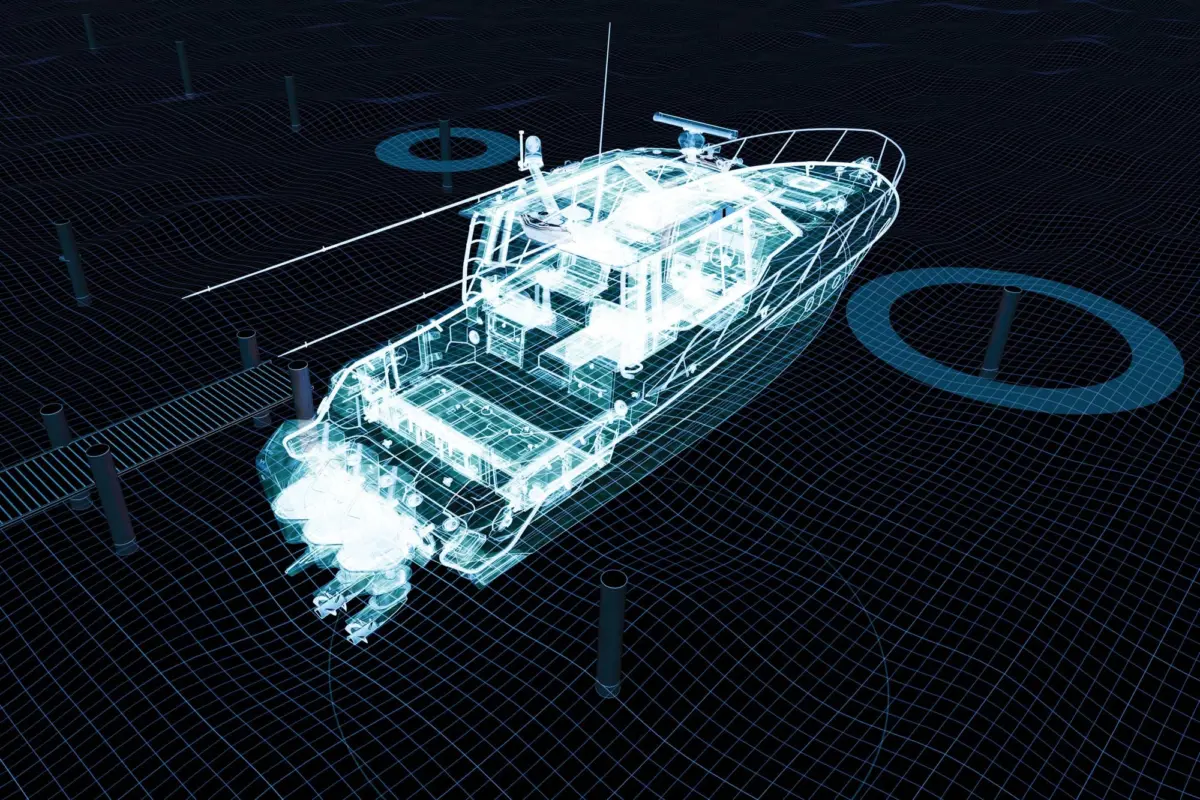
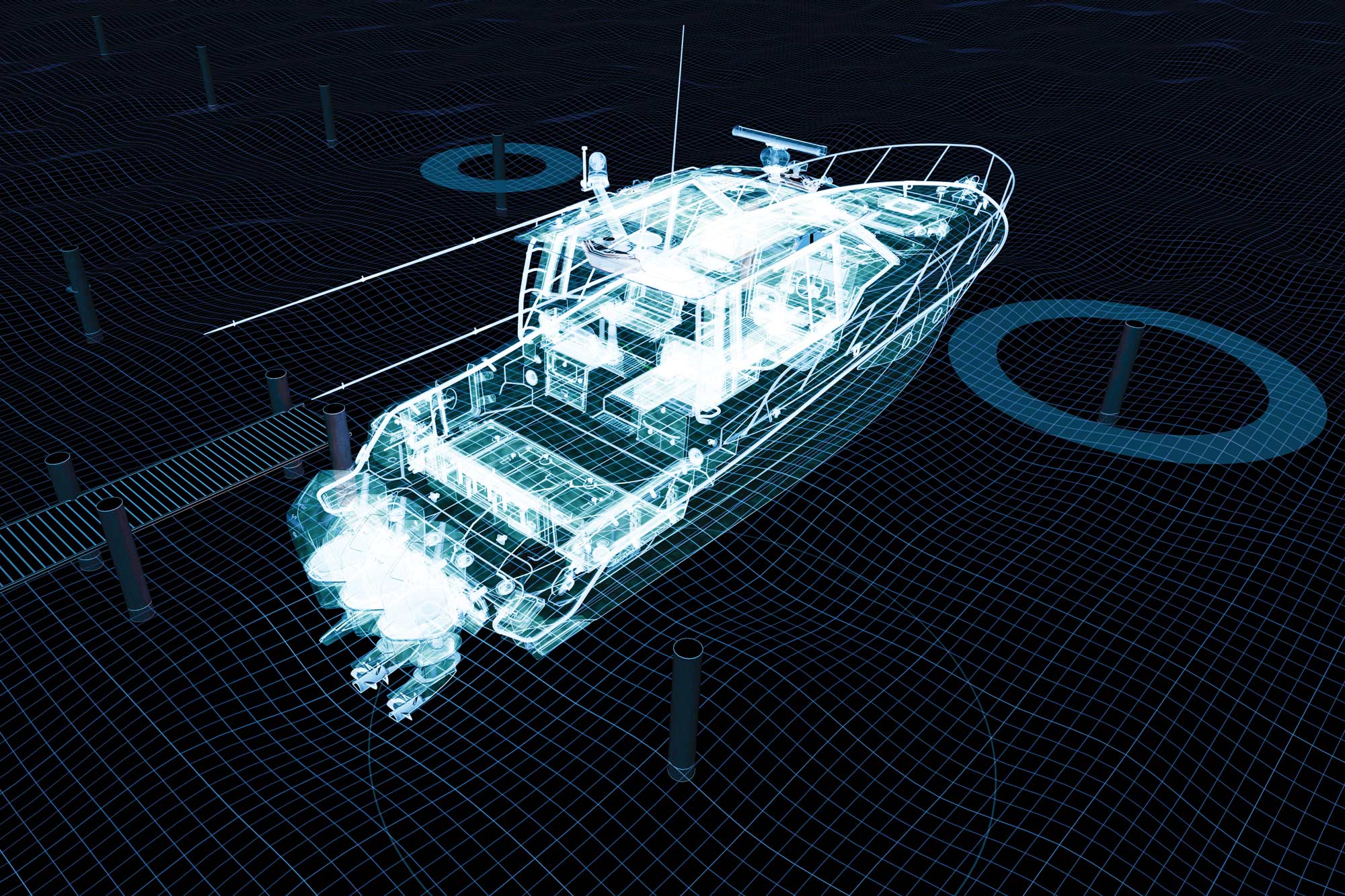
Enter Simrad’s AutoCaptain, a sophisticated, sensor-driven autonomous docking system that promises to transform the anxiety of close-quarters handling into a seamless, automated choreography. Developed in tandem by Navico Group and its parent company, Brunswick Corporation, AutoCaptain pairs an array of factory-installed stereo cameras with advanced machine vision, machine learning algorithms, and Mercury’s Joystick Piloting propulsion infrastructure.
What separates AutoCaptain from previous generations of aftermarket driver-assistance tech is its provenance. It represents the industry’s first fully integrated autonomous docking ecosystem forged by a parent organization that commands every link in the manufacturing chain—building everything from steering actuators and propulsion engines to marine sensors and multifunction displays. Currently debuting exclusively aboard the Boston Whaler 405 Conquest, AutoCaptain establishes a new benchmark for level two-plus automation on the water, balancing human oversight with machine precision to democratize seamanship while refining the toolkit of seasoned skippers.
Detailed Chronology: The Evolution Toward Autonomous Seamanship
The journey toward autonomous marine docking did not happen overnight, yet the rapid acceleration of artificial intelligence in the automotive and aviation sectors has finally spilled over into the marine industry.
[Mid-1990s: Manual Era]
   └── High-stress, manual docking relying entirely on crew skill and physical dexterity.
[Early Sensor Era]
   └── Introduction of aftermarket cameras, sonar, and basic proximity alerts.
[The Brunswick-Navico Integration]
   └── Proprietary ecosystem development (Steering + Propulsion + MFDs + Sensors).
[Present Day: AutoCaptain Launch]
   └── Level 2+ autonomous docking, un-docking, and short-range spatial management.
From Manual Strain to Machine Precision
For generations, safe docking relied on a delicate alchemy of engine feedback, rudder authority, windage estimation, and crew communication. For college kids running race-committee boats in dark, unlit harbors without thrusters, or weekend warriors facing stern-to slips with a tide running, the margin for error was razor-thin.
While early sensor-based docking assistants attempted to ease this burden, they were almost exclusively aftermarket bolt-on solutions. These third-party systems frequently suffered from communication bottlenecks, clunky user interfaces, and the finger-pointing blame game that inevitably arises when disparate hardware manufacturers fail to sync properly.
The Birth of AutoCaptain
Simrad Yachting and Brunswick Corporation circumvented these integration hurdles by designing AutoCaptain from the silicon up as an OEM-exclusive architecture. By consolidating the data stream from factory-installed hardtop stereo cameras into a dedicated black-box processor and routing execution commands directly through Mercury’s proprietary Joystick Piloting system, the engineering teams eliminated third-party latency.
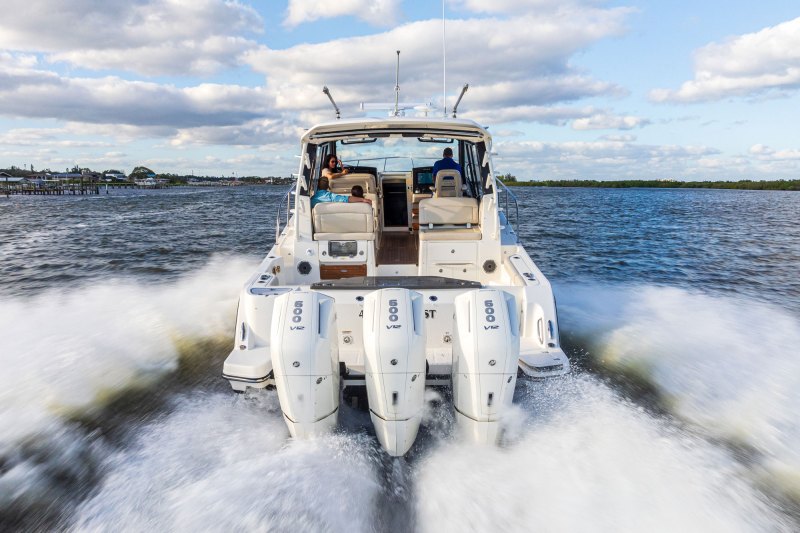
Currently deployed on the Boston Whaler 405 Conquest, AutoCaptain manages the intricate workloads of docking, undocking, and slow-speed, short-range open-water maneuvering. By handling the countless micro-adjustments of shifting gears and balancing thrust vectors simultaneously, the system relieves human operators of the frantic multi-tasking traditionally required during harbour approaches.
Supporting Context & Metrics: Under the Hood of AutoCaptain
To understand how AutoCaptain executes its feats of maritime precision, one must examine the intricate synergy of its hardware stack and software architecture.
The Hardware Matrix
AutoCaptain is not a simple software patch; it requires a robust, purpose-built hardware ecosystem. A fully equipped vessel features:
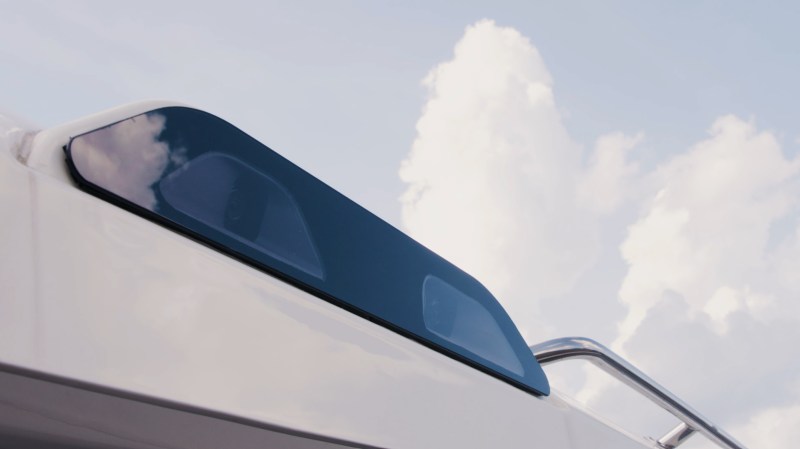
- Six Factory-Installed Stereo Cameras: Embedded seamlessly into the vessel’s hardtop to deliver uninterrupted 360-degree spatial visibility. These optical units require only minimal ambient light to function effectively.
- Black-Box Processing Unit: The central computational brain tasked with ingesting multi-channel video streams and executing path-finding algorithms.
- Multifunction Displays (MFDs): At least one Simrad NSO 4 or NSS 4 display running the proprietary AutoCaptain application.
- GNSS Receiver: A Global Navigation Satellite System receiver providing precise positional anchoring within the digital map.
- Propulsion Authority: At least two compatible Mercury outboards paired with Mercury’s advanced Joystick Piloting system.
Software Intelligence: Machine Vision and Machine Learning
The software suite relies on two core algorithms: one dedicated to non-water object detection and another focused on dynamic route planning. Powering these algorithms are two distinct artificial intelligence models:
- Machine Vision: Empowers the processor to “see” and categorize above-the-waterline objects—docks, pilings, neighboring vessels, and floating debris—derived from the live video feed.
- Machine Learning: Enables the system to adapt and improve over time without explicit code updates. The more marinas a vessel visits, the more refined its onboard spatial maps become.
| Feature / Metric | Specification | Operational Benefit |
|---|---|---|
| Automation Level | NHTSA Level 2+ ("Hands-off, eyes on") | Maintains human responsibility at the helm while automating complex motor adjustments. |
| Field of View | 360 Degrees via 6 Hardtop Stereo Cameras | Eliminates blind spots during tight-quarters maneuvering. |
| Position-Holding Accuracy | Within 1 Meter ("Pause Mode") | Provides a Skyhook-like safety buffer during interruptions or line-handling delays. |
| System Integration | OEM Factory-Install Only (No Aftermarket) | Eliminates component friction and ensures unified hardware/software diagnostics via Mercury G3. |
The User Interface and Operational Workflow
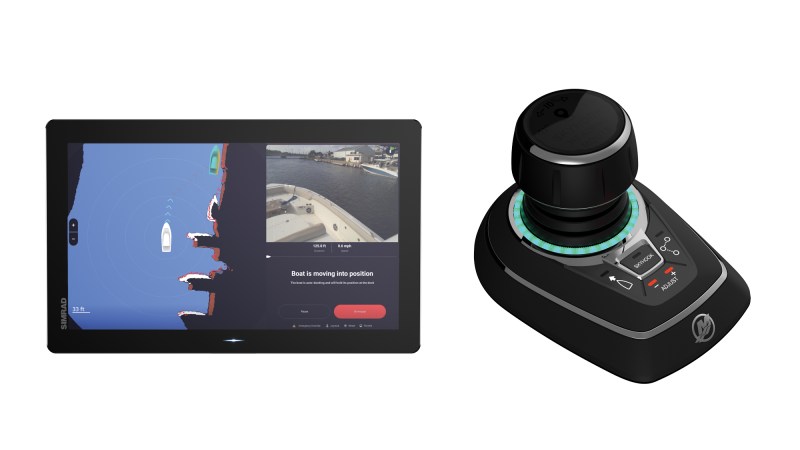
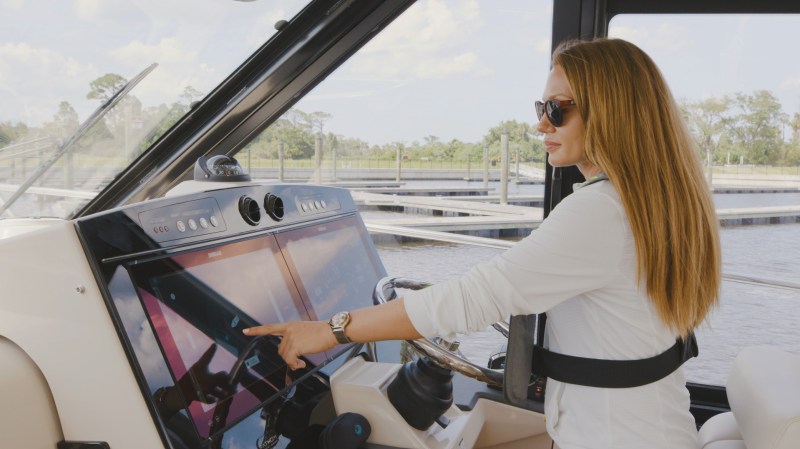
Engaging AutoCaptain is designed to be intuitive yet rigorous. The helmsman opens the AutoCaptain application on a Simrad MFD, acknowledges a safety prompt confirming they will remain at the helm station, and utilizes an on-screen touchpad to designate the desired vessel position and orientation (e.g., entering a starboard-side slip with the bow facing outward).
The MFD screen divides into three distinct panes:
- Port Two-Thirds: A dynamic, camera-generated vector map tracking the vessel’s immediate surroundings.
- Starboard One-Third (Upper): A real-time camera feed displaying the vessel’s exact direction of travel.
- Starboard One-Third (Lower): A critical dialogue box containing prominent "Disengage" and "Pause" buttons.
Should an unexpected obstacle enter the vessel’s path, AutoCaptain automatically recalculates a safe alternative route. If the system encounters a scenario it cannot definitively resolve, it smoothly transitions into "Pause Mode"—holding the yacht’s position and orientation to within one meter—before ultimately handing complete control back to the human operator.
Official Statements & Industry Perspectives
The development of AutoCaptain reflects a strategic shift within Brunswick Corporation and Navico Group toward deep vertical integration, mirroring the "walled garden" software philosophies seen in consumer electronics giants like Apple.
"There’s no aftermarket. There’s no dealer install. The only way to get this is with a new boat."
— Jeremiah Clark, Navico Group Vice President of Product Management for Electronics Solutions
Clark emphasizes that AutoCaptain is fundamentally an expandable, software-driven architecture. Because Navico Group and Mercury Marine operate under the same corporate umbrella, the engineering teams do not require external licenses or third-party protocols to interface sensors with propulsion controls.
"It’s hands-off, but you’re at the wheel… We’ve taught it what are boats, what are docks, what are obstacles in the water. But over time, the more of those things it sees, the smarter it actually gets."
— Brandon Ferriman, Brunswick Senior Director of Program Management
Ferriman underscores the system’s reliance on stereo cameras rather than radar or lidar alone. By mimicking human binocular vision, the stereo cameras calculate distance and depth of field with exceptional accuracy, even in low-light marina environments. Furthermore, the integration of Mercury’s Joystick Piloting allows the system to manipulate engines independently—varying RPMs, gear engagement, and vector thrust to slide the boat sideways, forward, or astern with surgical precision.
Future Outlook: The Road Ahead for Marine Autonomy
While AutoCaptain represents a monumental leap forward in recreational boating technology, its current iteration marks only the beginning of a broader evolutionary roadmap.
Upcoming Software Enhancements and Sensor Fusion
Executives have confirmed that future capabilities will be unlocked primarily through over-the-air or dealer-applied software updates rather than hardware overhauls. Future iterations are expected to leverage existing onboard sensor suites that are already natively understood by the Simrad ecosystem, including:
- Forward- and side-scanning sonar systems
- Doppler-enabled marine radar
- Automatic Identification System (AIS) transceivers
By fusing these auxiliary data streams with the existing stereo camera array, AutoCaptain’s situational awareness will expand significantly beyond close-quarters docking.
Target Markets and Scalability
Presently targeted at premium midsize vessels—such as the Boston Whaler 405 Conquest—AutoCaptain occupies a strategic position in the market. It serves two distinct demographics:
- Beginners: Lowering the psychological barrier to entry and making complex boating maneuvers accessible to newcomers.
- Experienced Boaters: Augmenting seamanship skills by eliminating fatigue during the final, high-stress moments of a long day on the water.
While scaling the technology downward to smaller runabouts remains constrained by the lack of hardtops (which are required to mount the 360-degree camera array) and cost thresholds, and scaling upward to superyachts is limited by the current prerequisite of Mercury propulsion integration, the underlying autonomy stack holds immense potential for future marine platforms.
The Human Element
Critics may argue that autonomous systems risk eroding traditional seamanship skills or fostering overreliance among greenhorn captains. However, AutoCaptain’s design deliberately retains human accountability: the skipper must remain helmside, acknowledge system prompts, and retain the ability to instantly override automation via the steering wheel, throttles, joystick, or physical disengage button.
Ultimately, AutoCaptain does not replace the captain; it acts as an infallible co-pilot. For past generations who wrestled heavy hulls into dark slips against wind and tide, a system like AutoCaptain would have saved countless topside scuffs, frayed nerves, and stressful post-trip debriefs. As Brunswick and Simrad continue to refine their integrated software ecosystem, the dark arts of docking are officially entering a safer, smarter, and far more graceful era.