










By Philippe Lazaro
Digital Content Manager
Executive Overview
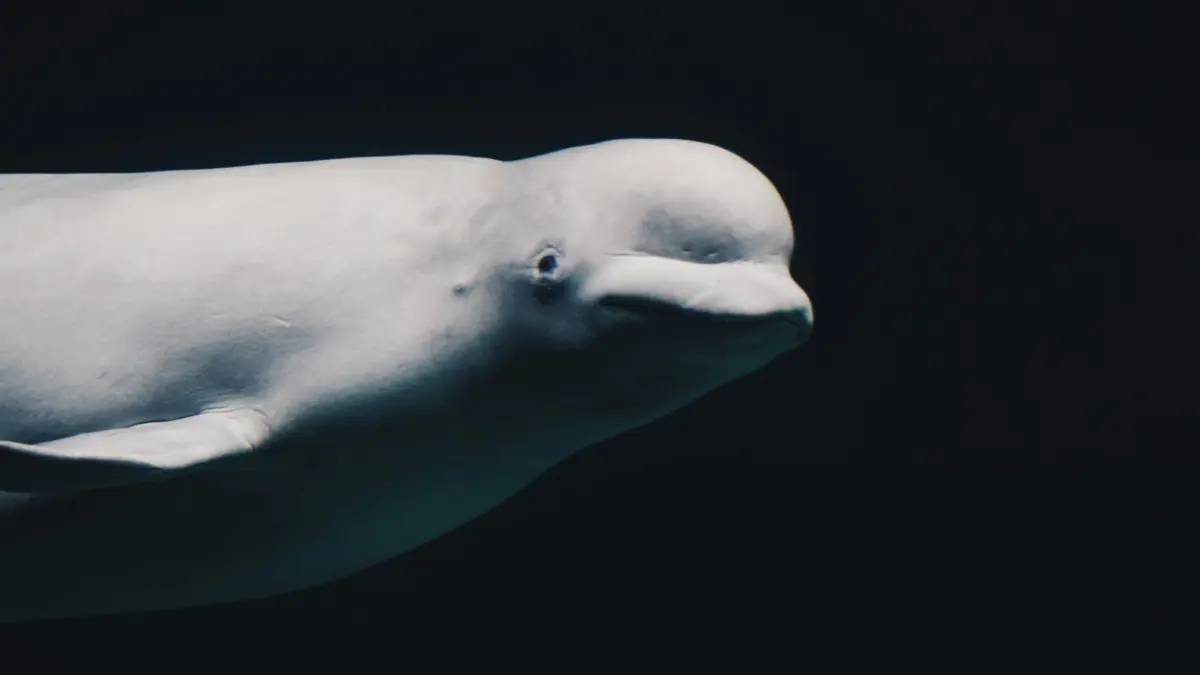
If you stand quietly on the rocky banks of the St. Lawrence River in Quebec, watching the slate-colored currents sweep past, you may catch a sudden, ethereal flash of brilliant white beneath the surface. It is a beluga whale (Delphinapterus leucas). To the uninitiated, finding a high-Arctic cetagogue hundreds of miles inland, navigating the same freshwater corridors as towering container ships and recreational kayaks, feels like a geographical anomaly. Yet these small, ivory-colored marine mammals have made this river their permanent home for millennia.
However, the story of how these Arctic whales came to reside in a Canadian river is not merely a tale of ecological adaptation; it is a geological epic. Born from the cataclysmic retreat of the last ice age, the St. Lawrence beluga population is a living archive of Earth’s ancient history. For over 10,000 years, this genetically isolated group has evolved in synchrony with the shifting rhythms of the St. Lawrence estuary.

Today, this ancient lineage faces an existential threat. Once numbering around 10,000 individuals at the dawn of the 20th century, the St. Lawrence beluga population has plummeted to an estimated 900 to 1,800 whales and is officially listed as endangered. Burdened by historical overhunting, industrial chemical contamination, and escalating underwater noise from commercial vessel traffic, these whales now confront an unprecedented catalyst for decline: rapid climate change. As a warming Arctic melts sea ice and reshapes marine ecosystems, new apex predators and ecological disruptions are bleeding into the belugas’ ancestral sanctuary.
This report examines the deep history written by ancient glaciers, the compounding pressures of the modern industrial age, and what the precarious fate of the St. Lawrence beluga reveals about the health of our rapidly warming global ocean.
Detailed Chronology: From the Champlain Sea to the Modern Estuary
To understand the presence of beluga whales in the heart of Quebec, one must look back not in decades, but in millennia, traversing a timeline defined by colossal ice sheets and dramatic geological upheaval.
15,000 Years Ago: The Retreat of the Wisconsin Glacier
Approximately 15,000 years ago, the North American continent was dominated by the Wisconsin glaciation—an immense ice sheet miles thick that depressed the Earth’s crust beneath its staggering weight. As global temperatures slowly shifted, the glacier began a protracted, centuries-long retreat.

The sheer weight of the ice had pushed the underlying bedrock far below sea level. Consequently, as the massive ice mass melted, Atlantic Ocean waters rushed inland to flood the immense depression left in its wake. This gave rise to the Champlain Sea, a vast inland water body that stretched from the Atlantic coastline westward toward the Great Lakes basin and modern-day New York State.
12,000 to 10,000 Years Ago: An Inland Arctic Ecosystem
The Champlain Sea was not merely a flooded basin; it was a cold, nutrient-rich marine ecosystem teeming with life adapted to sub-polar conditions. Submerged beneath what are now the rolling farms, suburban housing developments, and quiet woodlots of Quebec City and the Ottawa Valley lived a rich diversity of marine life.
Paleontological excavations throughout the St. Lawrence lowlands have unearthed the fossilized remains of porpoises, fin whales, bowhead whales, humpback whales, ringed seals, walruses, and early cetaceans. Researchers have mapped a treasure trove of marine fossils buried deep within the sedimentary soils of eastern Canada. Notably, in 2001, researchers at the Université du Québec à Montréal (UQAM) recovered a remarkably well-preserved beluga fossil carbon-dated to more than 10,000 years old.
The Holocene Transition: Isolation and Adaptation
As the ice age drew to a definitive close, the Earth’s crust—relieved of the immense burden of the glacial ice—began a geological process known as isostatic rebound. The land slowly rose, causing the Champlain Sea to drain eastward out toward the Atlantic Ocean.
While most marine mammals retreated with the receding saltwaters, a distinct population of beluga whales made a fateful choice. They remained within the newly formed estuary of the St. Lawrence River. As the land dried and the river system took its modern shape, these whales became geographically and genetically isolated from all other beluga populations inhabiting the high Arctic, coastal Alaska, and Russian waters.
Over thousands of years, this isolated population forged a unique evolutionary path. Their seasonal migration patterns, feeding habits, and social behaviors became finely tuned to the distinct hydrological and ecological rhythms of the St. Lawrence watershed. For Indigenous nations inhabiting the region, these whales became a vital cultural touchstone, serving as a cornerstone of subsistence, food security, and spiritual tradition long before European settlers arrived on the shores.
Supporting Context & Metrics: A Population Under Siege
Despite surviving the end of an ice age, the St. Lawrence belugas are currently struggling to survive the modern era. Their numbers tell a stark story of human impact and ecological distress.
- 10,000: The estimated population of St. Lawrence belugas at the turn of the 20th century.
- 900 – 1,800: The current estimated population range. While historical counts hovered around 1,800, recent scientific surveys suggest the population may have dangerously dipped closer to the 900 mark.
- 1979: The year commercial and recreational hunting of St. Lawrence belugas was finally banned, following decades of state-sanctioned culling driven by the perception that the whales competed with commercial fisheries.
- 19 (2007–2025): The last 19 consecutive September Arctic sea-ice minimums represent the lowest 19 extents ever recorded in nearly five decades of continuous satellite observation.
The Multifaceted Threat Matrix
The cessation of hunting in 1979 did not spark the recovery conservationists had hoped for. Instead, the St. Lawrence belugas became trapped in a complex web of modern stressors:
- Industrial Contamination: Situated at the drainage outlet of the Great Lakes and the St. Lawrence industrial corridor, the river accumulated staggering loads of toxic chemicals—including heavy metals, PCBs, and polycyclic aromatic hydrocarbons (PAHs). For decades, stranded belugas washed ashore with such high concentrations of industrial toxins that their carcasses were legally classified as hazardous toxic waste. This chemical burden severely compromised their immune and reproductive systems.
- Vessel Traffic and Acoustic Pollution: The St. Lawrence estuary is one of Canada’s busiest commercial shipping routes. Massive cargo vessels, tankers, and whale-watching boats generate a relentless cacophony of underwater noise. Because belugas rely heavily on echolocation and vocalizations to navigate, locate prey, and socialize, this acoustic smog effectively blinds and deafens them, disrupting vital life functions.
- Climate-Driven Ecological Shifts: Perhaps the most insidious modern threat stems from a warming Arctic. As sea ice diminishes and water temperatures rise, marine species that once avoided the St. Lawrence are expanding their ranges southward. Most alarmingly, researchers have documented killer whales (orcas)—a premier apex predator of all Arctic cetaceans—venturing into traditional beluga habitats. Furthermore, the loss of seasonal ice cover deprives belugas of critical physical refuges from predators and industrial activity.
Official Statements & Conservation Imperatives
Conservation organizations and marine biologists emphasize that the plight of the St. Lawrence beluga is not an isolated local tragedy, but a flashing red warning light for global marine biodiversity.
"Groups of belugas in places like the St. Lawrence River and the Arctic have been separated for such long periods that they highlight the importance of genetic diversity when it comes to climate resilience," notes conservation literature from Ocean Conservancy. "Losing one unique population, like the St. Lawrence group, cannot simply be offset by having healthy beluga numbers in another part of our world. They represent thousands of years of distinct history, culture, and evolutionary adaptation."
Marine scientists point out that the St. Lawrence belugas share a grim parallel with the Cook Inlet beluga population in Alaska, which is also critically endangered. Both groups demonstrate how geographically restricted, non-migratory marine mammal populations bear the brunt of localized industrial pollution combined with global climate disruption.
To combat these threats, advocacy groups and legislative bodies are pushing for aggressive policy overhauls. A prime example is the advocacy surrounding the Whale CHARTS Act, a legislative initiative designed to significantly reduce fatal ship strikes. The act aims to amend the National Oceanic and Atmospheric Administration’s (NOAA) near-real-time monitoring and mitigation programs for large cetaceans, drastically improving scientific understanding of migration corridors, feeding zones, and calving grounds. By integrating advanced acoustic monitoring and mandatory vessel slowdowns, lawmakers hope to carve out safe passages for baleen and toothed whales alike.
Future Outlook: Charting a New Course for Whales
The glaciers that carved out the Champlain Sea thousands of years ago fundamentally altered the geography of North America, stranding a population of Arctic whales in a Canadian river and setting them on an independent evolutionary journey. Today, human-driven climate change and industrial expansion are reshaping that same world on a timeline exponentially faster than any melting ice sheet.
The white belugas of the St. Lawrence River are more than a regional wildlife attraction; they are living sentinels. They serve as a biological record of what the North American marine ecosystem once was, and an urgent warning of what our oceans are rapidly becoming.
Protecting these iconic animals requires a multi-pronged commitment: enforcing stricter emissions standards, mitigating toxic runoff into the watershed, imposing rigorous speed limits on commercial shipping lanes to eliminate vessel strikes and reduce noise pollution, and aggressively curbing global greenhouse gas emissions to stabilize the Arctic cryosphere.
If we fail to protect the St. Lawrence beluga, we lose far more than a single endangered species. We lose a irreplaceable thread of Earth’s natural history—a living link to an ice age past that reminds us just how deeply our inland waters and distant oceans are intertwined. Charting a new course for these whales is not merely an act of conservation; it is a test of our commitment to the future health of our blue planet.


