










PUBLISHED: March 2026
AUTHOR: Maritime Investigative Desk
SUBJECT: Marine Accident Investigation Branch (MAIB) Report on the Arvia Fatality
Executive Overview
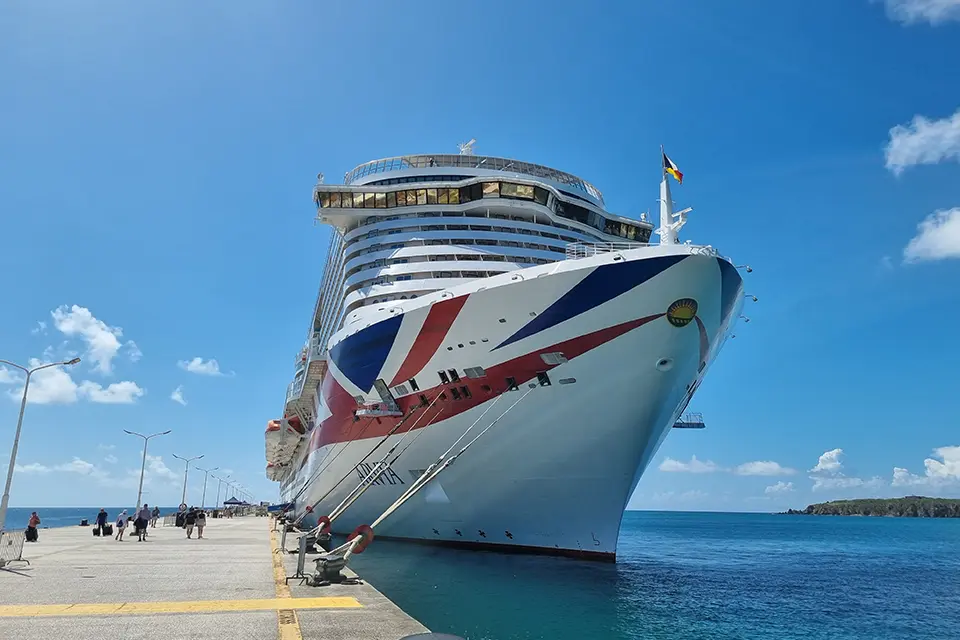
In a detailed report released today, maritime safety investigators have laid bare the sequence of events that led to the tragic death of a crew member aboard the Bermuda-registered passenger vessel Arvia. The fatal incident occurred on October 26, 2025, while the massive cruise liner was on an open-ocean passage from Southampton, England, to Santa Cruz de Tenerife in the Canary Islands, Spain.
The investigation was spearheaded by the United Kingdom’s Marine Accident Investigation Branch (MAIB). It was conducted on behalf of the Bermuda Ship Registry, operating under the cooperative framework of the Red Ensign Group (REG). Because Bermuda is a prominent member of the REG, the investigative mandate was executed in strict accordance with the Memorandum of Understanding (MoU) established between the MAIB and the various REG member administrations.

The publication of this report brings crucial scrutiny to onboard operational safety, procedural compliance, and the inherent risks faced by maritime workers in the modern cruise industry. While the Arvia—one of the flagship vessels of its operating fleet—is built to the highest contemporary standards of luxury and engineering, this incident highlights that human safety in high-tempo maritime environments remains acutely vulnerable to procedural breakdowns, communication gaps, and systemic oversights.
This article provides an in-depth examination of the findings, reviews the operational context of the voyage, analyzes the systemic safety metrics surrounding modern cruise line employment, and explores the broader industry implications aimed at preventing future tragedies at sea.
Detailed Chronology of the Voyage and Incident
Departure and Transit Phase
The voyage began in the historic maritime hub of Southampton, England, on a crisp autumn day in late October 2025. The Arvia, a state-of-the-art mega-cruise vessel carrying thousands of passengers and a large international crew, cast off its moorings and charted a southerly course toward the sun-drenched shores of Santa Cruz de Tenerife in the Canary Islands.
For the first phase of the passage, the transit proceeded under routine operational parameters. Weather conditions in the English Channel and the Bay of Biscay—notoriously challenging bodies of water during the autumn transition months—were monitored closely by the bridge team. Crew members across all departments—hotel operations, marine engineering, deck services, and safety—settled into their standard rotational shifts, preparing the vessel for the multi-day leisure voyage.

The Critical Incident on October 26, 2025
As the vessel cut through the Atlantic waters on October 26, operations on board shifted into the busy rhythm of a sea day. However, standard duties were abruptly interrupted when a critical incident unfolded, resulting in severe injuries to a crew member.
While the exact operational zone and the precise nature of the task remain detailed in the full technical annexes of the MAIB report, the incident immediately triggered the ship’s emergency response protocols. Medical personnel on board were mobilized instantly to render emergency trauma care. Despite the swift intervention of the ship’s medical team, the crew member succumbed to their injuries.
Immediate Aftermath and Port Notification
Following the declaration of the fatality, the master of the Arvia initiated emergency communication protocols, notifying relevant maritime authorities, the vessel’s operators, and the flag state administration (Bermuda Ship Registry). In compliance with international maritime law and standard accident investigation procedures, plans were made to preserve the scene for forensic analysis while maintaining the vessel’s safe navigation toward its scheduled route. Upon arrival in the Canary Islands and subsequent coordination with international marine authorities, the formal evidence-gathering process began, culminating in today’s comprehensive MAIB publication.
Regulatory Framework and Investigative Jurisdiction
The Role of the Marine Accident Investigation Branch (MAIB)
The MAIB is universally recognized as one of the world’s premier independent marine casualty investigation bodies. Operating under the UK Department for Transport, its statutory purpose is to investigate accidents and marine casualties with the sole objective of preventing recurrence—not to apportion blame or liability.
In this specific case, the jurisdictional pathway is governed by international maritime law, specifically the International Maritime Organization (IMO) Casualty Investigation Code. Because the Arvia is flagged under the jurisdiction of Bermuda—a British Overseas Territory and a core component of the Red Ensign Group—the Bermuda Ship Registry retains primary responsibility for statutory flag-state investigations. However, through long-standing bilateral agreements and MoUs, the MAIB frequently acts as an independent investigative proxy or lead agency for REG member states, leveraging its world-class forensic capabilities, human factors experts, and specialized marine surveyors.
Understanding the Red Ensign Group (REG)
The Red Ensign Group comprises the United Kingdom, the Crown Dependencies (Isle of Man, Guernsey, and Jersey), and the UK Overseas Territories (including Bermuda, the Cayman Islands, and Gibraltar). Together, they administer some of the largest and most prestigious shipping and cruise registries in the world.
When a serious marine incident or fatality occurs on a Red Ensign vessel outside UK territorial waters, the flag state must lead or commission the safety investigation. The collaboration between the Bermuda Ship Registry and the MAIB exemplifies how smaller flag administrations can access elite investigative resources to ensure absolute transparency, rigorous technical scrutiny, and uncompromising safety standards across their global fleets.
Supporting Context & Metrics: Safety in the Cruise Industry
The Human Element in Modern Maritime Operations
To truly understand the implications of the Arvia incident, one must look beyond the immediate physical mechanics of the accident and examine the broader systemic ecosystem of modern cruise shipping. Modern mega-cruise ships are floating cities, often accommodating upward of 5,000 to 6,000 passengers and supported by a diverse international crew numbering in the thousands.
Maritime safety experts frequently point out that while modern ship designs incorporate advanced fire-suppression systems, sophisticated electronic navigation suites, and redundant propulsion plants, the human element remains the most critical—and vulnerable—variable in the operational equation.

According to data compiled by international maritime labor organizations and safety forums, crew safety incidents often share common underlying root causes:
- Fatigue and Workload Pressures: The rapid turnaround times of modern cruise itineraries place immense physical and psychological demands on crew members, particularly those managing hotel services, technical maintenance, and deck operations simultaneously.
- Communication and Cultural Barriers: With crew members drawn from dozens of different nations—frequently communicating in a shared working language that may not be their native tongue—subtle misunderstandings during complex operational procedures can lead to catastrophic errors.
- Routine Habituation: Highly repetitive daily tasks can breed complacency, causing experienced workers to bypass vital safety check-sheets or personal protective equipment (PPE) protocols.
Comparative Safety Metrics
While cruise shipping remains statistically one of the safest modes of travel for passengers—boasting incident rates significantly lower than land-based transportation—the occupational safety record for crew members tells a different, more complex story.
Historical safety data from maritime labor watchdogs indicates that while passenger fatalities resulting from structural or navigational marine casualties are vanishingly rare, crew injuries and fatalities occurring during routine maintenance, mooring operations, and technical servicing remain a persistent challenge.
- Mooring and Deck Operations: Historically, mooring operations represent one of the highest-risk activities on any vessel. Snap-back zones, heavy mechanical winches, and unpredictable tension loads present constant hazards.
- Enclosed Space Entry: Another leading cause of maritime fatalities industry-wide is unauthorized or improperly managed entry into enclosed spaces (such as ballast tanks, cargo holds, and fuel tanks) where oxygen depletion or toxic gas accumulation poses an invisible, lethal threat.
- Overboard Incidents and Heavy Equipment Handling: The movement of heavy provisions, luggage, and technical spares across rolling decks creates ongoing exposure to crush injuries and falls from height.
While the MAIB report on the Arvia focuses heavily on the specific mechanical and human factors surrounding this particular event, it inevitably contributes to the global database of maritime risk management, prompting fleet-wide reviews across major cruise operators.
Official Statements and Industry Response
Reactions from Regulatory Bodies
Following the public release of the report, representatives from the Red Ensign Group and the Bermuda Ship Registry issued coordinated statements emphasizing their unwavering commitment to crew welfare and transparent accountability.
A spokesperson for the Bermuda Ship Registry noted:
"The safety and well-being of every single person who steps aboard a Bermuda-flagged vessel is our absolute highest priority. We acknowledge the release of the MAIB investigation report into the tragic incident aboard the Arvia. We are actively reviewing the safety recommendations contained within the document and are working closely with the vessel’s managers to ensure that all required corrective actions are implemented swiftly, thoroughly, and permanently."
The Operator’s Stance
The commercial operators and management team of the Arvia expressed profound grief over the loss of their crew member, extending deepest condolences to the family, friends, and colleagues affected by the tragedy.
In a corporate statement released shortly after the MAIB publication, the company emphasized its immediate operational response:
"We are deeply saddened by the passing of our crew member on October 26, 2025. There is nothing more important to us than the safety, security, and health of our shipboard community. We have fully cooperated with the MAIB and the Bermuda Ship Registry throughout this meticulous investigation. We are studying the final report in complete detail and are committed to reinforcing our safety management systems, training programs, and operational oversight to honor our late colleague and protect all personnel who sail with us."
Maritime labor advocates and union representatives have also weighed in, calling for the findings of the report to be disseminated widely across the international maritime sector rather than treated as an isolated incident. They argue that lessons learned from the Arvia tragedy must be integrated into standard STCW (Standards of Training, Certification and Watchkeeping for Seafarers) curriculums worldwide.
Future Outlook: Preventing Future Tragedies at Sea
Key Recommendations from the MAIB Report
While specific technical annexes and safety recommendations are detailed directly in the full MAIB publication, investigations of this magnitude typically center on several vital pillars designed to reshape operational safety:
- Enhancement of Safety Management Systems (SMS): Operators will likely be urged to audit their existing SMS frameworks to ensure that risk assessments for routine and non-routine tasks are practical, rigorously enforced, and adapted to the dynamic environment of a working cruise ship.
- Re-evaluating Crew Training and Supervision: The report is expected to underscore the necessity of enhanced supervisory oversight during hazardous operations, ensuring that clear lines of communication and stop-work authorities are fully understood by junior and senior personnel alike.
- Technological and Procedural Safeguards: Industry stakeholders are increasingly looking toward technological innovations—such as automated monitoring, improved personal protective gear, and enhanced design engineering—to engineer hazards out of the workplace entirely, rather than relying solely on human compliance.
The Broader Impact on the Cruise Sector
As the cruise industry continues its robust post-pandemic expansion, with larger vessels and increasingly complex itineraries spanning global oceans, the scrutiny on crew welfare has never been more intense. Passengers increasingly demand ethical and safe working conditions for the unseen workforce that powers their vacations.
The Arvia incident serves as a sobering reminder that the vast oceans remain an unforgiving workplace. The true legacy of this tragic event will depend entirely upon how the maritime industry—from flag states and ship managers to individual officers and crew—absorbs the lessons of the MAIB report. By transforming investigative insights into enforceable, lasting operational changes, the maritime community can move closer to the ultimate goal: ensuring that every seafarer returns home safely at the end of their contract.
For access to the complete, unabridged accident investigation report, technical appendices, and safety circulars regarding the Arvia incident, stakeholders and members of the public are encouraged to consult the official publications portal of the Marine Accident Investigation Branch (MAIB) and the Bermuda Ship Registry.


