











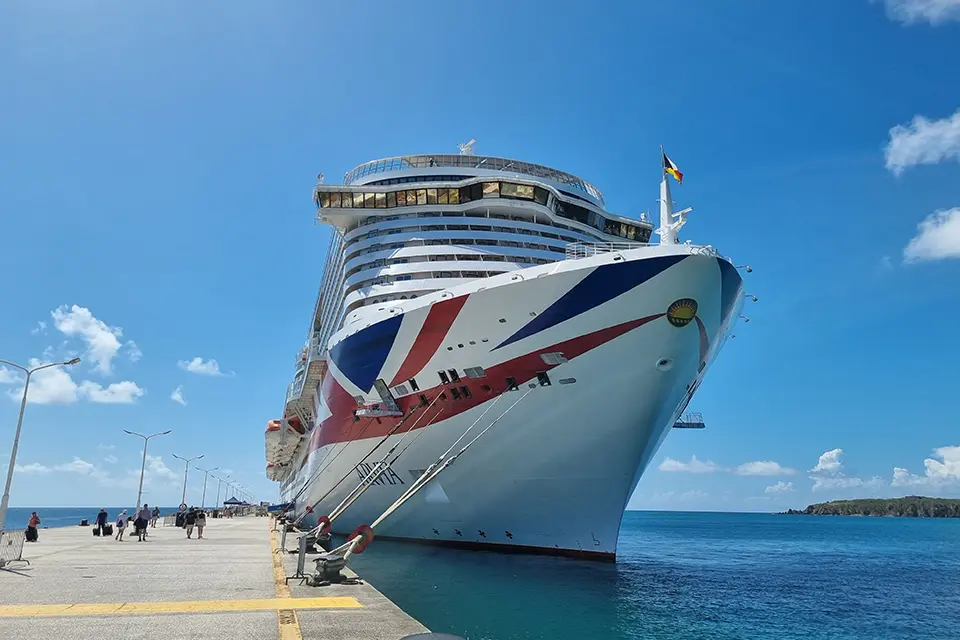
UNITED KINGDOM — Maritime authorities have released their official findings into a tragic onboard fatality involving a crew member aboard the Bermuda-registered cruise liner Arvia. The incident occurred on October 26, 2025, while the mega-ship was navigating open waters on a voyage from Southampton, England, to Santa Cruz de Tenerife in the Canary Islands, Spain.
The report, compiled by the United Kingdom’s Marine Accident Investigation Branch (MAIB) on behalf of the Bermuda Ship Registry, sheds light on the harrowing events that unfolded mid-ocean, renewing intense scrutiny regarding safety protocols, operational hazards, and working conditions for maritime personnel within the global cruise industry.
Executive Overview
The publication of the MAIB investigation report marks a critical milestone in understanding the systemic and situational factors that contributed to the loss of life aboard the Arvia. Operating under the flag of Bermuda—a proud member of the Red Ensign Group (REG)—the vessel was thrust into the spotlight when the fatal incident occurred late last year.
While the report details the direct sequence of events leading up to the tragedy, it also acts as a broader diagnostic tool for the cruise industry at large. Maritime accidents involving crew members on major passenger vessels are subject to rigorous international oversight, and this case highlights the complex jurisdictional frameworks governing ships at sea. Conducted under a formal memorandum of understanding (MoU) between the MAIB and REG member administrations, the investigation underscores the cooperative mechanisms designed to ensure absolute transparency, accountability, and the continuous enhancement of maritime safety standards.
This comprehensive overview examines the chronological progression of the incident, evaluates the regulatory and operational context of modern cruise shipping, reviews statements from key maritime bodies, and outlines the urgent preventative measures required to safeguard workers across the high seas.
Detailed Chronology of Events
Departure from Southampton
On the morning of October 26, 2025, the cruise vessel Arvia cast off from its moorings in Southampton, England. As one of the flagship vessels of modern leisure cruising, the ship was embarking on a regularly scheduled transatlantic/southerly itinerary heading toward the sun-drenched shores of Santa Cruz de Tenerife in the Canary Islands.
The departure proceeded according to standard maritime schedules. Thousands of vacationers were onboard enjoying the initial hours of the voyage, oblivious to the high-stakes, behind-the-scenes labor required to keep a floating resort operational. Crew members across various departments—from hospitality and entertainment to technical operations and deck maintenance—resumed their routine responsibilities as the vessel cleared the English Channel and entered the open waters of the Atlantic Ocean.

The Critical Incident
As the Arvia continued its southward passage, routine operations intersected with a fatal hazard. While exact granular details regarding the precise location and nature of the task remain heavily documented within the confidential annexes of the full technical report, the sequence of events escalated rapidly into a crisis.
A crew member, engaged in scheduled duties onboard, suffered catastrophic injuries. Immediate internal emergency responses were triggered across the ship. The vessel’s medical team responded rapidly, initiating emergency life-saving procedures. Despite the swift mobilization of the ship’s onboard medical infrastructure and the efforts of trained personnel, the severity of the injuries proved insurmountable. The crew member tragically succumbed to their injuries while the ship was still thousands of miles from its next scheduled port of call.
Immediate Aftermath and Divergence Protocols
Following the confirmation of the fatality, the ship’s command team initiated standard maritime emergency protocols. Under international maritime law and company procedures, the master of the vessel immediately notified the relevant flag state authorities—in this case, the Bermuda Ship Registry—as well as search and rescue (SAR) coordinators and maritime safety authorities in the United Kingdom.
The Arvia maintained its course toward Santa Cruz de Tenerife while coordinating closely with shore-side medical examiners, maritime police units, and diplomatic representatives. Upon the vessel’s arrival in the Canary Islands, local authorities boarded the ship to conduct preliminary forensic examinations, gather testimonies from witnesses and colleagues, and facilitate the repatriation process for the deceased crew member. Simultaneously, preliminary data, voyage data recorder (VDR) logs, and safety management system (SMS) records were secured for the impending independent investigation by the MAIB.
Supporting Context & Metrics
The Role of the MAIB and the Red Ensign Group
The Marine Accident Investigation Branch (MAIB) is an independent branch of the UK Department for Transport. It is charged with investigating marine accidents and incidents within UK territorial waters, as well as accidents involving UK-registered or Red Ensign Group-registered vessels worldwide, where a formal agreement or delegation of authority exists.
Bermuda, as a Category 1 Red Ensign Group (REG) jurisdiction, maintains its own shipping registry and adheres to stringent international maritime conventions, including the International Convention for the Safety of Life at Sea (SOLAS) and the Maritime Labour Convention (MLC). However, due to resource sharing and deep technical expertise, the Bermuda Ship Registry frequently delegates complex marine safety investigations to the MAIB. This cooperative framework ensures that independent, highly objective, and technologically advanced probes are conducted regardless of where in the world an accident occurs.
Understanding Modern Cruise Ship Hazards
The incident aboard the Arvia brings to the forefront the inherent dangers faced by maritime workers. While cruise passengers experience a sanitized, resort-style environment, the operational reality of running a floating city requires heavy engineering, continuous maintenance, hazardous material handling, and rigorous deck operations often conducted in dynamic, unpredictable marine environments.

Key structural and operational risk factors in contemporary maritime labor include:
- Fatigue Management: Long working hours, shift work, and the psychological strain of living and working in the same environment can degrade situational awareness.
- Complex Machinery and Mechanical Handling: The movement of heavy loads, operation of winches, tensioned lines, and high-pressure systems present constant physical threats.
- Environmental Dynamics: Pitching, rolling, and wind sheer on open decks can instantly transform routine maintenance tasks into high-risk operations.
- Multinational Communication Barriers: Crew members often hail from dozens of different nations, sometimes creating subtle linguistic or procedural miscommunications during high-pressure operational tasks.
Statistical Overview of Maritime Safety
According to historical data from the International Maritime Organization (IMO) and various flag-state registries, occupational safety within the cruise industry has seen long-term improvements; however, human error and procedural non-compliance remain persistent challenges.
- Fatality Trends: While passenger fatalities aboard major cruise liners are statistically rare, crew accidents—ranging from slips, trips, and falls to machinery entanglement and enclosed space incidents—account for the vast majority of serious injuries and fatalities in the sector.
- Regulatory Compliance: The enforcement of the Maritime Labour Convention (MLC, 2006) has established baseline protections for seafarers regarding maximum hours of work, minimum hours of rest, health and safety protection, and accident prevention. Despite these legal frameworks, investigations frequently reveal gaps between written safety management systems and on-the-ground operational realities.
Official Statements and Regulatory Findings
Findings from the MAIB Report
The newly published MAIB report does not merely document the tragic outcome; it deconstructs the operational decisions, safety barriers, and systemic factors that allowed the accident to occur. While investigators acknowledged that the ship’s management cooperated fully with the probe, the findings highlight critical areas where risk assessments fell short.
Key takeaways from the investigative findings include:
- Procedural Lapses: The task being performed at the time of the accident lacked a sufficiently robust, dynamic risk assessment tailored to the specific environmental conditions encountered on passage.
- Supervision and Oversight: The report evaluates the chain of command and the degree of direct supervision exercised during high-risk operations, noting that safety culture must remain vigilant even during routine transatlantic voyages.
- Emergency Response Evaluation: The onboard medical and emergency response received commendation for its promptness, though the report suggests continuous improvements in trauma response training for hospitality-heavy passenger vessels.
Responses from Stakeholders
In the wake of the report’s release, maritime unions, cruise industry associations, and the ship’s operators issued statements expressing profound condolences to the family and colleagues of the deceased crew member.
Representatives for the operator emphasized their unwavering commitment to crew welfare and safety:
"The safety, health, and well-being of every single crew member and guest on our ships remains our absolute highest priority. We are deeply saddened by this tragic event, and our thoughts remain with the family and loved ones of our colleague. We are carefully reviewing the findings of the MAIB report in detail and are fully committed to implementing all recommendations to ensure that such a tragedy can never happen again."
International maritime labor advocates, meanwhile, have utilized the publication to push for more aggressive enforcement of safety regulations, calling for mandatory third-party audits of crew working conditions and greater transparency from cruise lines regarding occupational hazards.
Future Outlook: Preventing Future Tragedies at Sea
The publication of the MAIB investigation report into the Arvia incident serves as both a solemn memorial and a vital roadmap for future maritime safety reform. As the global cruise industry continues to expand, with larger vessels carrying more passengers and operating on increasingly complex itineraries, the margin for error in crew safety narrows significantly.
1. Enhancement of Safety Management Systems (SMS)
Cruise operators must move beyond compliance-driven safety manuals toward a deeply ingrained, proactive safety culture. This requires:
- Dynamic Risk Assessments: Empowering crew members at all levels to halt work immediately if unpredicted environmental or operational hazards arise.
- Enhanced Training Modules: Integrating practical, scenario-based safety training that addresses human factors, fatigue management, and peer-to-peer communication barriers.
2. Regulatory Strengthening and Flag State Oversight
The collaboration between the Bermuda Ship Registry and the MAIB demonstrates the efficacy of international cooperation. However, regulators must continue to pressure shipping companies to standardize safety practices across global fleets. Flag states must rigorously audit training records, equipment maintenance logs, and actual working hours to ensure that the Maritime Labour Convention is upheld not just on paper, but in daily practice.
3. Technological Innovations in Crew Safety
The future of maritime safety lies in leveraging emerging technologies to protect workers:
- IoT and Wearable Tech: Utilizing smart sensors to monitor crew biometric data, fatigue levels, and proximity to hazardous zones on deck.
- Remote Monitoring and Automation: Deploying advanced robotics and automated systems for high-risk maintenance tasks, thereby minimizing the need for personnel to expose themselves to dangerous mechanical or environmental hazards.
Conclusion
The tragic loss of a crew member aboard the Arvia on October 26, 2025, is a sobering reminder of the human cost associated with global maritime commerce and leisure operations. As the industry digests the comprehensive findings of the MAIB report, the ultimate measure of its value will not be found in the pages of the document itself, but in the tangible, permanent changes implemented across the seas to ensure that every mariner returns home safely.


