











Executive Overview
The modern public transportation sector faces a looming demographic precipice. As veteran engineers, operators, and administrative leaders approach retirement age, transit agencies across North America are grappling with an urgent imperative: how to attract, train, and retain the next generation of transportation professionals. For decades, the standard approach to seasonal labor relied heavily on transactional, short-term arrangements—bringing in students for the summer months to handle clerical overflow, complete isolated administrative tasks, or assist with low-stakes field work. However, in an increasingly competitive labor market where top-tier engineering, technology, and business graduates can command lucrative positions in the private sector, this legacy model is no longer viable.
To build a resilient workforce pipeline, transit agencies must fundamentally reframe how they view and execute internship programs. Rather than treating internships as casual summer jobs or compliance-driven window dressing, forward-thinking organizations are recognizing that an optimal internship program serves as an extended, real-world interview and a foundational pillar of organizational talent development.
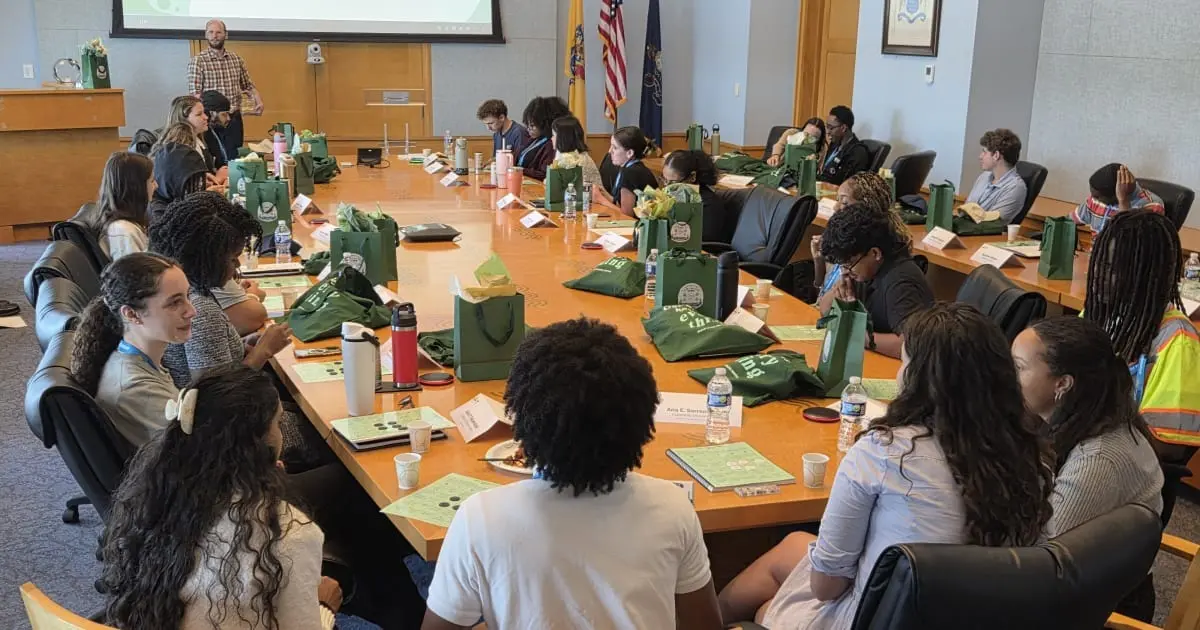
A prime example of this paradigm shift can be found in the successful collaborative model implemented by the Delaware River Port Authority (DRPA) and the Port Authority Transit Corporation (PATCO). By intentionally moving beyond traditional job descriptions, DRPA and PATCO have designed a holistic, high-impact internship ecosystem that delivers mutual value: students gain invaluable, hands-on exposure to critical infrastructure and transit operations, while the agency identifies, nurtures, and secures top-tier future talent.
Drawing from comprehensive insights featured in recent industry reporting by METRO Magazine, this article provides an investigative and authoritative exploration of the strategies transit organizations can leverage to build high-performing internship pipelines. By examining seven foundational pillars—ranging from purposeful recruitment and intentional mentorship to holistic agency exposure and continuous feedback loops—this blueprint offers actionable guidance for agencies seeking to future-proof their operations against impending labor shortages.
Detailed Chronology: The Evolution of Transit Workforce Development
To understand the current urgency surrounding transit internships, one must examine the historical trajectory of human capital management within the public transportation sector. For much of the late 20th century, transit agencies enjoyed a steady, organic influx of applicants. Public sector jobs were historically viewed as paragons of stability, offering reliable pensions, robust healthcare benefits, and a clear sense of civic duty. Agencies rarely needed to market themselves aggressively to university campuses; qualified candidates frequently sought out public authorities independently.
However, the dawn of the 21st century introduced compounding disruptions that altered the employment landscape permanently.
Phase One: The Aging Workforce and the "Silver Tsunami"
By the late 2000s and early 2010s, human resources departments across the transit industry began sounding alarms regarding the "Silver Tsunami"—the mass retirement of Baby Boomers. Agencies suddenly realized that decades of institutional knowledge were walking out the door, taking with them critical expertise in civil engineering, rail operations, signaling maintenance, and fiscal management. Initial responses were reactive: human resources departments scrambled to post open positions on traditional job boards, yet they frequently found themselves outbid and out-marketed by private engineering firms, technology startups, and logistics giants.
Phase Two: The Shift Toward Experiential Recruitment
Recognizing that traditional recruitment funnels were failing to capture the attention of digital-native generations, progressive transit agencies began experimenting with structured internship initiatives during the mid-2010s. The goal shifted from simply filling temporary labor gaps to creating a proactive talent pipeline. Agencies began partnering with regional engineering universities and vocational schools. Yet, many of these early programs suffered from structural flaws: interns were siloed within single departments, given repetitive, low-impact assignments, and provided with minimal interaction with senior leadership. Consequently, conversion rates—the percentage of interns transitioning into full-time employment post-graduation—remained low.
Phase Three: The Modern Holistic Model (The DRPA/PATCO Blueprint)
In recent years, industry leaders have recognized that a successful internship program requires deliberate, strategic design. The modern benchmark, exemplified by the DRPA and PATCO initiatives highlighted by METRO Magazine, treats the internship as a comprehensive professional incubator.
In this contemporary phase, agencies are no longer passive hosts. They are active curators of talent. By integrating cross-departmental rotations, executive mentorship, and formal professional development workshops, organizations like DRPA and PATCO have transformed the summer internship into a marquee recruitment tool. This evolutionary pivot acknowledges a fundamental truth: today’s high-achieving students are not merely looking for a paycheck; they are evaluating an agency’s culture, technological modernization, and commitment to professional growth before deciding where to launch their careers.
Supporting Context & Metrics: The Business Case for Transformational Internships
The urgency behind overhauling transit internship programs is supported by compelling industry data and labor market dynamics. According to workforce analyses by the American Public Transportation Association (APTA) and the Federal Transit Administration (FTA), public transportation agencies face a distinct disadvantage when competing against private sector employers who can offer rapid promotional tracks and highly flexible remote-work options.
The Cost of Turnover vs. The Value of Intern Conversion
Recruiting, onboarding, and training a specialized transit professional—such as a signaling engineer, a safety compliance officer, or a capital projects manager—is an expensive endeavor. When an agency relies entirely on external lateral hires, it faces high recruitment advertising costs, extended vacancy periods that strain existing staff, and the steep learning curve associated with navigating complex public-sector regulations and capital program funding.
Conversely, data from structured internship-to-hire pipelines demonstrate staggering efficiencies:
- Reduced Time-to-Productivity: Internal hires who started as interns arrive with a baseline understanding of agency culture, governance structures, and operational terminology, significantly reducing the onboarding curve.
- Higher Retention Rates: Studies across public administration indicate that employees who enter an organization via a formalized, high-engagement internship program exhibit higher three- and five-year retention rates compared to cold-market hires. They are emotionally invested in the agency’s mission and have already established internal professional networks.
- Enhanced Diversity and Innovation: Intentional recruitment strategies enable transit agencies to tap into diverse demographic pools, bringing fresh perspectives, digital-native competencies, and innovative problem-solving methodologies into historically rigid institutional environments.
Official Strategies: 7 Pillars for Building an Optimal Internship Program
Based on the operational successes observed at agencies like DRPA and PATCO, transit organizations aiming to modernize their talent pipelines must implement a rigorous, multi-faceted framework. Below are the seven essential pillars required to build an optimal internship program.
+-----------------------------------------------------------------+
|               THE 7 PILLARS OF TRANSIT INTERNSHIPS              |
+-----------------------------------------------------------------+
| 1. Build a Learning Experience   -> Set clear academic goals    |
| 2. Recruit With Purpose          -> Target specific campuses    |
| 3. Give Meaningful Work          -> Real projects, real impact  |
| 4. Provide Mentors               -> Guidance from veterans      |
| 5. Show the Bigger Picture       -> Cross-departmental views    |
| 6. Invest in Professional Dev.   -> Soft & hard skill training  |
| 7. Listen and Improve            -> Continuous feedback loops   |
+-----------------------------------------------------------------+
1. Build a Learning Experience
The cornerstone of any elite internship program is a commitment to education over exploitation. Too often, organizations fall into the trap of treating interns as cheap labor for seasonal filing or data entry. To attract ambitious students, agencies must establish explicit learning objectives aligned with academic standards and industry competencies.
An optimal program structures the summer not merely as a job, but as an experiential fellowship. Supervisors must collaborate with interns during week one to define what skills the student aims to acquire—whether that involves mastering computer-aided design (CAD) software, understanding National Environmental Policy Act (NEPA) compliance, or analyzing ridership data via geographic information systems (GIS). By treating the internship as an educational milestone, agencies position themselves as prestigious institutions dedicated to professional formation.
2. Recruit With Purpose
Post-and-pray recruitment strategies—where an agency drops a generic job listing on a public board and waits for resumes—rarely yield top-tier talent. Building a resilient workforce pipeline requires proactive, surgical outreach.
Transit agencies must identify target academic institutions, regional colleges, vocational schools, and community programs that align with their specific operational needs. For civil engineering talent, this means building direct relationships with regional university engineering departments; for administrative, financial, and planning roles, it involves engaging public policy and business schools. Furthermore, recruitment must be intentional regarding diversity. Outreach should extend to student organizations representing underrepresented groups in STEM and public administration. Agencies must actively articulate why spending a summer solving complex urban mobility challenges is intellectually stimulating and socially impactful.
3. Give Interns Meaningful Work
Nothing disillusions a talented student faster than being assigned busywork devoid of organizational relevance. If interns are relegated to the sidelines, they will quickly look toward the private sector for stimulation.
An optimal program assigns students high-impact projects that carry genuine organizational value. Whether an intern is assisting in the preliminary engineering assessment for a station rehabilitation project, evaluating safety protocols for a new rolling stock acquisition, or streamlining digital asset management systems, they must feel that their daily labor matters. Giving students real responsibility—backed by appropriate supervision and scaffolding—empowers them to take ownership of their deliverables, resulting in heightened engagement and demonstrable work products they can proudly showcase in their professional portfolios.
4. Provide Mentors
The transition from academia to the professional world can be daunting. One of the most transformative elements of the DRPA/PATCO model is the deliberate pairing of interns with seasoned industry veterans.
A mentor acts as a trusted guide, confidant, and career counselor. Unlike direct supervisors—who focus primarily on project output and daily task management—mentors provide holistic perspective. They answer granular technical questions, offer candid feedback on professional communication, and share personal anecdotes regarding career trajectories within the transportation sector. A strong mentor-mentee relationship often endures long after the summer concludes, frequently serving as the decisive factor when a graduating student weighs multiple job offers and chooses to return to the transit agency.
5. Show the Bigger Picture
Transit agencies are vast, complex ecosystems comprising engineering, operations, safety, legal, finance, communications, and executive governance. A common pitfall in poorly managed internships is the "silo effect," where a civil engineering intern spends ten weeks staring exclusively at stormwater drainage calculations without ever seeing a train move or understanding how capital projects are funded.
To combat this, optimal programs incorporate cross-departmental exposure. Agencies should organize site visits to maintenance facilities, control centers (such as PATCO’s state-of-the-art Operations Control Center), and board meetings. Sessions with senior leadership allow interns to ask direct questions about agency vision, regional mobility trends, and public policy challenges. When interns understand how their isolated department contributes to the agency’s overarching mission of moving communities safely and efficiently, their sense of purpose deepens dramatically.
6. Invest in Professional Development
Technical aptitude alone does not guarantee success in the modern workplace. High-performing transportation professionals must possess robust soft skills, including public speaking, technical writing, cross-functional collaboration, and project management.
Agencies should curate a regular professional development curriculum running parallel to the interns’ daily project work. Workshops on resume building, interview techniques, executive presentation skills, and networking strategies provide immediate, transferable value. Crucially, agencies should administer baseline surveys asking incoming interns what specific skills they wish to develop, tailoring workshops to meet their identified professional growth aspirations.
7. Listen — and Improve
An internship program should never remain static. To maintain a competitive edge, agencies must institutionalize continuous feedback loops.
At the conclusion of each cohort, comprehensive exit interviews must be conducted with both the interns and their respective departmental supervisors. Agencies should solicit candid, unfiltered critiques: What project structures succeeded? Where did communication break down? Which training modules felt redundant? This qualitative and quantitative data must then be systematically analyzed to refine recruitment strategies, orientation protocols, mentor training, and project assignments for the subsequent year. An agency that actively demonstrates it listens to its interns models the very culture of continuous improvement that defines world-class organizations.
Future Outlook: The Horizon of Transit Workforce Innovation
As public transportation enters a new era defined by technological disruption, zero-emission fleet transitions, digital transformation, and shifting urban mobility patterns, the stakes for workforce development have never been higher. The infrastructure investments of today require the intellectual capital of tomorrow.
The lessons modeled by the Delaware River Port Authority and PATCO demonstrate that building an optimal internship program is not an ancillary human resources luxury—it is an existential operational necessity. By moving away from transactional summer jobs and toward immersive, holistic professional incubators, transit agencies can successfully bridge the generational divide.
Looking ahead, the most resilient transit agencies will be those that view young professionals not as temporary summer help, but as the foundational architects of future public mobility. By implementing intentional recruitment, meaningful project assignments, rigorous mentorship, and continuous programmatic evolution, the transit industry can secure a vibrant, highly skilled workforce ready to lead public transportation boldly into the decades to come.


