











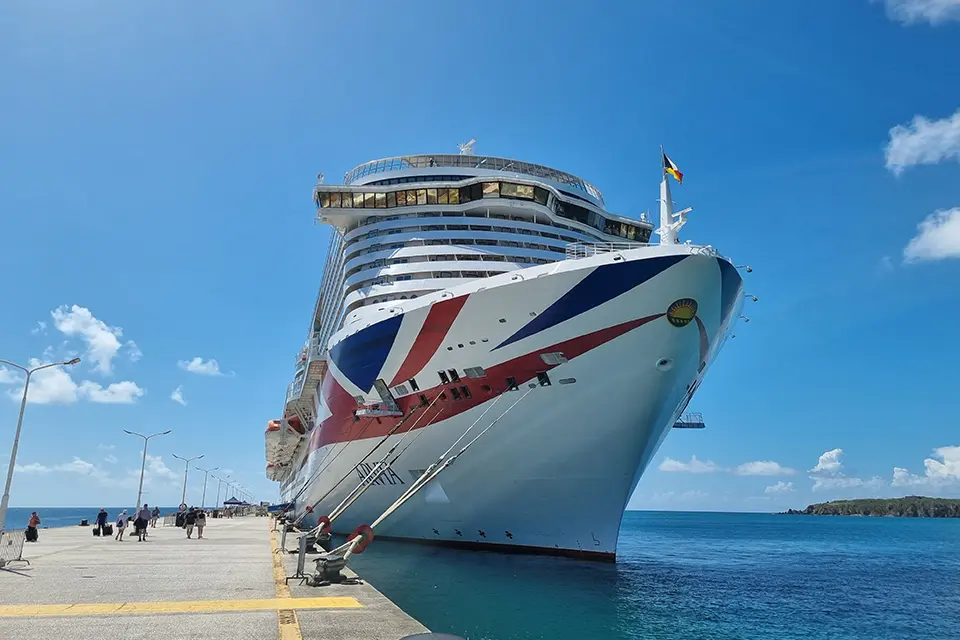
MARINE SAFETY REPORTING — The United Kingdom’s Marine Accident Investigation Branch (MAIB) has officially published its comprehensive accident investigation report regarding a tragic fatality aboard the Bermuda-registered passenger mega-ship Arvia. The incident occurred on October 26, 2025, while the vessel was navigating open waters on passage from Southampton, England, to Santa Cruz de Tenerife in the Canary Islands, Spain.
The findings shed light on the systemic vulnerabilities, operational pressures, and procedural adherence challenges inherent in managing safety protocols across modern, high-capacity commercial cruise liners operating under international flags of convenience.
Executive Overview
Maritime safety authorities and industry stakeholders have turned their attention to the operational review following the publication of the MAIB’s definitive assessment. The incident, which claimed the life of a crew member whose identity has been withheld pending family notifications, underscores the persistent hazards associated with routine maintenance, shipboard logistics, and technical operations on mega-cruise ships.
The Arvia, a massive floating resort capable of carrying thousands of passengers and a vast contingent of international crew, was executing a standard repositioning voyage down the Atlantic coast of Europe when the fatal mishap occurred. While passenger operations continued under strict protocols following the event, the accident triggered a multi-jurisdictional investigative response led by British authorities on behalf of the vessel’s flag state, Bermuda.
This report not only details the mechanical and human factors leading up to the tragedy but also serves as a critical warning to cruise operators globally regarding the delicate balance between rapid turnaround schedules, complex shipboard engineering systems, and the non-negotiable imperative of absolute worker safety.
Detailed Chronology: The Journey and the Incident
The Departure from Southampton
On the morning of October 26, 2025, the Arvia cast off its moorings in Southampton, setting out on a southerly heading across the English Channel and into the Bay of Biscay. The atmosphere on board was typical of a modern cruise departure: passengers were settling into their staterooms, exploring the extensive dining and entertainment amenities, and familiarizing themselves with the vessel. Below decks, however, the ship’s marine engineering and deck departments were engaged in the meticulous coordination required to transition a vessel of this magnitude from port operations to sea passage.
The Voyage South and the Emergence of the Hazard
As the vessel cleared the English coastline and encountered the rolling swells of the open Atlantic, departments across the ship executed routine post-departure tasks. Crew members were distributed across various work sites to perform scheduled maintenance, safety checks, and spatial reorganizations necessary for the multi-day transit to the Canary Islands.

According to the MAIB chronology, the critical chain of events leading to the fatality unfolded during a routine operational task. While specific engineering and deck procedures are designed to mitigate risk through standard operating procedures (SOPs) and permit-to-work systems, the investigation revealed critical gaps in how these protocols were communicated, supervised, and executed in real-time.
The Emergency Response and Medical Intervention
The accident occurred mid-morning. Upon the realization that a crew member had sustained severe injuries, the ship’s internal emergency response protocols were activated instantaneously. Medical personnel stationed within the vessel’s onboard hospital facilities were dispatched to the scene.
Despite the rapid deployment of the ship’s medical team, who administered advanced trauma care and life-saving interventions, the severity of the injuries proved fatal. The ship’s master initiated communication protocols, notifying maritime rescue coordination centers ashore while altering course parameters to ensure readiness for any potential emergency evacuation, though the crew member succumbed to their injuries prior to external medical extraction.
Supporting Context & Metrics: Navigating the Complexities of Mega-Cruise Operations
The Anatomy of the Arvia
To understand the context of the accident, one must examine the sheer scale of the Arvia. Delivered to its operators as a state-of-the-art marvel of modern naval architecture, the vessel represents the pinnacle of contemporary cruise ship design. Operating such a vessel requires a complex, multi-national workforce numbering in the thousands, operating around the clock in an industrial environment that directly intersects with a luxury hospitality setting.
The duality of a cruise ship—part heavy industrial transport, part luxury hotel—creates unique occupational safety hazards. Crew members frequently navigate high-tempo work environments, shifting time zones, language barriers, and physically demanding tasks.

The Regulatory Framework: MAIB, Bermuda, and the Red Ensign Group
The investigation was conducted by the MAIB acting on behalf of the Bermuda Ship Registry. Bermuda is a proud and active member of the Red Ensign Group (REG), which comprises the United Kingdom, the UK Crown Dependencies (Isle of Man, Guernsey, and Jersey), and the UK Overseas Territories (including Bermuda, the Cayman Islands, and Gibraltar).
Under international maritime law governed by the International Maritime Organization (IMO) and specifically the Memorandum of Understanding (MoU) between the MAIB and REG member administrations, the MAIB frequently acts as an independent investigative body for accidents occurring on vessels flying Red Ensign flags. This framework ensures that independent, highly professional, and transparent investigations are conducted regardless of where in the world the incident takes place, upholding the highest standards of global maritime safety.
Official Statements and Regulatory Analysis
Insights from the Marine Accident Investigation Branch
In releasing the report, senior investigators from the MAIB emphasized that the fatality was not an isolated mechanical failure, but the result of a confluence of systemic factors.
"Our investigation highlights the critical importance of rigorous risk assessment and uncompromising adherence to safety management systems aboard commercial passenger vessels," stated an MAIB spokesperson during the briefing. "When operating vessels of this complexity, the margin for error is razor-thin. Standard operating procedures must be treated as absolute boundaries rather than flexible guidelines."
The report outlines several key areas where safety management systems (SMS) on board the Arvia—and potentially within the broader cruise industry—require urgent review. These include:
- The efficacy of Permit-to-Work (PTW) systems: Ensuring that high-risk tasks are not only documented on paper but fully understood and visually verified by competent supervisory personnel before work commences.
- Communication barriers: Addressing potential linguistic and cultural gaps among a multi-national crew where English may be a second or third language, ensuring safety instructions are unequivocally understood.
- Fatigue management: Evaluating the impact of rapid turnaround schedules and continuous operational demands on crew alertness and decision-making capabilities.
Response from Ship Operators and Management
Representatives from the ship’s management and operating companies issued formal statements expressing profound grief over the loss of their crew member. The company pledged full cooperation with the MAIB and the Bermuda Ship Registry throughout the investigative process.
"The safety, health, and well-being of every single crew member and guest on our ships remains our absolute highest priority," a corporate spokesperson noted. "We are deeply reviewing the findings, recommendations, and insights provided by the MAIB report. We are committed to implementing immediate corrective actions across our entire fleet to ensure that an incident of this nature can never happen again."
Future Outlook: Industry Implications and Safety Reforms
Raising the Bar for Cruise Ship Safety
The publication of this MAIB report is expected to send shockwaves through the global cruise industry, prompting maritime safety committees, flag states, and cruise line executives to re-evaluate existing safety frameworks. While cruise lines have historically invested heavily in passenger safety—particularly concerning fire prevention, navigation, and life-raft deployment—occupational safety for crew members below decks and during technical operations has occasionally received secondary emphasis.
Maritime safety advocates argue that the mental and physical well-being of crew members is inextricably linked to overall vessel safety. A fatigued, overburdened, or improperly supervised crew represents a vulnerability to the entire ship.
Recommended Action Items for the Industry
Based on the systemic insights derived from the Arvia investigation, maritime analysts have outlined several mandatory forward-looking measures for the global fleet:
- Digitalization of Safety Permits: Transitioning from legacy paperwork-based safety permits to digital, tablet-verified verification systems that require physical check-ins and biometric or digital sign-offs before high-risk work can proceed.
- Enhanced Human Factors Training: Integrating advanced human factors and situational awareness training into standard crew onboarding programs, emphasizing the right and responsibility of every crew member to halt unsafe work.
- Strengthened Flag State Oversight: Increasing unannounced safety audits by flag state inspectors, particularly concerning technical maintenance operations and crew fatigue management during transatlantic repositioning voyages.
Conclusion
The tragic events aboard the Arvia on October 26, 2025, serve as a stark and sobering reminder of the unforgiving nature of the maritime environment. As the cruise industry continues to expand, building ever-larger vessels and pushing the boundaries of engineering and luxury, the human element must remain at the center of safety philosophy. Through transparent investigations by bodies like the MAIB and a proactive commitment to reform by ship operators, the maritime community honors the memory of those lost by striving relentlessly toward a zero-incident future at sea.


