











Executive Overview
The North American transportation and mobility sectors are undergoing a profound structural evolution. Driven by rapid technological modernization, shifting urban demographics, and unprecedented federal funding injections, public agencies, transit authorities, and private engineering firms are fundamentally re-evaluating their organizational leadership. A wave of high-profile executive appointments, strategic promotions, and nationwide searches underscores an industry racing to meet the complex demands of the 21st century.
Recent personnel movements across major industry pillars—ranging from national infrastructure consulting giants like HNTB and STV to policy think tanks like the Eno Center for Transportation, alongside prominent public transit agencies such as Denver RTD and San Joaquin RTD—signal a strategic alignment of talent. Veteran leaders with decades of public sector stewardship and private sector acumen are stepping into critical roles. These appointments are not merely routine administrative updates; they represent deliberate strategies to fortify organizational resilience, accelerate technological integration, and address long-standing challenges in project delivery, workforce development, and financial sustainability.
This report provides a comprehensive examination of the sweeping leadership changes currently reshaping the transportation landscape. Through a detailed analysis of key executive transitions, strategic appointments, and the broader institutional contexts driving these shifts, we explore how the industry’s top organizations are positioning themselves for an interconnected and rapidly changing future.
Detailed Chronology of Key Appointments
The past several months have witnessed a flurry of high-level personnel shifts across the public and private spheres of the transportation industry. A chronological examination of these movements reveals a clear industry-wide emphasis on visionary leadership, technical systems integration, and institutional stability.
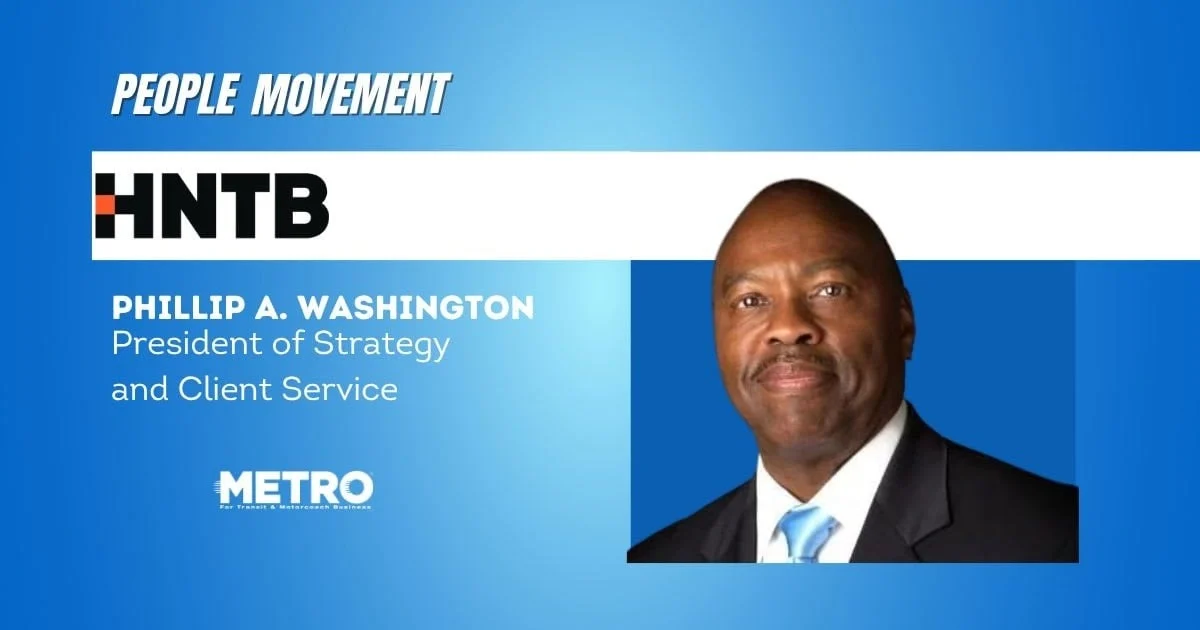
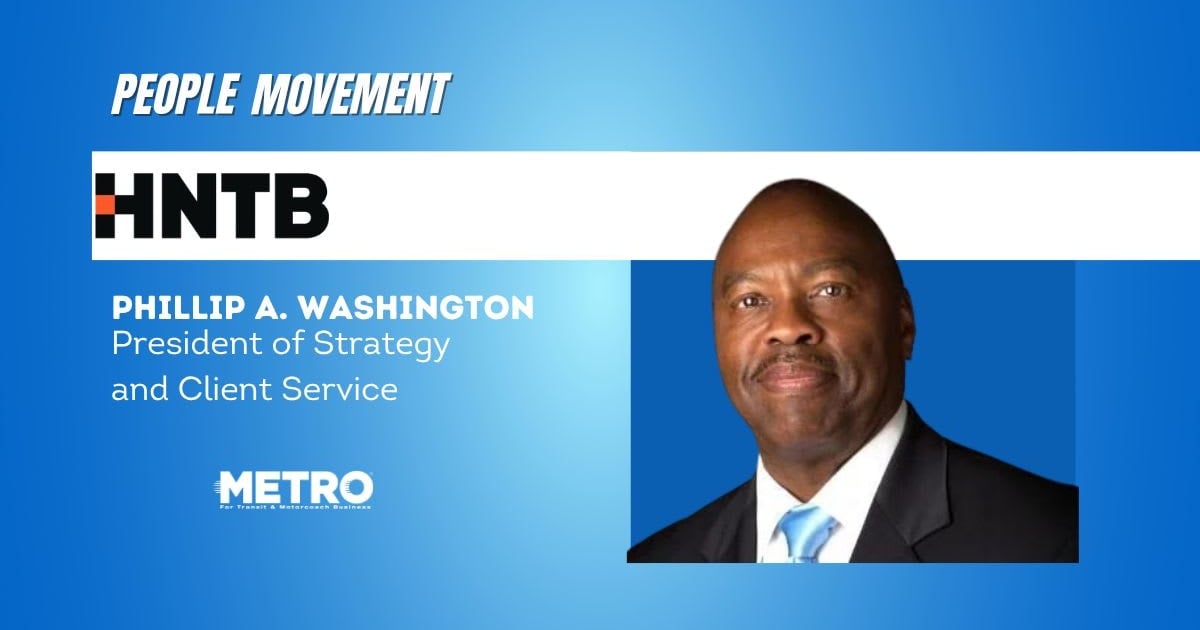
Phillip A. Washington Joins HNTB as President of Strategy and Client Service
In one of the most high-profile moves of the year, industry luminary Phillip A. Washington has joined infrastructure solutions firm HNTB as president of strategy and client service, markets and services, and senior vice president. Washington’s transition to the private sector brings decades of monumental public-sector experience to HNTB, further deepening the firm’s strategic advisory capabilities.
In his new capacity, Washington is collaborating with professionals across HNTB’s nationwide offices, transportation markets, and service lines. His core mandate focuses on identifying emerging market opportunities, strengthening strategic client engagements, and advancing forward-thinking solutions designed to help transportation agencies and infrastructure owners navigate an increasingly connected operational landscape.
Washington’s career is defined by monumental leadership roles. Most recently, he served as CEO of Denver International Airport (DEN), where he managed one of the busiest aviation hubs in the world and oversaw a multibillion-dollar capital improvement program centered on expanding capacity, enhancing the customer experience, driving long-term growth, and reinforcing safety protocols. Before his tenure in aviation, Washington was the CEO of the Los Angeles County Metropolitan Transportation Authority (LA Metro), where he led an 11,000-person agency responsible for executing North America’s largest modern public works program. His efforts advanced massive transit, highway, and active transportation investments across Los Angeles County. Earlier still, as CEO of Denver’s Regional Transportation District (RTD), he successfully delivered the ambitious FasTracks expansion program and spearheaded the historic redevelopment of Denver Union Station.
Eno Center for Transportation Names John Drake President and CEO
The Eno Center for Transportation Board of Directors announced the appointment of John Drake as its new president and chief executive officer, succeeding interim leader Paul Wiedefeld. Drake steps into the role after serving as the vice president of transportation, infrastructure, and supply chain policy for the U.S. Chamber of Commerce.
Bringing more than 20 years of multifaceted experience to the non-profit policy organization, Drake’s background includes nearly a decade of service on Capitol Hill, five years as a senior political appointee at the U.S. Department of Transportation (USDOT), and prominent executive roles within the private sector. His deep familiarity with federal legislative processes, regulatory frameworks, and multi-modal supply chains positions the Eno Center to remain at the forefront of national transportation discourse.
Denver RTD Launches National Search for Successor to Debra A. Johnson
Amid evolving regional mobility needs, Denver’s Regional Transportation District (RTD) has officially partnered with executive search firm Krauthamer & Associates to launch a comprehensive national search for its next general manager and CEO.
The search process moves forward as the contract for current GM/CEO Debra A. Johnson nears its conclusion on May 8, 2027. To ensure robust governance and transparency, Denver RTD established a specialized Search Committee comprising members of the board’s Executive Committee: Chair Patrick O’Keefe, First Vice Chair Ian Harwick, Second Vice Chair Chris Gutschenritter, Secretary Chris Nicholson, and Treasurer Karen Benker. The board has instructed the search firm and committee to present at least three qualified candidate finalists for formal board consideration by mid-December, following an application window closing in late November.
San Joaquin RTD Appoints Eric Williams as Permanent CEO
In Stockton, California, the San Joaquin Regional Transportation District (San Joaquin RTD) has named Eric Williams as its permanent chief executive officer. Williams, who previously served as the district’s chief operating officer (COO) and subsequently as acting CEO, has been tasked with guiding the agency into a new era characterized by organizational stability, regional collaboration, and technological innovation.
During his interim leadership tenure, Williams focused intensely on stabilizing internal operations, repairing fractured relationships with regional and municipal partners, resolving complex financial and structural challenges, and implementing strict public safety and security protocols. His promotion solidifies a leadership model centered on long-term regional visioning.
STV Bolsters National Rail Systems Practice with Dual Vice President Appointments
On the engineering and project delivery front, infrastructure firm STV announced the strategic appointments of Richard Mascara and Paul Salvatore as vice presidents within its national systems practice. These high-level additions significantly bolster STV’s national capabilities in train control, signaling, communications, and complex systems integration.
Mascara, based in Pittsburgh, brings more than 30 years of experience leading complex transportation initiatives. He specializes in Communications-Based Train Control (CBTC), signaling modernization, and automated transit systems. Most recently, he helmed a major transit authority’s NextGen CBTC program. Meanwhile, Salvatore, based in Boston, brings nearly three decades of transit systems engineering expertise. His career is distinguished by his work in signaling, communications, Positive Train Control (PTC), and systems integration for some of North America’s largest rail transit networks.
Supporting Context and Industry Metrics
To fully appreciate the weight of these personnel movements, one must examine the macroeconomic and regulatory pressures currently facing the North American transportation sector.
The Infrastructure Investment Boom and Workforce Demands
The passage of landmark federal legislation, most notably the Infrastructure Investment and Jobs Act (IIJA), injected historic levels of funding into surface transportation, public transit, aviation, and rail systems. However, capital abundance has brought an operational bottleneck: a severe shortage of experienced executive leadership and technical systems engineering talent.
Agencies are managing multi-billion-dollar capital portfolios while simultaneously grappling with post-pandemic ridership shifts, cybersecurity threats, inflationary pressures on construction materials, and the urgent imperative to decarbonize fleets. Leaders like Phillip A. Washington at HNTB and Richard Mascara and Paul Salvatore at STV are directly responding to this operational complexity. Private engineering and advisory firms are aggressively expanding their executive rosters to provide the strategic foresight and deep technical prowess that public transit agencies require to deliver mega-projects on time and within budget.
Modal Shifts and the Focus on System Reliability
In the public transit arena, agencies like Denver RTD and San Joaquin RTD face dual pressures: restoring rider confidence and modernizing legacy assets. For San Joaquin RTD, Eric Williams’ ascension to the CEO chair follows a period where community outreach and financial discipline were paramount. Regional transit districts across the United States are increasingly realizing that fiscal sustainability cannot be achieved through farebox revenue alone; it requires regional alignment, optimized operational efficiency, and modernized scheduling enabled by digital applications.
Similarly, the national policy landscape navigated by John Drake at the Eno Center for Transportation is focused on multimodal integration, supply chain resilience, and workforce development. The Eno Center’s core mission—training the next generation of leaders while guiding public debates on safety, innovation, and economic security—has never been more vital as federal agencies disburse billions in competitive grant funding.
Official Statements and Institutional Perspectives
The leadership transitions announced across these organizations reflect deliberate institutional strategies, articulated clearly through official statements from board chairs, executive search committees, and the incoming leaders themselves.
Reflecting on his transition to HNTB, Phillip A. Washington emphasized the evolving nature of mobility:
"We are operating in an increasingly connected and rapidly changing transportation landscape. I look forward to collaborating with professionals across HNTB’s transportation markets, services, and offices to identify emerging opportunities, strengthen strategic client engagement, and help advance solutions that address the evolving needs of transportation agencies and infrastructure owners."
At the Eno Center for Transportation, newly appointed President and CEO John Drake highlighted the critical timing of his leadership role:
"I am honored to lead the Eno Center for Transportation at this pivotal time. Eno’s world-class team of experts and stakeholders are training our next generation of transportation leaders while also helping guide important debates connecting transportation to advancing our nation’s safety, innovation, economic prosperity, and security. This is an exciting time to be in transportation, and I am grateful for the trust placed in me by the Eno board and its staff."
Addressing the rigorous executive search underway at Denver RTD, the agency’s board-led Search Committee—chaired by Patrick O’Keefe—underscored the importance of a transparent, structured recruitment process. By partnering with Krauthamer & Associates and establishing clear benchmarks, the agency aims to secure visionary leadership to guide its network well beyond the conclusion of Debra A. Johnson’s tenure in May 2027.
In San Joaquin County, Eric Williams outlined his long-term vision for the transit district, emphasizing that leadership in public mobility requires looking decades ahead:
"Public transportation must not simply focus on where it is today, but on what mobility must become over the next 30 to 40 years as communities continue to grow and change. Rebuilding relationships and establishing a culture of mutual respect, fairness, and accountability with our municipal and regional partners is foundational to achieving that long-term vision."
Future Outlook: The Next Era of Mobility Leadership
As the transportation industry looks toward the remainder of the decade and beyond, several key trends will define the success of these newly appointed leaders:
- Technological Integration and Cybersecurity: With the accelerated deployment of CBTC, PTC, and autonomous transit solutions, systems integration experts like STV’s Mascara and Salvatore will be indispensable. Protecting these increasingly digital networks from cyber threats while maximizing passenger throughput will be a defining operational challenge.
- Public-Private Collaboration: The movement of seasoned public sector executives like Phillip A. Washington into private consulting roles (HNTB) highlights an industry convergence. Successful infrastructure delivery increasingly relies on seamless synergy between public agencies setting policy and private firms executing complex engineering and strategic solutions.
- Workforce Pipeline and Leadership Development: Organizations like the Eno Center for Transportation, under John Drake’s leadership, will play a decisive role in cultivating the human capital necessary to run tomorrow’s transportation networks. Addressing labor shortages through targeted training and professional development remains an existential priority for the sector.
- Adaptive Governance in Regional Transit: As demonstrated by the leadership searches at Denver RTD and the structural stabilization efforts at San Joaquin RTD, transit boards are placing a premium on leaders who possess both fiscal discipline and a capacity for empathetic community engagement. Restoring pre-pandemic ridership trust requires visionary executives who can tailor mobility services to decentralized, modern work-and-lifestyle patterns.
In conclusion, the recent personnel movements across HNTB, the Eno Center for Transportation, Denver RTD, San Joaquin RTD, and STV are indicative of an industry in active transformation. By placing proven, forward-thinking executives at the helm, the North American transportation sector is systematically arming itself to meet the infrastructural, technological, and societal demands of tomorrow.


