Executive Overview
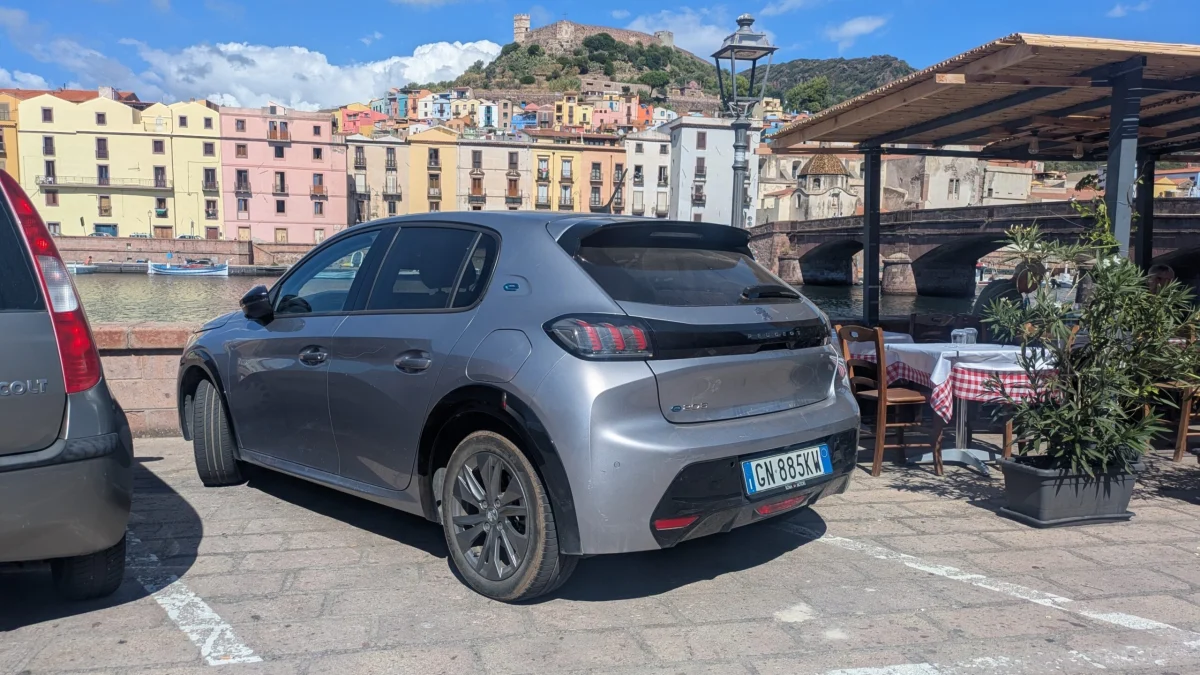
Renting an electric vehicle while traveling has become a standard litmus test for the real-world viability of modern sustainable mobility. For a recent vacation to the sun-drenched, wind-swept island of Sardinia, the vehicle of choice was the Peugeot E-208—rented through local provider Drivalia out of Olbia Airport. Islands serve as ideal micro-cosms for battery-electric vehicles (EVs): distances are manageable, tourism is heavy, and the elimination of tailpipe emissions dramatically enhances the tranquility of coastal getaways. Furthermore, with petrol prices hovering well above €2 per liter (approaching $9 per gallon), an EV promises immediate financial relief at the pump.
Yet, spending a week behind the wheel of Stellantis’s popular European hatchback revealed a complex dichotomy. The Peugeot E-208 offers genuine driving character, nimble handling, and a charmingly traditional French hot-hatch demeanor that makes carving up winding backroads an absolute joy. At the same time, it exposes the growing pains of a European automotive market caught in transition.
Built on an adapted internal combustion engine (ICE) platform, the E-208 struggles with packaging efficiency, highway aerodynamic drag, and mounting price pressures from highly competitive imports—particularly from China. Compounding these vehicle-level observations was the reality of Sardinia’s public charging ecosystem. While destination charging proved manageable during idyllic stays in Alghero, the broader public infrastructure infrastructure left significant room for improvement, plagued by ICE-blocked stalls, out-of-service hardware, and clunky payment interfaces.

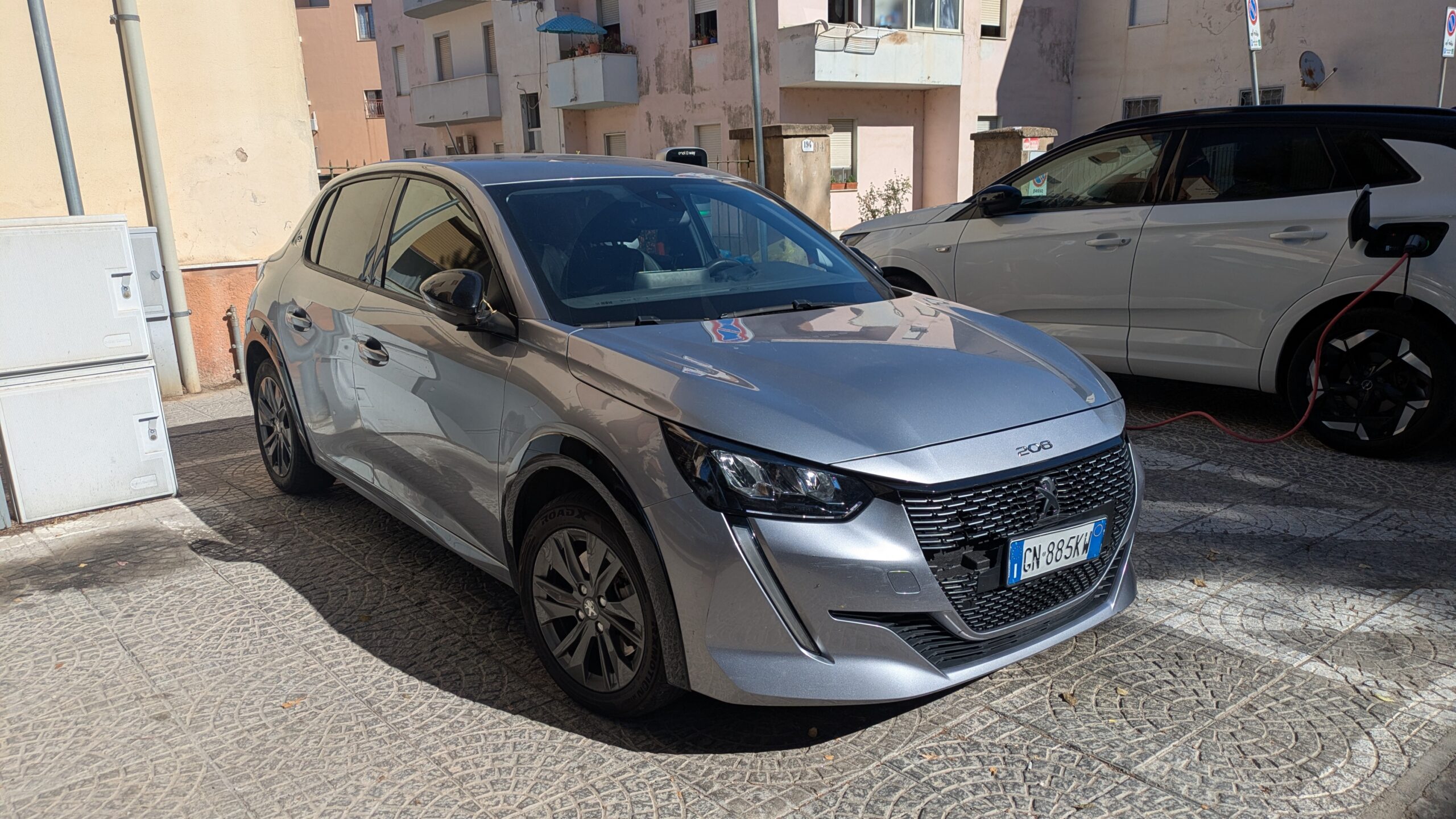
This review explores the Peugeot E-208 through the lens of a real-world road trip, examining how legacy European automakers stack up against an evolving global EV landscape.
Detailed Chronology: The Sardinian Road Trip Experience
Pickup and First Impressions at Olbia Airport
Our journey with the Peugeot E-208 began at Olbia Airport, where local rental agency Drivalia provided a cost-effective entry point into electric mobility. However, the realities of fleet management quickly became apparent. The vehicle showed signs of heavy rental wear-and-tear, most notably a hazy film on the interior of the windshield—likely residue from a spray-on suntan lotion left behind by a previous driver. Under low-angle Mediterranean sunlight or the glare of oncoming headlights, visibility was severely compromised. A quick intervention with a handful of napkins and window cleaner restored clarity, highlighting the minor hurdles often faced by vacationers sampling rental EVs.
Navigating Alghero: The Destination Charging Sweet Spot
Basecamped for the majority of the trip in Alghero, our daily routine highlighted the ideal use case for urban and regional EV deployment. Located just a couple of blocks from our lodging was a multi-stall Level 2 charging hub. The operational rhythm quickly became second nature: after returning from a day of exploring Sardinia’s rugged coastline and historic towns, we plugged the E-208 in for the evening and retrieved a fully replenished vehicle by morning.
During this portion of the trip, we never required a DC fast charger, effortlessly covering the roughly 300-kilometer daily range envelope without range anxiety. More importantly, the silent, vibration-free operation of the electric hatchback allowed us to fully absorb the ambient sounds of the Mediterranean without the interruption of an idling fossil-fuel engine.
The Olbia Charging Gauntlet: Infrastructure Realities
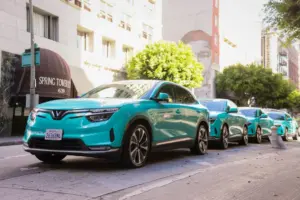
The illusion of seamless European charging vanished upon returning to Olbia for our final night before departure. Seeking an overnight charge near our hotel, we encountered the classic infrastructure hazard: a conventional internal combustion engine SUV illegally parked in the designated EV charging stall.
Undeterred, we embarked on a circuit of public chargers across the city:

- Station One: Completely out of service.
- Station Two: Out of service.
- Station Three: Blocked by another ICE vehicle.
- Station Four: Located over a mile away from our hotel, featuring a completely broken, unresponsive touchscreen interface.
Fortunately, the final charger successfully recognized our RFID card and initiated a charge. Nevertheless, the experience served as a stark reminder that Europe’s public charging network still lags far behind the seamless, ubiquitous reliability found in regions like China or within Tesla’s proprietary Supercharger network.
Despite these hardware frustrations, infrastructure provider Enel’s broader commitment to the region’s green transition was impossible to miss. Across the northern expanse of Sardinia, rolling hills are increasingly punctuated by utility-scale solar arrays and wind turbines, proving that the island’s abundant natural resources are well-suited for a fully renewable grid.
Supporting Context & Metrics: Specifications, Pricing, and Packaging
Powertrain and Performance Variants
The Peugeot E-208 is offered with varying power outputs, though our rental unit featured the entry-level powertrain.

- Standard Powertrain: Features a motor pushing either 100 kW or 115 kW, paired with a smaller battery pack yielding a WLTP-rated range of 363 kilometers (approximately 225 miles).
- Long-Range Variant: Upgrades to a larger battery configuration, extending the WLTP range to 433 kilometers (269 miles).
- High-Performance GTi Variant: At the top of the hierarchy sits the E-208 GTi, starting at €43,650. Equipped with a potent 207-kW motor, it rockets from 0 to 100 km/h in a swift 5.5 seconds.
Dimensions and Packaging Compromises
Measuring 4055 millimeters in length, the E-208 occupies a footprint comparable to modern subcompact hatchbacks—falling neatly between current offerings like the BYD Seagull and upcoming next-generation compact EV iterations.
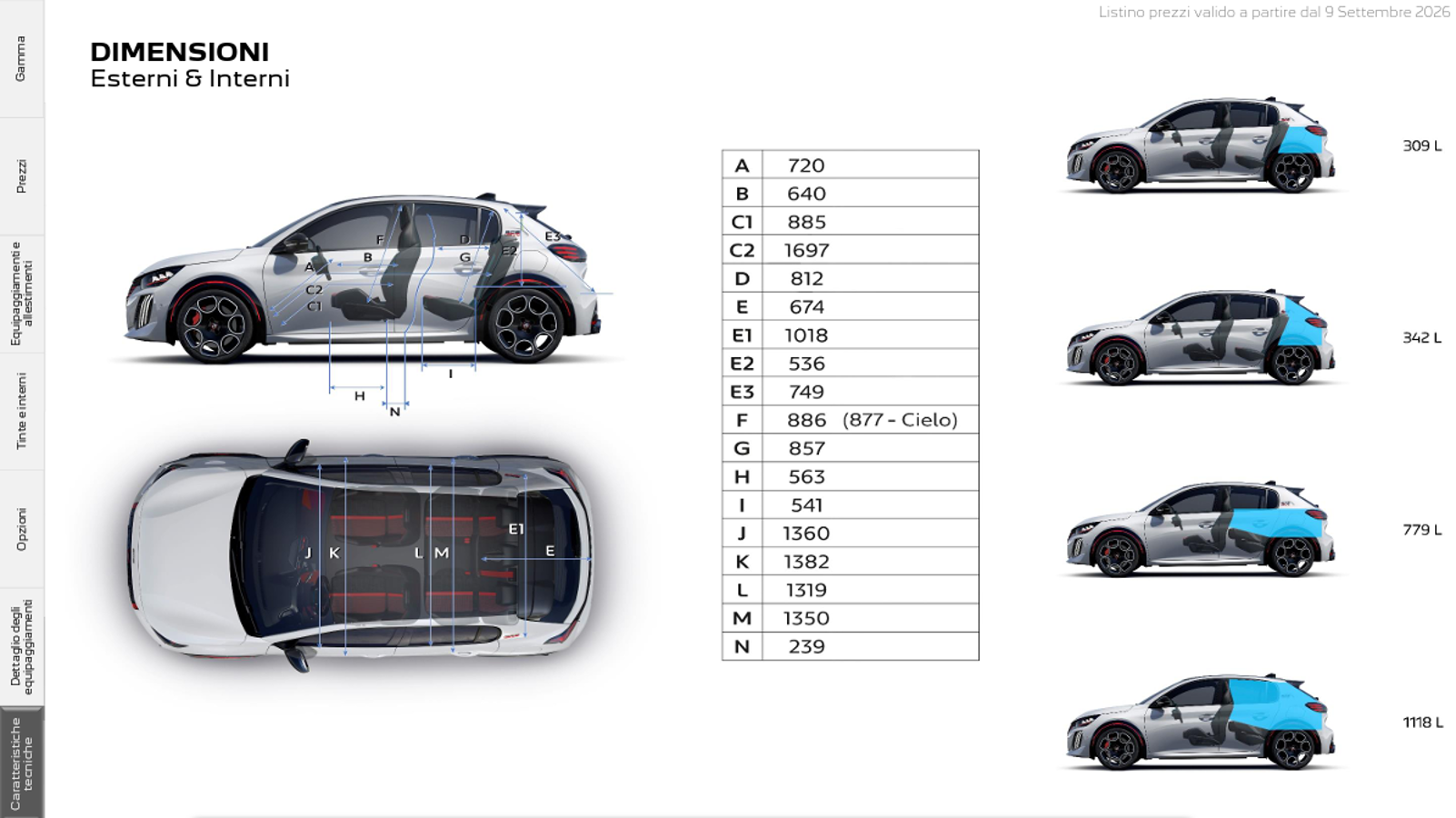
However, entering the cabin requires a slight duck due to relatively constrained door openings, though interior headroom proves adequate once settled. Cargo space is inherently limited by the vehicle’s platform origins. Notably, Peugeot’s marketing materials provide transparency by reporting both standard liquid measurements (from the floor to the top of the seatbacks) and roof-height liquid measurements. In an automotive landscape where companies increasingly adopt disparate, non-standard measurement metrics popularized by brands like Tesla, Peugeot’s commitment to clear, comparable cargo data is a welcome relief.
Because the E-208 is built upon an adapted ICE architecture rather than a dedicated EV skateboard platform, several packaging compromises are evident:
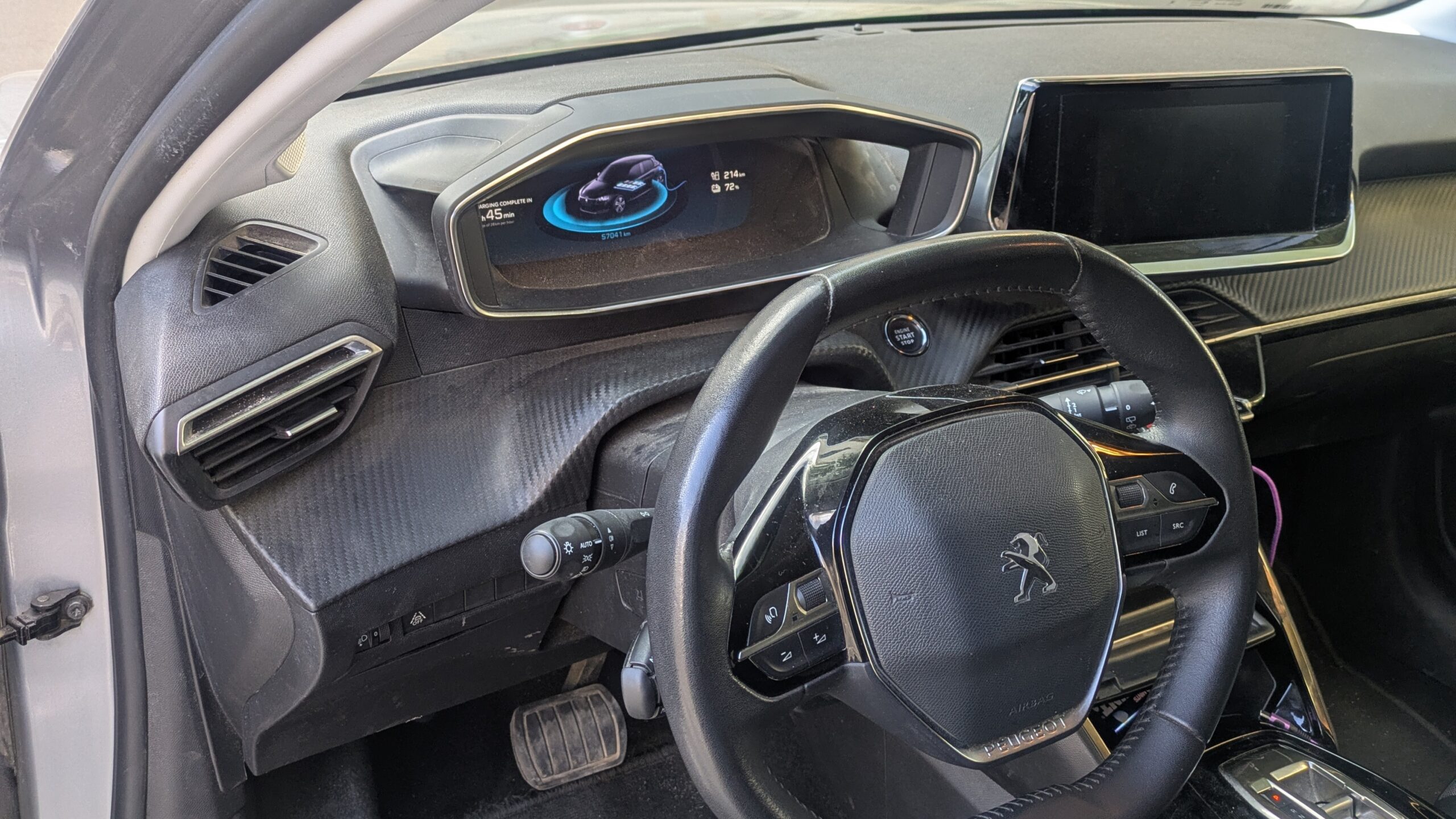
- No Frunk: The engine bay houses electric drivetrain components, but leaves no room for a front trunk (frunk).
- Missing Under-Floor Storage: Areas previously reserved for exhaust systems and mufflers remain unutilized for storage.
- Aerodynamic Penalties: Lacking the slippery, purpose-built aerodynamic optimizations of dedicated ground-up EVs, the E-208 suffers from a notable drop in highway efficiency as speeds increase.
Weight and Driving Dynamics
Tipping the scales at a curb weight of 1530 kg (3373 lbs), the E-208 is heavy for an ICE vehicle of its physical dimensions, yet surprisingly light compared to many modern long-range battery-electric competitors. For instance, regulatory filings indicate that upcoming competitors like the BYD Seagull will start as low as 1180 kg.
Despite its mass, the E-208 leverages its low-slung battery placement to deliver exceptional handling characteristics true to its French front-wheel-drive heritage. Rather than pushing hard on efficiency-killing highways, the car inspired us to seek out winding backroads. Utilizing momentum-driving techniques—focusing on smooth entry lines, controlled speed maintenance, and late apexes akin to driving a Mazda Miata, albeit at a more leisurely pace—transformed every drive into an engaging, dynamic experience that brought a smile to the driver’s face without alarming the passenger.
Interior Quality and Technology
The cabin is heavily dominated by hard plastics, a direct carryover from the entry-level €18,100 internal combustion engine 208 upon which it is based. Infotainment and connectivity also feel dated compared to contemporary segment standards; during our trip, persistent pairing issues prevented phone-based projection, forcing reliance on manual smartphone navigation mounted by the passenger.

Official Statements & Market Positioning
Pricing Realities in Europe
In Italy, the Peugeot E-208 starts at €34,480 including VAT—representing a substantial premium over its gasoline counterpart, which kicks off at €18,100. At this price point, the E-208 enters a fiercely contested market segment populated by rapidly advancing global competitors.
For context, €34,480 positions the Peugeot directly against formidable alternatives like the XPENG L03, which starts at €34,990 in Italy. For the price of a high-end E-208 GT Exclusive (retailing at €42,430), buyers can secure a rear-wheel-drive Long Range Ultra XPENG L03 featuring 480 kilometers of range, superior onboard technology, and advanced intelligent driving systems like VLA 2.0.
Similarly, highly affordable imported options—such as the Leapmotor B05 starting at €23,900—offer greater value and cutting-edge EV manufacturing efficiencies, even if they occasionally lack the emotional styling flair of European marques.

| Vehicle Model | Starting Price (Italy, incl. VAT) | Key Advantage | Key Disadvantage |
|---|---|---|---|
| Peugeot ICE 208 | €18,100 | Highly affordable baseline | Fossil-fuel dependent, high running costs |
| Peugeot E-208 (Base) | €34,480 | Fun handling, distinctive character | Adapted ICE platform, dated tech |
| XPENG L03 (Long Range) | €34,990+ | Advanced tech, superior range & interior | Brand recognition in legacy markets |
| Leapmotor B05 | €23,900 | Exceptional value, EV efficiency | Relatively generic styling |
Future Outlook: The Synergy of Chinese Efficiency and European Flair
Despite its technological quirks, higher price tag, and infrastructure-dependent highway efficiency, the Peugeot E-208 retains an intangible asset that many modern compliance EVs lack: character. It is fun, distinctive, and rewards the driver on technical roads.
The future of European subcompact electric vehicles lies at the intersection of traditional design heritage and advanced manufacturing scale. Stellantis’s growing partnership with Leapmotor offers a glimpse into what is possible. While Leapmotor vehicles provide exceptional production efficiency and EV architecture expertise, they often lack emotional resonance.
If legacy European manufacturers can successfully merge the industrial scale and advanced EV technology of Chinese platforms with the legendary tuning, styling, and driving dynamics of French hatchbacks, the resulting vehicles will capture unbridled market demand. The current E-208 proves that legacy brands know how to make an EV fun to drive; the next generation must combine that driving joy with competitive pricing, ground-up packaging efficiency, and reliable software to truly win over global consumers beyond the rental counter.