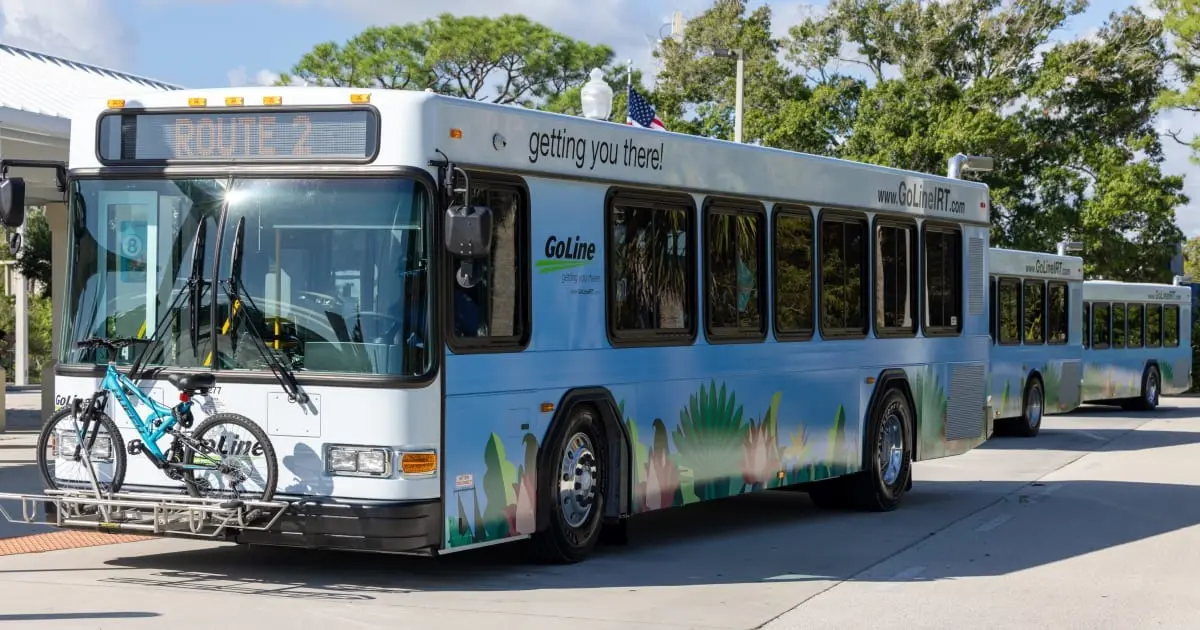
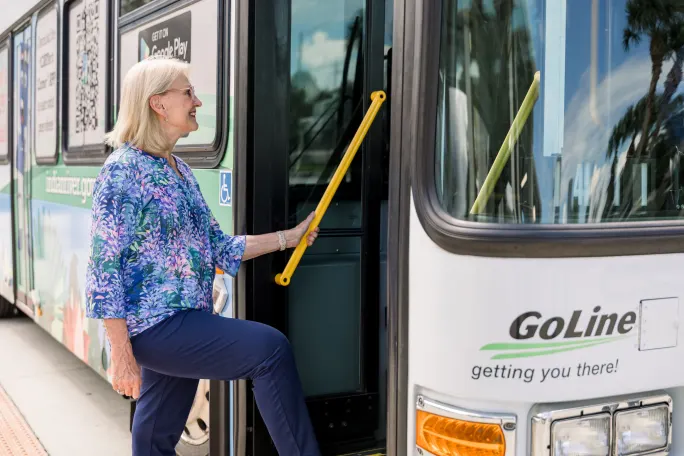
In the modern landscape of municipal governance and public infrastructure, public transportation is frequently viewed through a lens of fiscal burden, operational friction, and perpetual subsidy debates. Across the United States, transit agencies grapple with shrinking budgets, declining ridership recovery post-pandemic, and the intricate challenge of matching sprawling modern development with fixed-route transit lines. Yet, nestled along Florida’s dynamic Treasure Coast, Indian River Transit—operating locally as GoLine—has quietly shattered these prevailing narratives.
Operated by the nonprofit Senior Resource Association (SRA) under contract with Indian River County, GoLine has achieved what few public systems across the nation can claim: consecutive years of surging ridership, absolute elimination of passenger fares, and a localized philosophy that treats transit as a fundamental community utility rather than a commodified service.
This sustained commitment to community-centric mobility culminated in a landmark achievement: the American Public Transportation Association (APTA) named Indian River Transit the 2026 Outstanding Public Transportation System in the category for systems providing fewer than three million annual passenger trips. Marking the agency’s first national APTA accolade—following a decorated history of state-level recognitions by the Florida Public Transportation Association (FPTA)—this honor places GoLine on the national stage. The agency will be formally celebrated in October at the APTA TRANSform & EXPO in Chicago, Illinois.
This comprehensive report examines the structural foundations of GoLine’s success, analyzing its unique operating model, economic calculus behind fare-free transit, responsiveness to regional demographics, and strategic vision for future mobility.
Detailed Chronology: From Grassroots Concept to National Acclaim
The trajectory of Indian River Transit is a study in adaptive management and organic growth. To understand how a regional transit provider in a county of contrasting landscapes clinched a premier national title, one must examine the chronological milestones that shaped its development.
The Foundation and the Fare-Free Mandate
From its inception, Indian River Transit established an operational principle that runs counter to conventional American public transit: GoLine would operate entirely fare-free. While major metropolitan transit agencies across the country continually debate fare hikes, smart-card integrations, and revenue leakage, Indian River County cut through administrative friction by dropping fares altogether.
By eliminating fareboxes, cash-handling procedures, ticket-processing equipment, and the enforcement apparatus required for fee collection, the agency sidestepped major capital expenses. More importantly, it eradicated the operational "dwell time"—the moments buses sit idle while passengers fumble for change, purchase tickets, or troubleshoot fare cards. This design choice set the stage for an extraordinarily low-barrier transit experience across Vero Beach, Sebastian, and the broader county.
Expanding the Footprint: Fixed-Route and Paratransit
Operated under the stewardship of the Senior Resource Association, the transit ecosystem evolved into two primary pillars:
GoLine: A robust network of 14 fixed routes connecting residents to employment hubs, educational institutions, healthcare facilities, retail centers, and recreational beaches.
Community Coach: A complementary door-to-door paratransit and demand-response service ensuring that mobility-impaired or rural residents without fixed-route access are never left stranded.
The Pandemic Resilience and Post-COVID Surge
While the COVID-19 pandemic devastated ridership across the global public transit sector—with many agencies still struggling to claw back to 70% or 80% of pre-2020 numbers—Indian River Transit charted a vastly different path. By embedding itself deeply into the daily routines of essential workers, medical patients, and students, GoLine maintained vital connectivity.
This resilience blossomed into historic growth during fiscal year 2024–25, when GoLine recorded approximately 1.59 million passenger trips. This staggering 17.2% year-over-year increase represents the system’s largest annual ridership gain since fiscal year 2011–12. With current projections pointing toward eclipsing 1.6 million trips, the system boasts an astonishing statistic: ridership has increased in 15 of the past 16 years.
State Accolades Leading to National Gold
Long before capturing the APTA national spotlight in 2026, GoLine’s operational model caught the attention of Florida transit authorities. The Florida Public Transportation Association (FPTA) previously crowned GoLine as its Outstanding System of the Year in 2017, 2022, and 2025. These recurring state-level validations served as stepping stones, proving that the agency’s localized strategies possessed scalable merits applicable on a national scale.
Supporting Context & Metrics: Navigating a Community of Contrasts
Operating public transit in Indian River County is an exercise in balancing geographic and demographic dichotomies. Executive leadership often describes the county as a "community of contrasts." Within a single municipal boundary, the system must service dense urbanized pockets, rapidly expanding suburban residential developments, sprawling rural sectors, seasonal tourists, working families, and a significant retirement demographic.
Demographics and the Multi-Use Transit User
Unlike transit systems tailored strictly for the traditional 9-to-5 corporate commuter, GoLine’s ridership reflects a mosaic of modern economic life. Retail and hospitality workers require early-morning, late-night, and weekend transit options. Seniors require accessible vehicles to maintain their independence and attend regular medical appointments. Students rely on the network to access vocational training and higher education.
To quantify the human impact behind the data, leadership points not merely to gross numbers, but to qualitative outcomes. As transit directors frequently note, a single trip captured in the 1.59 million annual passenger tally represents a vital life milestone:
A patient reaching a life-saving dialysis appointment.
An hourly worker arriving at a job on time, securing their paycheck and livelihood.
A senior citizen retaining autonomy by traveling independently to grocery stores and social services.
A student reaching class without placing a financial strain on their household.
The Economic Case for a Fare-Free System
The financial architecture of GoLine’s fare-free model demands close analytical inspection. In traditional transit economics, farebox recovery ratios—the percentage of operating costs covered by passenger fares—are scrutinized by municipal budget directors. However, transit analysts increasingly recognize that farebox recovery is often a mirage when accounting for total administrative costs.
Indian River Transit’s leadership evaluated the equation and found that the true cost of collecting fares outweighed the revenue generated. The overhead associated with:
Purchasing, maintaining, and auditing secure fareboxes,
Managing cash transport, counting rooms, and bank deposits,
Printing, distributing, and managing physical passes or digital ticketing infrastructure,
Resolving customer disputes regarding fare structures, and
Absorbing the delays caused by transaction times at the boarding door
…collectively eclipses the net revenue a farebox would produce. By casting off these burdens, GoLine redirected capital toward service quality, fleet maintenance, route optimization, and increased frequency. Furthermore, it removed the equity barrier. For low-income households, eliminating transit fares translates directly into increased disposable income, injecting capital back into the local economy via consumer spending on essentials.
Official Statements and Leadership Perspectives
The announcement of the 2026 APTA award brought a wave of pride to the offices of Indian River Transit and the Senior Resource Association. Leadership attributes this national recognition to a persistent corporate culture focused on listening, flexibility, and proactive planning.
Karen Deigl, President and CEO of Indian River Transit:
"National recognition from APTA tells our employees, our County, and our community that what we are doing here in Indian River County is something special. We have been fortunate to receive recognition in Florida over the years, but being named the outstanding public transportation system in the country in our size category is something we will always be proud of."
Reflecting on the unique character of the county, Deigl emphasized the core philosophy driving the agency’s operational decisions:
"Our system is built around the idea that public transportation should be simple, dependable, timely, and accessible. What makes us unique is that we have tried to build a transit system around the community rather than expecting the community to adapt to it. We listen closely to our passengers, our drivers, employers, and community partners. Some of our best service improvements have come directly from those conversations."
Summarizing the ultimate mission of the organization, Deigl added:
"Our goal isn’t necessarily to build the biggest transit system. It’s to build the right transit system for Indian River County. If we keep listening to our passengers, employees, community partners, and County leadership, I think we are well-positioned to do so."
Chris Stephenson, Director at Indian River Transit:
Stephenson elaborated on the logistical challenges of matching transit infrastructure with regional growth, noting that public transportation must anticipate development rather than react to it after the fact.
"We have responded by expanding service hours, evaluating routes and timepoints, improving connections, and continually looking at where development is occurring and where our passengers are trying to go. When new housing, medical facilities, shopping areas, and employment centers are developed, transportation becomes part of the infrastructure needed to support that growth. We want public transportation to be part of those conversations early."
Addressing the deeper meaning behind the ridership metrics, Stephenson offered a poignant reminder of the agency’s human-centric mission:
"Ridership numbers tell you how many trips we provided, but they don’t tell you what those trips meant. One trip might mean someone got to dialysis. Another might mean someone got to job and kept their job… When public transportation works well, most people probably don’t think about all of those individual connections. They see a bus going down the road. But inside that bus are dozens of different reasons people need transportation, and each one represents an opportunity, an appointment, a paycheck, or a connection to the community."
Future Outlook: Smart Growth, Technology, and Regional Evolution
As Indian River Transit prepares to accept its national honor at the APTA TRANSform & EXPO in Chicago, the agency is not resting on its laurels. The road ahead demands careful calibration to ensure that organizational success does not outpace operational capacity.
1. Intelligent Expansion and Fleet Modernization
The primary mandate for the agency’s immediate future is managing growth intelligently alongside Indian River County’s expanding footprint. This involves:
Continually auditing route performance and timepoints to eliminate bottlenecks.
Enhancing service frequency along high-demand corridors where resources allow.
Upgrading physical bus stops and passenger amenities to improve comfort and weather protection.
Maintaining a rigorous, safe, and reliable fleet of vehicles capable of withstanding rigorous daily deployment.
2. Beyond Fixed-Route: Embracing Hybrid Mobility
Recognizing that traditional fixed-route buses are not a silver bullet for every geographic nuance, leadership is actively exploring alternative mobility models. As Chris Stephenson noted, certain travel patterns and low-density sectors are better served outside the constraints of a large bus on a rigid schedule.
By integrating emerging technologies, demand-response platforms, smaller micro-transit vehicles, and hybrid paratransit partnerships, Indian River Transit is positioning itself at the forefront of modern transit innovation. These tools allow the agency to customize service delivery down to the neighborhood level, optimizing capital expenditure while maximizing geographic coverage.
3. Preserving Core Values Amid Scale
Perhaps the greatest challenge facing any award-winning municipal entity is the temptation to over-bureaucratize as it scales. Indian River Transit’s leadership remains hyper-focused on preserving the foundational traits that fueled its rise: remaining easy to understand, exceptionally dependable, welcoming to all demographic groups, and deeply responsive to grassroots feedback.
Conclusion
The story of Florida’s Indian River County transit system is a compelling blueprint for regional mobility across the United States. By dismantling the financial and psychological barriers of fare collection, aligning service hours with the realities of a modern workforce, and maintaining an unwavering commitment to listening to its constituents, GoLine has proven that world-class public transit does not require a mega-city budget.
As Indian River Transit steps onto the national stage as APTA’s 2026 Outstanding Public Transportation System, it carries a message of hope and pragmatic innovation for transit agencies nationwide: true public transportation success is measured not merely by the scale of the fleet, but by the depth of the human connections it fosters every single day.