




Executive Overview
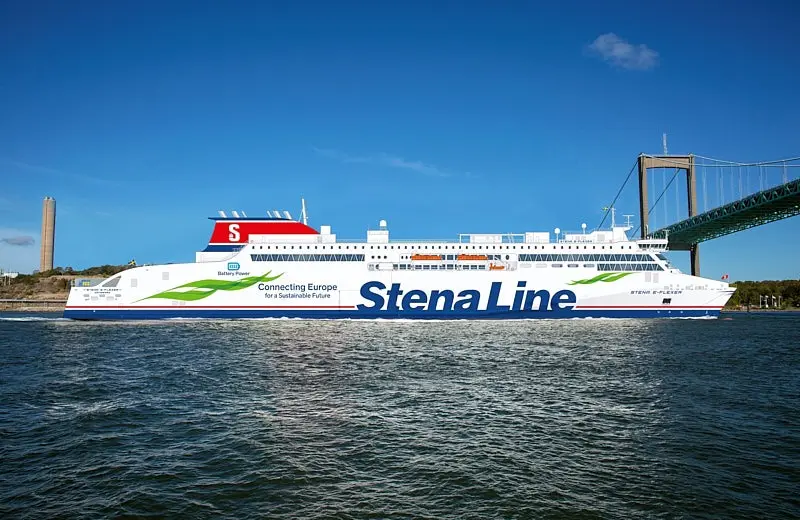
In a decisive move to modernize Northern Europe’s short-sea shipping corridors, Stena RoRo has finalized a contract with China Merchants Industry (CMI) Weihai Shipyard for the construction of two next-generation E-Flexer 2.0 RoPax (roll-on/roll-off passenger) ferries. Scheduled to enter commercial service in 2030, these state-of-the-art vessels are earmarked for Stena Line’s critical Gothenburg–Frederikshavn route across the Kattegat strait, bridging Sweden and Denmark. The contract also includes options for two additional sister ships, underlining Stena’s long-term commitment to scalable fleet renewal.
Measuring 214.5 meters in length, each ferry will feature a capacity of 1,500 passengers, 2,750 lane meters of freight volume spread across three vehicle decks, and 132 cabins designed for both passengers and commercial drivers. Engineered as hybrid-electric vessels from day one, the ferries will initially utilize a combination of conventional marine fuel and battery power, while featuring an adaptable structural and electrical design ready for full zero-emission battery-electric conversion as shore-side high-power charging infrastructure matures.
This order marks a pivotal transition for Stena Line. The newbuilds will replace two long-serving mainstays on the route: Stena Danica, introduced in 1984, and Stena Jutlandica, deployed in 1996. Beyond upgrading vessel efficiency, the deployment aligns with Stena Line’s planned relocation of its Gothenburg ferry terminal from the central city waterfront to Arendal. Located near the mouth of the Göta River, the Arendal facility will provide direct rail connections, vastly enhancing intermodal logistics across Scandinavia and Northern Europe.
+-----------------------------------------------------------------------------------+
|                        E-FLEXER 2.0 VESSEL SPECIFICATIONS                         |
+--------------------------+--------------------------------------------------------+
| Overall Length           | 214.5 meters                                           |
| Passenger Capacity       | 1,500 passengers                                       |
| Freight Capacity         | 2,750 lane meters (3 vehicle decks)                    |
| Cabin Infrastructure     | 132 cabins (passenger & driver accommodation)          |
| Primary Propulsion       | Hybrid-Electric (Combustion Engine + Battery Storage)  |
| Decarbonization Design   | Full Conversion Ready (100% Battery-Electric)          |
| Target Route             | Gothenburg (Sweden) – Frederikshavn (Denmark)          |
| Scheduled Entry          | 2030                                                   |
| Builder                  | China Merchants Industry Weihai Shipyard               |
+--------------------------+--------------------------------------------------------+
Detailed Chronology
The Evolution of the E-Flexer Platform (2016–2024)
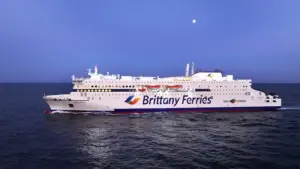
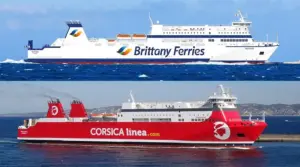
Stena RoRo introduced its proprietary E-Flexer series in 2016 to deliver optimized hydrodynamic efficiency, multi-fuel capabilities, and structural flexibility. The platform was designed not only for Stena Line’s internal network but also for long-term charter to external global operators, including Brittany Ferries, DFDS, and Marine Atlantic.
Between 2019 and 2024, the initial wave of E-Flexer deliveries proved the commercial viability of the standardized yet customizable hull design. By combining standardized hull designs with adaptable interior and propulsion spaces, Stena RoRo significantly reduced per-unit engineering costs while accommodating disparate operator requirements ranging from short-sea day trips to multi-day overnight transits.
Project Conception and Engineering Adjustments (2022–2024)
Recognizing the impending operational limits of Stena Danica and Stena Jutlandica, Stena Line and Stena RoRo initiated joint feasibility studies in late 2022 to conceptualize the next phase of Kattegat tonnage. The Kattegat route demands rapid turnaround times, high passenger throughput during peak summer seasons, and consistent year-round freight capacity.
Engineers developed the "E-Flexer 2.0" specification to address these specific operational requirements. The 2.0 iteration refines the baseline hull lines for optimized low-water-depth performance and integrates advanced energy storage spaces (ESS), enhanced bow-thruster configurations for dynamic docking in confined ports, and optimized deck layouts for rapid un-ro/ro operations.
+-----------------------------------------------------------------------------------+
|                          PROJECT DEVELOPMENT TIMELINE                             |
+-------------+---------------------------------------------------------------------+
| 2016        | Stena RoRo unveils the initial E-Flexer concept and charter model.  |
| 2019–2024   | First-generation E-Flexers delivered across European routes.        |
| late 2022   | Feasibility studies begin for Kattegat route replacement tonnage.   |
| 2023–2024   | Design of E-Flexer 2.0 finalized with CMI Weihai Shipyard.          |
| 2025–2026   | Steel cutting, block assembly, and keel laying at CMI Weihai.       |
| 2028–2029   | Floating, fitting out, advanced sea trials, and energy testing.     |
| 2030        | Scheduled entry into service on Gothenburg–Frederikshavn route.     |
+-------------+---------------------------------------------------------------------+
Contracting and Delivery Roadmap (2025–2030)
The formalization of the contract with China Merchants Industry Weihai Shipyard sets in motion a multi-year construction schedule:
- 2025–2026: Detailed naval architecture modeling, steel cutting, block construction, and keel laying at CMI Weihai Shipyard.
- 2028: Launching, hull floating, and primary machinery installation, including dual-fuel engine sets and preliminary battery banks.
- 2029: Extensive sea trials, quay-side commissioning of electrical propulsion systems, and validation of ship-to-shore power connections.
- 2030: Delivery, repositioning voyage to Northern Europe, crew familiarization, and formal commercial commissioning on the Gothenburg–Frederikshavn route.
Supporting Context & Metrics
Fleet Modernization and Capacity Shift
The arrival of the E-Flexer 2.0 ships represents a major generational upgrade over the tonnage currently deployed on the Gothenburg–Frederikshavn service.
+-----------------------------------------------------------------------------------+
|                       VESSEL COMPARISON: KATTEGAT ROUTE                           |
+-----------------------+-------------------+-------------------+-------------------+
| Metric                | STENA DANICA      | STENA JUTLANDICA  | E-FLEXER 2.0      |
+-----------------------+-------------------+-------------------+-------------------+
| Entry into Service    | 1984              | 1996              | 2030              |
| Length Overall (LOA)  | 152.2 m           | 182.0 m           | 214.5 m           |
| Passenger Capacity    | ~2,300            | ~1,500            | 1,500             |
| Freight Lane Meters   | ~1,640 m          | ~2,100 m          | 2,750 m           |
| Propulsion Profile    | Diesel mechanical | Diesel mechanical | Hybrid -> Electric|
| Vehicle Decks         | 2                 | 2                 | 3                 |
+-----------------------+-------------------+-------------------+-------------------+
Stena Danica, operating for over four decades, was optimized for high passenger volumes during the peak eras of duty-free cross-border shopping. In contrast, modern maritime logistics demands higher freight capabilities alongside flexible passenger spaces.
The E-Flexer 2.0 vessels strike this balance by delivering 2,750 lane meters—a significant upgrade in ro-ro capacity over both legacy ships—while preserving a 1,500-passenger capacity suited for modern travel patterns.
                         FREIGHT LANE METERS
   STENA DANICA     [====================] 1,640m
   STENA JUTLANDICA [==========================] 2,100m
   E-FLEXER 2.0     [===================================] 2,750m
Propulsion Architecture and Decarbonization Roadmap
The propulsion configuration of the E-Flexer 2.0 reflects a flexible, future-proof strategy designed to balance immediate operational capabilities with long-term environmental targets:
- Stage 1 (Hybrid-Electric Deployment): The vessels will launch with internal combustion engines working in tandem with large-scale battery banks. This hybrid setup enables peak shaving, zero-emission harbor approaches, and low-speed maneuvering on battery power alone, reducing fuel consumption and localized emissions near densely populated port cities.
- Stage 2 (Full Battery-Electric Conversion): The hull and internal arrangements feature reserved space, load-bearing capability, and cabling pathways specifically configured for scaled-up energy storage systems (ESS). Once shore-side mega-watt charging hubs are operational at both Gothenburg and Frederikshavn, the ships can be retrofitted with expanded battery packs to transition into 100% battery-electric operations.
+-----------------------------------------------------------------------------------+
|                          E-FLEXER 2.0 PROPULSION STAGES                           |
+-----------------------------------------------------------------------------------+
| STAGE 1: HYBRID OPERATION (Launch)                                                |
| [ Combust. Engines ] + [ Battery Storage ] ---> [ Hybrid Drives ] ---> [ Propellers ]
|  * Peak shaving & engine optimization                                             |
|  * Zero-emission port entry/maneuvering                                           |
|                                                                                   |
| STAGE 2: 100% ELECTRIC CONVERSION (Post-Shore Infrastructure Buildout)            |
| [ Shore Power Hub ] ---> [ Expanded ESS (Batteries) ] ---> [ Direct Drive Motors ] |
|  * Complete elimination of fossil fuels on transit                                |
+-----------------------------------------------------------------------------------+
Infrastructure Transformation: The Move to Arendal
A key factor driving the deployment of the E-Flexer 2.0 tonnage is Stena Line’s planned operational shift within Gothenburg. For decades, Stena’s ferries have operated out of inner-city terminals at Majnabbe and Masthugget. These locations face geographical constraints, urban traffic bottlenecks, and limited space for expanding port-side charging infrastructure.
+-----------------------------------------------------------------------------------+
|                        ARENDAL TERMINAL RELOCATION ADVANTAGES                     |
+-----------------------------------------------------------------------------------+
| Historic Terminals (Majnabbe / Masthugget)  |  New Terminal (Arendal)             |
+---------------------------------------------+-------------------------------------+
| Inner-city traffic congestion               |  Direct access to highway networks  |
| Restricted rail freight access              |  Integrated rail terminal access    |
| Space-constrained charging infrastructure   |  Purpose-built high-power grid connection |
| Longer navigation time down Göta River      |  Shorter transit time to open sea   |
+---------------------------------------------+-------------------------------------+
Relocating the ferry hub to Arendal offers three main operational advantages:
- Direct Rail Integration: The Arendal terminal will feature dedicated rail sidings running directly parallel to the ferry berths. This layout allows for seamless intermodal transfers, enabling cargo trailers to move straight from train chassis onto the vessel’s three vehicle decks.
- High-Voltage Grid Connections: Establishing a greenfield terminal at Arendal allows regional energy grid operators to build purpose-built, high-capacity megawatt charging infrastructure. This high-power link is essential for rapid-recharging battery-electric RoPax vessels during their limited quay-side turnarounds.
- Nautical Efficiency: Positioned closer to the mouth of the estuary, the Arendal terminal cuts down transit time through the restricted speed zones of the Göta River, reducing overall energy requirements per voyage.
Official Statements
Stena RoRo: Engineering for Long-Term Fleet Agility
Commenting on the contract execution with China Merchants Industry, Per Westling, Managing Director of Stena RoRo, emphasized the versatility and strategic design choices built into the E-Flexer 2.0 specification:
"The order for these two E-Flexer 2.0 vessels represents an important milestone in our continuous development of modular, energy-efficient ferry design. Working closely with CMI Weihai Shipyard, we have systematically optimized every aspect of the hull, weight distribution, and internal layout to create a platform that delivers immediate efficiency gains under hybrid power while retaining a clear pathway to full electrification.
These vessels are designed to be resilient asset solutions. While custom-tailored to serve Stena Line’s key Kattegat artery, their functional baseline ensures they can seamlessly step into daytime operations across diverse short-sea routes within our global footprint if market conditions require."
Stena Line: Decarbonization and Logistics Integration
Niclas Mårtensson, Chief Executive Officer of Stena Line, underscored the commercial and environmental importance of renewing the Gothenburg–Frederikshavn link:
"The Gothenburg–Frederikshavn corridor is a foundational artery for Northern European commerce and travel. Modernizing this route demands tonnage that meets strict future decarbonization targets while delivering the scale required by our freight customers.
Replacing Stena Danica and Stena Jutlandica with these E-Flexer 2.0 newbuilds allows us to significantly expand our freight lane capacity and integrate our operations with the future rail-connected terminal at Arendal. This order directly supports our goal of leading the green transition in short-sea shipping without sacrificing efficiency or operational reliability."
Future Outlook
Regulatory Drivers Accelerating Fleet Modernization
The timing of the E-Flexer 2.0 deployment aligns with increasingly stringent maritime decarbonization regulations enacted by regional and international governing bodies:
+-----------------------------------------------------------------------------------+
|                        REGULATORY COMPLIANCE TIMELINE                             |
+------------------+----------------------------------------------------------------+
| IMO Targets      | 20%–30% GHG emissions reduction by 2030 (vs. 2008 levels);     |
|                  | target of zero net emissions near 2050.                        |
+------------------+----------------------------------------------------------------+
| EU ETS           | Phase-in of maritime emissions allowances from 2024 to 2026,   |
|                  | imposing direct financial costs on fossil carbon outputs.      |
+------------------+----------------------------------------------------------------+
| FuelEU Maritime  | Incremental reductions in annual greenhouse gas intensity      |
|                  | of energy used on board, starting at 2% in 2025 to 80% by 2050.|
+------------------+----------------------------------------------------------------+- EU Emissions Trading System (EU ETS): As maritime emissions are phased into the EU ETS between 2024 and 2026, operators face direct financial penalties for carbon output. Deploying hybrid and fully electric vessels on short-sea routes substantially lowers carbon tax liability.
- FuelEU Maritime Initiative: Mandating gradual reductions in the greenhouse gas (GHG) intensity of onboard energy systems, FuelEU Maritime penalizes reliant legacy vessels. The E-Flexer 2.0’s battery-ready framework positions Stena Line to remain well ahead of compliance thresholds into the 2030s and 2040s.
- IMO Decarbonization Trajectory: The International Maritime Organization’s updated greenhouse gas strategy mandates at least a 20% emission reduction by 2030 (aiming for 30%) compared to 2008 baselines. Replacing older, higher-emission tonnage with the E-Flexer 2.0 platform supports compliance with these targets across the fleet.
Structural Flexibility and Strategic Options
A central strength of Stena RoRo’s asset strategy remains the deployment versatility engineered into its vessel architecture. While optimized for daytime transits between Sweden and Denmark, the E-Flexer 2.0 design features standardized bow and stern door configurations, flexible lane spacing, and adaptable passenger facilities. This design allows the vessels to easily transition to alternative routes within Stena Line’s broader network—such as Irish Sea or Baltic corridors—if trade patterns shift over their multi-decade operational lifespan.
Furthermore, the inclusion of two option agreements within the CMI Weihai contract provides Stena RoRo with strategic flexibility. If freight demand surges or port charging infrastructure expands faster than anticipated across other European routes, Stena RoRo can exercise these options to scale up its E-Flexer 2.0 deployment.
Conclusion
By pairing standardized modular construction at CMI Weihai Shipyard with adaptable propulsion architecture, Stena RoRo and Stena Line have established a clear path forward for sustainable short-sea shipping.
When these two E-Flexer 2.0 ferries enter service in 2030, they will offer an efficient, scalable, and environmentally sound link between Gothenburg and Frederikshavn. Coupled with the relocation to the rail-connected terminal at Arendal, the project sets a high standard for modern European intermodal transport, proving that heavy freight volume and sustainable operations can effectively go hand in hand.