








Executive Overview
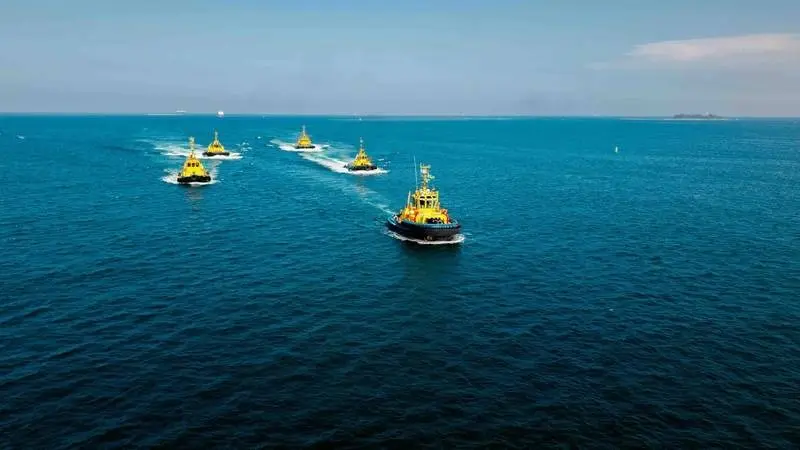
The global maritime sector is undergoing a profound structural transformation, driven by the dual pressures of tightening environmental regulations and the logistical demands of managing ever-larger container vessels. At the forefront of this operational evolution is SAAM Towage, a leading provider of towage services across the Americas. By the third quarter of 2026, the company has successfully integrated five state-of-the-art tugboats into its regional fleets, signaling an accelerated phase of its multi-year fleet renewal program.
The new acquisitions—Guanay (Peru), Carancho (Chile), Kanan (Mexico), Hunabku (Guatemala), and Caribe (Colombia)—are designed to address the complex requirements of modern port operations. Boasting bollard pull capacities ranging from 70 to 80 metric tons and equipped with highly advanced propulsion and environmental control systems, these vessels represent a calculated effort to optimize operational efficiency, enhance safety margins during high-complexity maneuvers, and drastically reduce greenhouse gas and nitrogen oxide ($textNO_x$) emissions.
This aggressive capital expenditure campaign comes at a critical juncture for SAAM. Following the strategic divestment of its port terminal and logistics operations to Hapag-Lloyd in 2023, SAAM has repositioned itself as a highly focused, pure-play towage and air cargo services provider. Armed with a robust balance sheet, the company’s ongoing fleet modernization serves as a defensive moat against competitors like Boluda and Svitzer, while positioning it as the partner of choice for global shipping lines committed to green corridor initiatives.
Detailed Chronology: The 2026 Deployment Strategy
The deployment of these five new tugboats across five distinct Latin American nations highlights SAAM Towage’s decentralized yet highly coordinated operational model. Each vessel has been customized and allocated to address specific regional infrastructure demands and geographical challenges.
+-----------------------------------------------------------------------------+
|                          SAAM TOWAGE 2026 DEPLOYMENTS                       |
+---------------------+-----------------------+-------------------------------+
| Vessel Name         | Primary Country       | Strategic Operational Focus   |
+---------------------+-----------------------+-------------------------------+
| Guanay              | Peru                  | Callao & Chancay megaport     |
|                     |                       | integration                   |
+---------------------+-----------------------+-------------------------------+
| Carancho            | Chile                 | High-wind Pacific coastal     |
|                     |                       | maneuvers                     |
+---------------------+-----------------------+-------------------------------+
| Kanan               | Mexico                | High-density Gulf & Pacific   |
|                     |                       | industrial hubs               |
+---------------------+-----------------------+-------------------------------+
| Hunabku             | Guatemala             | Central American agricultural |
|                     |                       | & trade corridors             |
+---------------------+-----------------------+-------------------------------+
| Caribe              | Colombia              | Caribbean transshipment and   |
|                     |                       | LNG safety support            |
+---------------------+-----------------------+-------------------------------+
1. Guanay (Peru)
Deployed to Peru, the Guanay arrives at a time of unprecedented maritime expansion for the nation. With the expansion of the Port of Callao and the commercial operational phase of the Chancay megaport, Peru has become a focal point for trans-Pacific trade. The Guanay provides the necessary heavy-lift capability to handle Neo-Panamax vessels, which require precise handling in tight port basins.
2. Carancho (Chile)
Operating along the rugged, high-swell Chilean coastline, the Carancho is tasked with managing challenging meteorological and oceanographic conditions. Chilean ports, such as San Antonio and Valparaíso, frequently experience heavy swells and high winds that complicate docking maneuvers. The vessel’s high maneuverability and instant thrust response are critical for maintaining port throughput during inclement weather.
3. Kanan (Mexico)
Mexico’s manufacturing boom and nearshoring trend have led to a surge in port traffic along both its Pacific and Gulf coasts. The Kanan has been integrated into SAAM’s Mexican operations to support high-density industrial ports. The tug’s versatile design allows it to transition seamlessly between harbor assistance, coastal towing, and emergency response.

4. Hunabku (Guatemala)
In Guatemala, the Hunabku strengthens SAAM’s footprint in Central America, serving vital agricultural and container trade corridors. Operating out of key hubs like Puerto Quetzal or Santo Tomás de Castilla, the tug provides the robust bollard pull required to assist bulk carriers and medium-sized containerships in narrow access channels.
5. Caribe (Colombia)
The Caribe has been deployed to Colombia, a nation serving as a dual-ocean gateway. Based primarily in the Caribbean hub of Cartagena—or alternatively supporting Pacific operations in Buenaventura—the Caribe is optimized for high-frequency operations, supporting the rapid turnaround times demanded by major international container carriers and LNG terminal operators.
Supporting Context & Metrics: Technical Specifications and Environmental Benchmarks
The integration of these five vessels is not merely an expansion of hull count; it represents a significant technological leap forward for regional maritime services. The specifications of these tugboats reflect a careful balance of raw physical power and refined environmental engineering.

IMO Tier II and Tier III Compliance
A key differentiator of the 2026 intake is the integration of engines certified under the International Maritime Organization (IMO) Tier II and Tier III standards:
- $textNO_x$ Emission Reductions: Under IMO Tier III guidelines, vessels operating within designated Emission Control Areas (ECAs) must reduce nitrogen oxide emissions by approximately 80% compared to Tier I levels. This is achieved through advanced Selective Catalytic Reduction (SCR) systems, which inject a urea-based reducing agent into the exhaust stream to convert harmful nitrogen oxides into harmless nitrogen and water vapor.
- Operational Flexibility: By maintaining a mix of Tier II and Tier III compliant vessels, SAAM Towage optimizes its capital expenditure while ensuring that its fleet can operate without restriction in environmentally sensitive marine sanctuaries and strict regulatory zones across the Americas.
Bollard Pull and Vessel Maneuverability
The new units deliver a bollard pull ranging between 70 and 80 metric tons. In modern harbor towage, bollard pull is the primary metric of a tug’s capacity to assist large ships:
- Handling Ultra-Large Container Vessels (ULCVs): As container ships exceed lengths of 366 meters and capacities of 15,000+ TEUs (Twenty-Foot Equivalent Units), their massive windage (surface area exposed to wind) requires tugs with immense lateral and direct pulling force to prevent groundings and collisions.
- Azimuth Stern Drive (ASD) Propulsion: These tugs utilize ASD configuration, featuring omnidirectional thrusters capable of rotating 360 degrees. This allows for instantaneous vectoring of thrust in any direction, providing superior lateral walking speeds, indirect towing capabilities, and safer escort operations.
  [Typical ASD Tug Propulsion Layout]

         /===================
        |                     |
        |      Bow Winch      |  <-- High-strength synthetic rendering line
        |                     |
                            /
                           /
                          /
            |             |
            |   Engine    |  <-- IMO Tier III / SCR System equipped
            |    Room     |
            |             |
           /
          /  Dual Azimuth
         |   Stern Drives    |  <-- 360-degree thrust vectoring
            (Z-Drives)     /
           ===============/
FF1-Certified Fire-Fighting Systems
To meet the safety standards of modern industrial ports, particularly those handling volatile cargoes such as Liquefied Natural Gas (LNG), chemical tankers, and petroleum products, all five tugs feature Class 1 Fire-Fighting (FF1) certification:
- Water and Foam Capacity: FF1 systems require a minimum of two water monitors capable of discharging a combined total of $2,400text m^3/texth$ of water, with a throw range often exceeding 120 meters.
- Deluge Systems: The vessels are equipped with water spray protection systems that envelope the tug’s own superstructure in a protective mist, allowing it to operate in close proximity to intense marine fires during emergency rescue operations.
Strategic Context: SAAM’s Corporate Realignment
To understand the scale of SAAM Towage’s fleet renewal, one must look at the parent company’s broader corporate strategy. In August 2023, Sociedad Matriz SAAM S.A. completed the sale of its port terminal operations and associated logistics services to the German shipping giant Hapag-Lloyd for approximately $1 billion.
This transaction reshaped the company’s financial profile:
- Creation of a Pure-Play Towage Leader: By divesting its port terminals, SAAM freed itself from the capital-intensive demands of container terminal concessions and dredging operations. It focused its resources on two primary business lines: SAAM Towage and Aerosan (air cargo services).
- Financial Liquidity: The cash influx from the Hapag-Lloyd transaction provided SAAM with the liquidity to fund aggressive fleet modernization programs without relying heavily on high-interest debt markets.
- Market Consolidation: SAAM Towage has utilized its capital to acquire regional competitors, including the towage businesses of Starnav in Brazil and Ian Taylor’s towage assets, solidifying its position as the largest towage operator in the Americas and the third-largest globally, with a fleet exceeding 300 tugs.
Future Outlook: Navigating Towards Net-Zero
The addition of these five tugs in 2026 is a milestone within a long-term capital allocation strategy. As the maritime industry moves toward decarbonization, SAAM Towage is positioning itself to lead the transition in Latin America.
The Electrification Blueprint
While the new 2026 vessels rely on high-efficiency diesel engines with SCR technology, SAAM has already established a blueprint for zero-emission harbor operations. The company’s deployment of the SAAM Volta and SAAM Sparky—fully electric tugs developed in partnership with Damen Shipyards and Teck Resources for operations in the Port of Vancouver—serves as a testing ground for future deployments in South and Central America.
               SAAM TOWAGE DECARBONIZATION PATHWAY

   [IMO Tier II] ----> [IMO Tier III / SCR] ----> [Hybrid / Electric]
   Standard Diesel      80% NOx Reduction          Zero-Emission Ports
   (Baseline Fleet)    (2026 Deliveries)          (Future Regional Rollout)
As shore-power infrastructure and high-capacity electrical grids mature in Latin American ports, SAAM is prepared to scale its electric and hybrid tug designs to major hubs in Chile, Colombia, and Mexico.
Operational Digitalization
Beyond physical assets, the future of SAAM Towage relies heavily on data-driven operations. The company is actively integrating telemetry systems across its new vessels. These systems track real-time engine performance, fuel consumption, and bollard pull utilization. By applying predictive maintenance algorithms and optimizing transit speeds between operations, SAAM aims to reduce its overall fuel burn, passing carbon savings directly along to its shipping line clients’ Scope 3 emissions ledgers.
Through this balanced approach of deploying highly efficient internal combustion engines today, while refining the electric and digital technologies of tomorrow, SAAM Towage ensures that its fleet remains resilient, compliant, and highly competitive in the evolving global trade landscape.