







Executive Overview
The global hospitality and tourism industries have undergone a profound, structural transformation in the wake of the COVID-19 pandemic. While much of the early post-lockdown discourse focused on capacity rebounds, supply chain disruptions, and pent-up travel demand, a quieter yet more permanent evolution has taken place beneath the surface: the fundamental shift in consumer behavior. Modern travelers are approaching leisure with a renewed sense of urgency, a heightened valuation of personal time, and a distinct preference for flexibility over rigid, traditional itineraries.
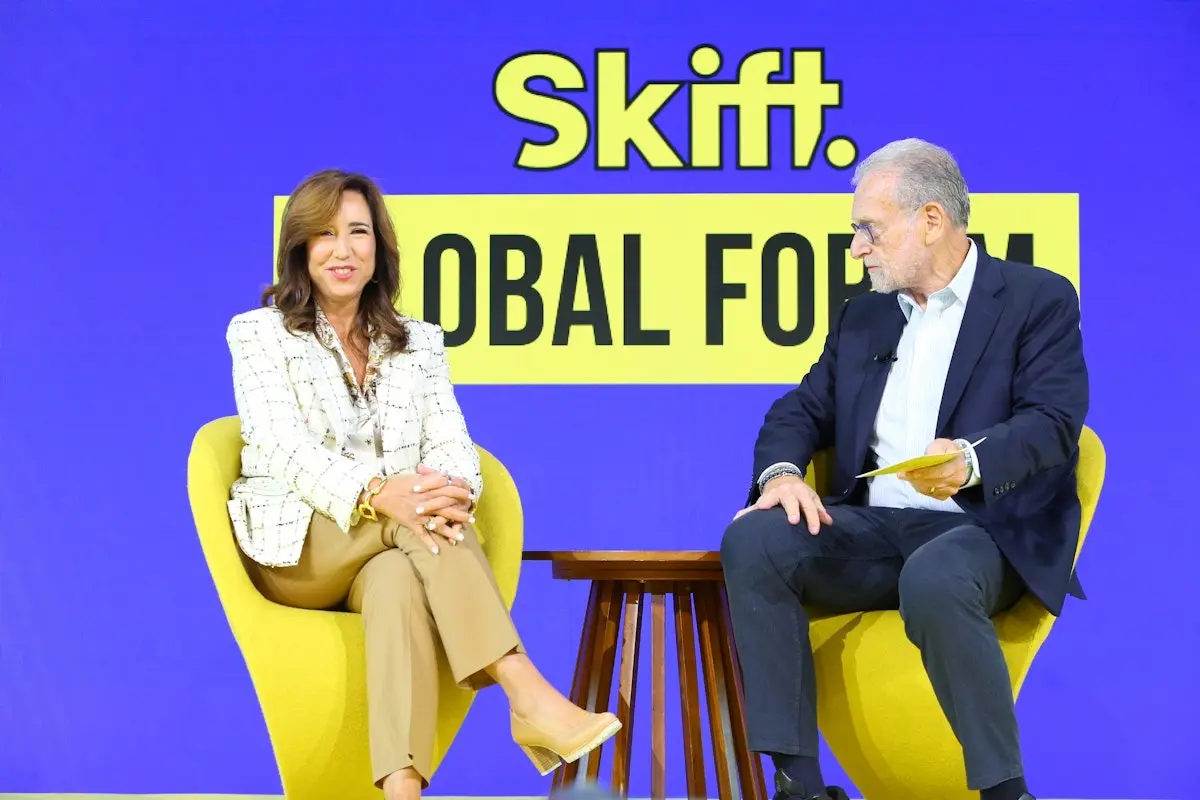
Nowhere is this cultural pivot more visible than on the high seas. During a high-profile session at the Skift Global Forum—moderated by renowned CBS News travel editor Peter Greenberg—Carnival Cruise Line President Christine Duffy laid bare the striking statistical and behavioral changes defining contemporary cruising. According to Duffy, the psychological footprint of the pandemic has permanently altered how guests consume onboard experiences, moving away from time-consuming, highly structured traditions toward rapid, frictionless, and highly adaptable formats.
The most prominent casualty of this shift is the traditional cruise dining room experience. Once the undisputed anchor of maritime socialization, the classic 90-minute formal seating arrangement has fallen out of favor with a populace that increasingly views time as its most precious commodity. Passengers who historically clamored for the late 8:00 p.m. seating are now forming queues outside dining venues as early as 5:00 p.m., signaling an absolute rejection of protracted, multi-course evening routines.
In response to this seismic behavioral evolution, Carnival Cruise Line has overhauled its operational playbook, introducing express dining options that condense meals to under an hour alongside expanded flexible-time formats. This deep-dive report examines the mechanics of this transformation, analyzing the broader implications for the cruise sector, the operational hurdles facing legacy hospitality giants, and what these changing consumer expectations signal for the future of global travel.
Detailed Chronology: The Road to the 5:00 PM Rush
To understand the magnitude of Carnival’s operational pivot, it is essential to trace the timeline of dining culture aboard cruise ships over the past several decades. For generations, the cruise industry operated on a rigid, highly regimented schedule designed to maximize efficiency for massive galleys while fostering a sense of community among strangers.
The Era of Traditional Seating (Pre-2020)
For decades, the standard cruise model revolved around fixed-seating dining arrangements. Guests were assigned either an early seating (typically around 5:30 p.m. or 6:00 p.m.) or a late seating (usually 8:00 p.m. or 8:30 p.m.). These seatings were treated as social events; passengers wore formal attire, sat at large tables with unfamiliar travelers, and committed a solid 90 minutes to two hours to a multi-course culinary journey orchestrated by executive chefs.
The late seating, in particular, was a badge of sophistication. It allowed guests to enjoy shore excursions late into the afternoon, return to the ship at a leisurely pace, dress for dinner, and conclude their evening with a nightcap or a late-night production show. The system worked because travelers viewed a cruise vacation as an escape from the frantic clock-watching of daily life—an environment where time could slow down.

The Pandemic Disruption (2020–2022)
When COVID-19 brought the global cruise industry to a screeching halt in March 2020, cruise lines were forced into an existential survival mode. When ships gradually returned to service under strict health and safety protocols between 2021 and 2022, traditional dining rooms faced immediate logistical roadblocks. Social distancing requirements, capacity caps, and staggered meal times meant that the old ways of packing hundreds of guests into a confined space at identical hours were temporarily impossible.
During this interim period, cruise operators aggressively rolled out digital innovations. Virtual queueing apps, QR-code menus, and expanded casual dining options became the norm. Passengers grew accustomed to eating on their own terms, ordering food through mobile devices, and bypassing the formal staging rituals of traditional cruise dining.
The Permanent Behavioral Shift (2023–Present)
As normal operations resumed, cruise executives initially anticipated a return to historical norms. However, as Christine Duffy noted during her Skift Global Forum appearance, the behavioral shift proved not to be a temporary safety precaution, but a permanent psychological adjustment.
The modern cruise passenger has returned to sea with a fundamentally different mindset. Burnout from remote work, lifestyle realignments, and a generalized cultural acceleration have made travelers hyper-conscious of how they spend every hour of their vacation. The idea of sitting through a 90-minute dinner when there are shows to see, ports to explore, or simply relaxation time to be had is increasingly viewed as an unnecessary constraint.
Consequently, the 8:00 p.m. late seating has seen a precipitous decline in demand. In its place, a massive wave of early diners now surges toward the dining rooms right as they open at 5:00 p.m. This early rush is not merely a quirk of scheduling; it represents a complete inversion of the traditional evening timeline, forcing cruise lines to rethink staffing, galley preparation, and entertainment schedules to accommodate an entirely front-loaded evening.
Supporting Context & Metrics: Deconstructing the Time Economy
The pivot from late-night formality to early-evening efficiency is underpinned by broader shifts in the global "time economy." Consumers across all demographics are placing a higher premium on autonomy and speed, trends that hospitality analysts have tracked across hotels, airlines, and theme parks.
The Death of the 90-Minute Meal
In her discussion with Peter Greenberg, Duffy emphasized a stark ultimatum delivered by modern passengers: "People absolutely do not want the 90-minute formal dining experience anymore."
For cruise operators, this sentiment creates a complex logistical puzzle. Traditional cruise dining was engineered around the cadence of a 90-minute service. Kitchens prepared dishes in synchronized waves—appetizers, soups, salads, mains, and desserts—timed meticulously to allow servers to manage tables efficiently. When guests demand to be in and out in under an hour, the entire culinary assembly line must be re-engineered.

To address this, Carnival introduced express dining formats. These options retain the quality associated with the main dining room but streamline the delivery process, trimming the fat off service interactions while empowering guests to dictate their own pace. Crucially, this is not merely about fast food; it is about efficient hospitality—delivering high-end culinary execution without the ceremonial drag of traditional service models.
The Psychological Driver: Reclaiming Control
Psychologists and consumer behaviorists point to the pandemic as a catalyst for a phenomenon known as "time scarcity anxiety." Having experienced prolonged periods of uncertainty and loss of control over their schedules, contemporary travelers view their leisure time as a fiercely protected asset.
Waiting for a table, adhering to strict dress codes, or sitting through a protracted multi-course meal when one could be experiencing other facets of the ship induces micro-stressors that modern vacationers actively seek to avoid. By shifting dinner times to 5:00 p.m., passengers are able to front-load their culinary responsibilities, freeing up the rest of the evening for entertainment, relaxation, or sleep.
Economic and Operational Ripples
This behavioral shift has profound ripple effects across the entire cruise ecosystem:
- Staffing and Galley Dynamics: Traditional cruise ships rely on a highly choreographed schedule where galley staff prep for the early seating and transition directly into the late seating. A massive surge at 5:00 p.m. compresses peak demand, requiring more dynamic deployment of culinary personnel.
- Entertainment Scheduling: With large segments of the passenger population finishing dinner by 6:00 or 6:30 p.m., onboard entertainment schedules must adapt. Late-night comedy shows and midnight parties are seeing declining utility, while earlier theater performances and twilight deck activities are surging in popularity.
- Alternative Dining Venues: Specialty restaurants, casual buffets, and grab-and-go eateries are capturing a larger share of the market as guests gravitate toward casual, unstructured eating environments over the grand dining room.
Official Statements & Industry Perspectives
The insights shared by Christine Duffy at the Skift Global Forum offer a rare, candid glimpse into the boardroom deliberations of the world’s largest cruise operators. Her dialogue with Peter Greenberg highlighted the tension between legacy traditions and modern consumer realities.
"The behavioral shift since COVID is real and measurable," Christine Duffy, President of Carnival Cruise Line, stated during the moderated session. "Guests who used to request eight o’clock late seating are now lining up at five o’clock, and people absolutely do not want the 90-minute formal dining experience anymore."
Duffy’s comments underscore a broader truth applicable to the entire hospitality sector: heritage brands cannot survive on legacy reputation alone. When consumer preferences undergo a generational shift, operational agility becomes the primary determinant of long-term commercial viability.
Industry analysts watching the session noted that Carnival’s willingness to publicly acknowledge and adapt to these changes sets a benchmark for competitors. While luxury lines may continue to cater to traditionalists seeking ultra-refined, protracted dining experiences, mass-market and premium cruise operators must follow Carnival’s lead in prioritizing speed, flexibility, and guest-led scheduling.
Peter Greenberg, steering the conversation from the perspective of an investigative travel journalist, challenged Duffy to look beyond immediate operational fixes, probing into how these micro-trends reflect a broader metamorphosis in human mobility and vacation philosophy. The consensus emerging from the dialogue was clear: the cruise industry is no longer just selling a destination or a floating resort; it is selling time—and the modern consumer demands absolute sovereignty over how that time is spent.
Future Outlook: What Lies Ahead for Cruising and Hospitality
As the travel sector looks toward the remainder of the decade, the lessons learned from Carnival’s dining room evolution will serve as a foundational case study in consumer-centric adaptation. Several key trends will dictate the path forward:
1. The Hyper-Flexibility Mandate
The era of rigid schedules in mass-market hospitality is drawing to a close. Future cruise ship designs will likely feature even more decentralized dining ecosystems, moving away from massive, multi-deck central dining rooms toward decentralized neighborhood concepts where guests can eat what they want, when they want, and at whatever speed suits their evening agenda.
2. Technology as a Friction Reducer
Artificial intelligence, predictive analytics, and seamless mobile applications will play an increasing role in managing passenger flow. By analyzing real-time data on where guests are gathering—such as the sudden surge at 5:00 p.m. dining venues—cruise lines can dynamically adjust staffing, open pop-up culinary stations, and eliminate bottlenecks before they impact guest satisfaction.
3. Redefining "Luxury" on Vacation
For decades, luxury in cruising was synonymous with formality: white gloves, silver service, and lengthy, ceremonial meals. Today, true luxury is increasingly defined by freedom from friction. The passenger who wants to eat a gourmet meal in 45 minutes so they can watch the sunset from the top deck views that speed not as a compromise, but as the ultimate enhancement of their vacation experience.
Conclusion
Christine Duffy’s revelations at the Skift Global Forum signal that the post-pandemic traveler is an entirely new breed of consumer—one who values time over tradition and autonomy over ceremony. For Carnival Cruise Line and the broader hospitality industry, listening to the 5:00 p.m. queue is not just an operational adjustment; it is an absolute necessity for survival in a rapidly accelerating world.