








Executive Overview
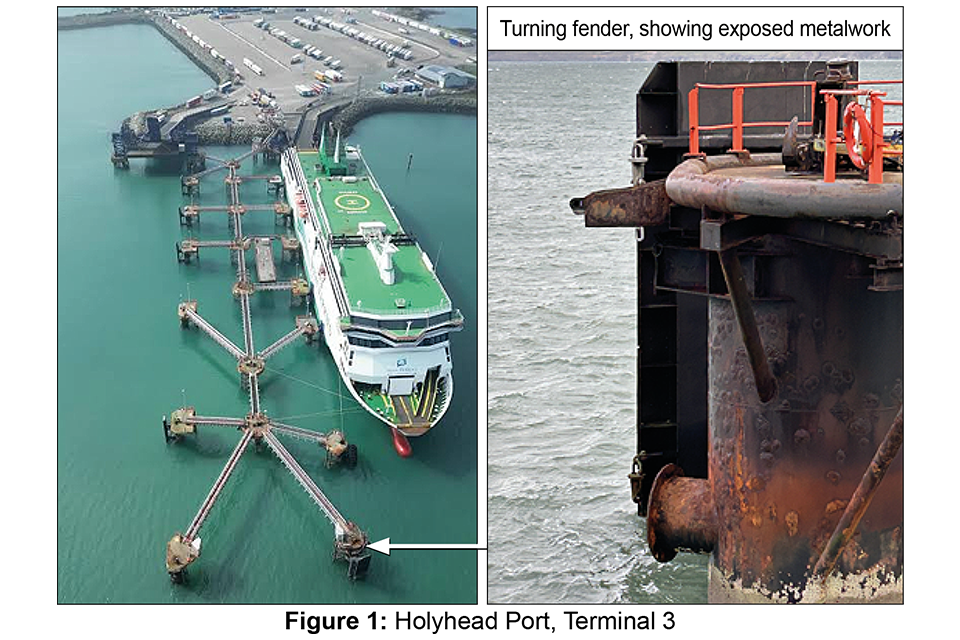
On the morning of January 7, 2026, routine maritime transit across the Irish Sea turned into a high-stakes marine casualty when the large roll-on/roll-off passenger (RoPax) ferry Stena Estrid made forceful contact with port infrastructure while berthing at Holyhead, Wales. Operating its regular cross-border route from Dublin, Ireland, the 214.5-meter Cyprus-flagged vessel struck an unprotected turning fender at the northern extent of Terminal 3. The impact breached the vessel’s hull in two locations, resulting in an ingress of approximately 500 tonnes of seawater into the starboard engine room and flooding an adjacent void space.
Despite the severity of the structural breach and the challenging external environmental conditions—which featured westerly winds blowing at a strong Force 6 to 7—the rapid, textbook response of the ship’s 66-strong crew averted a catastrophic escalation. Through swift damage control measures, including the immediate shoring up of the compromised hull, dewatering operations, and precise ballasting adjustments to create a port list that raised the breach above the waterline, the crew stabilized the ship.
Remarkably, once the immediate danger was brought under control, the vessel successfully completed its berthing maneuver, allowing all 91 passengers and their 95 vehicles to disembark without significant delay. While Holyhead Port experienced a temporary evening closure for safety and structural inspections, the terminal was quickly cleared for service following verification that the jetty sustained no significant structural compromise.

Following the incident, the Marine Accident Investigation Branch (MAIB) launched a formal inquiry. However, due to proactive corrective actions implemented swiftly by both Stena Line Limited and Stena Line Ports Limited—alongside planned infrastructure enhancements at the port—the MAIB has officially closed its investigation. This comprehensive report explores the chronology of the collision, the vessel and voyage particulars, the emergency mitigation strategies employed by the crew, and the systemic safety takeaways arising from the event.
Detailed Chronology of the Incident
The Approach and Maneuvering Phase
At 0750 UTC on January 7, 2026, Stena Estrid approached the final stages of its international voyage from Dublin, Ireland, to Holyhead Port, Wales. The weather conditions during the approach were demanding, characterized by a brisk westerly wind gusting at Force 6 to 7, which required precise navigational and maneuvering inputs from the bridge team.
As part of the standard berthing sequence for Terminal 3, the vessel executed a port turn to the north of the jetty. To assist with the maneuver in the strong crosswinds, a commercial tug was made fast on the ferry’s port aft quarter. The operational plan required the vessel to back into its designated berth following the turning evolution.
The Impact and Hull Breach
During the positioning phase prior to backing in, the interaction between the vessel’s movement, external environmental forces, and local port constraints led to an unintended trajectory. At 0750 UTC, the starboard side of the Stena Estrid made hard contact with an unprotected turning fender situated at the northern extent of Terminal 3.

The localized force of the collision concentrated on the vessel’s steel plating, resulting in a dual-point breach. The hull was holed just below the waterline directly abreast of the starboard engine room, allowing an uncontrolled rush of seawater into the space. Concurrently, a secondary breach occurred above the waterline on the cargo deck level. The sudden breach led to an estimated 500 tonnes of water flooding the starboard engine room, while an unknown quantity of water entered an adjacent void space, instantly threatening the vessel’s stability, electrical generation capacity, and propulsion readiness.
Emergency Response and Damage Control
Faced with a rapidly evolving crisis and substantial water ingress in a critical machinery space, the crew of the Stena Estrid initiated emergency protocols with exemplary discipline and speed.

The damage control teams were immediately mobilized. Recognizing the threat posed by the massive weight of water inside the starboard engine room, personnel moved swiftly to shore up the compromised hull plating from the inside to mitigate further structural degradation. Simultaneously, high-capacity bilge and emergency dewatering pumps were brought online to expel incoming water.
To counter the severe trim and stability risks introduced by the flooding, the bridge and engineering teams coordinated a strategic ballasting evolution. By purposefully transferring ballast water across the ship, the crew induced a controlled port list. This intentional heel shifted the ship’s geometry, effectively raising the waterline breach above the external water level and halting the passive flow of water into the vessel.
Berthing, Disembarkation, and Port Operations
With the ship’s stability restored, internal flooding contained, and critical systems monitored, the master and bridge team made the calculated decision to resume the berthing sequence. The masterfully managed docking operation was completed safely, enabling the roll-on/roll-off infrastructure to connect to the ship.
The 91 passengers and 95 vehicles on board were safely disembarked without injury. Not a single casualty or injury was reported among the 157 total persons on board (comprising 91 passengers and 66 crew members).
Following the evacuation of passengers and cargo, Holyhead Port authorities temporarily suspended ferry traffic to ensure safety while emergency services and port engineers evaluated the structural integrity of the terminal. Later that evening, Stena Estrid was shifted to an alternative berth within the port complex. A comprehensive dive and surface inspection of the jetty confirmed that, aside from the turning fender itself, the terminal sustained no significant structural damage, allowing Holyhead Port to resume normal operations.
Voyage to Dry Dock
With temporary structural repairs completed to ensure seaworthiness for a coastal transit, Stena Estrid departed Holyhead under its own power. The vessel sailed across the Irish Sea to a specialized dry dock facility in Liverpool, England, where permanent repairs to the starboard engine room hull plating and cargo deck structure were carried out.
Supporting Context & Metrics
Understanding the scope of this marine casualty requires a detailed examination of the vessel’s structural specifications, operational parameters, and the environmental framework in which the accident occurred.
Ship Particulars: Stena Estrid
- Vessel Name: Stena Estrid
- Flag: Cyprus
- Classification Society: DNV GL
- IMO Number: 9807293
- Vessel Type: Roll-on/Roll-off Passenger (RoPax) Ferry
- Registered Owner: LS-CYP1 Co Ltd
- Manager: Stena Line Limited
- Operator: Stena Line Irish Sea Ferries Limited
- Builder: China Merchants Jinling Shipbuilding Co. Ltd.
- Year of Build: 2019
- Length Overall (LOA): 214.5 meters
- Gross Tonnage: 41,671 GT
- Minimum Safe Manning: 19 personnel
- Authorised Cargo: Commercial and private vehicles, alongside passengers
Voyage Particulars
- Port of Departure: Dublin, Ireland
- Port of Arrival: Holyhead, Wales
- Type of Voyage: International short-sea transit
- Cargo Manifest: 95 vehicles (mix of freight and passenger transport) and 91 passengers
- Total Crew Complement: 66 personnel
- Total Persons on Board (POB): 157 individuals
Marine Casualty Information
- Date and Time: January 7, 2026, at 0750 UTC
- Incident Classification: Serious Marine Casualty
- Geographic Location: Terminal 3, Holyhead Port, Anglesey, Wales
- Specific Location On Board: Starboard engine room and adjacent void space
- Casualties / Injuries: Zero fatalities, zero injuries reported
- Environmental Impact: Hull puncture with localized internal flooding (no oil spill or hazardous material discharge reported)
- Vessel Operation & Segment: RoPax ferry engaged in the berthing phase of an international voyage
- Environmental Conditions: Westerly winds at Force 6 to 7 (strong breeze to near gale), presenting significant windage challenges for a high-sided 41,671 GT vessel during low-speed port maneuvers.
Official Statements and Regulatory Closure
Following the incident, the Marine Accident Investigation Branch (MAIB) initiated a preliminary assessment (PA Summary 3/2026) to determine the underlying factors contributing to the contact with the unprotected turning fender at Terminal 3.
The investigation focused on human factors, bridge resource management during high-wind berthing operations, tug assistance coordination, and the design and protective attributes of port infrastructure.
Corrective Actions Taken
To address the vulnerabilities exposed by the collision, the relevant corporate and port entities enacted immediate remedial and preventative measures:
-
Stena Line Limited (Vessel Manager):
- Implemented enhanced bridge resource management (BRM) training modules focusing specifically on high-wind berthing maneuvers in restricted port environments.
- Reviewed and updated Standard Operating Procedures (SOPs) regarding tug utilization and deployment protocols during adverse weather conditions at Holyhead Port.
- Conducted internal audits of damage control readiness and emergency response drills across the wider fleet.
-
Stena Line Ports Limited (Port Operator):
- Initiated an immediate engineering review of fender systems across all berths at Holyhead Port.
- Scheduled infrastructure upgrades to replace or reinforce unprotected turning fenders, specifically targeting high-exposure contact zones at Terminal 3.
- Updated port risk assessments to account for the combined hydrodynamic and windage effects experienced by modern, high-sided RoPax tonnage.
Closure of the MAIB Investigation
In light of the prompt, transparent, and comprehensive safety actions taken by both Stena Line Limited and Stena Line Ports Limited, alongside their commitments to long-term port infrastructure improvements, the MAIB determined that further investigative steps were unnecessary. The safety lessons of the incident have been integrated into industry guidance, and the formal MAIB investigation has been officially closed.
Future Outlook
The collision of the Stena Estrid serves as a critical case study in modern maritime risk management, highlighting both the inherent vulnerabilities of port infrastructure and the life-saving value of exceptional crew preparedness.
As maritime trade across the Irish Sea continues to grow, ferry operators and port authorities face mounting pressure to balance schedule reliability with safety in increasingly severe weather patterns linked to changing climate norms. Modern RoPax vessels—characterized by significant windage areas due to high passenger superstructures—are particularly susceptible to crosswinds during slow-speed maneuvering in confined port basins.
The swift actions taken at Holyhead Port to upgrade fender protection standards, combined with Stena Line’s rigorous revisions to bridge team operational procedures, establish a robust precedent for accident prevention. Ultimately, the incident underscores that while maritime accidents cannot always be entirely prevented in adverse environmental conditions, the combination of resilient vessel design, rigorous damage control training, and proactive infrastructure management can successfully transform a potential marine disaster into a manageable, injury-free event.