










Executive Overview
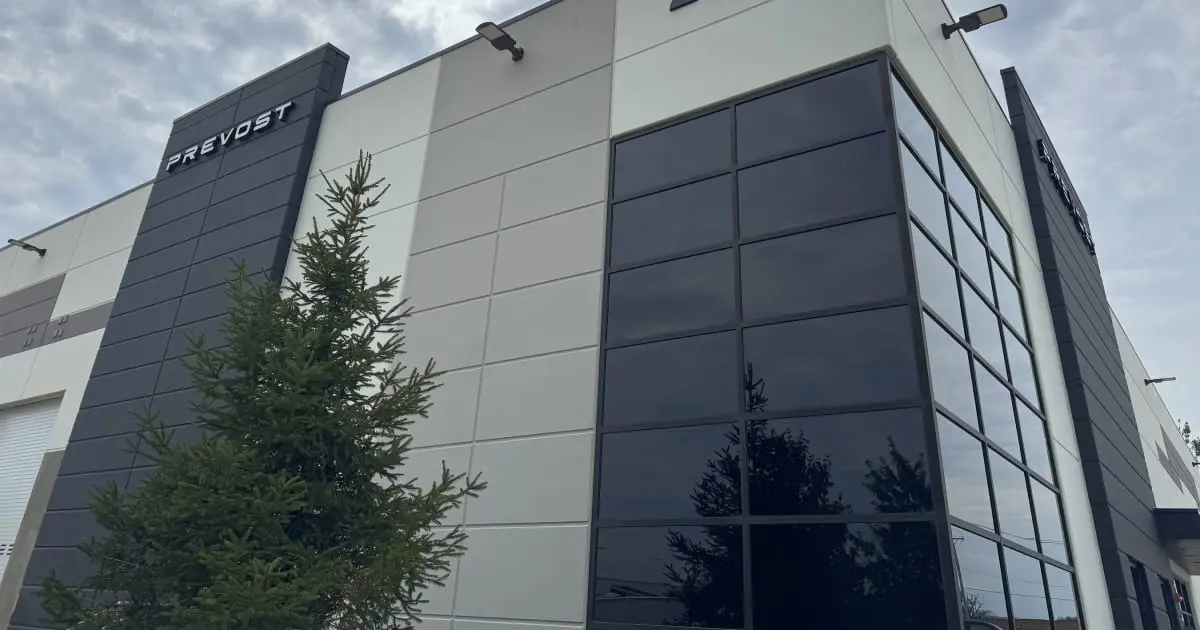
In an aggressive strategic maneuver to fortify its nationwide operational footprint, luxury motorcoach manufacturer and service provider Prevost has officially inaugurated its state-of-the-art service center in Elk Grove Village, Illinois. Representing a substantial capital investment of $8.1 million, this expansive facility is engineered to redefine the standard of aftermarket support, maintenance, and fleet reliability for operators across the greater Chicago metropolitan area and the broader Midwest transit corridor.
The opening of the Elk Grove Village location is far more than a routine commercial relocation; it stands as a cornerstone in Prevost’s overarching master plan to systematically scale and modernize its service network through 2026 and 2027. By migrating to a location that dwarfs its predecessor in square footage, parts inventory capacity, and technical infrastructure, Prevost is directly confronting the modern demands of passenger transport operators. In an industry where vehicle uptime directly translates to profitability, passenger satisfaction, and brand survival, this facility aims to mitigate downtime through aggressive capacity expansion, strategic geographic placement, and an unyielding commitment to operational excellence.
This comprehensive report examines the multifaceted dimensions of Prevost’s latest infrastructure investment. We explore the strategic imperatives driving the project, analyze the granular architectural and operational metrics of the new facility, contextualize the expansion within the company’s broader multi-year national growth roadmap, and weigh the implications of these developments for the future of the North American motorcoach and commercial passenger transport industry.
Detailed Chronology and Strategic Genesis
The genesis of the Elk Grove Village service center can be traced back to a meticulous internal assessment of Prevost’s existing regional network performance. For years, the company operated out of a legacy service site in the Chicago area. While this previous facility served its purpose historically, changing market dynamics, larger average coach fleets, and an escalating demand for rapid-turnaround preventative maintenance and complex heavy repairs pushed the facility to its structural and spatial limits.
The search for a superior location began with a rigid set of logistical and geographic criteria. Management recognized that any future home for Chicago-area operations had to offer seamless connectivity to major interstate arteries and proximity to vital transportation hubs. The ultimate selection of Elk Grove Village—situated just a mere five miles from the former site—struck an optimal balance between maintaining continuity for existing clientele and unlocking unprecedented operational scalability.
Crucially, the new facility’s geographic positioning immediately adjacent to O’Hare International Airport and major regional expressways provides an undeniable strategic advantage. For regional and national motorcoach operators navigating the notoriously congested Chicagoland transit network, accessibility is a primary operational friction point. By establishing a footprint that minimizes transit time from major regional corridors to the service bays, Prevost has drastically reduced the logistical friction historically associated with routine service routing and emergency recovery operations.
The execution of the $8.1 million project followed a disciplined timeline, aligning with Prevost’s corporate strategy to optimize its North American service architecture well ahead of anticipated industry volume surges. From architectural planning and zoning approvals to interior upfitting and the integration of specialized heavy-duty diagnostic and repair equipment, every phase of the development was monitored to ensure minimal disruption to ongoing customer support. The formal opening of the Elk Grove Village facility now establishes a new benchmark for how heavy-duty vehicle manufacturers approach regional service delivery.
Supporting Context, Architectural Metrics, and Operational Enhancements
To fully comprehend the transformational impact of the Elk Grove Village facility, one must examine the stark contrast between the legacy operation and the new state-of-the-art campus. The transformation is defined by exponential growth across every major operational parameter, from physical square footage to parts warehousing and technician deployment capabilities.
Scaling the Physical Footprint
The previous Chicago-area facility operated within a modest 9,000-square-foot envelope. While functional during eras of smaller regional fleets, this footprint severely restricted simultaneous repair operations and limited parts availability on-site. The new Elk Grove Village facility shatters those physical constraints, expanding the total operational footprint to approximately 29,000 square feet.
This near-tripling of physical space allows for a radical reorganization of workflow. Service operations, parts distribution, administrative functions, and customer hospitality areas now occupy dedicated, optimized zones within the campus, eliminating the workflow bottlenecks that plagued the legacy site.
Revolutionizing Parts Logistics
In the motorcoach industry, the availability of replacement components is frequently the primary bottleneck governing vehicle repair times. Recognizing that waiting on parts shipments from distant distribution centers inflicts severe financial pain on operators, Prevost has fundamentally upgraded its parts warehousing capabilities in Elk Grove Village.
The previous facility featured a cramped 800-square-foot parts storage area, necessitating frequent special orders and limiting the breadth of inventory that could be kept on hand. The new facility boasts a sprawling, nearly 15,000-square-foot parts department. This massive storage capacity enables Prevost to stock a significantly broader, deeper inventory of high-turnover replacement parts, specialized mechanical components, electrical assemblies, and body panels on-site. By drastically increasing local stock levels, the facility can fulfill routine maintenance requests and emergency parts pickups instantly, bypassing transit delays and accelerating vehicle turnaround times.
Expanding Service Bays and Technical Infrastructure
Physical space and parts availability are only as effective as the technical infrastructure deployed to utilize them. The Elk Grove Village center addresses this by expanding core service capacity from three traditional service bays to five fully equipped, high-clearance service bays.
Each bay is engineered to accommodate full-sized modern motorcoaches, outfitted with heavy-duty lifting systems, advanced diagnostic computing ports, integrated fluid delivery lines, and high-intensity overhead lighting designed to facilitate precise mechanical inspections. These five bays enable technicians to conduct multiple simultaneous interventions—ranging from routine preventative maintenance inspections and HVAC servicing to complex powertrain overhauls and collision repairs—without compromising turnaround schedules.
Elevating the Customer Experience and Field Support
Prevost’s multi-million-dollar investment extends far beyond the mechanical workspace, recognizing that fleet managers, drivers, and operators require comfort and operational continuity while their vehicles are being serviced.
The new facility introduces a suite of customer-focused amenities, highlighted by a modern, professional customer lounge equipped with high-speed connectivity, comfortable workspaces, and amenities designed to make downtime productive and restful for visiting flight crews and drivers. Furthermore, to address the parking and staging complexities common in urban industrial parks, the campus features secure, dedicated leased parking for up to 60 vehicles, providing ample space for fleet staging, driver personal vehicles, and coaches awaiting service.
Beyond the brick-and-mortar facility, Prevost has reinforced its field support infrastructure. The Elk Grove Village site is directly supported by a dedicated fleet of 10 mobile service vans, staffed by certified technicians available around the clock (24 hours a day, 7 days a week). This mobile deployment capability ensures that operators stranded on regional highways or at remote depots can receive expert diagnostic and repair assistance without necessarily requiring a costly tow back to the service center. Additionally, Prevost officials have confirmed that extended operating hours for the physical facility are currently in the final planning stages and will be officially announced in the near future, further amplifying accessibility for regional fleets.
Official Statements and Industry Perspective
The inauguration of the Elk Grove Village facility has drawn high-level commentary from Prevost’s executive leadership, underscoring the strategic weight the corporation assigns to regional infrastructure investments.
Kevin Dawson, Vice President of Commercial Operations at Prevost, emphasized that the Elk Grove Village opening is not an isolated corporate milestone, but rather a vital tactical maneuver within a broader multi-year campaign.
"This expansion reflects Prevost’s commitment to strengthening its service network in 2026 and 2027," stated Dawson. "Through this investment, Prevost is enhancing service capacity, improving the customer experience, and helping keep coaches on the road where they belong—generating revenue for our operators."
Dawson’s remarks cut to the heart of the modern commercial passenger transport business model. In an environment defined by tightening profit margins, rising operational costs, and persistent labor shortages within the technical trades, operators cannot afford protracted vehicle downtime. By injecting capital into regional hubs like Elk Grove Village, Prevost is actively partnering with its customer base to protect fleet uptime and operational reliability.
Echoing these sentiments from the ground level, Rob Senne, Branch Manager for the Elk Grove Village facility, highlighted the tangible improvements the new location brings to daily operations and client relationships.
"This new service center, located just five miles from our previous site, marks a major step forward in our ability to support customers," noted Senne. "With significantly more space, greater service capacity, and a location designed around customer convenience, we are well-positioned to deliver the high level of support Prevost customers count on and deserve."
Senne’s perspective emphasizes the human and operational transition. By keeping the facility within the immediate geographic orbit of the previous site, Prevost preserved established customer relationships and retained its skilled local workforce while instantly upgrading the physical and technical tools at their disposal. The result is a seamless transition for local fleet managers, who now enjoy vastly superior service capabilities without the friction of retraining or adjusting regional transit routes.
Future Outlook: Broadening the National Service Network
The $8.1 million investment in Elk Grove Village, Illinois, represents a major milestone, but it must be viewed as one vital node within a much larger, highly calculated national network expansion strategy currently being deployed by Prevost.
As the North American motorcoach industry continues its robust post-pandemic recovery and adapts to evolving regulatory, technological, and environmental standards—including the increasing integration of advanced safety systems, alternative propulsion architectures, and connected vehicle diagnostics—the demands placed on manufacturer-backed service networks have never been higher.
To meet these evolving industry demands, Prevost is aggressively executing a synchronized multi-region expansion plan. In lockstep with the opening of the Elk Grove Village center, the company is concurrently expanding its field service reach through targeted tactical investments across the United States. Notably, Prevost is deploying a new mobile service unit to the high-demand Las Vegas, Nevada market, instantly bolstering rapid-response maintenance capabilities in the booming American Southwest tourism and charter hub.
Furthermore, looking ahead to the immediate horizon, Prevost is advancing construction on a brand-new, purpose-built major service facility in Randleman, North Carolina. Anticipated to officially open its doors in early 2027, the Randleman facility will mirror the state-of-the-art design principles established in Elk Grove Village, providing a massive expansion of service capacity, parts warehousing, and technical support along the vital Southeastern transit corridor.
Conclusion
Prevost’s strategic investment in Elk Grove Village serves as a masterclass in modern heavy-duty aftermarket infrastructure development. By committing $8.1 million to expand its physical footprint from 9,000 to 29,000 square feet, scaling parts storage by nearly twentyfold, expanding active service bays, and embedding 24/7 mobile van support, the company has fundamentally elevated the standard of care for commercial motorcoach operators in the Midwest.
As Prevost continues to roll out its sweeping 2026-2027 infrastructure roadmap—highlighted by developments in Las Vegas and the upcoming Randleman facility—the company is demonstrating an unyielding proactive leadership stance. In an industry where reliability, uptime, and rapid technical intervention dictate commercial success, Prevost’s expansive network investments ensure that its clientele remains well-equipped, fully supported, and confidently driving down the road.