







Executive Overview
Nestled at the foot of Ben Nevis, Britain’s highest peak, and hugging the shimmering shores of Loch Linnhe, Fort William stands as the undisputed "Outdoor Capital of the United Kingdom." This bustling Highland hub serves as the geographical and cultural heartbeat for adventurers, naturalists, and travelers seeking an authentic encounter with Scotland’s rugged interior. Far more than a mere staging ground for mountaineers, Fort William marries raw wilderness with rich maritime history, engineering marvels, and a vibrant local economy.
From the engineering triumph of Neptune’s Staircase on the Caledonian Canal to the cinematic romance of the Jacobite Steam Train traversing the Glenfinnan Viaduct, the town offers a multifaceted itinerary. Whether hikers are conquering the grueling 10-mile round trip of the Ben Nevis Mountain Track, cyclists are navigating the demanding trails of the Nevis Range, or literary travelers are browsing the shelves of the Highland Bookshop on the pedestrianized High Street, Fort William presents a masterclass in blending outdoor adventure with cultural preservation. This comprehensive report examines the geography, infrastructure, attractions, and accessibility that cement Fort William’s status as a premier global destination.
Detailed Chronology & Historical Context
To understand Fort William today, one must trace its evolution from a strategic military outpost into a modern hub for eco-tourism and outdoor sports.
The Fortification Era (17th–18th Century)
The town’s origins are inextricably linked to military strategy and the pacification of the Scottish Highlands. Originally established as a garrison during the reign of King William III in the late 17th century—built to suppress Jacobite uprisings led by the Clan Cameron—the original fort gave the burgeoning settlement its name. While the physical stone fort has largely vanished, replaced by modern industrial and commercial developments over the centuries, its historical footprint dictates the layout of the area.
The Industrial Revolution and Engineering Triumphs (19th Century)
The 19th century reshaped Fort William through visionary civil engineering that transformed trade and transportation in the Highlands:
- 1822: The completion of the Caledonian Canal under the direction of famed engineer Thomas Telford. This engineering feat connected Scotland’s east and west coasts, slicing through the Great Glen. Central to this system was Neptune’s Staircase at Banavie—a dramatic staircase lock comprising eight interconnected chambers that raise boats 64 feet over a distance of 500 yards.
- 1873: The inception of early sleeper-train services connecting London to the Scottish Highlands, laying the groundwork for what would eventually become the iconic Caledonian Sleeper service.
- 1901: The opening of the West Highland Railway extension to Mallaig, engineered by Robert McAlpine. This route introduced the world-famous Glenfinnan Viaduct, an architectural masterpiece of mass concrete arches that would later capture the global imagination on film.
The Modern Era and the Rise of Eco-Tourism (Late 20th–21st Century)
As traditional industries like logging and aluminum smelting evolved, Fort William pivoted toward its natural assets. Throughout the late 20th century, the town earned official recognition as the "Outdoor Capital of the U.K." The opening of the Nevis Range mountain resort in 1989 cemented its reputation as a winter sports and mountain-biking mecca, hosting international Mountain Bike World Cup events. Simultaneously, the endurance community embraced Fort William as the triumphant northern endpoint of the legendary 96-mile West Highland Way.
Supporting Context & Metrics: Exploring the Landscape
Fort William’s appeal lies in its diverse topography, offering micro-environments that range from sea-level lochs to alpine tundra.
Alpine Dominance: Ben Nevis and the Nevis Range
- Ben Nevis Elevation: 1,345 meters (4,413 feet) above sea level.
- The Mountain Track: Spanning approximately 10 miles (round trip) from the Glen Nevis Visitor Centre, the route requires a substantial ascent of over 1,300 meters. Typical completion times range from six to nine hours, depending on physical fitness and shifting alpine weather conditions.
- Nevis Range Mountain Gondola: Rising to 2,100 feet on the slopes of Aonach Mòr, this is the only mountain gondola of its kind in Britain. It grants visitors rapid access to panoramic viewpoints, including Sgùrr Finnisg-aig and Meall Beag, as well as an extensive network of downhill mountain-biking trails.
- Cow Hill Circuit: A more accessible 7-mile circuit starting directly from Fort William, climbing through ancient woodlands and open heathland to provide sweeping vistas over Loch Linnhe and Glen Nevis.
Maritime and Inland Waterways
- Loch Linnhe: A massive sea loch where Highland waters merge with the Atlantic Ocean. It serves as a playground for kayaking, sailing, and wildlife excursions where sightings of harbor seals, red deer, and golden eagles are common.
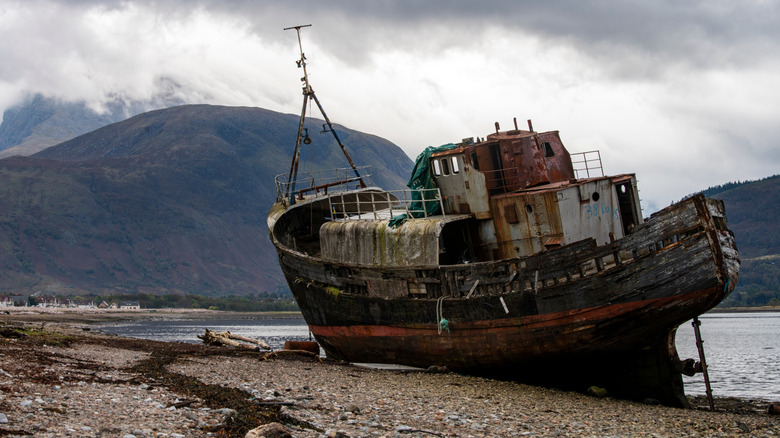
- The Corpach Wreck: Located near the village of Corpach, roughly 4 miles north of Fort William, the rusting hulk of the former fishing vessel MV Days Gone By (commonly known as the Corpach Wreck) rests dramatically on the stony shore. Set against the looming backdrop of Ben Nevis, it has become one of the most photographed modern landmarks in the Scottish Highlands.
Retail, Culture, and Infrastructure
- The High Street: A pedestrianized zone featuring independent purveyors of mountaineering hardware (such as Nevisport and Cotswold Outdoors), local crafts, and the renowned Highland Bookshop, which specializes in regional literature, cartography, and Gaelic studies.
- The West Highland Museum: Positioned centrally, it houses a premier collection of Jacobite memorabilia, antique weaponry, rare bagpipes, and artifacts detailing the turbulent history of the Clan system.
Official Statements and Expert Perspectives
Tourism boards, conservation agencies, and transit authorities emphasize the delicate balance between promoting regional economic growth and preserving the fragile Highland ecosystem.
The Importance of Mountain Safety:
Mountain rescue authorities and the John Muir Trust frequently issue advisories regarding the unpredictable nature of Highland weather. Local officials stress that "Ben Nevis is not a casual walk; conditions at the summit can feature sub-zero temperatures, high winds, and zero visibility even in mid-summer. Proper footwear, waterproof layers, navigation tools, and physical preparation are non-negotiable prerequisites for every climber."Preserving Industrial Heritage:
Representatives from Scottish Canals highlight the ongoing conservation required to maintain historic waterways like the Caledonian Canal: "Neptune’s Staircase is a monument to 19th-century ingenuity. Our commitment is to ensure that these operational heritage sites continue to function smoothly for modern boaters while remaining accessible to the thousands of pedestrians and cyclists who explore the Great Glen Way each year."The Cinematic and Economic Impact of Rail Travel:
Speaking on the cultural phenomenon of the West Highland Line, tourism analysts note the profound impact of cinematic exposure: "The Jacobite Steam Train and the Glenfinnan Viaduct have transformed global perceptions of Highland travel. By bridging the gap between nostalgic railway history and modern pop culture—most notably its role as the Hogwarts Express—it drives consistent, high-value tourism into Fort William and Mallaig throughout the spring and autumn shoulder seasons."
Future Outlook: Sustainable Growth and Accessibility
As Fort William looks toward the coming decades, municipal planners, environmental groups, and transit operators are focusing on sustainable tourism, infrastructure modernization, and enhanced connectivity.
Managing Visitor Pressures and Conservation
With tens of thousands of hikers attempting Ben Nevis and walking the West Highland Way annually, environmental degradation and trail erosion remain primary concerns. Conservation bodies are actively investing in path-repair projects using traditional stone-pitching methods to protect the fragile alpine flora. Future initiatives will likely see expanded "Leave No Trace" educational campaigns, improved waste management facilities at trailhead car parks, and increased funding for the Lochaber Mountain Rescue Team.
Transit Modernization and the Carbon-Neutral Transition
Transportation networks serving Fort William are evolving to meet modern climate goals while preserving historic charm:
- The Caledonian Sleeper: Having undergone a multi-million-pound fleet modernization program in recent years, the overnight service from London Euston remains a flagship for low-carbon long-distance travel. It allows travelers to bypass domestic air travel, waking up directly at the foot of the Highlands.
- Active Travel Networks: Local authorities are expanding regional cycle paths, integrating the Caledonia Way (National Cycle Network Route 78) to allow seamless, car-free travel between Fort William, Oban, and Inverness.
Economic Diversification
Beyond traditional summer tourism, Fort William is actively positioning itself as a year-round destination. Winter snowsports at the Nevis Range, dark-sky stargazing initiatives, and the promotion of culinary tourism—highlighting fresh seafood from Loch Linnhe and locally produced Highland game—ensure that the local economy remains resilient.
By carefully stewarding its natural wonders while welcoming a global wave of travelers, Fort William is poised to retain its crown as the definitive outdoor capital of the United Kingdom for generations to come.