








Executive Overview
Tucked away in the heart of East Anglia, surrounded by the whispering pines of Thetford Forest and the winding curves of the Little Ouse River, lies the historic market town of Thetford. Often overshadowed by its more aggressively marketed neighbors—Cambridge to the west and Norwich to the east—Thetford represents an enduring microcosm of British history. To take a drive through this picturesque pocket of the English countryside is to embark on an immersive journey across epochs, where the tangible remnants of Iron Age hillforts, medieval monasteries, Tudor architecture, and World War II home-front defense sit comfortably alongside modern, community-focused establishments.
Thetford’s appeal extends far beyond its quaint stone buildings and homey pubs. It is a crucible of formative historical narratives. It is the ancient domain of Boudicca, the fierce warrior queen of the Iceni tribe who struck terror into the heart of the Roman Empire; the final resting place and spiritual home of transnational revolutionary Thomas Paine, whose pen helped forge the United States of America; and a poignant intersection of British and Indian history through the legacy of Maharaja Duleep Singh, the last ruler of the Sikh Empire. Simultaneously, it holds a beloved place in British popular culture as the filming ground and spiritual home of the classic television sitcom "Dad’s Army."
For the international traveler arriving via London Heathrow or utilizing the efficient regional rail networks, Thetford offers an accessible yet deeply transporting escape. It bridges the gap between the fairy-tale aesthetic of rural England and the heavy, unvarnished weight of international history. This comprehensive report examines Thetford’s multi-layered past, its architectural landmarks, its culinary landscape, and its enduring capacity to enchant historians, casual tourists, and culture seekers alike.
Detailed Chronology: From Iron Age Strongholds to the Modern Era
To truly understand Thetford, one must peel back its architectural layers chronologically, revealing a settlement that has constantly reinvented itself over two millennia of conflict, political upheaval, and cultural exchange.
The Iceni Tribe and the Iron Age Roots (c. 1st Century CE)
Long before the stone-built edifices of the medieval period defined the town’s skyline, the geographical advantages of the Little Ouse valley drew early Britons. The most striking prehistoric legacy in the area is the Thetford Castle Mound. While the earthworks often bear the title of a medieval castle, archaeological records maintained by the Norfolk Heritage Explorer confirm that this massive motte-and-bailey structure was ingeniously layered directly on top of an existing Iron Age hillfort.
These ancient ramparts were crafted by the Iceni tribe, famously ruled by King Prasutagus and, subsequently, his indomitable wife, Queen Boudicca. Following the death of Prasutagus, the Roman administration brutally betrayed the royal family, driving Boudicca to launch a devastating rebellion. Uniting local tribes, she spearheaded a scorched-earth campaign that slaughtered thousands of Roman legionaries and reduced Londinium (modern-day London) to ash before her eventual defeat. Standing atop the Thetford Castle Mound today offers visitors a direct connection to this volatile dawn of British history—a landscape shaped by resistance against imperial expansion.
The Medieval Explosion: Priories and Monasteries (12th Century Onward)
As the centuries progressed, Thetford transitioned from a tribal stronghold into an ecclesiastical and political powerhouse of East Anglia. By the early 1100s, the town had become a major spiritual center, a status cemented by the establishment of the Thetford Priory. Founded as a Cluniac monastery, the Priory quickly grew in prominence, wealth, and architectural scale.
Today, the sprawling, roofless ruins of the Thetford Priory stand as a testament to medieval ecclesiastical ambition. Managed by English Heritage, the site is freely accessible to the public, allowing visitors to wander among crumbling stone arches, detailed carvings, and sacred foundations. The atmospheric aura of the Priory grounds evokes a profound sense of temporal transience, inviting reflection on the rise and fall of monastic power in England.
The Tudor Period and the Imperial Connection
Fast-forwarding into the Tudor era, Thetford’s architectural footprint continued to evolve. Domestic structures from this period dot the town center, most notably the building that now houses the Ancient House Museum. However, the significance of this Tudor structure stretches far beyond its 16th-century timber frames.
In a fascinating convergence of global histories, the building was acquired in the late 19th century by Prince Frederick Duleep Singh, who subsequently gifted it to the town’s mayor to establish a public museum. Prince Frederick was the son of Maharaja Duleep Singh, the last ruler of the Sikh Empire. Following the British colonization of the Punjab, the young Maharaja was forcibly exiled to Britain, where he became a favored ward of Queen Victoria. His life embodied a heartbreaking dichotomy—torn between the glittering aristocratic circles of Victorian England and a deep, inescapable yearning for his stolen homeland. The Ancient House Museum now serves as an intimate repository of both local Norfolk history and priceless artifacts from the Sikh Empire, acting as a bridge between British imperialism and South Asian heritage.
Revolutionary Fervor: The Age of Enlightenment
Thetford’s contributions to global political thought crystallized in the 18th century with the birth of Thomas Paine in 1737. Paine’s early life in the market town did little to forecast his seismic impact on world history; however, his growing alienation from the rigidity of English class structures fueled a fierce intellectual independence.
Encouraged by Benjamin Franklin to emigrate to the American colonies, Paine unleashed a literary weapon that altered the course of Western civilization: the pamphlet Common Sense. Published in 1776, it was the first openly articulate call for immediate independence from Great Britain, radically shifting public discourse and giving a new nation its very name—the "United States of America." Thetford preserves this revolutionary legacy today through dedicated historical trails and themed accommodations like the Thomas Paine Hotel, which immerses guests in the philosophies of the Enlightenment.
The Home Front: World War II and "Dad’s Army"
Moving into the 20th century, Thetford played its part in defending the realm during humanity’s darkest global conflict. As the threat of a Nazi invasion loomed large over Britain during World War II, the British government mobilized the Local Defence Volunteers—affectionately and colloquially known as the Home Guard. Comprising men too old, too young, or otherwise ineligible for regular military service, these civilian soldiers trained tirelessly to defend their local communities.
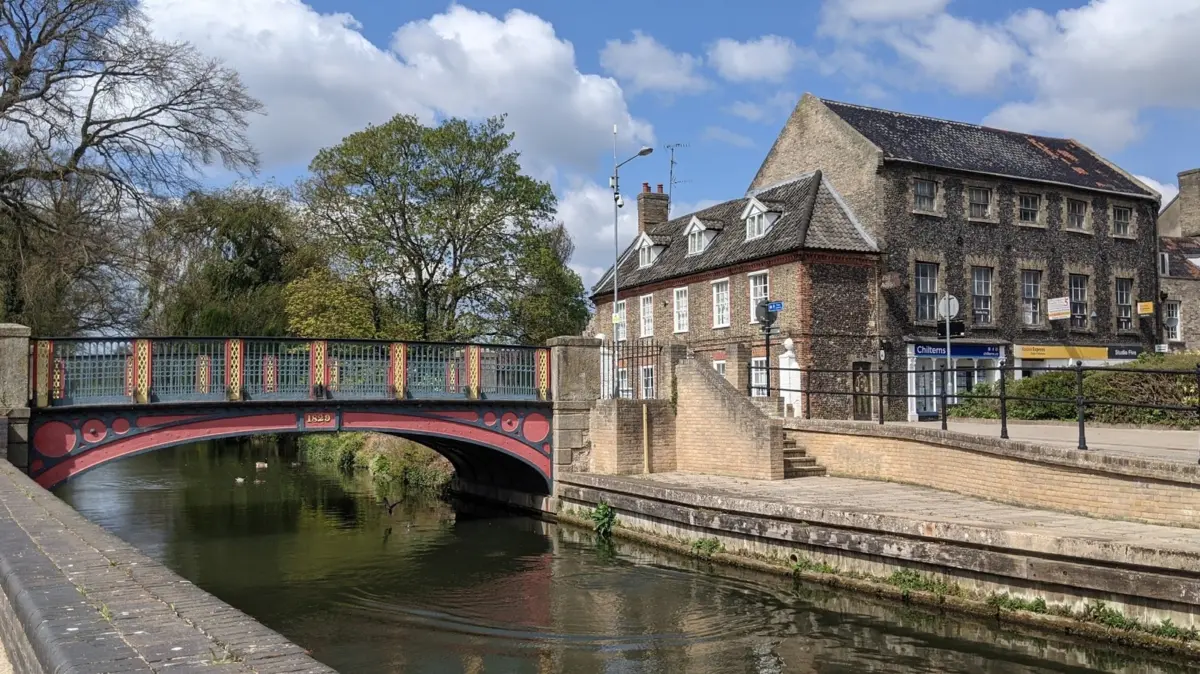
This chapter of history achieved immortal cultural status through the hit BBC comedy "Dad’s Army," which aired from 1968 to 1977. Because the show was filmed extensively in and around Thetford, the town has embraced its comedic heritage wholeheartedly. The Dad’s Army Museum celebrates the warmth, eccentricities, and genuine civic duty of the Home Guard, drawing fans from across the globe to iconic locations like the ornate 1829 iron bridge on Bridge Street, where a life-sized bronze statue of Captain Mainwaring sits invitingly on a park bench.
Supporting Context & Metrics: Accessibility, Geography, and Tourism Infrastructure
For planners, travel analysts, and prospective visitors, evaluating Thetford requires looking at its logistical footprint and economic integration within the broader East Anglian tourism sector.
Geographic Positioning and Transit Metrics
Thetford occupies a strategic geographic node in the Breckland district of Norfolk, sharing borders with Suffolk. Its regional connectivity makes it an ideal hub for exploring southeastern England:
- Proximity to Major Cities: Thetford sits less than an hour’s drive from the historic university city of Cambridge to the west and the cathedral city of Norwich to the east.
- International Access: Travelers arriving from abroad typically land at London Heathrow International Airport (LHR). From Heathrow, the drive to Thetford spans approximately two hours, guiding motorists through quintessential English landscapes characterized by rolling fields, ancient hedgerows, and the sprawling pine canopies of Thetford Forest.
- Rail and Bus Networks: Direct rail services from London connect travelers to Thetford in roughly two to three hours, offering panoramic views of the countryside. Long-distance bus and coach services provide alternative routes, with travel times ranging from two and a half to five hours depending on the point of origin.
Architectural and Cultural Preservation Metrics
Thetford’s tourism economy relies heavily on free-access historical sites and community-run institutions, which democratize access to heritage:
- Thetford Priory: Operated by English Heritage; open 365 days a year with free general admission.
- Ancient House Museum: Maintained in partnership with Norfolk County Council, offering subsidized educational programs and multicultural exhibitions connecting Norfolk to the former Sikh Empire.
- Culinary Heritage Density: The town boasts an unusually high concentration of centuries-old public houses per capita, including the Black Horse (operational for over two centuries), the Red Lion (dating back in various forms to 1791), and the Bell Hotel (welcoming travelers continuously since the 15th century).
Official Statements & Stakeholder Perspectives
Preserving a town where Iron Age earthworks sit yards away from Tudor facades and 19th-century iron bridges requires careful coordination between local government bodies, national heritage organizations, and community preservationists.
The English Heritage Trust, in a statement regarding the preservation of the Thetford Priory ruins, noted:
"Sites like Thetford Priory are not merely static piles of stone; they are narrative anchors for the British landscape. By maintaining open, free access to these monastic grounds, we ensure that the architectural brilliance and spiritual history of early East Anglia remain accessible to every citizen, bridging the gap between academic archaeology and public appreciation."
Local tourism and heritage boards in Norfolk have consistently emphasized the importance of multicultural narratives, as highlighted by curators at the Ancient House Museum:
"Thetford’s history cannot be told through a single lens. From Boudicca’s indigenous resistance to the profound, cross-continental life of Maharaja Duleep Singh, our town has always been a meeting point for global historical currents. The Ancient House stands as a testament to the fact that local history is, by extension, world history."
Community representatives involved in the maintenance of the Dad’s Army Museum underscore the vital role of local humor and nostalgia in modern placemaking:
"Dad’s Army captured a unique moment of British resolve—one defined by ordinary people stepping up in extraordinary times. By anchoring Captain Mainwaring and his platoon permanently in the townscape, we honor not just a beloved television show, but the authentic spirit of community defense and resilience that defined the era."
Future Outlook: Sustainable Heritage Tourism and Community Development
As Thetford looks toward the decades ahead, its primary challenge and opportunity lie in balancing modern economic development with the rigorous preservation of its delicate historical ecosystems.
Sustainable Tourism Management
With increasing numbers of travelers seeking authentic, off-the-beaten-path destinations—away from the overcrowded corridors of London, Oxford, and Stratford-upon-Avon—Thetford is uniquely positioned to absorb cultural tourists. However, municipal planners emphasize that growth must be sustainable. Initiatives are underway to enhance walking and cycling paths along the Little Ouse River and through the adjacent Thetford Forest, encouraging low-impact exploration of the region’s natural biodiversity.
Integrating the Past with the Modern Visitor Experience
Future infrastructure developments are slated to improve digital integration across Thetford’s heritage sites. Augmented reality (AR) walking tours are currently in conceptual phases, designed to allow visitors standing at the Thetford Castle Mound or the Priory ruins to digitally visualize what these structures looked like at the height of their historical significance. This technological layering promises to deepen educational engagement without altering the physical integrity of the ancient landscapes.
Culinary and Hospitality Evolution
The hospitality sector in Thetford continues to thrive by leaning into its historic assets. Historic inns such as the Bell Hotel and the Black Horse are investing in eco-friendly retrofits while preserving their 15th- and 18th-century aesthetics. Simultaneously, local eateries are doubling down on "farm-to-table" sourcing, leveraging the surrounding bucolic agricultural lands of Norfolk to elevate traditional British fare—such as the classic Sunday roast and traditional Afternoon Tea—for a discerning international clientele.
In sum, Thetford remains a rare jewel in the English crown. It is a place where time refuses to move in a straight line, inviting every traveler to step off the beaten path, sit beside a bronze captain, walk in the footsteps of revolutionaries and queens, and experience the timeless soul of the English countryside.