






Executive Overview
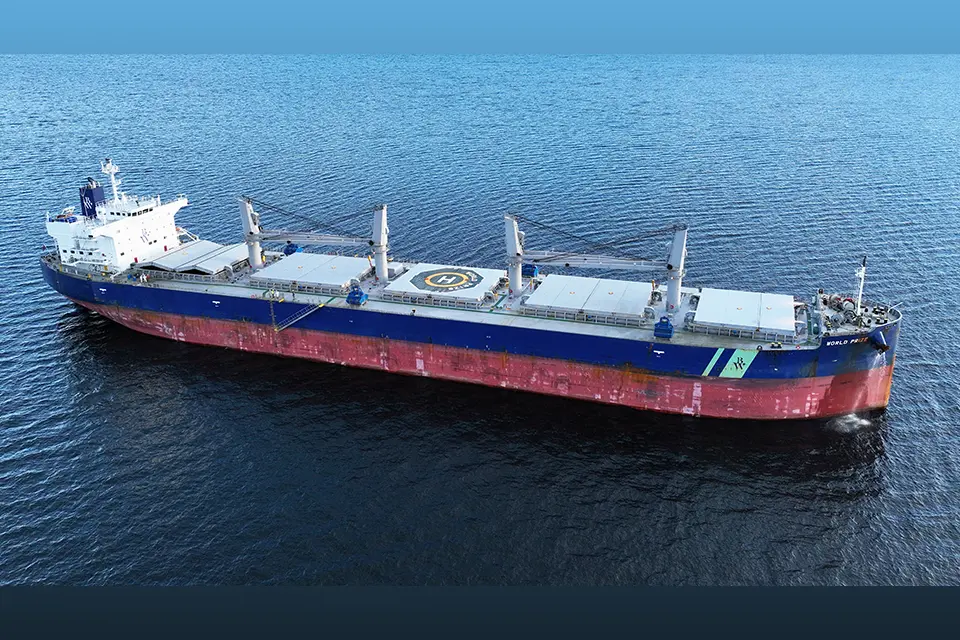
The United Kingdom’s Marine Accident Investigation Branch (MAIB) has officially released its comprehensive accident investigation report regarding a fatal man overboard incident aboard the Isle of Man-registered bulk carrier World Prize. The tragedy, which occurred on October 14, 2025, resulted in the loss of a crew member and triggered an extensive cross-jurisdictional inquiry into safety protocols, operational risk management, and emergency response procedures within the international dry bulk shipping sector.
The formal report, which is now publicly accessible through the government’s digital publishing platform, details the sequence of events leading up to the crew member entering the water, the subsequent search and rescue (SAR) operations, and the systemic factors that influenced the outcome of the emergency. Conducted by the MAIB on behalf of the Isle of Man Administration, the investigation highlights ongoing vulnerabilities in maritime working practices, particularly concerning operations conducted in open ocean conditions, personal protective equipment (PPE) compliance, and immediate vessel maneuvering during man overboard emergencies.
This investigation was executed under the established cooperative framework outlined in the Memorandum of Understanding (MoU) between the MAIB and the Red Ensign Group Category 1 registries—which include the Isle of Man, the Cayman Islands, Bermuda, and Gibraltar. This bilateral arrangement allows the UK’s specialist marine investigators to conduct rigorous, independent safety investigations for Red Ensign Group flag states, ensuring that lessons learned are shared globally to prevent similar marine casualties.

The publication of the World Prize report serves as a stark reminder of the persistent hazards faced by seafarers across the globe. By dissecting the root causes of this fatal incident, the MAIB aims to foster a proactive safety culture across commercial fleets, urging shipowners, operators, and masters to re-evaluate their safety management systems (SMS), enhance onboard training regimens, and rigorously audit deck operations where the risk of falling overboard remains elevated.
Detailed Chronology of the Incident
While the full operational narrative is detailed within the published MAIB investigation report, maritime incidents of this nature typically unfold through a rapid, compounding sequence of operational steps, environmental challenges, and procedural bottlenecks. To understand the gravity of the World Prize tragedy, maritime analysts and safety experts examine the operational window leading up to the alarm, the immediate response of the bridge team, and the challenges inherent in recovering a person from the water from a large bulk carrier.
Pre-Incident Operations and Environmental Conditions
On October 14, 2025, the World Prize was underway on an international voyage, operating within a commercial sea lane under specific environmental conditions. Bulk carriers of this scale—often measuring hundreds of meters in length and possessing high freeboards—present unique operational hazards, particularly when crew members are required to perform maintenance, inspections, or deck duties in adverse weather or heavy sea states.
On the day of the incident, the vessel was navigating through dynamic weather conditions. While exact meteorological data forms a core analytical component of the MAIB report, operating environments at sea inherently demand stringent adherence to safety harnesses, work permits, and watchkeeping standards. The transition from routine deck work to an emergency scenario often hinges on milliseconds of miscalculation, equipment failure, or sudden shifts in ship motion caused by swells and wind action.
The Critical Event: Man Overboard
The sequence of events shifted from routine navigation to a critical emergency when the crew member entered the water. Whether the individual was engaged in scheduled maintenance, routine inspections, or transiting an exposed deck area, the sudden loss of a crew member demands an immediate, rehearsed, and flawless tactical response from the ship’s company.
In a man overboard (MOB) scenario involving a large bulk carrier, the physical dynamics of the vessel complicate immediate rescue efforts. A ship the size of the World Prize has a massive turning circle and significant stopping distance (head reach), meaning that even with an immediate hard rudder command, the vessel can take substantial time to return to the vicinity of the person in the water. Furthermore, visual contact is frequently lost within moments due to wave heights, distance, and the high eye-level of the navigation bridge.
Immediate Emergency Response and Search Operations
Upon the alarm being raised, the bridge team initiated standard emergency maneuvers, sounded the general alarm, and deployed life-saving appliances as mandated by the International Convention for the Safety of Life at Sea (SOLAS).
Key actions executed during the initial response phase included:
- Bridge Navigation Actions: Executing Williamson turn or Scharnow turn maneuvers to reposition the vessel back along its reciprocal track, dependent on prevailing wind and sea conditions.
- Communication Protocols: Transmitting urgent distress messages via Digital Selective Calling (DSC) and Very High Frequency (VHF) radio to local Maritime Rescue Coordination Centres (MRCCs) and nearby shipping traffic.
- Visual and Radar Tracking: Posting dedicated lookouts on the bridge wings and forward stations, utilizing radar and electronic plotting tools to track the estimated position of the casualty relative to the vessel’s drift.
- Rescue Boat Preparation: Mobilizing the ship’s rescue boat crew for deployment once the vessel reduced headway, balancing the need for speed against the safety of the rescue boat operators in heavy seas.
Despite the rapid mobilization of the vessel’s crew and subsequent coordination with external search and rescue authorities, the operation tragically concluded with the recovery of the crew member, who could not be resuscitated. The MAIB’s chronological reconstruction provides a minute-by-minute account of these actions, identifying both commendable responses and critical operational delays that influenced the final outcome.
Supporting Context & Metrics: The Global Challenge of Man Overboard Incidents
To contextualize the findings of the World Prize report, it is necessary to examine broader industry metrics surrounding man overboard fatalities in the global commercial shipping sector. Falls from height and slips, trips, and falls into the water remain among the leading causes of occupational fatalities in the maritime industry.
Statistical Overview of Maritime Casualties
According to data compiled by international maritime organizations, flag administrations, and classification societies, man overboard incidents carry one of the highest mortality rates of any maritime accident category. Unlike engine failures or hull breaches—where the vessel itself generally remains a stable platform for survival—an individual in the water is immediately exposed to extreme environmental stressors, including:
- Cold Water Immersion (Hypothermia): Even in moderate sea temperatures, the onset of cold shock and subsequent hypothermia can incapacitate an unsuited swimmer within minutes, drastically reducing their ability to remain afloat or assist rescuers.
- Trauma: Individuals falling from the deck of a bulk carrier often risk striking structural components, machinery, or the water surface at high velocity, resulting in incapacitating physical trauma before immersion even occurs.
- Drowning: The combination of heavy work clothing, lack of personal flotation devices (PFDs), and turbulent sea states generated by the vessel’s wake significantly accelerates physical exhaustion and secondary drowning.
Regulatory Frameworks and Compliance
Commercial vessels operate under stringent international regulations designed to mitigate these risks. The International Safety Management (ISM) Code requires shipping companies to establish robust safety management systems that identify potential operational risks, including working on deck and working aloft or over the side. Furthermore, SOLAS Chapter III mandates specific life-saving appliances, rescue boats, and regular muster drills to ensure crew proficiency in MOB recovery.
However, the MAIB report on the World Prize underscores a recurring challenge within the industry: the gap between written safety procedures and operational reality on deck. Investigators frequently examine whether risk assessments were adequately contextualized for the specific environmental conditions at the time of the accident, whether personal protective equipment (PPE) was worn correctly, and if communication between the bridge and working parties was maintained without interruption.
Official Statements and Institutional Roles
The publication of the World Prize investigation report highlights the collaborative, highly specialized nature of international marine safety investigations. The division of labor between flag states, registries, and independent investigative branches ensures complete transparency and objective analysis.
The Role of the Marine Accident Investigation Branch (MAIB)
As an independent branch of the UK Department for Transport, the MAIB is tasked with investigating marine accidents involving UK vessels, as well as providing specialized investigative services to designated international partners under formal agreements. The primary objective of an MAIB investigation is not to apportion blame or liability, but rather to determine the circumstances and causes of an accident with the sole aim of preventing future marine casualties.
In the case of the World Prize, the MAIB acted on behalf of the Isle of Man Administration. This relationship is formalized through the Memorandum of Understanding (MoU) between the MAIB and the Red Ensign Group Category 1 registries. This framework ensures that smaller flag administrations—which may not maintain large, dedicated standing corps of marine accident investigators—have access to world-class investigative expertise, forensic engineering, and human factors analysis.
Government and Media Contact Channels
To ensure that journalists, maritime stakeholders, and the public have access to authoritative updates and clarification regarding published reports, the MAIB maintains dedicated communication channels. For media inquiries concerning the World Prize report or broader maritime safety statistics, officials have provided specific contact points:
- Office Hours Media Inquiries (Monday to Friday, standard business hours): Telephone 01932 440015
- Out-of-Hours Media Inquiries (Emergency and weekend support): Telephone 0300 7777878
Media representatives seeking to review the primary source documentation are directed to the official government portal via the published MAIB report link, which contains the complete technical analysis, safety recommendations, and systemic observations derived from the investigation.
Future Outlook: Industry Implications and Recommendations
The ultimate value of any marine casualty investigation lies in its ability to drive meaningful change across the maritime sector. The MAIB report on the World Prize concludes with specific safety recommendations directed at the vessel’s managers, the Isle of Man Administration, and the wider maritime community. Implementing these measures is critical to reversing adverse safety trends and safeguarding seafarers operating in demanding oceanic environments.
Key Focus Areas for Safety Enhancement
- Enhancement of Risk Assessment Practices: Shipping companies must move beyond generic safety checklists, ensuring that masters and crew members conduct dynamic, task-specific risk assessments that account for vessel motion, sea state, and fatigue levels prior to commencing deck operations.
- Strict Enforcement of PPE Compliance: The mandatory use of personal flotation devices (PFDs) equipped with personal locator beacons (PLBs) for all personnel working on deck or in exposed areas must be rigorously enforced across commercial fleets. Immediate visibility in the water is paramount for survival.
- Refinement of MOB Recovery Drills: Operators should conduct unannounced man overboard drills utilizing realistic scenarios—including simulated casualties and adverse weather conditions—to test bridge team reaction times, communication clarity, and the mechanical reliability of rescue boat deployment systems.
- Technological Integration: The adoption of advanced tracking technologies, such as automatic identification system (AIS) man overboard beacons, wearable sensors, and enhanced thermal imaging cameras on navigation bridges, can drastically reduce search times and improve the probability of a successful recovery.
Conclusion
The fatal man overboard incident aboard the bulk carrier World Prize on October 14, 2025, represents a profound human loss and a critical learning opportunity for the global maritime industry. Through the rigorous, independent investigation conducted by the MAIB on behalf of the Isle of Man Administration, the maritime community is provided with an unflinching analysis of what went wrong and how similar tragedies can be averted.
As shipowners, operators, and regulatory bodies digest the findings of the report, the overarching mandate remains clear: continuous vigilance, unyielding adherence to safety protocols, and an uncompromising commitment to the protection of human life at sea. The full report remains available for public and professional review, serving as an essential reference document for safety management systems worldwide.