As climate change accelerates, altering weather patterns and shifting ecosystems, American agriculture and forestry are facing an unprecedented crisis. Invasive species, shifting pest ranges, and aggressive climate-driven plant diseases are no longer theoretical risks on the distant horizon—they are actively devastating crops, straining farm economics, and destabilizing rural communities from coast to coast.
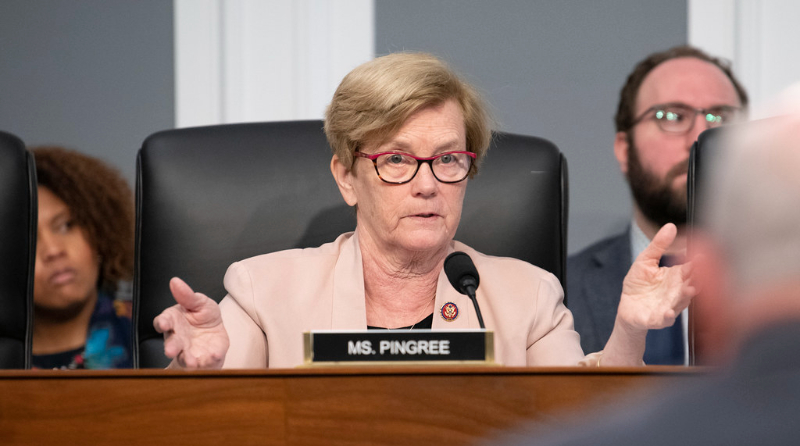
Amidst this escalating crisis, US Representative Chellie Pingree (D-ME)—a longtime organic farmer and senior member of the House Agriculture Committee—has launched a sharp critique against the United States Department of Agriculture (USDA). Representative Pingree is formally calling on USDA Secretary Rollins to immediately abandon bureaucratic hesitation and adopt the recommendations outlined in a damning Government Accountability Office (GAO) report.
The GAO report, titled Agricultural Diseases and Pests: Nationwide Assessment and Strategy Needed to Enhance the Climate Resilience of Farms and Forests, reveals that the USDA has taken "few actions" to proactively mitigate the growing risks that climate-driven pests and pathogens pose to American farms and timberlands. Even more alarming, despite the compounding threats, federal support, staffing, and funding for critical programs—such as the USDA’s interagency Climate Hubs—have faced continuous cuts and political headwinds.
Lawmakers, scientists, and agricultural advocates argue that the cost of inaction is staggering. Between 1960 and 2020, invasive species and agricultural diseases cost the U.S. economy at least $550 billion. With shifting climate dynamics expected to inflate federal crop insurance payouts by billions of dollars annually, critics argue that the federal government’s current posture of neglect is not only environmentally reckless, but fiscally irresponsible.
Detailed Chronology: The Escalating Confrontation Between Congress and the USDA
To understand the gravity of the current standoff between Capitol Hill and the USDA, it is necessary to examine the timeline of events, reports, and legislative pressures that have brought this issue to a boiling point.
The Rise of Climate-Driven Agricultural Threats (1960–2020)
For decades, researchers have tracked the steady creep of invasive species and agricultural pests into new geographical zones. Warmer winters, prolonged droughts, and erratic precipitation patterns have broken down traditional ecological barriers that once kept regional pests contained. According to historical economic tracking, invasive species, agricultural diseases, and forest pests drained at least $550 billion from the U.S. agriculture and forestry sectors over this sixty-year period. However, federal adaptation strategies failed to scale proportionally with the escalating threat.
Publication of the GAO Report (2026)
The Government Accountability Office released its comprehensive review, Agricultural Diseases and Pests: Nationwide Assessment and Strategy Needed to Enhance the Climate Resilience of Farms and Forests. The oversight report evaluated the USDA’s preparedness and response mechanisms regarding climate-induced disease and pest pressures. The findings were stark: the department lacked a cohesive nationwide strategy, had taken minimal concrete action to enhance ecological resilience, and was operating without adequate interagency coordination.
Congressional Pushback and Representative Pingree’s Ultimatum
Reacting swiftly to the GAO’s findings, Rep. Chellie Pingree escalated the pressure on the executive branch. Drawing from her personal background as an organic farmer in Maine, Pingree underscored that the warnings in the GAO report mirror the daily realities faced by agricultural producers. In a direct and unvarnished letter to USDA Secretary Rollins, Pingree demanded immediate compliance with the GAO’s roadmap, warning that trimming vital research and outreach programs during an ecological crisis is dangerously shortsighted.
Budgetary Battles Over USDA Climate Hubs
The political friction reached a critical juncture with the introduction of the proposed Fiscal Year 2027 Agriculture Appropriations Bill. Within the spending proposal, funding for the USDA Climate Hubs—widely regarded as a vital bridge connecting cutting-edge scientific research with boots-on-the-ground farmers and foresters—faced severe threats of elimination. Critics of the proposed budget cuts, led by congressional agricultural advocates, argue that defunding these regional hubs will blindside producers just as they require advanced climate adaptation tools the most.
Supporting Context & Metrics: The Human and Economic Toll
The urgency of the GAO’s recommendations is underpinned by stark economic realities and ecological metrics. Climate change is fundamentally rewriting the playbook for American agriculture, transforming localized nuisance problems into systemic economic shocks.
The Multi-Billion-Dollar Burden of Invasive Species
Invasive pests and plant diseases are notoriously resilient. Warmer temperatures allow insect generations to multiply more rapidly, expand their territories northward, and survive winters that once acted as natural population controls. A prime example is the southern pine beetle (Dendroctonus frontalis), an aggressive forest pest whose range has expanded northward into New England. Historically restricted to warmer southern states, the beetle has now established a foothold in Maine, leaving expansive tracts of timber dead, dying, and highly vulnerable to catastrophic wildfires.
Escalating Crop Insurance and Disaster Costs
The financial fallout of these compounding threats directly impacts federal budgets. A 2024 economic analysis cited in congressional correspondence estimated that shifting climate conditions and associated biological pressures could increase federal crop insurance costs by anywhere from $300 million to $2.2 billion annually. When farmers face unexpected late freezes, severe droughts, unseasonal heavy rainfall, and rampant pest infestations, their reliance on federal safety nets spikes. Without preemptive investments in farm resilience, taxpayers will be left footing an escalating bill for disaster recovery.
The Practical Roadmap: What the GAO Recommends
The GAO report does not merely highlight failures; it provides a constructive, four-part framework designed to modernize America’s agricultural defense systems. The core recommendations include:
Improving and Coordinating Monitoring and Surveillance: Establishing robust, real-time tracking systems to detect emerging diseases and invasive pest populations before they reach epidemic proportions.
Incorporating Climate Information into Modeling Data: Integrating predictive climate models with biological forecasting to give farmers and foresters advanced warnings of environmental stress.
Expanding Education, Outreach, and Technical Assistance: Ensuring that agricultural producers have direct access to expert guidance, regionally tailored adaptation strategies, and modern tools (such as high tunnels and protective netting).
Modifying Existing Management Strategies: Moving away from outdated pest-control paradigms that rely on chemicals or practices which are rapidly losing efficacy in a warming world.
Official Statements and Congressional Correspondence
The debate over the USDA’s responsiveness has been defined by sharp rhetoric from lawmakers who feel the federal agency is ignoring ground-level realities. Representative Pingree’s official correspondence to USDA Secretary Rollins serves as a defining indictment of current federal inertia.
Excerpt from Representative Chellie Pingree’s Letter to USDA Secretary Rollins:
"Farmers, ranchers, and foresters know all too well that the impacts of climate change are not distant or theoretical—they are already materializing on the ground and affecting their operations and livelihoods… GAO found that USDA has taken few actions to enhance the resilience of farms and forests to climate-related diseases and pests, despite clear trends showing rapidly escalating threats."
Pingree emphasized that while farmers are actively innovating—investing thousands of dollars out of pocket into protective high tunnels, advanced netting, and resilient crop varieties—they cannot shoulder the massive financial and logistical burden alone.
Furthermore, Pingree highlighted the critical role played by the USDA Climate Hubs:
"USDA’s Climate Hubs—once instrumental in providing regionally tailored climate and pest information—have reduced their capacity at precisely the moment producers need them most… Given the scale of documented losses and projected future costs, it would be fiscally irresponsible for USDA to disregard these findings or delay action."
As of publication, the USDA has faced mounting pressure from agricultural stakeholders, environmental scientists, and congressional leaders to formally respond to the GAO’s roadmap and outline how it intends to protect the nation’s food and timber supply chains.
Future Outlook: A Critical Test for American Agriculture
The standoff between congressional watchdogs and the USDA highlights a pivotal crossroads for American environmental and agricultural policy. As global temperatures continue to rise, the agricultural sector stands on the frontline of the climate crisis.
If the federal government continues to scale back its scientific infrastructure, dismantle regional climate hubs, and ignore the strategic guidance of the Government Accountability Office, the consequences will ripple across the entire economy. Higher food prices, devastated timber industries, soaring federal disaster payouts, and widespread rural economic distress will be the inevitable outcomes of institutional complacency.
Conversely, embracing the GAO’s recommendations offers a clear pathway toward long-term resilience. By conducting a comprehensive nationwide risk assessment, upgrading surveillance networks, and empowering farmers with the technical assistance they desperately need, the U.S. can safeguard its agricultural heritage.
For farmers like Chellie Pingree and the thousands of producers across Maine and the nation navigating erratic weather and invasive species every day, the message to Washington is unambiguous: the time for studies and hesitation has passed. The future of American agriculture depends on immediate, decisive, and science-driven leadership.