Leaving the Hawaiian Islands is an experience defined by a bittersweet mixture of tropical nostalgia and logistical anxiety. Beyond the standard transportation security measures, departing travelers—whether boarding a transpacific jetliner or embarking on a cruise ship—must clear a rigorous second layer of defense: the Animal and Plant Health Inspection Service (APHIS) and U.S. Customs and Border Protection (CBP).
Far from being mere bureaucratic inconveniences, these inspections serve as a critical ecological shield. Hawaii’s geographic isolation has fostered a fragile, highly endemic ecosystem entirely unique to the planet. Introducing invasive pests, plant pathogens, or foreign soil samples can trigger ecological collapses and devastate mainland agricultural industries worth billions of dollars.
Despite ubiquitous educational campaigns by airlines, tour operators, and airport authorities, millions of tourists continue to pack contraband natural resources in their luggage every year. From fresh stalks of sugarcane to pocketed handfuls of volcanic sand, unauthorized items face immediate confiscation, while undeclared agricultural products can trigger steep financial penalties reaching up to $1,000.
This investigative report examines the five most frequently confiscated souvenirs at Hawaii’s airports, the legislative and ecological reasons behind their prohibition, and the authorized alternatives that allow travelers to bring a genuine piece of the aloha spirit safely back to the continental United States.
Detailed Chronology: The Enforcement Evolution at Hawaiian Ports of Departure
The interception of restricted agricultural and geological items at Hawaii’s ports of exit is not a modern innovation, but rather the result of decades of escalating biosecurity policies. Understanding how these restrictions evolved provides valuable context for modern travelers navigating Honolulu, Kahului, Kona, and Lihue airports.
The Foundation of Federal Oversight (Late 20th Century)
Historically, agricultural inspections in Hawaii were localized and primarily focused on commercial exports of pineapples and sugarcane to protect mainland agricultural hubs in California, Florida, and the American South. However, as tourism expanded exponentially in the final decades of the 20th century, commercial air travel democratized access to the islands.
Suddenly, millions of individual tourists—rather than just cargo ships—were moving back and forth across the Pacific. The U.S. Department of Agriculture (USDA) recognized that casual travelers posed an unprecedented vector for agricultural pests. The Mediterranean fruit fly (medfly), various scale insects, and plant-boring pathogens began routinely appearing in passenger baggage.
The Implementation of Mandatory Pre-Departure Screening
In response to rising ecological threats, federal and state agencies revolutionized the departure process. Today, the system relies heavily on APHIS agricultural specialists who screen baggage prior to boarding.
X-Ray and Biological Detection: Luggage passing through modern screening systems at major Hawaiian airports is evaluated not just for security threats (weapons and explosives), but for organic mass and biological signatures.
The Declaration Mandate: Travelers are legally required to complete agricultural declaration forms or utilize electronic check-in prompts verifying that they are not transporting restricted biological or geological materials.
The Amnesty Bin Era: Realizing that many tourists commit honest mistakes, APHIS established amnesty bins before security checkpoints. Travelers can voluntarily surrender forbidden fruits, plants, or organic items without facing administrative fines or legal repercussions.
Active Enforcement and Financial Penalties: For travelers who bypass amnesty bins and fail to declare restricted goods during screening, enforcement escalates rapidly. Confiscation is automatic, and agricultural specialists possess the authority to levy civil penalties ranging from hundreds to over a thousand dollars depending on the risk profile of the intercepted material.
The Big Five: Contraband Souvenirs Confiscated at Hawaii’s Airports
Biosecurity officials maintain a zero-tolerance policy for certain classes of items due to the irreparable harm they pose to mainland ecosystems and local cultural sites. Travelers attempting to pack the following five items will find them intercepted before departure.
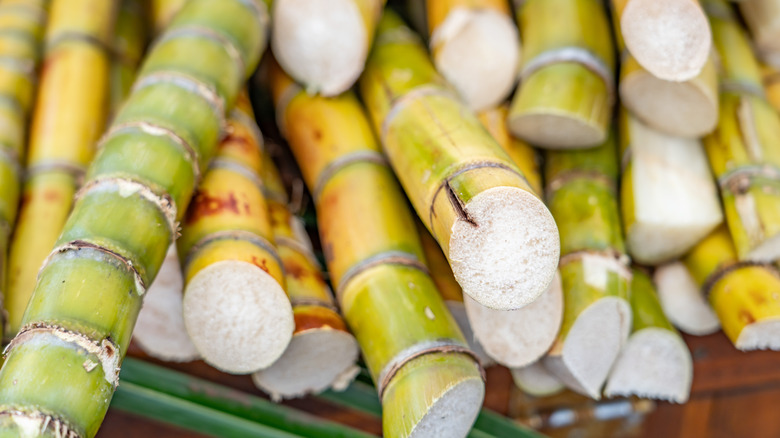
1. Sugarcane (Saccharum officinarum)
For generations of travelers, gnawing on a fresh, fibrous stalk of raw sugarcane—often experienced during historical plantation tours like those at Kauai’s Grove Farm Museum—has been a quintessential taste of tropical childhood. However, tucking these sweet, woody stalks into a suitcase as a treat for family back home is strictly prohibited by the USDA.
The Ecological Risk: Unlike pineapples, which can undergo certified post-harvest processing and clearance, fresh sugarcane is fundamentally barred from entering the continental United States from Hawaii. Raw stalks are notoriously resilient vectors for agricultural pathogens, including sugarcane rust, smut, and destructive pests such as whiteflies and borers. Introducing these vectors to domestic farming regions could devastate commercial sugar and grass crops.
Alternative Options: Travelers craving the authentic flavor profile of Hawaiian sugarcane should look for processed derivatives sold in sealed commercial packaging, such as artisan cane syrups, brown sugars, or culinary blends available at certified gift shops.
2. Fresh Tropical Fruits
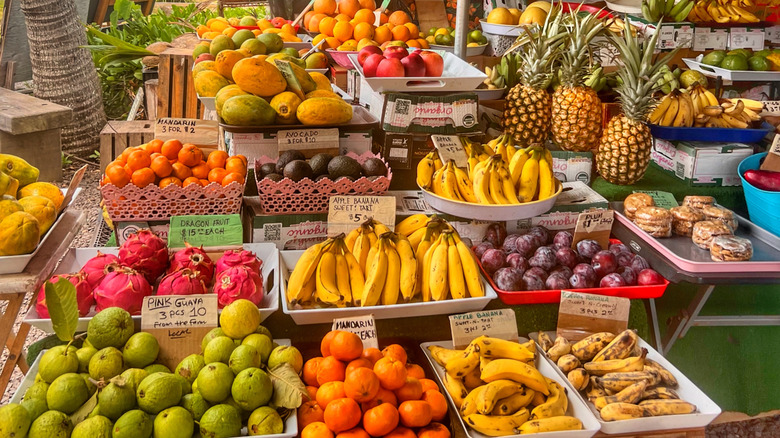
Hawaii’s vibrant farmers’ markets—from the lush windward stalls of Oahu to the fertile volcanic soils of Waimea—teem with exotic bounty. From creamy, dark-skinned mangosteens and prickly jackfruit to tart lilikoi, lychees, rambutans, and dragonfruit, the visual and sensory appeal is irresistible.
The Biosecurity Dilemma: The prohibition on fresh tropical fruits is governed by a strict regulatory framework. Uninspected fruits purchased directly from open-air markets cannot be transported to the mainland due to the high risk of harboring fruit fly larvae and other insidious agricultural pests.
Compliant Alternatives: Many reputable farm stands and agricultural vendors cater directly to travelers by providing pre-inspected, officially certified, and USDA-stamped fresh fruit boxes specifically cleared for air travel. Additionally, iconic tropical staples like pineapples and whole coconuts frequently pass inspection after a routine visual assessment by agricultural officers, provided they meet specific maturity and cleanliness standards.
3. Beach Sand
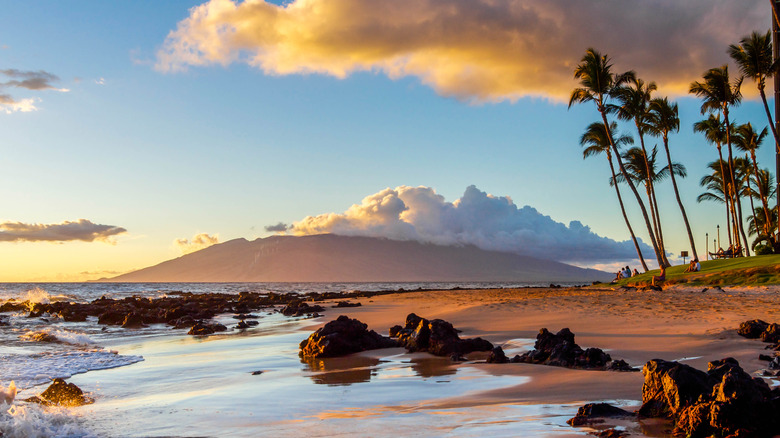
The allure of Hawaii’s world-famous beaches—whether pristine white, golden, emerald green, or dramatic black volcanic sand—inspires many romantic honeymooners to attempt bottling a handful of the shoreline as a physical keepsake.
Legal Prohibitions: Under Hawaii’s Department of Land and Natural Resources regulations (specifically Hawaii Revised Statutes Chapter 205A), the mining, extraction, or removal of sand, dead coral, coral rubble, rocks, soil, or any other marine and coastal deposits from the shoreline area is strictly illegal. Tucking a plastic baggie of sand into checked luggage risks immediate confiscation and potential administrative fines.
Cultural and Karmic Respect: Beyond statutory penalties, local residents and Native Hawaiian cultural practitioners view the removal of natural beach materials as a severe sign of disrespect. Traditional beliefs hold that taking elements of the land invites negative spiritual energy and bad karma. Local community members frequently emphasize that the true beauty of Hawaii’s beaches should be captured in photographs and memories, leaving the physical shoreline undisturbed for future generations.
4. Lava Rocks and Volcanic Materials
The hypnotic, fiery majesty of Hawaii’s active volcanoes—most notably within Hawaii Volcanoes National Park on the Big Island—leaves an indelible impression on visitors. The temptation to pocket a jagged piece of basaltic lava rock as a tangible memento of Earth’s raw power is a common impulse.
The Myth of Pele’s Curse: Thousands of tourists who successfully smuggle lava rocks home in their luggage ultimately experience a change of heart, mailing the rocks back to park headquarters accompanied by anxious letters detailing relentless streaks of bad luck. This phenomenon is popularly attributed to "Pele’s Curse," the legend that Hawaii’s fire goddess wreaks havoc upon anyone who steals her geologic children. While folklorists note that the curse was popularized in the mid-20th century, the legal reality remains absolute: stealing rocks from a national park is a federal offense.
Park Preservation: Within UNESCO World Heritage Sites and National Biosphere Reserves, disturbing natural geological formations disrupts delicate micro-ecosystems and damages trail infrastructure. Park rangers utilize rock stacks known as cairns to guide hikers safely across treacherous, ever-shifting volcanic terrain; tampering with these stones endangers subsequent visitors.
5. Soil and Unsterilized Plant Media
While bringing home a jar of ordinary dirt sounds like an eccentric vacation souvenir, thousands of tourists inadvertently attempt to transport soil by purchasing potted tropical plants—such as exotic orchids—directly from local vendors without verifying their growing medium.
The Threat Beneath the Roots: Soil is one of the most heavily restricted biological materials in international and domestic travel. It harbors microscopic nematodes, fungal spores, weed seeds, and soil-borne bacteria that can devastate agricultural sectors on the mainland.
Compliant Floral Keepsakes: Travelers enchanted by the botanical wonders found at institutions like Honolulu’s Foster Botanical Garden can still bring home living flora, provided the plants are cultivated in sterile, soil-free growing media. Premier nurseries—such as Orchid Alley on Kauai or Akatsuka Orchid Gardens near Hawaii Volcanoes National Park—specialize in packaging and labeling travel-ready plants for carry-on transport or direct mail delivery to the mainland. Traditional floral leis, being entirely soil-free and crafted from approved blossoms, are generally permitted, though inspectors will verify that restricted flowers (such as citrus blooms and specific daylilies) are excluded from the arrangement.
Supporting Context & Metrics: The Economic and Ecological Stakes
To fully grasp why APHIS inspectors enforce these regulations with unwavering rigidity, one must examine the broader economic and environmental metrics governing Pacific biosecurity.
Souvenir Category
Primary Risk Vector
Regulatory Authority
Penalty for Non-Declaration
Sugarcane
Whiteflies, mites, rust, smut
USDA / APHIS
Confiscation + Civil Fine (up to $1,000)
Fresh Tropical Fruit
Fruit fly larvae, seed borers
USDA / APHIS
Confiscation (unless pre-inspected)
Beach Sand & Coral
Coastal erosion, habitat destruction
HI Dept. of Land & Natural Resources
Confiscation + State Fines
Lava Rocks
Geological disruption, park vandalism
National Park Service
Confiscation + Federal Citations
Soil & Potted Plants
Nematodes, soil-borne pathogens
USDA / APHIS
Confiscation + Civil Fine
According to agricultural impact studies, the introduction of a single invasive species—such as the Mediterranean fruit fly or the coffee berry borer—can cost the agricultural industry and state economies hundreds of millions of dollars in eradication programs, crop losses, and quarantine restrictions. Hawaii’s unique insular ecosystem acts as a bellwether; protecting it requires absolute vigilance at every egress point.
Official Statements and Expert Guidance
Biosecurity officials and environmental advocates consistently emphasize that compliance relies on proactive traveler education rather than punitive measures alone.
"Our primary mission is not to penalize the vacationer, but to protect the extraordinary biodiversity of these islands and the agricultural security of the United States as a whole," noted an APHIS senior agricultural inspector stationed at Daniel K. Inouye International Airport. "When travelers declare what they are carrying, we can work with them. When items are hidden or deliberately smuggled, it compromises the safety of our food supply chain and triggers strict legal intervention."
Cultural historians and park rangers reinforce this sentiment, reminding visitors that authentic travel in Hawaii is rooted in the concept of malama—to care for and protect the land.
"When you take sand, rocks, or soil, you are taking a literal piece of the ancestral foundation," explains a cultural interpreter with the National Park Service. "True appreciation of Hawaii means honoring its laws, respecting its cultural traditions, and leaving the landscape as pristine as you found it."
Future Outlook: Smart Travel and Sustainable Souvenirs
As tourism management shifts toward regenerative and sustainable models, the guidelines governing what travelers can take home from Hawaii will only tighten. Future technological integrations at airports—including advanced biological scanning sensors and automated baggage profiling—will further reduce the window for unauthorized organic material transport.
For future travelers planning a Hawaiian getaway, the path forward is clear:
Research Before You Buy: Verify that any agricultural product, plant, or packaged food item bears explicit USDA-approved certification for mainland transport before purchasing.
Utilize Local Shipping Services: Support local businesses that offer certified mail-order services, ensuring your purchases arrive legally and safely at your doorstep without risking airport confiscation.
Embrace Intangible Keepsakes: Invest in locally crafted, non-biological souvenirs—such as authentic wood carvings by local artisans, textiles, jewelry, and certified manufactured goods—that support the local economy while respecting federal law and cultural heritage.
By adhering to these standards, travelers ensure that Hawaii remains a thriving ecological sanctuary and a vibrant cultural treasure for generations to come.