







Executive Overview
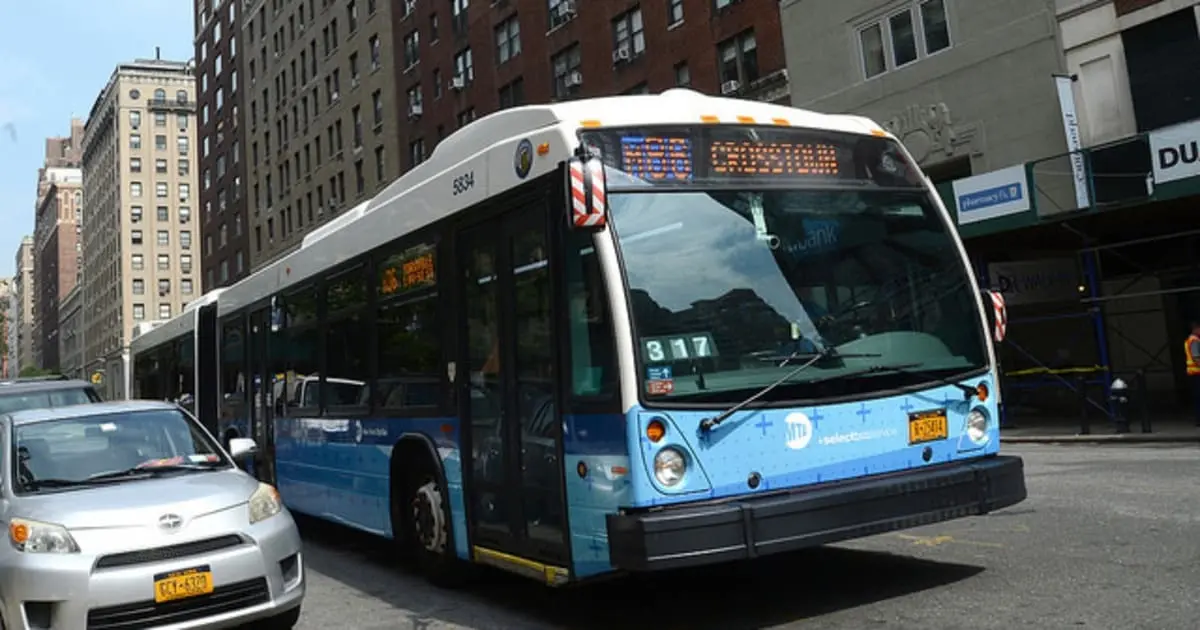
In a sweeping move designed to reshape the daily commute for millions of urban residents, New York Governor Kathy Hochul has announced that the Metropolitan Transportation Authority (MTA) is officially issuing a request for proposals (RFP) for the manufacturing and delivery of 650 brand-new buses. This massive procurement initiative represents the single largest fleet upgrade for the authority since 2013, marking a watershed moment in the ongoing revitalization of New York City’s surface transit infrastructure.
Once fully manufactured, delivered, and integrated into active service, this new cohort of vehicles will comprise more than 10 percent of the MTA’s entire operational bus fleet. Crucially, these modern vehicles are slated to serve over one million daily transit riders across the five boroughs, directly addressing long-standing public grievances regarding unreliability, mechanical breakdowns, and lagging travel speeds.
The financial engine driving this multi-million-dollar acquisition is anchored within the MTA’s 2025–2029 Capital Plan, secured through direct gubernatorial leadership. This funding mechanism turns long-term transit planning into immediate, tangible capital investments. Furthermore, the procurement aligns directly with the strategic mandates laid out in the joint municipal-state transit blueprint, Next Stop: Faster Buses, Better Service, which was introduced earlier this summer in close collaboration between Governor Hochul and New York City Mayor Zohran Kwame Mamdani.
While the global transportation sector increasingly pivots toward total electrification, the MTA’s new acquisition relies on state-of-the-art Compressed Natural Gas (CNG) technology. This pragmatic transitionary approach is designed to immediately phase out the authority’s aging fleet of legacy CNG buses, which have increasingly suffered from frequent mechanical failures and elevated maintenance expenditures. By utilizing 100 percent Renewable Natural Gas (RNG) derived from captured methane sources, the transit agency achieves a dual objective: dramatically curbing lifecycle greenhouse gas emissions while insulating municipal budgets from the notorious price volatility of traditional petroleum diesel.
Beyond the immediate numerical milestone of 650 vehicles, this RFP serves as the pilot test for the MTA’s newly minted Rolling Stock Program. This innovative procurement framework fundamentally re-engineers how the agency contracts with heavy-duty vehicle manufacturers. By cutting bureaucratic red tape, encouraging industry-wide design innovations, and offering vendors unprecedented flexibility, the Rolling Stock Program promises to deliver high-quality, dependable transit assets on strict schedules and within tight budgetary constraints. As urban mobility experts, municipal leaders, and daily commuters watch closely, this ambitious undertaking sets a new benchmark for how modern megacities can overhaul public transportation systems under intense economic and environmental pressures.
Detailed Chronology of the Initiative
To understand the magnitude of the MTA’s latest procurement announcement, one must examine the systematic, chronological progression of transit policy, executive negotiations, and operational adjustments that have characterized New York City’s transportation sector over the past several years.
The Spring and Summer Prelude: Crafting Next Stop
The foundational roots of the 650-bus procurement extend back to early 2025, when transit advocates, municipal leaders, and state officials intensified discussions regarding the sluggish average speeds of New York City buses. Despite boasting the nation’s largest municipal bus network, the MTA faced mounting criticism over sluggish average operating speeds, which routinely hovered below historical benchmarks due to escalating street-level congestion, double-parked vehicles, and a chronically aging mechanical fleet.
Recognizing that piecemeal adjustments were insufficient, Governor Hochul and Mayor Zohran Kwame Mamdani convened a series of high-level working sessions. These deliberations culminated in July with the formal unveiling of Next Stop: Faster Buses, Better Service. This comprehensive multi-agency initiative established aggressive performance targets, prioritizing dedicated bus lane enforcement, traffic signal optimization, and—most importantly—the rapid retirement of the agency’s oldest, most unreliable vehicles.
The Immediate Aftermath of the July Rollout
Immediately following the launch of the Next Stop initiative, the MTA operationalized a preliminary emergency remediation phase. Transit officials identified the oldest vehicles actively operating within the municipal grid—a subset of buses boasting an average age of 18 years, with the oldest individual vehicle having logged an astounding 21 years of continuous service, well past its designated useful operational life.
By late summer, the MTA successfully integrated 41 brand-new replacement buses into active service lines. While these initial deployments provided temporary relief to heavily burdened routes, transit leadership acknowledged that a localized injection of 41 vehicles was merely a drop in the bucket. A systemic overhaul required a capital procurement campaign of unprecedented modern scale, laying the direct groundwork for the historic announcement regarding the 650-bus RFP.
Formalizing the Capital Plan and Issuing the RFP
With the legislative groundwork laid by the Next Stop blueprint, Governor Hochul successfully secured the necessary financial allocations within the MTA’s 2025–2029 Capital Plan. This capital allocation ensured that the procurement would not be subjected to the budgetary shortfalls that have historically plagued public transit infrastructure investments in the United States.
Following the formal approval of the Capital Plan, the MTA’s procurement division finalized the technical specifications for the upcoming fleet. Eschewing traditional, highly restrictive contracting models, the agency structured the bidding process around its newly minted Rolling Stock Program. On the heels of these administrative milestones, the formal Request for Proposals was released to the international bus manufacturing market, inviting leading heavy-vehicle builders to submit competitive bids to construct the 650 state-of-the-art CNG buses. This milestone initiates a multi-year manufacturing timeline that will culminate in the systematic deployment of these vehicles across the MTA network.
Supporting Context & Metrics
Evaluating the true impact of a 650-bus acquisition requires analyzing the hard data, fleet demographics, and environmental metrics that govern modern metropolitan transit operations. The scale of this procurement is better understood when framed against the broader operational landscape of the MTA.
Fleet Demographics and Operational Scale
The Metropolitan Transportation Authority manages one of the most complex, dense transit networks in the Western Hemisphere. Within its surface transit division, the agency operates thousands of buses traversing hundreds of individual routes across Manhattan, Brooklyn, Queens, Bronx, and Staten Island.
- Fleet Share: The acquisition of 650 new buses represents more than 10 percent of the MTA’s total active bus fleet. This level of fleet renewal is statistically rare in the North American transit industry, where agencies often struggle to replace more than 2 to 4 percent of their rolling stock annually due to budgetary constraints.
- Daily Ridership Impact: The routes slated to receive these modern vehicles accommodate well over one million passenger trips every single business day. For these riders, the transition directly translates to reduced wait times, lower frequencies of mechanical breakdowns, and vastly improved onboard climate control and accessibility features.
- Retiring Legacy Assets: The new vehicles will directly supplant an aging cohort of Compressed Natural Gas buses that have suffered from diminished mechanical reliability. Vehicles that remain in service past their operational lifespan frequently suffer from engine degradation, hydraulic failures, and electrical faults, requiring disproportionate maintenance hours in municipal depots.
Environmental Engineering and the RNG Transition
A critical dimension of the MTA’s procurement strategy is its nuanced approach to environmental sustainability. While zero-emission battery-electric bus technology remains a long-term priority, industry maturation timelines and infrastructural requirements necessitate a balanced, pragmatic transition strategy.
- The CNG/RNG Synergy: The 650 new buses will operate on Compressed Natural Gas, but the fuel source itself represents a radical departure from fossil-fuel extraction. The natural gas utilized by the MTA is 100 percent offset by Renewable Natural Gas (RNG). RNG is synthesized by capturing methane emissions emitted by organic decomposition sources, primarily agricultural operations and municipal landfills.
- Lifecycle Emissions Reduction: By capturing methane—a greenhouse gas significantly more potent than carbon dioxide in the short term—and combusting it as a refined transportation fuel, the MTA achieves a net-negative carbon lifecycle footprint for its propulsion energy. This process transforms a potent atmospheric pollutant into clean kinetic energy.
- Economic Insulation: Beyond environmental considerations, RNG shields the MTA from the notorious price volatility of traditional petroleum diesel and spot-market fossil fuels. Fixed-cost RNG contracts protect the authority’s operating budget, directly saving taxpayer dollars that can be reallocated toward frontline transit operations and service expansions.
- Zero-Emission Complement: It is important to note that the CNG procurement does not exist in a vacuum. Under the broader 2025–2029 Capital Plan, the MTA has concurrently committed to purchasing 500 zero-emission battery-electric buses. Furthermore, this capital deployment includes funding for heavy-duty charging infrastructure at bus depots, intentionally prioritizing facilities located in environmental justice communities—neighborhoods historically burdened by disproportionate rates of industrial pollution and poor air quality.
Official Statements and Leadership Perspectives
The announcement of the 650-bus RFP drew widespread commentary from key political figures, municipal executives, and transit administrators, highlighting the collaborative nature of the initiative and its alignment with broader urban mobility goals.
Governor Kathy Hochul on Historic Partnerships and Reliability
Governor Hochul emphasized that the procurement is the physical manifestation of promises made earlier in the year regarding municipal-state cooperation. Her remarks underscored the direct correlation between modern rolling stock and operational efficiency:
"We promised New Yorkers a historic partnership with City Hall to move buses faster and more reliably; now we are delivering by moving full speed ahead with the single largest purchase of new MTA buses in over a decade. Modern, reliable buses can spend more time on the road and less time in the shop than the old vehicles they will replace, a win for riders who depend on frequent, reliable service to get around."
Hochul’s emphasis on "time on the road versus time in the shop" strikes at the heart of municipal fleet management. When buses spend fewer hours undergoing unscheduled mechanical repairs in maintenance depots, route adherence stabilizes, bunching decreases, and schedule reliability significantly improves.
MTA Chair and CEO Janno Lieber on Pragmatic Innovation
MTA Chair and CEO Janno Lieber addressed the technological nuances of the procurement, defending the decision to invest in CNG-RNG propulsion while the heavy-duty electric bus sector continues to evolve:
"The Governor and Mayor have been clear: better bus service can’t wait. So, while the electric bus industry continues to mature, MTA is moving forward with CNGs to further improve service for the millions of New Yorkers who ride MTA buses every day."
Lieber’s commentary highlights a central tenet of modern transit leadership: balancing long-term environmental ideals with immediate operational imperatives. While electric bus technology is advancing rapidly, early-generation models have occasionally faced challenges regarding battery degradation in extreme weather, driving range limitations, and heavy infrastructural demands. By leveraging mature, highly reliable CNG-RNG technology for this specific batch of 650 vehicles, the MTA ensures that immediate service enhancements are not delayed by technological growing pains in the broader zero-emission manufacturing sector.
Future Outlook: The Rolling Stock Program and Beyond
As the MTA enters the competitive bidding phase for the 650-bus RFP, the implications of this initiative extend far beyond the immediate delivery of vehicles. The procurement serves as the proving ground for the agency’s innovative Rolling Stock Program, which is poised to redefine how public transit agencies across North America acquire capital assets.
Re-engineering Public Procurement
Historically, public sector transit procurement has been bogged down by hyper-prescriptive, rigid contract requirements that often stifle manufacturing innovation and drive up costs. Suppliers were forced to navigate cumbersome regulatory hurdles that discouraged creative engineering solutions.
The MTA’s new Rolling Stock Program fundamentally alters this dynamic. By encouraging industry innovation and granting bus manufacturers greater flexibility to propose cutting-edge design, material, and ergonomic ideas, the program streamlines the contracting process. This ensures that the transit agency can secure high-value, superior-quality buses on predictable timelines, ultimately maximizing the return on investment for taxpayer-funded capital projects.
The Road Ahead for New York City Transit
Over the next several years, the landscape of New York City’s surface transit will undergo a visible transformation. As the winning manufacturer is selected and production lines spool up, the first waves of these 650 new CNG buses will begin replacing the antiquated vehicles that currently plague the streetscape.
Simultaneously, the parallel rollout of zero-emission battery-electric buses and depot-level charging infrastructure will continue to advance, moving the MTA steadily closer to its ultimate sustainability milestones. Coupled with the street-level interventions of the Next Stop: Faster Buses, Better Service initiative—such as expanded bus lanes, automated bus lane enforcement cameras, and transit signal priority—this massive fleet renewal signals a new era for urban mobility in New York City. For the millions of commuters who rely on buses to navigate the world’s most demanding transit ecosystem, relief is officially on the horizon, moving forward at full speed.